Prepnúť na tlač
 Zobraziť viac







































 V prípade umeleckých diel alebo reprodukcií, ktorých ktorákoľvek strana je väčšia ako 105 cm (cca 41 palcov), sa rám dodáva v rozloženom stave ako sada. Táto metóda zabezpečuje bezpečnú доставu a chráni pred poškodením počas prepravy.


Vétheuil: A Moment Frozen in Impressionist Light
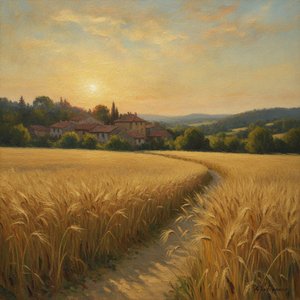
Claude Monet’s *Vétheuil* isn't merely a depiction of a French village; it’s an embodiment of the Impressionist ethos—a fervent pursuit of capturing the ephemeral beauty of nature and the transformative power of light. Painted during his residency in Vétheuil between 1878 and 1881, this artwork stands as a testament to Monet's revolutionary approach to painting and offers a profound glimpse into his artistic vision.The Setting: Tranquility Amidst Change
Vétheuil itself held a special significance for Monet. Following financial difficulties that prompted him to leave Paris, he sought refuge in the serene landscapes of Normandy, specifically the Seine River valley. Unlike grand historical canvases prioritizing accuracy and detail, Monet’s Vétheuil deliberately eschews meticulous representation. Instead, it strives to convey *feeling*, capturing the very essence of life unfolding within this picturesque hamlet—the gentle murmur of the river, the dappled sunlight filtering through the trees, and the quiet rhythm of daily existence. The artist meticulously recreated the atmosphere of his home, transforming Vétheuil into a canvas for his artistic exploration.Impressionistic Technique: Embracing Fleeting Light
Monet’s technique is undeniably characteristic of Impressionism. He abandons traditional brushstrokes in favor of loose, visible marks—a deliberate decision to prioritize sensory experience over photographic realism. Observe the sky – it shimmers with delicate shades of azure and rose pink, punctuated by fluffy clouds that seem to dance across the canvas. These aren’t simply colors; they are vibrations of light itself. Similarly, the Seine reflects these hues in broken strokes of emerald green and sapphire blue, creating an illusion of depth and movement. Monet skillfully layered thin washes of paint to build up texture and color, achieving a remarkable luminosity that would become synonymous with Impressionist art.Composition and Color: Harmony Through Complementary Contrast
The composition is thoughtfully balanced, guiding the viewer’s eye across the canvas. The dominant horizontal line represents the river's expanse, anchoring the right bank of Vétheuil while allowing for expansive views of the surrounding landscape. Monet masterfully employs complementary colors—blues and oranges—to heighten visual interest and reinforce the painting’s harmonious balance. This strategic use of color isn’t arbitrary; it serves to amplify the emotional impact of the scene, drawing attention to key elements and creating a captivating interplay between light and shade.Symbolism and Emotional Resonance
Beyond its aesthetic beauty, *Vétheuil* resonates with deeper symbolic meanings. The river symbolizes fluidity and continuity—a reminder that life is constantly evolving—while Vétheuil itself represents human settlement amidst the grandeur of nature. Monet’s painting evokes a palpable sense of nostalgia for simpler times, capturing the tranquility and contemplative spirit of his artistic retreat. It's an invitation to pause and appreciate the subtle wonders of the natural world, mirroring Monet’s own profound connection with his surroundings.- Provenance: Acquired 1910 from the artist by (Georges Bernheim, Paris). René Gimpel, Paris.
Otázky a odpovede
Ako sa vzájomne dopĺňajú farby diela „Vétheuil“?
Farby diela „Vétheuil“ od Claude Monet vykazujú Silná farebná jednota harmóniu. Harmónia popisuje vzájomný vzťah medzi farbami.
Je „Vétheuil“ od Claude Monet vhodným darčekom a pre koho?
„Vétheuil“ od Claude Monet sa odporúča ako darček pre Výročie, najmä pri príležitosti Relaxácia. Ako darček môžete darovať reprodukciu tohto diela.
Aký emocionálny tón má dielo „Vétheuil“ od Claude Monet?
Emocionálny tón zaznamenaný pre „Vétheuil“ od Claude Monet je Pokojný. Tento opis vystihuje pocit, ktorý toto dielo vyjadruje.
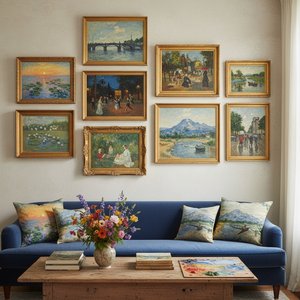
 Náhľad v interiéri
 Odoslať ako digitálnu kartu
 Zdieľať
 Podrobnosti o dielo
 Príručka

 Stiahnuť obraz
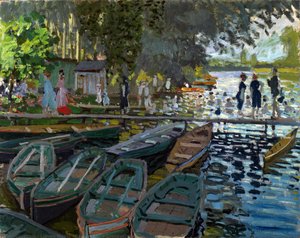
 Podobné položky
 RTG skúška
 Prehliadanie diapozoje
 Otázky a odpovede
 Štatistiky