

 Náhľad v interiéri
 Odoslať ako digitálnu kartu
 Zdieľať
 Podrobnosti o dielo
 Príručka

 Stiahnuť obraz
 Podobné položky
 RTG skúška
 Prehliadanie diapozoje
 Q&A
Q&A Štatistiky
Spring Maiden


 Zobraziť viac
Ručne maľovaná olejová reprodukcia
Ručne maľovaný olej na plátne vo vašej zvolenej veľkosti a v ráme, vyrobený na mieru našimi umelcami. ( Prepnúť na tlač Prepnúť na digitálny obraz)




P118B €10

P118H €10

P118W €10

P438Z €10

P508JH €12

P508YH €12

P805H €10

P805Z €10

P919BZ €10

P919G €10

P919XJ €10

P959ZH €10

P968JZ €12

W106C €8

W218G €10

W218JH €8

W218Y €10

W307PJ €10

W316G €10

W316PJ €8

W316Y €10

W398PJ €8

W4111J €10

W500HY €15

W500JH €15

W692G €12

W849H €8

W940BG €15

W953PJ €8




Vyberte si z našich preddefinovaných rozmerov, ktoré zodpovedajú pôvodným pomeroḿ diela.

Zadajte šírku a výšku, ktoré potrebujete, aby sa dielo hodilo k vášmu rámu alebo stene. Keďže ide o ručnú maľbu, pri rozmeroch s odlišným pomerom strán môže umelec namalovať o niečo viac okolo obrázka alebo ho mierne orezatú — výber patrí vám. Pred začatím maľovania vám pošleme digitálnu ukážku na schválenie. Obrázok zobrazený na tejto stránke nenahrádza reálny výsledok — ten zobrazuje iba digitálna ukážka.
Po odoslaní objednávky vám tím OriginalUniqueArt.com pošle e-mail s pokynmi a poskytne náhľad na návrh
Celosvetová doprava () za 3 až 4 týždne namiesto štandardných 5 týždňov. (28 október). Bez kompromisov v kvalite.

Bezplatná expresná doprava po celom svete

Vysokokvalitné lnianske plátno

Kompletné poistenie prepravy

Záruka vrátenia colného poplatku

Záruka presného farebného zhodnutia

100-dená politika vrátenia tovaru (iba pri vadách)

100% záruka vrátenia peňazí

Zľava pri väčšom množstve
 Možnosť skla je dostupná len pri rozmeroch pod 110 cm

Spring Maiden
Technika reprodukcie
Veľkosť reprodukcie
-


Celková cena
€ 264
Spring Maiden: A Portrait of Transient Beauty
Charles Webster Hawthorne’s “Spring Maiden,” painted in 1925, isn't merely a depiction of a young woman; it’s a carefully constructed meditation on the fleeting nature of youth and the poignant beauty found within moments of quiet contemplation. This oil-on-canvas work, currently residing at the High Museum of Art in Atlanta, exemplifies Hawthorne’s signature Luminist style – a deliberate rejection of dramatic lighting and bold brushstrokes in favor of subtle tonal gradations and an emphasis on capturing the ephemeral quality of light and atmosphere. The painting immediately draws the viewer in with its muted palette dominated by earthy browns, soft greens, and delicate creams, creating a sense of serene stillness that belies the emotional depth at its core.
Hawthorne’s technique is remarkably restrained, yet profoundly effective. He employs a layering approach, building up color slowly to achieve a velvety texture and an almost photographic realism. Notice how he renders the fabric of her dress – not with sharp outlines but with delicate washes of color that suggest both its weight and its fluidity. The loose brushwork in the background, particularly around the suggestion of trees and foliage, contributes to the painting’s overall sense of atmospheric depth, pulling the viewer into a dreamlike state. Hawthorne's training under William Merritt Chase is evident in his masterful use of light and shadow, creating an illusion of three-dimensionality that elevates the portrait beyond a simple likeness.
The Luminist Influence and New England Roots
To fully appreciate “Spring Maiden,” it’s crucial to understand Hawthorne's artistic lineage. He was deeply influenced by the Luminist movement, which originated in post-Civil War America and sought to capture the quiet beauty of everyday life – particularly landscapes bathed in soft light. This movement rejected the grand narratives and dramatic scenes favored by earlier generations of American painters, instead focusing on capturing the subtle nuances of nature and human experience. Hawthorne’s upbringing in Maine, steeped in the traditions of shipbuilding and ice farming—his father a captain—provided him with an intimate connection to the rugged coastline and its ever-changing light, themes that would permeate his work throughout his career.
Born in Lodi, Illinois, in 1872, Hawthorne’s early years were far removed from the coastal landscapes he would later immortalize. However, a return to Maine as a child profoundly shaped his artistic vision. This connection to the sea—its power, its beauty, and its inherent melancholy—became a recurring motif in his paintings, informing both subject matter and aesthetic sensibility. His work is often described as embodying the spirit of New England, capturing not just the physical landscape but also the emotional resonance of its history and culture.
Symbolism and the Portrait’s Essence
The young woman depicted in “Spring Maiden” possesses an enigmatic quality that invites interpretation. Her slightly downturned gaze suggests a pensive mood—a moment of introspection amidst the beauty of springtime. The white flower she holds, likely a lily or similar bloom, symbolizes purity, innocence, and new beginnings – fitting themes for a portrait celebrating youth and renewal. Hawthorne’s careful attention to detail extends beyond mere representation; he imbues the painting with a sense of quiet dignity and understated grace.
The composition itself is carefully balanced, drawing the eye to the woman's face while simultaneously creating a sense of spaciousness around her. The muted colors and soft lighting contribute to this feeling of tranquility, suggesting a moment suspended in time—a fleeting glimpse of beauty that will inevitably fade with the passage of seasons. It’s a portrait not just of a young woman, but of an entire mood, a captured essence of springtime itself.
A Legacy of Light and Observation
Charles Webster Hawthorne's “Spring Maiden” stands as a testament to his skill as a painter and his deep understanding of the Luminist aesthetic. His dedication to capturing light and atmosphere, combined with his masterful technique and evocative symbolism, has secured its place as a significant work in American art history. The painting’s enduring appeal lies not only in its technical brilliance but also in its ability to evoke a sense of quiet contemplation and appreciation for the beauty of the natural world – qualities that continue to resonate with viewers today. Reproductions of this piece offer a wonderful opportunity to bring Hawthorne's evocative style into any space, capturing the spirit of New England’s coastal landscapes and the poignant beauty of fleeting moments.
Otázky a odpovede
Aké sýte farby má dielo „Spring Maiden“?
Farby diela „Spring Maiden“ od Charles Webster Hawthorne vykazujú Subtle Color saturáciu s intenzitou Monochromatic.
Čo zobrazuje dielo „Spring Maiden“ od Charles Webster Hawthorne?
Témy predstavované v díle „Spring Maiden“ od Charles Webster Hawthorne zahŕňajú new england, coastline, landscape, figure, painting, hawthorne, 1925. Spolu zhrňujú predmet skladby.
Do ktorej fázy kariéry Charles Webster Hawthorne spadá dielo „Spring Maiden“, vzhľadom na jeho dátum vytvorenia?
Datovanie do roku 1925 situuje dielo „Spring Maiden“ do obdobia Mature Period v rámci umeleckého vývoja Charles Webster Hawthorne.
Biografia umelca
Charles Webster Hawthorne
Charles Webster Hawthorne, born January 8, 1872, in Lodi, Illinois, stands as a cornerstone of American art during the transformative period between the late nineteenth and early twentieth centuries—a time marked by burgeoning national identity and a fervent embrace of Impressionist ideals. His formative years unfolded inland amidst the rolling prairies of Illinois, yet it was the rugged coastline of Maine—to which his parents relocated shortly after his birth—that irrevocably imprinted upon his artistic vision. This profound connection to the sea, nurtured through childhood recollections of his father’s profession as a ship captain and ice farmer, became an enduring motif throughout his oeuvre, informing both subject matter and stylistic choices. Hawthorne's artistic journey was characterized by unwavering dedication to mastering technique, cultivating observation skills, and establishing a revolutionary approach to art education that would propel him to prominence and leave an indelible mark on the landscape of American painting. Initially pursuing formal training in New York City—balancing demanding employment responsibilities with evening classes at the Art Students League under George de Forest Brush and H. Siddons Mowbray—Hawthorne’s exposure to William Merritt Chase proved particularly influential. This mentorship, commencing with his enrollment as a student and extending into an assistant role at Shinnecock Hills School of Art, instilled in him a deep appreciation for plein air painting and the expressive potential inherent within brushwork. These formative experiences coalesced into Hawthorne's distinctive style—a bold blend of tonalism and Impressionism—characterized by robust paint handling and luminous tonal qualities that continue to captivate viewers today.The Cape Cod School and Pioneering Artistic Education
Recognizing a palpable need for a dedicated space where aspiring artists could immerse themselves in direct engagement with the natural world, Hawthorne founded the Cape Cod School of Art in Provincetown, Massachusetts, in 1899. This ambitious undertaking—fueled by his conviction that genuine artistic insight stemmed from observation and experimentation—quickly garnered acclaim as a beacon for those seeking an alternative to the rigid conventions of academic art institutions. Hawthorne’s pedagogical philosophy centered on fostering spontaneity and encouraging students to liberate their creativity through uninhibited exploration of color, form, and light. He famously urged them to “go out like a savage,” embracing a fresh perspective—one that prioritized immediacy and sensory experience over meticulous detail—a stance that resonated powerfully with his pupils and cemented Provincetown’s reputation as a hotbed of artistic innovation. Among Hawthorne's notable students were Milton Avery, Will Barnet, Peter Busa, Edwin Dickinson, Dorothy Lake Gregory, Blanche Lazzell, George McNeil, Ross Moffett, Margery Ryerson, Jack Tworkov and Agnes Weinrich—artists who would subsequently contribute significantly to the evolution of American painting. Hawthorne’s artistic output spanned a remarkable range of subjects—from portraits capturing psychological nuance to landscapes imbued with atmospheric grandeur—reflecting his unwavering commitment to portraying the beauty and complexity of the human condition alongside the majesty of the natural environment. His canvases are distinguished by their masterful use of tonal values, achieved through layering thin glazes of pigment that capture subtle shifts in light and color—a technique honed during his studies under Chase and further refined during his travels to Holland and Munich. He championed a method rooted in observation—specifically, applying paint directly onto the canvas outdoors—believing that this approach yielded results more truthful and evocative than studio renderings. Hawthorne’s influence extended far beyond his own artistic accomplishments; he served as an inspiring teacher and mentor who nurtured generations of artists—a legacy that continues to inspire creativity and innovation within the American art community. Hawthorne's enduring contribution to American painting lies not merely in his stylistic innovations but also in his unwavering advocacy for a humanist approach to art education—one that prioritizes direct engagement with nature, spontaneity of expression, and the cultivation of individual vision. His legacy persists as a testament to the transformative power of artistic exploration and the importance of embracing unconventional methods—a reminder that true beauty resides not in imitation but in authentic representation.
Charles Webster Hawthorne
1872 - 1930 , Spojené štáty americké
Základné informácie
- Artistic Movement Or Style: Impressionizmus, Luminizmus
- Artists Or Movements Influenced By This Artist: ['Norman Rockwell']
- Artists Who Influenced This Artist: ['William Merritt Chase']
- Date Of Birth: 8. január 1872
- Date Of Death: 29. november 1930
- Full Name: Charles Webster Hawthorne
- Nationality: Amerikanec
- Notable Artworks:
- His First Voyage
- The Red Dress
- Place Of Birth: Lodi, USA
Súvisiace články

Alfred Thompson Bricher: Luminism & the American Landscape Tradition
Explore the luminous landscapes of Alfred Thompson Bricher (1837-1908), a key figure in American Luminism and the Hudson River School. Discover his masterful maritime paintings & legacy.

Grahame Sydney: Evoking Otago's Soul Through Light & Landscape
Explore the captivating landscapes of Sir Grahame Sydney, a leading New Zealand artist renowned for his magic realism & evocative depictions of Otago's beauty. Discover key works and delve into his artistic legacy.
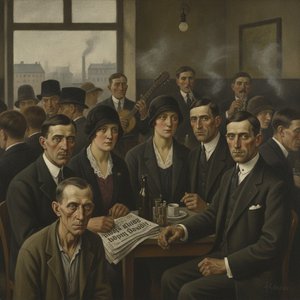
Neue Sachlichkeit: The Unflinching Realism and Social Critique of German New Objectivity
Explore the raw realism of Neue Sachlichkeit. Discover how German New Objectivity artists like Otto Dix and George Grosz captured the turbulent Weimar Republic through unflinching social critique and precise detail. A definitive guide for art historians and collectors.

Willard Leroy Metcalf: Capturing the Intimacy of American Rural Life
Explore the serene landscapes of Willard Leroy Metcalf, a key figure in American Impressionism. Discover his tranquil New England scenes & vibrant art reproductions at OriginalUniqueArt.

The Ashcan School: Capturing the Raw Spirit and Urban Realism of New York City Life
Explore the raw, evocative beauty of the Ashcan School. Discover how masters like Bellows and Glackens captured New York's urban soul through American Realism, and learn to bring this gritty, historical elegance into your modern art collection.
