
 Zobraziť v interiéri
 Odoslať
 Zdieľať
 Podrobnosti
 Príručka

 Stiahnuť
 Podobné položky
 RTG skúška
 Prehliadanie diapo\]
 Štatistiky
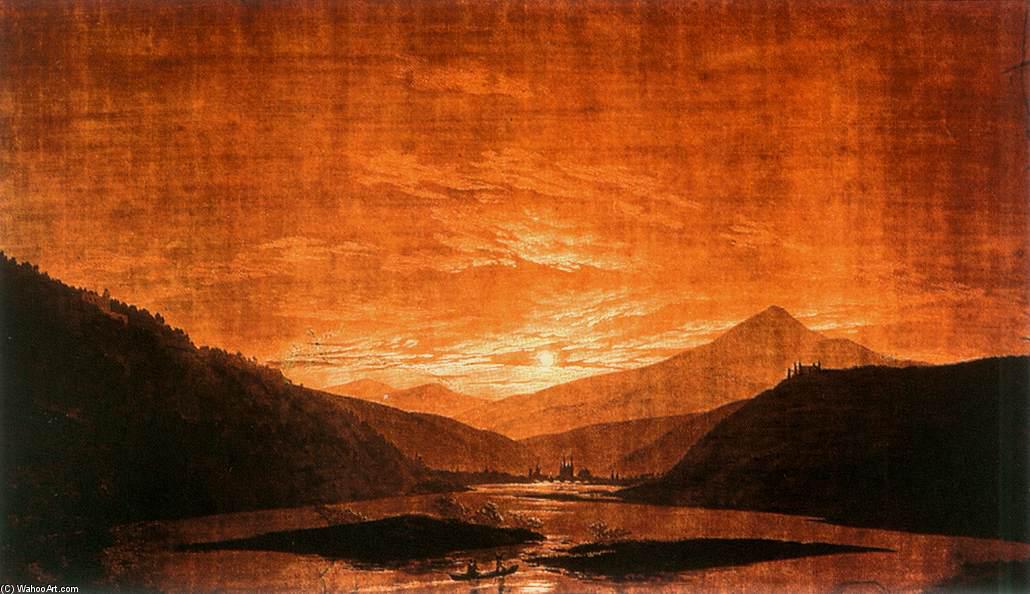
Mountainous River Landscape (Night Version)
 Acrylic On Canvas
- WallArt
- Romantic Landscape
 1830
1830 77.0 x 127.0 cm
 Staatliche Museen
 Prečítať si viac
Kúpte si digitálnu snímku vo vysokom rozlíšení s vylepšenými detailmi, ktorá je oveľa kvalitnejšia než online náhľad.
Každý súbor starostlivo pripravujú naši interní špecialisti pomocou pokročilých nástrojov a odborného manuálneho retušovania. Zabezpečujeme, aby každý obrázok disponoval výnimočnou čistotou, presnou farebnou vernosťou a jemnými detailmi.
Konečný súbor vám bude doručený e-mailom do 72 hodín, optimalizovaný pre okamžité použitie v profesionálnom, redakčnom aj tlačovom prostredí. Ponúkame rovnakú kvalitu, ktorej dôverujú špičkové dizajnérske štúdiá, vydavateľstvá a galérie.
Digitálny obraz
Stiahnite si vysokorozlíšený súbor na osobné zobrazovanie, tlačenie a kreatívne projekty. ( Prepnúť na tlač Objednať ručne maľovanú reprodukciu)
Súčasťou každej objednávky digitálneho obrazu
Profesionálne digitálne doručenie, garantované
Keď si vyberiete OriginalUniqueArt.com, nezískate len obyčajný obrázok – získate profesionálne upravené digitálne umenie, vytvorené s maximálnou precíznosťou a podložené zárukou vašej spokojnosti. Tu je všetko, čo je súčasťou vašej objednávky automaticky:

Rýchle doručenie e-mailom
Vaša vysokorozlíšená digitálna súprava obrázkov vám bude zaslaná e-mailom do 72 hodín od objednávky – pripravená na okamžité použitie.

Digitálny súbor s vylepšením AI
Vaše dielo je profesionálne optimalizované pomocou pokročilých nástrojov umelej inteligencie a manuálnej úpravy, čo zaručuje maximálnu mieru detailov, čistotu a presnosť farieb.

Bezplatné celoživotné opätovné doručenie
Súbor ste náhodou zmazali alebo ste ho stratili? Nebojte sa – kedykoľvek vám ho môžeme poslať znova, úplne bez poplatkov.

Bez poplatkov za dovoz – navždy
Užite si svoje umelodelo okamžite bez colných poplatkov, daní alebo nákladov na dopravu – digitálne stiahnutia sú vždy oslobodené od dane.

Garantovaná presnosť farieb
Pomocou profesionálnych nástrojov a farebného manažmentu zabezpečujeme, aby vaša digitálna fotografia čo najpresnejšie odrážala pôvodné farby.

Záruka spokojnosti 100 dní
Ak nebudete spokojní so svojím digitálnym obrázkom, upravíme ho alebo vám v priebehu 100 dní vrátime 100% – bez zbytočných otázok.

100% Záruka vrátenia peňazí
Nie ste spokojní? Získajte plnú náhradu platby do 100 dní od prijatia digitálneho súboru – bez zbytočných otázok.

Zľavy pri veľkom odbere
Pri kúpe 3 obrázkov získate zľavu 10% - Pri kúpe 5 obrázkov získate zľavu 15% - Pri kúpe 10+ obrázkov získate zľavu 20%. Ideálne pre kreatívne projekty, galérie a agentúry.
A Meditation on Sublime Beauty: Exploring Caspar David Friedrich’s Mountainous River Landscape (Night Version)
Caspar David Friedrich's *Mountainous River Landscape (Night Version)* transcends mere depiction; it embodies a profound philosophical statement about humanity’s relationship with the natural world and the sublime. Painted in 1830, this monumental canvas—measuring 77 x 127 cm—holds its place within the Staatliche Museen in Kassel as a cornerstone of Romantic landscape painting, cementing Friedrich's legacy as one of Germany’s most influential artists.Composition and Atmosphere: Capturing Twilight’s Embrace
The artwork immediately draws the viewer into a scene bathed in the ethereal glow of twilight. Friedrich meticulously crafted a panorama dominated by towering mountains silhouetted against a bruised orange sky—the fading embers of sunset casting long shadows across the tranquil river below. Two boats, positioned strategically on the water's surface, punctuate the expanse, offering glimpses of human presence amidst the grandeur of nature. Scattered figures – indistinct yet palpable – suggest contemplation and appreciation for the sublime vista. This deliberate arrangement isn’t simply aesthetically pleasing; it’s designed to evoke a feeling of awe and solitude—a core characteristic of Romantic artistic ideals.Technique: Mastering Light and Shadow - Friedrich's Signature Style
Friedrich’s mastery lies in his masterful manipulation of light and shadow, techniques honed through extensive study and experimentation. He employed a sophisticated chiaroscuro method – dramatic contrasts between illuminated areas and deep darkness – to heighten the sense of depth and volume. The sfumato technique—characterized by subtle gradations of tone—further softens edges and creates an atmospheric haze, blurring distinctions between mountains and sky, fostering an illusion of infinite space. Furthermore, Friedrich skillfully utilized tenebrism, a darker form of chiaroscuro where intense darkness dominates, emphasizing the spiritual significance of the scene. These techniques weren’t merely technical exercises; they served as conduits for conveying Friedrich's deeply held belief in nature’s capacity to inspire contemplation and elevate the human spirit.Symbolism: Echoes of Spirituality and Transcendence
Beyond its visual splendor, *Mountainous River Landscape (Night Version)* resonates with profound symbolic meaning. The mountains represent permanence and stability—a counterpoint to the fleeting nature of earthly existence. The river symbolizes life’s journey, flowing onward towards an unknown destination, mirroring humanity's quest for spiritual understanding. The twilight sky embodies both beauty and melancholy – a reminder of mortality but also hinting at divine grace. Friedrich deliberately positioned the boats as symbols of human endeavor amidst this overwhelming landscape, suggesting that even in confronting the sublime, individuals retain a connection to something greater than themselves.Legacy and Emotional Impact: An Enduring Vision
Friedrich’s *Mountainous River Landscape (Night Version)* continues to inspire artists and viewers alike. It exemplifies the Romantic movement's preoccupation with emotion and imagination—a reaction against Enlightenment rationalism—and solidified Friedrich’s position as a prophet of the sublime, a concept championed by Edmund Burke that posits beauty can simultaneously provoke terror and awe. The painting’s quiet grandeur invites contemplation on themes of spirituality, solitude, and the interconnectedness between humanity and nature. Reproductions offer an opportunity to experience this timeless masterpiece, transporting viewers into Friedrich's visionary world and fostering a deeper appreciation for the profound power of landscape art.Otázky a odpovede
Aké sú rozmery originálu „Mountainous River Landscape (Night Version)"?
Zaznamenané rozmery diela „Mountainous River Landscape (Night Version)“ od Caspar David Friedrich sú 77 x 127 cm. Reprodukcie je možné objednať v iných rozmeroch pri zachovaní rovnakých pomerov.
Aká veľkosť je pre „Mountainous River Landscape (Night Version)“ odporúčaná do Living Room?
Pre Living Room je odporúčaná veľkosť vytlačenej verzie diela „Mountainous River Landscape (Night Version)“ od Caspar David Friedrich Large.
Existuje sprievodca k dielu „Mountainous River Landscape (Night Version)“ od Caspar David Friedrich?
Pre dielo „Mountainous River Landscape (Night Version)“ od Caspar David Friedrich je k dispozícii stránka Sprievodca: tlačiteľný informačný list o umedení, navrhnutý pre študentov a využitie v triedach.
Biografia umelca
A Solitary Vision: The Life and Art of Caspar David Friedrich
Born in the Baltic port city of Greifswald in 1774, Caspar David Friedrich’s life was steeped in a melancholic atmosphere that would profoundly shape his artistic vision. His early years were marked by loss – the deaths of his mother and siblings cast a long shadow, fostering a sensitivity to mortality and transience that became central themes in his work. Initially educated by his older brother Christian in drawing, Friedrich’s formal training began at the University of Leipzig, where he pursued both art and theology, though neither degree was completed. This dual interest – a fascination with the visual world alongside a deep spiritual questioning – would prove crucial to his development as an artist. Further studies in Copenhagen honed his technical skills, exposing him to landscape painting traditions that would serve as a foundation for his unique style, yet it was not imitation he sought but rather expression—a means of conveying inner emotional states through the language of nature.The Birth of Romantic Landscape
Friedrich’s artistic journey wasn't merely about depicting scenery; it was about imbuing landscapes with profound symbolic meaning. He moved away from the meticulous detail favored by earlier artists, embracing a more personal and expressive approach. His paintings are characterized by an emphasis on the sublime – evoking feelings of awe, terror, and spiritual connection in the face of nature’s grandeur. The use of *Rückenfiguren*, figures seen from behind, became a signature element, inviting viewers to step into the scene and share in the contemplative experience. Natural elements like ancient trees, towering mountains, swirling fog, and crumbling ruins weren't simply picturesque details; they were potent symbols representing life’s cycles, spiritual longing, and the weight of history. His palette, often muted with blues, grays, and browns, further enhanced the mood of introspection and solemnity that pervades his work. He pioneered a way to depict landscapes not as mere views but as reflections of the human soul—a revolutionary concept for its time.Iconic Works and Enduring Themes
Several paintings stand out as defining examples of Friedrich’s artistic achievement. “Abbey in the Oakwood” (1809-1810), a haunting image of a ruined churchyard enveloped by bare trees, speaks powerfully to themes of mortality and spiritual decay. This artwork exemplifies the Romantic preoccupation with ruins and decay as symbols of time's passage and the inevitable decline of earthly existence. “Wanderer Above the Sea of Fog” (c. 1818), perhaps his most famous work, encapsulates the Romantic ideal of the individual confronting the vastness and mystery of existence. The figure, silhouetted against a swirling sea of mist, embodies both human aspiration and insignificance—a poignant reminder of our vulnerability in the face of overwhelming natural forces. “Chalk Cliffs on Rügen” (1818) demonstrates his mastery of atmospheric effects and subtly conveys a sense of national identity—a growing concern in the fragmented political landscape of early 19th-century Germany. The dramatic interplay of light and shadow contributes to the painting's mood of contemplation and grandeur. “The Sea of Ice” (1824), a chilling depiction of an Arctic wasteland, represents nature’s immense power and indifference to human fate—a powerful visual statement about the insignificance of humankind compared to the forces of geological time.Influences and Artistic Style
Friedrich's artistic style was profoundly influenced by Dutch Golden Age landscape painters like Jacob van Ruisdael and Rembrandt, whose masterful use of chiaroscuro – dramatic contrasts between light and dark – established a precedent for expressive painting. He also drew inspiration from the philosophical writings of Immanuel Kant, which explored the limits of human perception and championed subjective experience—a cornerstone of Romantic thought. Friedrich’s technique involved meticulous observation of nature combined with an intuitive understanding of how to convey emotion through color and composition. His distinctive *Rückenfiguren* motif – figures viewed from behind – served as a deliberate device for inviting viewers into the scene and encouraging them to contemplate the spiritual significance of their surroundings.Legacy and Rediscovery
Friedrich’s art captured the very spirit of the Romantic era—a period defined by a rejection of Enlightenment rationalism in favor of emotion, imagination, and individualism. His landscapes served as powerful symbols of German national identity during a time of political fragmentation, fostering a sense of shared cultural heritage. Though he died in Dresden in 1840, his legacy extends far beyond the confines of 19th-century Germany. He didn’t simply paint what he saw; he painted what he *felt*, and it is this emotional honesty that continues to captivate and inspire. His work stands as a testament to the enduring power of art to explore the deepest questions of human existence, reminding us of our place within the vastness of nature and the mysteries of the universe. He remains a pivotal figure whose influence resonates throughout subsequent artistic movements—particularly Symbolism and Surrealism—demonstrating his lasting contribution to the history of Western art.
Caspar David Friedrich
1774 - 1840 , Nemecko
Rýchle fakty
- Artistic Movement Or Style: Romantizmus
- Artists Or Movements Influenced By This Artist:
- Symbolisti
- Surrealisti
- Artists Who Influenced This Artist:
- Holandské majstrovské diel
- J.C. Dahl
- Date Of Birth: 5. september 1774
- Date Of Death: 7. máj 1840
- Full Name: Caspar David Friedrich
- Nationality: Nemecký
- Notable Artworks:
- Kostolík v Dubove
- Turista nad morskou mlžou
- Slnečné útesy na Rúžňanskej
- Ľadové more
- Place Of Birth: Greifswald, Nemecko