
 Náhľad v interiéri
 Odoslať ako digitálnu kartu
 Zdieľať
 Podrobnosti o dielo
 Príručka

 Stiahnuť obraz
 Podobné položky
 RTG skúška
 Prehliadanie diapozoje
 Otázky a odpovede
 Štatistiky
Child with Mother


 Zobraziť viac
Umelecké dielo zobrazené na tejto stránke je chránené autorským zákonom, čo znamená, že nemôžeme legálne vytvárať ani predávať jeho identickú reprodukciu. Táto ochrana je vymáhaná na základe medzinárodných dohôd, ako napríklad Bernská konvencia a národnými zákonmi, vrátane tých, ktoré sú stanovené v Autorské právo USA – Title 17. Všetky práva vyhradené.
Táto metóda plne dodržiava autorské práva, pretože nezahŕňa kopírovanie ani duplikovanie chráneného diela. Ide skôr o kreatívnu reinterpretáciu – nový obraz, ktorý je ovplybnený originálom, no nie je s ním identický.
Giclée / Umenotlač
Giclée tlač alebo plátno múzeálnej kvality s rýchlou výrobou a rôznymi možnosťami povrchovej úpravy. ( Kúpiť ručne maľovaný obraz Prepnúť na digitálny obraz)




P118B €10

P118H €10

P118W €10

P438Z €10

P508JH €12

P508YH €12

P805H €10

P805Z €10

P919BZ €10

P919G €10

P919XJ €10

P959ZH €10

P968JZ €12

W106C €8

W218G €10

W218JH €8

W218Y €10

W307PJ €10

W316G €10

W316PJ €8

W316Y €10

W398PJ €8

W4111J €10

W500HY €15

W500JH €15

W692G €12

W849H €8

W940BG €15

W953PJ €8




Vyberte si z našich preddefinovaných rozmerov, ktoré zodpovedajú pôvodným pomeroḿ diela.

Zadajte šírku a výšku, ktoré potrebujete, aby sa reprodukcia hodila k vášmu rámu alebo stene. Print možno len orezávať, nikdy však nemennú veľkosť zvětšiť oproti pôvodnému obrázku, preto pri inom formáte stráca časť obrazu. Pred samotným vytlačiacím procesom vám pošleme digitálny náhľad na schválenie. Obrázok zobrazený na tejto stránke nezobrazuje reálny rez — len digitálny náhľad ukazuje presný výsledok.
Celosvetová doprava () do 2 týždňov namiesto štandardných 4 až 5 týždňov. (5 november)

Bezplatná expresná doprava po celom svete

Vysokokvalitné lnianske plátno

Kompletné poistenie prepravy

Záruka vrátenia colného poplatku

Záruka presného farebného zhodnutia

100-dená politika vrátenia tovaru (iba pri vadách)

100% záruka vrátenia peňazí

Zľava pri väčšom množstve
 Možnosť skla je dostupná len pri rozmeroch pod 110 cm

Child with Mother
Giclée / Umenotlač
Veľkosť reprodukcie
-


Celková cena
€ 72
A Silent Dialogue: Exploring the Essence of Childhood and Connection
Barbara Hepworth’s “Child with Mother,” created in 1972, isn't merely a sculpture; it’s an invitation to contemplate the profound intimacy of familial bonds. This remarkable piece, rendered in pristine white marble, transcends the limitations of representational art and plunges directly into the realm of emotion and suggestion. Hepworth, a pivotal figure in the development of modern sculpture, masterfully employs abstraction to evoke a deeply felt sense of connection – a quiet dialogue between mother and child that resonates long after initial observation.
The work’s genesis lies within Hepworth's signature style: biomorphic abstraction. Rejecting rigid geometric forms, she drew inspiration from the natural world, particularly the fluidity of human anatomy and the organic curves found in plants and animals. “Child with Mother” embodies this perfectly – two distinct yet inextricably linked shapes emerge from the stone. The upper form, a gently arching curve reminiscent of an embracing figure or perhaps a sheltering wing, seems to cradle the lower, bowl-like element. This interplay creates a dynamic tension, suggesting both protection and openness, nurture and independence.
The Language of Stone: Technique and Material
Hepworth’s mastery of marble is undeniable. The sculpture's surface is remarkably smooth, achieved through a meticulous process of carving – a subtractive technique involving chisels, rasps, and polishing tools. Light dances across the polished planes, revealing subtle variations in tone that add depth and luminosity to the piece. These shifts in light create an almost ethereal quality, as if the sculpture itself is breathing with a quiet life.
- Subtractive Carving: Hepworth skillfully removed material from the block of marble, revealing the form within.
- Polished Surface: The meticulous polishing process created a luminous surface that reflects light beautifully.
- Material Choice: White marble was chosen for its purity and ability to enhance the sculpture’s inherent elegance.
Symbolism and Emotional Resonance
The title, “Child with Mother,” immediately establishes a powerful symbolic framework. While abstract in form, the piece speaks volumes about the fundamental human need for connection, care, and belonging. The central aperture within the lower form can be interpreted as an invitation – a portal to vulnerability, acceptance, or perhaps even a symbol of potential. It’s a space that suggests both openness and protection, mirroring the complex dynamics of motherhood.
Hepworth's work often explores themes of human emotion through abstraction. “Child with Mother” isn’t about depicting a specific child or mother; it’s about capturing the essence of their relationship – the unspoken understanding, the unconditional love, and the enduring bond that connects generations. The sculpture invites viewers to project their own experiences and memories onto its surface, creating a deeply personal connection.
A Legacy of Modernism: Context and Influence
Barbara Hepworth’s work emerged during a period of profound artistic experimentation and innovation. Her embrace of abstraction aligned with the broader modernist movement, which sought to break free from traditional representational art forms. Hepworth's influence extends far beyond her own generation; she paved the way for subsequent generations of sculptors who explored new ways of representing human form and emotion. “Child with Mother” stands as a testament to her enduring legacy – a timeless masterpiece that continues to captivate and inspire.
Otázky a odpovede
Kto je autorom a aké je vznikové obdobie diela „Child with Mother"?
Barbara Hepworthová vytvoril/a „Child with Mother“ v roku 1972.
Pod akými inými menami alebo pseudonymami je známy/á Barbara Hepworthová?
Barbara Hepworthová sa objavuje aj pod inými menami: Dame Jocelyn Barbara Hepworthová.
Využíva „Child with Mother“ od Barbara Hepworthová silné kontrasty alebo jemné harmónie?
Farebná kompozícia diela „Child with Mother“ od Barbara Hepworthová spája Bold kontrast s Strong Color Unity harmóniou.
Biografia umelca
Barbara Hepworth: Pioneer of Organic Abstraction
Barbara Hepworth (1903–1975) stands as one of the most influential figures in British sculpture of the 20th century, a sculptor whose uncompromising vision reshaped artistic conventions and cemented her place among the vanguard of modernist art. Born Jocelyn Barbara Hepworth in Wakefield, Yorkshire, she possessed an innate fascination for form and texture from childhood—a passion that would propel her to become a celebrated artist who defied traditional representational approaches.- Early Life and Education: Hepworth’s formative years were marked by a profound connection to the Yorkshire landscape. Her father, Herbert Hepworth, was a civil engineer for the West Riding County Council, fostering in her a keen appreciation for geometric precision alongside an early sensitivity to natural forms. She attended Wakefield Girls' High School where she excelled academically and musically—receiving music prizes at the age of twelve—and subsequently secured a prestigious scholarship to Leeds School of Art in 1920. It was there that she encountered Henry Moore, forging a lifelong friendship characterized by mutual respect and artistic rivalry.
- Royal College of Art Years: In 1921 Hepworth enrolled at the Royal College of Art in London, where she honed her sculptural skills under the tutelage of Lucie Rie and Edgar Chadwick. Her studies focused on exploring abstraction, influenced by movements like Surrealism and Cubism—particularly the pioneering work of Picasso and Braque—and establishing herself as a key contributor to the burgeoning British avant-garde.
- Marriage and Early Career: Hepworth married John Skeaping in 1925, forming a collaborative partnership that would shape her artistic trajectory. Together they embraced “direct carving”—a technique prioritizing tactile engagement with raw materials—and championed the exploration of geometric forms devoid of illusionistic representation. Their shared studio at Hampstead became a crucible for experimentation and innovation, fostering connections with fellow artists like Ben Nicholson and William Moore.
- Collaboration with Ben Nicholson: Hepworth’s relationship with Ben Nicholson blossomed in 1931, resulting in a marriage that lasted until 1933. Their partnership was marked by intellectual exchange and artistic synergy—particularly during the Second World War when they relocated to St Ives, Cornwall—where Hepworth continued to develop her distinctive sculptural style.
- Mature Style and Legacy: Hepworth’s mature oeuvre is defined by a masterful manipulation of form and space, reflecting her deep engagement with the natural world. She favored materials like bronze, alabaster, slate and stone—often employing techniques that emphasized textural contrasts and subtle shifts in perspective. Her sculptures—such as *Oval Form*, *Two Forms* and *Totem*—are celebrated for their elegance, simplicity and profound emotional resonance. Hepworth’s work profoundly impacted subsequent generations of sculptors and cemented her reputation as a visionary artist who championed the expressive potential of abstraction.
Notable Works and Exhibitions
Hepworth's artistic journey culminated in numerous prestigious commissions and exhibitions that solidified her position as one of Britain’s foremost sculptors. Her monumental sculpture *Winged Figure*, commissioned by John Lewis for their Oxford Street flagship store, stands as a testament to her ambition and technical prowess—a striking example of organic abstraction achieved on an unprecedented scale. Furthermore, Hepworth's sculptures are prominently featured in collections worldwide, including the Tate Modern in London and the Guggenheim Museum Bilbao. Her enduring influence continues to inspire artists today.Influence and Artistic Philosophy
Hepworth’s artistic philosophy centered around a belief that sculpture should communicate emotion and experience—rather than merely replicating visual reality. She drew inspiration from both Eastern and Western art traditions, particularly Japanese Zen Buddhism—which emphasized contemplation and the pursuit of inner harmony—and the pioneering work of Piet Mondrian—who championed geometric abstraction as a pathway to spiritual enlightenment.The Hepworth Wakefield
Today, The Hepworth Wakefield houses an impressive collection of Hepworth’s sculptures—a vibrant celebration of her artistic legacy. Visitors can immerse themselves in the artist's groundbreaking explorations of form and texture, gaining insight into the creative process that shaped her iconic masterpieces.
Barbara Hepworthová
1903 - 1975 , Spojené kráľovskosti
Základné informácie
- Artistic Movement Or Style: Modernizmus
- Artists Or Movements Influenced By This Artist: ['Unit One']
- Artists Who Influenced This Artist: ['Henry Moore']
- Date Of Birth: 10 január 1903
- Full Name: Jocelyn Barbara Hepworth
- Nationality: Anglická
- Notable Artworks:
- Oval Form
- Two Forms
- Totem
- Place Of Birth: Wakefield, Veľké Uhrádza
Súvisiace články

Top 10 Bronzových Sôch, ktoré Zmenili Umenie Navždy | OriginalUniqueArt
Objavte top 10 legendárnych bronzových sôch, ktoré zmenili umenie! Michelangelo, Rodin a ďalší majstri. História, techniky a nadčasová krása pre váš interiér. Reprodukcie múzejnej kvality na OriginalUniqueArt.com

The Enduring Form: Exploring Themes & Techniques in Sculpture Across Historical Periods
Explore the rich history of sculpture from ancient masterpieces to contemporary innovations. Discover key techniques, influential artists & investment potential for discerning art collectors.
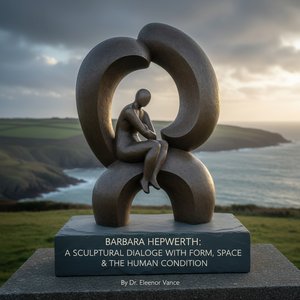
Barbara Hepworth: A Sculptural Dialogue with Form, Space & the Human Condition
Explore the profound world of Barbara Hepworth's sculpture. Discover her artistic evolution, iconic forms, and lasting influence on modern art. A guide for collectors & enthusiasts.

The Enduring Allure of Marble in Art History: From Classical Sculpture to Modern Abstraction
Explore the captivating history of marble sculpture from ancient Greece to modern art. Discover renowned artists like Canova & Michelangelo, carving techniques, and investment insights at OriginalUniqueArt.

The Enduring Form: Sculpture Across History, Technique & Emotional Resonance
Explore the rich history of sculpture with OriginalUniqueArt. Discover key techniques, influential artists & investment potential for discerning collectors. Expert insights into valuing and collecting timeless masterpieces.


