- Domov

- Digitálny obraz
- Balcomb Greene
- Sunlight

 Náhľad
 Odoslať
 Zdieľať
 Podrobnosti o dielo

 Stiahnuť
 Podobné diela
 RTG skúška
 Prezentácia
Sunlight
 1962
1962 122.0 x 97.0 cm
 Zobraziť viac
Kúpte si digitálnu snímku vo vysokom rozlíšení s vylepšenými detailmi, ktorá je oveľa kvalitnejšia než online náhľad.
Každý súbor starostlivo pripravujú naši interní špecialisti pomocou pokročilých nástrojov a odborného manuálneho retušovania. Zabezpečujeme, aby každý obrázok disponoval výnimočnou čistotou, presnou farebnou vernosťou a jemnými detailmi.
Konečný súbor vám bude doručený e-mailom do 72 hodín, optimalizovaný pre okamžité použitie v profesionálnom, redakčnom aj tlačovom prostredí. Ide o rovnakú kvalitu, ktorej dôverajú špičkové dizajnérske štúdiá, vydavateľstvá a galérie.
Digitálny obraz
Stiahnite si vysokorozlíšený súbor na osobné zobrazovanie, tlačenie a kreatívne projekty. ( Prejsť na tlač Prejsť na ručne maľovanú reprodukciu)
Súčasťou každej objednávky digitálneho obrazu
Expetórne digitálne doručenie, garantované
Keď si vyberiete OriginalUniqueArt.com, nedostávate len obrázok – získate profesionálne upravené digitálne umenie, vytvorené s precíznosťou a so zárukou vašej maximálnej spokojnosti. Tu je všetko, čo je súčasťou vašej objednávky automaticky:

Rýchle doručenie e-mailom
Vaša vysokorozlíšená digitálna súprava obrázkov vám bude zaslaná e-mailom do 72 hodín od objednávky – pripravená na okamžité použitie.

Digitálny súbor s vylepšením AI
Vaše dielo je profesionálne optimalizované pomocou pokročilých nástrojov umelej inteligencie a manuálnej editácie, čo zaručuje maximálnu úroveň detailov, čistotu a presnosť farieb.

Bezplatné celoživotné opätovné doručenie
Náhodou ste zmazali alebo ste stratili svoj súbor? Nebavžte sa – pošleme vám ho kedykoľvek znova, úplne bez poplatkov.

Bez poplatkov za dovoz – navždy
Užite si svoje umelodelo okamžite bez colných poplatkov, daní alebo nákladov na dopravu – digitálne stiahnutia sú vždy oslobodené od dane.

Garantovaná presnosť farieb
Pomocou profesionálnych nástrojov a farebného manažmentu zabezpečujeme, aby vaša digitálna fotografia čo najpresnejšie odrážala pôvodné farby.

60-dňová záruka spokojnosti
Ak nebudete spokojní so svojou digitálnou fotografiou, upravíme ju alebo vám vrátime 100% v priebehu 60 dní – bez zbytočných otázok.

100% Záruka vrátenia peňazí
Nie ste spokojní? Získajte plnú náhradu peňazí do 60 dní od prijatia vášho digitálneho súboru – bez zbytočných otázok.

Zľavy pri veľkom odbere
Kúpte si 3 obrazy, ušetrite 10% - Kúpte si 5, ušetrite 15% - Kúpte si 10+, ušetrite 20%. Ideálne pre kreatívne projekty, galérie a agentúry.
Životopis umelca
A Life Dedicated to the Evolving Language of Abstraction
Balcomb Greene, born John Wesley Greene in 1904 in Millville, New York, embarked on a remarkable artistic journey that mirrored the seismic shifts occurring within the American art world throughout the 20th century. Initially steered toward a religious path by his father, a Methodist minister, Greene’s intellectual curiosity led him to Syracuse University where he immersed himself in philosophy and psychology. This early exploration of the human condition, of thought and perception, would subtly inform his later artistic endeavors, even as he moved decisively away from representational forms. A pivotal moment arrived with his marriage to fellow artist Gertrude Glass Greene in 1926, a partnership that proved not only personally fulfilling but also creatively catalytic. Together, they ventured to Paris in 1931, a city then pulsating with avant-garde energy, and it was there, amidst the ferment of modernism, that Greene truly discovered his calling as a painter. The influence of pioneers like Juan Gris, Piet Mondrian, Pablo Picasso, and Henri Matisse became apparent, yet Greene wasn’t content to merely emulate; he sought to forge his own distinct visual vocabulary.From Geometric Precision to Expressive Figuration
Greene's early work was characterized by a rigorous commitment to non-objective abstraction – geometric planes interlocking and overlapping in carefully considered compositions. These weren’t simply aesthetic exercises, however; they were explorations of spatial relationships, of color as an independent force, and of the fundamental building blocks of visual experience. He became a central figure in the burgeoning American abstract art movement, co-founding and serving as the first chairman of *American Abstract Artists* (AAA) in 1936. This organization was crucial in advocating for the acceptance of abstraction at a time when it faced considerable resistance from both critics and the public. Simultaneously, Greene engaged with socially conscious art through his work with the Works Progress Administration (WPA), creating significant murals for the Williamsburg Houses and the 1939 New York World’s Fair – early examples of abstract art integrated into public spaces. However, the 1940s witnessed a profound shift in Greene's artistic approach. While remaining deeply committed to formal concerns, he began to reintroduce the human figure into his compositions. This wasn’t a rejection of abstraction but rather an expansion of its possibilities. He explored themes of light and shadow with increasing intensity, imbuing his figures with a sense of psychological depth and emotional resonance. His work became more expressive, less concerned with pure geometry and more focused on conveying the “intuitive spirit” of man.Recognition and Enduring Legacy
Throughout his career, Balcomb Greene exhibited extensively, showcasing his evolving style at prestigious galleries such as Bertha Schaefer Gallery in New York, Feingarten Gallery in Los Angeles, and Saidenberg Gallery in New York. A significant milestone was the retrospective exhibition held at the Whitney Museum of American Art in 1961, a testament to the breadth and depth of his artistic achievement. In 1972, he was elected as an Associate member of the National Academy of Design, further solidifying his standing within the American art establishment. Beyond these accolades, Greene’s lasting impact lies in his role as a tireless advocate for abstract art and his willingness to challenge conventional boundaries. He bridged the gap between pure abstraction and expressive figuration, demonstrating that these seemingly disparate approaches could coexist and enrich one another. His murals remain important examples of early abstract public art, while his paintings continue to captivate viewers with their subtle complexities and emotional power.A Voice for Modernism
Balcomb Greene’s historical significance extends beyond his individual artistic contributions. He was a crucial voice in promoting modernism during a period when it was often misunderstood or dismissed. Through his involvement with the AAA, his writings, and his teaching – he held positions at Carnegie Institute of Technology and Black Mountain College – he helped to cultivate a more receptive audience for abstract art. His commitment to an independent artistic vision, often diverging from prevailing trends, established him as a unique and influential figure in American modernist art. He wasn’t simply following a prescribed path; he was actively shaping the discourse around abstraction, pushing its boundaries, and exploring its potential to express profound human experiences. His work serves as a reminder that true artistic innovation requires both technical mastery and an unwavering dedication to one's own creative impulses.Key Characteristics of His Work
- Early Abstraction: Geometric forms, interlocking planes, non-representational compositions.
- Shift to Figuration: Incorporation of the human figure in the 1940s, exploring light and shadow.
- Influences: Cubism, Neo-Plasticism, Surrealism, but maintaining a distinct individual style.
- WPA Murals: Significant examples of early abstract public art at Williamsburg Houses and the 1939 World’s Fair.
- Advocacy for Abstraction: Founding member and first chairman of American Abstract Artists (AAA).
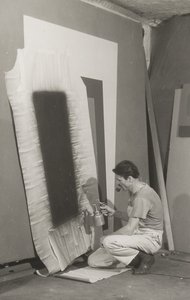
Balcomb Greene
1904 - 1990 , United States of America
Základné informácie
- Artistic Movement Or Style: Abstract Expressionism
- Artists Or Movements Influenced By This Artist: American Abstract Artists
- Artists Who Influenced This Artist:
- Juan Gris
- Piet Mondrian
- Pablo Picasso
- Henri Matisse
- Date Of Birth: May 22, 1904
- Date Of Death: Nov 12, 1990
- Full Name: Balcomb Greene
- Nationality: American
- Notable Artworks:
- Untitled (39 03)
- Untitled (34 8)
- Way Down Blue
- Place Of Birth: Millville, USA

