Prepnúť na tlač
 Zobraziť viac







































 V prípade umeleckých diel alebo reprodukcií, ktorých ktorákoľvek strana je väčšia ako 105 cm (cca 41 palcov), sa rám dodáva v rozloženom stave ako sada. Táto metóda zabezpečuje bezpečnú доставu a chráni pred poškodením počas prepravy.


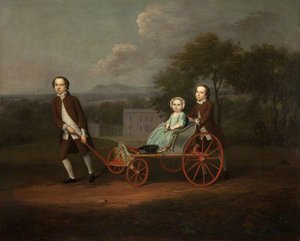
Thomas Hunt III (1721–1788): A Portrait of Dignified Reflection
Arthur William Devis’s “Thomas Hunt III” stands as a quintessential example of the conversation piece—a genre that flourished in Georgian England and captured the spirit of its age. Executed around 1743, this oil painting transcends mere likeness; it embodies an idealized vision of gentlemanly virtue and intellectual pursuits, reflecting the values championed by the Enlightenment.
The subject himself is presented with remarkable composure—Thomas Hunt III, a prominent barrister and landowner, occupies center stage within a richly appointed interior. Devis skillfully employs linear perspective to establish depth, guiding the viewer’s gaze across the room towards a distant windowpane. The muted palette of browns, blacks, and whites contributes to an atmosphere of solemn dignity, mirroring the seriousness of Hunt’s expression.
- Composition: Devis’s masterful arrangement emphasizes Hunt's figure against a backdrop of wooden paneling and windows, creating a sense of contained grandeur.
- Technique: The artist demonstrates meticulous attention to detail through visible brushstrokes—a hallmark of traditional oil painting—allowing texture to convey the materiality of fabric and wood surfaces.
- Lighting: Light emanates from the left side of the canvas, casting subtle shadows that accentuate Hunt’s form and imbue the scene with warmth and dimension.
- Style: Rooted in classical portraiture, “Thomas Hunt III” adheres to conventions established by artists like Rembrandt and Rubens, prioritizing realism and conveying an inner psychological state.
Beyond its technical prowess, the painting resonates with symbolic significance. Hunt’s posture—seated at a desk with a book in his left hand—represents erudition and moral responsibility – ideals central to Georgian society. The inclusion of classical motifs—such as the urn—references humanist philosophy and elevates Hunt's status within the intellectual landscape.
“Thomas Hunt III” continues to captivate viewers today not only for its aesthetic beauty but also for its ability to transport us back to a pivotal moment in British history. It serves as a testament to Devis’s artistic vision and his enduring legacy as one of England's most celebrated portraitists.
Otázky a odpovede
Aká je odporúčaná veľkosť a orientácia tlače pre dielo "Thomas Hunt III (1721–1788)"?
Odporúčaná veľkosť pre tlač diela „Thomas Hunt III (1721–1788)“ od Arthur Devis je Large v orientácii Portrait.
V akom rozмере sa odporúča tlačiť dielo „Thomas Hunt III (1721–1788)“?
Pre dielo „Thomas Hunt III (1721–1788)“ sa odporúča veľkosť tlače Large. K dispozícii sú aj інші veľkosti v rovnakých proporciách.
Môžem si „Thomas Hunt III (1721–1788)“ od Arthur Devis pozrieť pod iným osvetlením?
Dielo „Thomas Hunt III (1721–1788)“ je možné skúmať vrstvu po vrstve na jeho stránke RTG skenovanie, ktorá funguje ako interaktívny prehliadač inšpirovaný konzervačným svetelným stolom a ponúka jedenaásť optických náhľadov na obraz.
 Náhľad v interiéri
 Odoslať ako digitálnu kartu
 Zdieľať
 Podrobnosti o dielo
 Príručka

 Stiahnuť obraz
 Podobné položky
 RTG skúška
 Prehliadanie diapozoje
 Otázky a odpovede
 Štatistiky