Mannerist · 1600
Skeleton (Andreas Vesalius, 1600)
Andreas Vesalius (1514–1564) vytvoril Skeleton. Pochádza z roku 1600. Patrí k umeleckému smeru Mannerist. Je vyrobené z Engraving. Nachádza sa v Vilnius University Library v Vilnius, Lithuania.
- 1600
- Engraving
- Vilnius University Library

 Náhľad v interiéri

 Ručne maľovaná olejná reprodukcia
 Odoslať ako digitálnu kartu
 Zdieľať
 Informačný list


 Stiahnuť obraz
 Podobné položky
 RTG skúška
 Prehliadanie diapozoje
 Otázky a odpovede

 Štatistiky
Skeleton v krátkosti
- Názov
- Skeleton
- Umelec
- Andreas Vesalius (1514–1564)
- Narodený v roku
- Brussels, Belgium
- Dátum
- 1600
- Technika
- Engraving
- Kde si ho pozrieť
- Vilnius University Library, Vilnius, Lithuania
- Pohyb
- Mannerist
- Obdobie
- Early Modern
- Motív
- mortality, death, anatomy, skeletal, renaissance, mannerism
Čo zobrazuje Skeleton?
Identification of the Artwork and Artist
We are looking at Skeleton, a work attributed to Andreas Vesalius. This piece is dated about 1600. It offers a quiet, structural view of the human form, captured through the precise hand of an artist who fundamentally changed how we perceive the internal architecture of the body.
Andreas Vesalius was born in Brussels, Belgium, in 1514. His life and his contributions to anatomical study remained central to his identity until his death in 1564. This specific engraving reflects a period of profound inquiry into the mechanics of life and mortality.
Visual Composition and Subject Matter
In this detailed black and white engraving, we find a skeleton seated upon a pedestal. The figure is captured in a moment of quiet contemplation, looking down at a human skull. The composition is complex, utilizing multiple overlapping planes to create a sense of depth and spatial arrangement. This arrangement directs the eye through a series of structural layers, emphasizing the stillness of the scene.
The style is distinctly Mannerist, characterized by a focus on stylized anatomy and expressive gestures. Through this lens, the subject matter addresses the inevitability of death and the human preoccupation with mortality. It is a meditation on the fragility of life, presented through the stark, structural reality of the bone. The interaction between the seated figure and the skull creates a silent dialogue regarding the fate of the human form.
Artistic Technique and Materials
The work is an engraving executed with a precision that reveals the artist's command over the medium. Using primarily ink and paper, the image is constructed through a series of sharp, meticulously rendered lines. These marks do more than define the edges of the form; they build the very substance of the subject. Through the disciplined application of hatching and cross-hatching, a palpable texture is achieved, simulating the hard, matte surface of bone and the subtle folds of fabric. This technical rigor allows for a sophisticated interplay of light and shadow.
The lighting appears to originate from above and slightly in front of the figure, casting shadows that provide a sense of weight and three-dimensionality. This light works in tandem with a linear perspective to establish a convincing sense of space within the composition. The result is a structural clarity that emphasizes the anatomical details through careful shading. The depth of the scene is achieved by layering these elements, creating a quiet, controlled environment for the subject.
Related Works by Andreas Vesalius
To understand the lineage of this piece, one might look toward the artist's other contributions to anatomical study. In 1543, an engraving titled Anatomy was produced, sharing a temporal connection to the era of the De humani corporis fabrica. This work, much like the one before us, captures the silent architecture of bone and muscle through meticulous line work.
There is also the Dissected human body, dated 1543, which is held within the Bibliothèque nationale de France in Paris. This engraving maps the structural reality of the human frame with a similar precision. Another notable piece is the Portrait of Vesalius from his De humani corporis fabrica, which offers a different perspective on the man behind these detailed observations.
- Dissected human body, 1543
- Anatomy, 1543
Current Location of the Artwork
This engraving is held within the Vilnius University Library, situated in Vilnius, Lithuania. It remains a significant part of a collection that is recognized as the oldest and one of the largest academic libraries in Lithuania. The institution has a long history, having been founded in 1570 by the Jesuits.
The library functions as a sanctuary for many historical documents and engravings. Within its walls, this work exists alongside a vast array of manuscripts and incunabula. It is part of a specialized repository that preserves the intellectual history of the region through its extensive holdings.
V ktorom múzeu sa nachádza Skeleton?
Vilnius University Library
Vilnius, Lithuania
A Sanctuary of Ink and Stone: The Soul of Vilnius To step into the Vilnius University Library is to cross a threshold between the ephemeral present and the enduring weight of centuries. It is not merely a repository for the written word, but a living, breathing monument to Lithuania’s intellectual and artistic heartbeat. As one wanders through its hallowed halls, there is a palpable sense of being enveloped by the ghosts of scholars past—a quiet, reverent atmosphere where the scent of aged parchment meets the grandeur of neoclassical ambition.


Vysoko rozlíšené fotografie diela Skeleton

Andreas Vesalius, Skeleton (1600), Vilnius University Library. Verejné vlastníctvo
Otázky k dielu Skeleton, odpovede
Kde je dnes vystavené dielo „Skeleton“ od Andreas Vesalius?
Originál diela „Skeleton“ si môžete pozrieť v múzeu Vilnius University Library, Vilnius, Lithuania.
V ktorom roku bolo vytvorené dielo „Skeleton“?
Dielo „Skeleton“ od Andreas Vesalius vzniklo v roku 1600.
Aká technika bola použitá pre „Skeleton“ od Andreas Vesalius?
Technikou diela „Skeleton“ od Andreas Vesalius je Engraving. Reprodukcie majú za cieľ verné odovzdanie vzhľadu tejto techniky.
Čo zobrazuje dielo "Skeleton"?
Témy predstavované v díle „Skeleton“ od Andreas Vesalius zahŕňajú mortality, death, anatomy, skeletal, renaissance, mannerism, reflection, human form. Spolu zhrňujú predmet skladby.
Možno voľne reprodukovať obraz diela „Skeleton“ od Andreas Vesalius?
Stav autorských práv pre „Skeleton“ od Andreas Vesalius: dielo je v stave v slobodnom prostredí – autorské práva vypršali. To určuje, či je možné voľne vytvárať reprodukcie tohto obrazu.
Kto je umelcom diela „Skeleton"?
Dielo „Skeleton“ vytvoril/a Andreas Vesalius. Informácie na tejto stránke opisujú originálne dielo umelca/ky Andreas Vesalius.
K akému umeleckému smeru patrí „Skeleton“?
„Skeleton“ je dielo smeru Mannerist. Tento smer odzrkadľuje umeleckú tradíciu, ktorej toto dielo súčasťou.
Do ktorého obdobia tvorby Andreas Vesalius patrí dielo „Skeleton“?
"Skeleton" predstavuje Mature Period umelca Andreas Vesalius.
V akom veku vytvoril/a Andreas Vesalius dielo „Skeleton“?
Andreas Vesalius vytvoril/a „Skeleton“ vo veku 86 rokov. Umenec sa narodil/a v roku 1514 a dielo pochádza z roku 1600.
O umelcovi, Andreas Vesalius

1514–1564, Belgium
Andreas Vesalius
Andreas Vesalius: The Father of Modern Anatomy Andreas Vesalius (1514 – 1564) stands as a monumental figure in the history of science and art, irrevocably altering our understanding of human anatomy and establishing a new paradigm for medical illustration. Born in Brussels, Belgium, Vesalius’s early life was marked by intellectual curiosity and a fascination with dissection—activities that would ultimately define his groundbreaking career. His father, Gerard Vesalius, was a physician who instilled in him a passion for observation and meticulous anatomical study, shaping the trajectory of Vesalius's scholarly pursuits. Early Life & Education: Academic Pursuits at Padua: De Humani Corporis Fabrica: A Revolution in Illustration Influence and Legacy Padua University became Vesalius’s academic home, where he excelled as a student of medicine under Alessandro Vesalius (his uncle), furthering his commitment to anatomical investigation.
O umelci Andreas Vesalius Významné diela umelca Andreas Vesalius
Aj od Andreas Vesalius
 Anatomy1543
 Dissected human body1543
 Title page1543
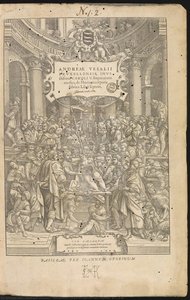 De humani corporis fabrica libri septem, N*.1.1(A)1555

Eseje k dielu Skeleton
 20th century Lithuanian paintersLithuanian 20th-century painting features masters like Mikalojus Konstantinas Čiurlionis, Ben Shahn, and Lasar Segall. View them all on Ori…
 19th century Lithuanian paintersIconic 19th century Lithuanian painters like Isaac Levitan define this era. Explore the full collection online at OriginalUniqueArt.com.
 The Architecture of Flesh: Mastering Anatomical Precision in Classical Figurative ArtMaster the science of classical figure painting through anatomical study and light. Explore the masters of form today.