
() ·
A print made for you, with care
Giclée / Umenotlač
Giclée tlač alebo plátno múzeálnej kvality s rýchlou výrobou a rôznymi možnosťami povrchovej úpravy. ( Kúpiť ručne maľovaný obraz Prepnúť na digitálny obraz)
Biografia umelca
Explore the Baroque art of Andrea Camassei (1602-1649), an Italian painter known for dramatic religious scenes & mythological narratives like 'The Massacre of the Niobids.' Discover his legacy!
 Zobraziť viac
od ·
Kapitola 1
On which medium should it be printed?
Canvas is printed with giclée inks and can be stretched or framed like a painting; paper comes flat, or framed behind glass.
Kapitola 2
Akú veľkosť by mala mať?
Posuňte pre zmenu veľkosti; obrázok vľavo zobrazuje rám v jeho reálnej šírke. Priebeh pôvodného diela zostáva zachovaný.
Vyberte si z našich preddefinovaných rozmerov, ktoré zodpovedajú pôvodným pomeroḿ diela.

Zadajte šírku a výšku, ktoré potrebujete, aby sa reprodukcia hodila k vášmu rámu alebo stene. Print možno len orezávať, nikdy však nemennú veľkosť zvětšiť oproti pôvodnému obrázku, preto pri inom formáte stráca časť obrazu. Pred samotným vytlačiacím procesom vám pošleme digitálny náhľad na schválenie. Obrázok zobrazený na tejto stránke nezobrazuje reálny rez — len digitálny náhľad ukazuje presný výsledok.
Kapitola 3
V akom stave by mal doraziť?
Vyberte si opletenie plátna
Vyberte si rám

Biele okraje €1

rozostrené okraje €1

Vytiahnutý okraj €1

P118B €10

P118H €10

P118W €10

P438Z €10

P508JH €12

P508YH €12

P805H €10

P805Z €10

P919BZ €10

P919G €10

P919XJ €10

P959ZH €10

P968JZ €12

W106C €8

W218G €10

W218JH €8

W218Y €10

W307PJ €10

W316G €10

W316PJ €8

W316Y €10

W398PJ €8

W4111J €10

W500HY €15

W500JH €15

W692G €12

W849H €8

W940BG €15

W953PJ €8

H24-GOLD €30

H24-SILVER €30

H36-GOLD €45

H36-SILVER €45
V rámoch
Profil: . Celkový rozmer vrátane rámov: .
Kapitola 4
Celosvetová doprava () do 2 týždňov namiesto štandardných 4 až 5 týždňov. (22 november)
Posledné dotahy
Štítok, ako v múzeu?
Detaily vygravírovaného bronzového pláka
This elegant plaque features the artist's name and the title of the artwork, finely engraved for a timeless presentation.
It is made from bronze with a refined, elegant finish. The text is precisely laser-engraved for a sharp and permanent result. Measuring 9x2 cm, the plaque is compact yet easy to read. It's built to be durable and scratch-resistant, offering a professional, museum-quality look. Mounting is simple thanks to the included adhesive backing.
Detaily transparentnej akrylovej plăty
The plaque includes essential engraved details such as the artist's name, the title of the artwork, the date it was created, the type of media used-like oil on canvas or watercolor-a brief description of the piece, and a QR code that links to the complete artwork information.
It is crafted from clear acrylic, offering a sleek, modern appearance. The text is UV-engraved in black to ensure strong visual contrast. With a size of 10x15 cm, it ensures optimal readability. It comes equipped with two metal hooks for secure wall mounting. The plaque is designed to be weather-resistant, making it suitable for various environments, and it includes interactive features that work seamlessly with smartphone scanning.
Detaily čiernej akrylovej plăty
This elegant plaque includes engraved information such as the artist's name, the title of the artwork, the date it was created, the type of media used (like oil on canvas or watercolor), a short description of the artwork, and a QR code for quick access to more information.
The plaque itself is made from refined black acrylic with a premium finish. The text is laser-engraved in white for high contrast and readability. Its size is 10x15 cm, designed to be easy to read. It comes with two metal hooks for professional mounting. The design is sleek and fits any interior style. It is also weather-resistant and durable, with built-in digital integration for mobile compatibility.
Ochranný lak?
Kedy vám má byť doručené?
Kapitola 5
Your print, as you ordered it

Lupercalia feasts
Technika reprodukcie
Veľkosť reprodukcie
-

Rámovanie reprodukcie
-
-
V prípade umeleckých diel alebo reprodukcií, ktorých ktorákoľvek strana je väčšia ako 105 cm (cca 41 palcov), sa rám dodáva v rozloženom stave ako sada. Táto metóda zabezpečuje bezpečnú доставu a chráni pred poškodením počas prepravy.
Vyžaduje sa odborná montáž – toto nie je produkt na vlastnú prípravu (DIY).
Sada musí byť zmontovaná a plátno napnuté skúseným profesionálnym rámovaníkom, s použitím drevárneho lepidla (nie je súčasťou sady), klieš na napínanie plátna a svoriek na udržanie prav角的 rámov počas schnutia lepidla. Nesprávna montáž alebo nerovnomerné napnutie plátna môže trvalo poškodiť umelecké dielo, čo nie je kryté našou zárukou.
 V prípade umeleckých diel alebo reprodukcií, ktorých ktorákoľvek strana je väčšia ako 105 cm (cca 41 palcov), sa rám dodáva v rozloženom stave ako sada. Táto metóda zabezpečuje bezpečnú доставu a chráni pred poškodením počas prepravy.
Všetky lišty z masívneho dreva sú súčasťou balenia, presne narezané na mieru.
Montuje sa pomocou súčasťou balenia dodaných skrutiek, plus drevolepu na spoje v rohoch, ktorý nie je súčasťou balenia a musí si ho zabezpečiť váš montážnik.
Vyžadujú sa profesionálne nástroje, ktoré nie sú súčasťou sady: kliešte na napínanie plátna (napínací nástroj) a svorky na udržanie pravých uhlov rámov počas schnutia lepidla.
Dôležité:
Spoje v rohoch si vyžadujú lepidlo na drevo, tyče je potrebné upevniť pomocou svoriek, kým lepidlo úplne newyschne, a napnutie plátna na zostavený rám si vyžaduje klieže na napínanie plátna. Žiadna z týchto pomôcok nie je súčasťou sady. Pred objednaním tejto veľkosti si, prosím, zabezpečte skúseného odborníka na zakladanie rámov.

Popisné označenie
-
-

Ochranný lak
Lesklý lak (zvýrazňuje farby, chráni pred svetlom a vlhkosťou)
-

Prioritné doručenie
Celosvetová doprava () do 2 týždňov namiesto štandardných 4/5 týždňov. (22 november)
-
Rýchle doručenie
Celosvetová doprava () do 4 až 5 týždňov. (29 november).
V cene
Celková cena
€ 72
Možnosť skla je dostupná len pri rozmeroch pod 110 cm
Súčasťou každej objednávky
- Bezplatná expresná doprava po celom svete
- Vysokokvalitné lnianske plátno
- Kompletné poistenie prepravy
- Záruka vrátenia colného poplatku
- Záruka presného farebného zhodnutia
- 100-dená politika vrátenia tovaru (iba pri vadách)
- 100% záruka vrátenia peňazí
- Zľava pri väčšom množstve


 Náhľad v interiéri

 Odoslať ako digitálnu kartu
 Zdieľať
 Podrobnosti o dielo
 Príručka


 Stiahnuť obraz
 Podobné položky
 RTG skúška
 Prehliadanie diapozoje
 Otázky a odpovede
 Štatistiky
V číslach
- 29výber z dostupných rámov
- štandardné veľkosti, v ich vlastných proporciách
- 5týždňov na vytvorenie a doručenie
O origináli


Andrea Camassei
1602 - 1649, Italy
Rýchle fakty o umelcovi Andrea Camassei
- Full Name: Andrea Camassei
- Nationality: Italian
- Date Of Birth: 1602
- Date Of Death: 1649
- Place Of Birth: Bevagna, Italy
- Notable Artworks:
- Massacre of the Niobids
- Hunt of Diana
- Artistic Movement Or Style: Baroque Painting
- Artists Who Influenced This Artist: ['Domenichino']
- Artists Or Movements Influenced By This Artist: ['Raphael']
Biografia umelca
Andrea Camassei: A Baroque Master of Light and Shadow
Born in the Umbrian town of Bevagna in 1602, Andrea Camassei’s life was a testament to both artistic talent and a tragically curtailed career. His early years were steeped in the traditions of Italian painting, yet he possessed an individual vision that quickly distinguished him within the vibrant, competitive environment of Rome during the mid-17th century. While often overshadowed by his more celebrated contemporaries – Domenichino, Guido Reni, and Pietro da Cortona – Camassei’s work reveals a profound understanding of light, color, and dramatic composition, securing him a place as a significant, if somewhat elusive, figure in Baroque art.
Camassei's formal training remains somewhat shrouded in mystery. He apprenticed under Domenichino, a master known for his meticulous realism and ability to capture the nuances of human expression. This early influence is evident in Camassei’s initial works, characterized by a careful attention to detail and a restrained palette. However, he quickly developed a distinctive style, marked by an increased use of chiaroscuro – the dramatic contrast between light and dark – that would become his signature. His first documented commission came in 1627, decorating the chapel of St Philip Neri in Bevagna with scenes from the life of the saint, providing him with invaluable experience and establishing a foundation for his future endeavors.
The Barberini Patronage and Early Rome
By 1628, Camassei had relocated to Rome, entering the orbit of the powerful Barberini family. This patronage proved crucial to his early career, providing him with commissions for elaborate decorations within the Palazzo Barberini – a complex undertaking that involved collaborating with established artists like Guido Reni, Andrea Sacchi, and Pietro da Cortona. These projects demanded not only technical skill but also an understanding of architectural design and the integration of painting into broader spatial arrangements. The frescoes he contributed to Santa Maria della Concezione, depicting scenes from the life of St Peter, showcased his burgeoning talent for creating dynamic compositions filled with movement and emotion.
A pivotal moment in Camassei’s career came in 1631 when he was entrusted with decorating a ceiling in the Palazzo Barberini. This commission – “Apollo and the Muses on Mt Parnassus” – demonstrated his ability to handle large-scale projects, but also highlighted a potential limitation: his reluctance to embrace overly complex or decorative schemes. He famously declined a subsequent, even more ambitious assignment – the decoration of the Gran Salone – recognizing that it exceeded his capabilities. This decision, while perhaps strategically prudent, ultimately contributed to a period of relative obscurity.
Dramatic Narratives and Religious Iconography
Camassei’s most enduring legacy lies in his dramatic depictions of religious narratives and mythological scenes. His paintings are characterized by an intense emotionality, conveyed through expressive gestures, dynamic poses, and a masterful manipulation of light and shadow. The “Massacre of the Niobids” (circa 1645-48), arguably his most famous work, exemplifies this approach. The painting’s chaotic composition, featuring a brutal slaughter of innocent women by zealous priests, is rendered with visceral intensity, capturing both the horror of the event and the underlying moral ambiguity. Other notable works include “St. Erasmus Martyrdom” and “Alexander and Hephaestion,” each demonstrating his ability to infuse historical or mythological subjects with profound psychological depth.
His style was influenced by Poussin’s use of light, color, and composition, as well as the more restrained realism of Domenichino. However, Camassei possessed a unique sensibility, evident in his preference for pastel colors and his ability to create a sense of atmospheric depth. His works are not merely illustrations of biblical or mythological tales; they are carefully constructed narratives designed to evoke contemplation and elicit an emotional response from the viewer.
A Tragic End and Lasting Influence
Andrea Camassei’s career was tragically cut short in 1649, at the age of forty-six. The political turmoil surrounding the deposition of Pope Urban VIII and the exile of his successors severely impacted the patronage system that supported many artists. Despite his talent and potential, Camassei struggled to secure consistent commissions during this period. He spent his final years working for the Palazzo Pamphilj in Rome, producing decorative frescoes depicting scenes from the story of Bacchus and Ariadne.
Although largely forgotten for centuries, Andrea Camassei’s work has experienced a resurgence of interest in recent decades. His paintings are now recognized as significant examples of Baroque art, admired for their dramatic intensity, masterful use of light and shadow, and profound psychological insights. His legacy endures through his captivating depictions of religious narratives and mythological scenes – works that continue to resonate with viewers today.
Súvisiace články
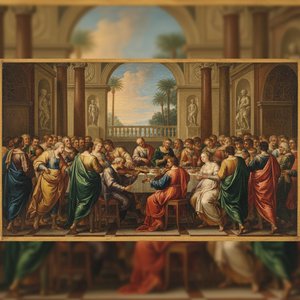
Paolo Veronese: A Renaissance Master of Color, Composition, and Venetian Splendor
Explore the vibrant world of Paolo Veronese, a Renaissance master renowned for his opulent compositions, masterful use of color, and dramatic Venetian scenes. Discover key artworks & legacy.

Master of Antiquity: The 25 Greatest Artworks by Andrea Mantegna
Explore 25 iconic Andrea Mantegna masterpieces of the Renaissance. Discover museum-quality art on OriginalUniqueArt.com.

The Fête Galante & Beyond: Exploring the Artistic World of Jean-Antoine Watteau
Discover the captivating world of Jean-Antoine Watteau, master of the Fête Galante! Explore his iconic paintings, symbolism, and lasting influence on Rococo art. A deep dive for classic art enthusiasts.

Masterpieces of Grandeur: The Top 25 Artworks by Paolo Veronese
Step into the opulence of the Venetian Renaissance with our curated guide to the top 25 Paolo Veronese masterpieces. From grand feasts to luminous colors, explore the stories behind these timeless icons and find museum-quality reproductions. Discover all masterpieces on OriginalUniqueArt.com.