
() ·
A print made for you, with care
Giclée / Umenotlač
Giclée tlač alebo plátno múzeálnej kvality s rýchlou výrobou a rôznymi možnosťami povrchovej úpravy. ( Kúpiť ručne maľovaný obraz Prepnúť na digitálny obraz)
Biografia umelca
Dutch painter Gerard Sanders specialized in portraits and landscapes like Archibald Hope the Elder. Discover his exquisite fine art collection.
 Zobraziť viac
od ·
Kapitola 1
On which medium should it be printed?
Canvas is printed with giclée inks and can be stretched or framed like a painting; paper comes flat, or framed behind glass.
Kapitola 2
Akú veľkosť by mala mať?
Posuňte pre zmenu veľkosti; obrázok vľavo zobrazuje rám v jeho reálnej šírke. Priebeh pôvodného diela zostáva zachovaný.
Vyberte si z našich preddefinovaných rozmerov, ktoré zodpovedajú pôvodným pomeroḿ diela.

Zadajte šírku a výšku, ktoré potrebujete, aby sa reprodukcia hodila k vášmu rámu alebo stene. Print možno len orezávať, nikdy však nemennú veľkosť zvětšiť oproti pôvodnému obrázku, preto pri inom formáte stráca časť obrazu. Pred samotným vytlačiacím procesom vám pošleme digitálny náhľad na schválenie. Obrázok zobrazený na tejto stránke nezobrazuje reálny rez — len digitálny náhľad ukazuje presný výsledok.
Kapitola 3
V akom stave by mal doraziť?
Vyberte si opletenie plátna
Vyberte si rám

Biele okraje €1

rozostrené okraje €1

Vytiahnutý okraj €1

P118B €10

P118H €10

P118W €10

P438Z €10

P508JH €12

P508YH €12

P805H €10

P805Z €10

P919BZ €10

P919G €10

P919XJ €10

P959ZH €10

P968JZ €12

W106C €8

W218G €10

W218JH €8

W218Y €10

W307PJ €10

W316G €10

W316PJ €8

W316Y €10

W398PJ €8

W4111J €10

W500HY €15

W500JH €15

W692G €12

W849H €8

W940BG €15

W953PJ €8

H24-GOLD €30

H24-SILVER €30

H36-GOLD €45

H36-SILVER €45
V rámoch
Profil: . Celkový rozmer vrátane rámov: .
Kapitola 4
Celosvetová doprava () do 2 týždňov namiesto štandardných 4 až 5 týždňov. (22 november)
Posledné dotahy
Štítok, ako v múzeu?
Detaily vygravírovaného bronzového pláka
This elegant plaque features the artist's name and the title of the artwork, finely engraved for a timeless presentation.
It is made from bronze with a refined, elegant finish. The text is precisely laser-engraved for a sharp and permanent result. Measuring 9x2 cm, the plaque is compact yet easy to read. It's built to be durable and scratch-resistant, offering a professional, museum-quality look. Mounting is simple thanks to the included adhesive backing.
Detaily transparentnej akrylovej plăty
The plaque includes essential engraved details such as the artist's name, the title of the artwork, the date it was created, the type of media used-like oil on canvas or watercolor-a brief description of the piece, and a QR code that links to the complete artwork information.
It is crafted from clear acrylic, offering a sleek, modern appearance. The text is UV-engraved in black to ensure strong visual contrast. With a size of 10x15 cm, it ensures optimal readability. It comes equipped with two metal hooks for secure wall mounting. The plaque is designed to be weather-resistant, making it suitable for various environments, and it includes interactive features that work seamlessly with smartphone scanning.
Detaily čiernej akrylovej plăty
This elegant plaque includes engraved information such as the artist's name, the title of the artwork, the date it was created, the type of media used (like oil on canvas or watercolor), a short description of the artwork, and a QR code for quick access to more information.
The plaque itself is made from refined black acrylic with a premium finish. The text is laser-engraved in white for high contrast and readability. Its size is 10x15 cm, designed to be easy to read. It comes with two metal hooks for professional mounting. The design is sleek and fits any interior style. It is also weather-resistant and durable, with built-in digital integration for mobile compatibility.
Ochranný lak?
Kedy vám má byť doručené?
Kapitola 5
Your print, as you ordered it

Amorous Couple
Technika reprodukcie
Veľkosť reprodukcie
-

Rámovanie reprodukcie
-
-
V prípade umeleckých diel alebo reprodukcií, ktorých ktorákoľvek strana je väčšia ako 105 cm (cca 41 palcov), sa rám dodáva v rozloženom stave ako sada. Táto metóda zabezpečuje bezpečnú доставu a chráni pred poškodením počas prepravy.
Vyžaduje sa odborná montáž – toto nie je produkt na vlastnú prípravu (DIY).
Sada musí byť zmontovaná a plátno napnuté skúseným profesionálnym rámovaníkom, s použitím drevárneho lepidla (nie je súčasťou sady), klieš na napínanie plátna a svoriek na udržanie prav角的 rámov počas schnutia lepidla. Nesprávna montáž alebo nerovnomerné napnutie plátna môže trvalo poškodiť umelecké dielo, čo nie je kryté našou zárukou.
 V prípade umeleckých diel alebo reprodukcií, ktorých ktorákoľvek strana je väčšia ako 105 cm (cca 41 palcov), sa rám dodáva v rozloženom stave ako sada. Táto metóda zabezpečuje bezpečnú доставu a chráni pred poškodením počas prepravy.
Všetky lišty z masívneho dreva sú súčasťou balenia, presne narezané na mieru.
Montuje sa pomocou súčasťou balenia dodaných skrutiek, plus drevolepu na spoje v rohoch, ktorý nie je súčasťou balenia a musí si ho zabezpečiť váš montážnik.
Vyžadujú sa profesionálne nástroje, ktoré nie sú súčasťou sady: kliešte na napínanie plátna (napínací nástroj) a svorky na udržanie pravých uhlov rámov počas schnutia lepidla.
Dôležité:
Spoje v rohoch si vyžadujú lepidlo na drevo, tyče je potrebné upevniť pomocou svoriek, kým lepidlo úplne newyschne, a napnutie plátna na zostavený rám si vyžaduje klieže na napínanie plátna. Žiadna z týchto pomôcok nie je súčasťou sady. Pred objednaním tejto veľkosti si, prosím, zabezpečte skúseného odborníka na zakladanie rámov.

Popisné označenie
-
-

Ochranný lak
Lesklý lak (zvýrazňuje farby, chráni pred svetlom a vlhkosťou)
-

Prioritné doručenie
Celosvetová doprava () do 2 týždňov namiesto štandardných 4/5 týždňov. (22 november)
-
Rýchle doručenie
Celosvetová doprava () do 4 až 5 týždňov. (29 november).
V cene
Celková cena
€ 72
Možnosť skla je dostupná len pri rozmeroch pod 110 cm
Súčasťou každej objednávky
- Bezplatná expresná doprava po celom svete
- Vysokokvalitné lnianske plátno
- Kompletné poistenie prepravy
- Záruka vrátenia colného poplatku
- Záruka presného farebného zhodnutia
- 100-dená politika vrátenia tovaru (iba pri vadách)
- 100% záruka vrátenia peňazí
- Zľava pri väčšom množstve


 Náhľad v interiéri

 Odoslať ako digitálnu kartu
 Zdieľať
 Podrobnosti o dielo
 Príručka


 Stiahnuť obraz
 Podobné položky
 RTG skúška
 Prehliadanie diapozoje
 Otázky a odpovede
 Štatistiky
V číslach
- 1752rok vytvorenia
- 29výber z dostupných rámov
- štandardné veľkosti, v ich vlastných proporciách
- 5týždňov na vytvorenie a doručenie
O origináli

- 41.0 x 36.0cm


Toto dielo je chránené autorským právom
Umelecké dielo zobrazené na tejto stránke je chránené autorským zákonom, čo znamená, že nemôžeme legálne vytvárať ani predávať jeho identickú reprodukciu. Táto ochrana je vymáhaná na základe medzinárodných dohôd, ako napríklad Bernská konvencia a národnými zákonmi, vrátane tých, ktoré sú stanovené v Autorské právo USA – Title 17. Všetky práva vyhradené.
Ako rešpektujúca a legálna alternatíva ponúkame vlastné, ručne maľované diela inšpirované originálom. Naši skúsení a profesionálni umelci dôkladne študujú štýl, náladu a umelecký podnet originálu, aby vytvorili nové, jedinečné dielo, ktoré vyvoláva rovnaký pocit – pričom samo ostáva vlastným originálnym dielom.
Táto metóda plne dodržiava autorské práva, pretože nezahŕňa kopírovanie ani duplikovanie chráneného diela. Ide skôr o kreatívnu reinterpretáciu – nový obraz, ktorý je ovplybnený originálom, no nie je s ním identický.

Gerard Sanders
1702 - 1767
Rýchle fakty o umelcovi Gerard Sanders
- Artists Who Influenced This Artist:
- Tobias van Nijmegen
- Elias van Nijmegen
- Full Name: Gerard Sanders
- Nationality: Dutch
- Notable Artworks:
- Archibald Hope the Elder
- Amorous Couple
- Portrait of Johannes Wilhelmus Bussingh
- Portrait of Elisabeth van der Linden
- Place Of Birth: Wesel am Rhein, Germany
- Date Of Birth: 1702
- Date Of Death: 1767
Biografia umelca
Early Life, Family and Training
Born in 1702 in Wesel am Rhein, Germany, Gerard Sanders entered a world of visual craft through the intimate ties of family. His early years were shaped by a significant transition when his mother remarried Tobias van Nijmegen. This change in family structure provided the young artist with his first formal introduction to the arts, as he became a pupil of his stepfather. Under Tobias's guidance, Sanders began to develop the foundational skills of a painter and draughtsman, learning the nuances of composition and form within a domestic apprenticeship.
The trajectory of his education shifted when he reached the age of eighteen. Seeking to broaden his technical horizons, he moved to Rotterdam to study under Elias van Nijmegen. This period of study was essential in refining his ability to navigate both portraiture and landscape, preparing him for a career that would eventually see him decorating the interiors of the social elite. Throughout his life, he was occasionally known by the alias Gerhard Sanders, a variation that reflects the shifting linguistic borders of his era.
Patrons, Workshop and Commissions
Sanders’s professional life was defined by his ability to navigate the social hierarchies of the eighteenth century, moving between the private splendor of aristocratic homes and the public dignity of civic institutions. His early training under his stepfather, Tobias van Nijmegen, provided a foundation in the art of decoration, a skill that would lead him to decorate the interiors of the elite. This expertise in large-scale decorative schemes allowed him to secure significant placements, including work for the Elector Palatinate in Düsseldorf. Such commissions required a versatility that bridged the gap between fine art and the functional requirements of interior design.
His reputation for handling both private and public spaces is evident in the varied nature of his patronage. He was entrusted with the decoration of the house of Isaac Hope, a commission that placed his work within the intimate, domestic settings of the wealthy. This ability to cater to the specific tastes of prominent families ensured a steady presence in the high-society circles of the era. His work was not confined to the private sphere, however; he also engaged with the civic identity of the Netherlands. In 1764, he was commissioned to paint several scenes of civic virtues for the Town Hall of Middelburg, a task that required a shift from the personal nuances of portraiture to the formal demands of public morality.
Key Works and Artistic Subjects
Sanders focused his creative energy on the formal demands of portraiture, history subjects, and landscapes. His ability to navigate these diverse genres allowed him to move between the intimate scale of a private study and the grander requirements of civic decoration. In 1730, he produced a portrait historiée of a mother with her children, a work that suggests an interest in the allegorical or narrative potential of the human figure. This interest in character and status is further evidenced by his 1737 portrait of Archibald Hope the Elder, a piece that captures the dignity of its subject within the social hierarchies of the era.
As his career progressed, his output continued to reflect the tastes of the Dutch elite. He turned his attention to the likenesses of prominent individuals, including a portrait of Johannes Wilhelmus Bussingh (1727-1782) and a portrait of Elisabeth van der Linden (1735-1783), both dating to about 1760. These works demonstrate a steady hand in capturing the specificities of his sitters. Beyond the human form, he also engaged with the natural world, as seen in his 1763 watercolor over graphite, Fleurs et châtaignes sur un entablement.
- Portrait historiée of a mother with her children (1730)
- Portrait of Archibald Hope the Elder (1737)
- Portrait of Johannes Wilhelmus Bussingh (1727-1782) (about 1760)
- Portrait of Elisabeth van der Linden (1735-1783) (about 1760)
- Fleurs et châtaignes sur un entablement (1763)
Technique and Style
Sanders operated with the versatility required of a professional working in the Dutch tradition, moving fluidly between the roles of painter, draughtsman, and decorator. His training under his stepfather and later in Rotterdam provided him with a technical foundation that allowed him to navigate diverse commissions. Whether he was executing large-scale decorations for the interiors of the elite or working on more intimate studies, his hand remained steady and purposeful. He was as comfortable as a schilder handling canvas as he was a tekenaar capturing the essential lines of a subject.
In his more delicate works, Sanders demonstrated the precision of an aquarellist. He frequently employed watercolor over graphite on laid paper, a method that allowed for a controlled yet expressive application of color. This technique was particularly suited to his botanical studies and his ability to render the subtle textures of still life. The use of graphite provided a structural clarity to his compositions, ensuring that even his most light-handed washes of color maintained a sense of formal order.
His stylistic range was dictated by the demands of his environment. As a decorator, his work had to harmonize with the architectural spaces of the wealthy, requiring a sense of scale and decorative rhythm. In his portraiture and history subjects, he focused on the clarity of form and the character of his sitters. This adaptability—the ability to shift from the broad requirements of interior decoration to the fine, meticulous detail of a watercolor on paper—defined his professional practice.
Súvisiace články
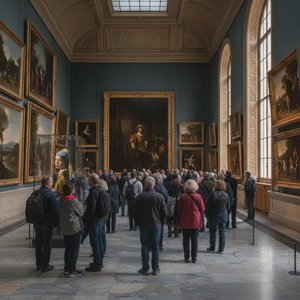
Masterpieces of the Dutch Soul: Top 25 Must-See Artworks in Amsterdam's Rijksmuseum
Embark on a journey through the Dutch Golden Age. From Rembrandt's drama to Vermeer's light, explore 25 iconic Rijksmuseum masterpieces and find museum-quality art reproductions for your decor. Discover all masterpieces on OriginalUniqueArt.com.

Masterpieces Unveiled: The Top 25 Artworks at the J. Paul Getty Museum
Explore 25 iconic masterpieces from the J. Paul Getty Museum. From Renaissance to Baroque, discover the legends on OriginalUniqueArt.com.