

 Zobraziť v interiéri
 Odoslať
 Zdieľať
 Podrobnosti
 Príručka

 Stiahnuť
 Podobné položky
 RTG skúška
 Prehliadanie diapo\]
 Štatistiky
Autumn Flowers


 Prečítať si viac
Ručne maľovaná olejová reprodukcia
Ručne maľovaný olej na plátne vo vašej zvolenej veľkosti a v ráme, vyrobený na mieru našimi umelcami. ( Prepnúť na tlač Prepnúť na digitálnu verziu obrazu)




P118B €10

P118H €10

P118W €10

P438Z €10

P508JH €12

P508YH €12

P805H €10

P805Z €10

P919BZ €10

P919G €10

P919XJ €10

P959ZH €10

P968JZ €12

W106C €8

W218G €10

W218JH €8

W218Y €10

W307PJ €10

W316G €10

W316PJ €8

W316Y €10

W398PJ €8

W4111J €10

W500HY €15

W500JH €15

W692G €12

W849H €8

W940BG €15

W953PJ €8




Vyberte si z našich preddefinovaných rozmerov, ktoré zodpovedajú pôvodným pomeroḿ diela.

Môžete zadať vlastné rozmery tak, aby sa hodili do konkrétneho rámu alebo priestoru. Ak sa váš zvolený rozmer nezhoduje s pôvodnými proporciami obrazu, dielo buď orezáme, alebo ho doplníme ručne maľovanými prvkami. Pred začiatkom výroby vám zašleme digitálny náhľad na schválenie.
Upozorňujeme, že ukážka na obrazovke neodráža skutočné orezanie ani doplnenie. Skutočnú finálnu kompozíciu zobrazuje iba digitálny náhľad.
Hoci sú k dispozícii vlastné rozmery, odporúčame vybrať rozmer z preddefinovaného zoznamu, aby sme zachovali pôvodné proporcie.
Po odoslaní objednávky vám tím OriginalUniqueArt.com pošle e-mail s pokynmi a poskytne náhľad na návrh
Celosvetová doprava () za 3 až 4 týždne namiesto štandardných 5 týždňov. (3 október). Bez kompromisov v kvalite.

Bezplatná expresná doprava po celom svete

Vysokokvalitné lnianske plátno

Úplné poistenie prepravy

Záruka vrátenia colného poplatku

Záruka presného farebného zhodnutia

100-dená politika vrátenia tovaru (iba pri vadách)

100% záruka vrátenia peňazí

Ponuka množstevnej zľavy
 Možnosť skla je dostupná len pri rozmeroch pod 110 cm

Autumn Flowers
Spôsob reprodukcie
Veľkosť reprodukcie
-


Celková cena
€ 258
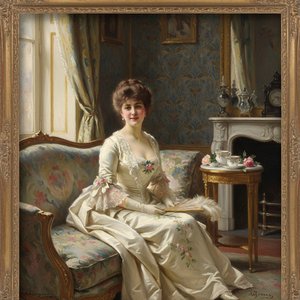
A Portrait of a Moment: The Enigmatic Beauty of *Autumn Flowers*
Alfred Stevens’s *Autumn Flowers*, painted in 1867, isn't merely a depiction of a woman amidst flowers; it’s an exquisitely crafted meditation on stillness, light, and the subtle poetry of everyday life. At first glance, the painting presents a seemingly simple arrangement: a seated lady, her posture suggesting quiet contemplation, surrounded by a still-life tableau of fabrics, blossoms, and a delicately rendered table. Yet, beneath this surface lies a profound exploration of form, color, and the very essence of observation – a hallmark of Stevens’s unique artistic vision.
Stevens, a pivotal figure in 19th-century Belgian art, deliberately eschewed the prevailing trends of his time. Rejecting the fleeting effects of Impressionism's vibrant light and atmosphere, he instead focused on capturing an immutable quality – the frozen gesture, the fixed expression, the enduring presence of the subject. This deliberate choice is powerfully evident in *Autumn Flowers*. The woman’s hand, poised as if about to touch a flower, isn’t caught in motion; it's suspended, imbued with a sense of timelessness. Her gaze, directed slightly off-canvas, invites us into her private world, suggesting an inner life beyond the immediate scene.
The Language of Color and Texture: Stevens’s Masterful Technique
What immediately draws the eye is Stevens's extraordinary command of color and texture. He employs a remarkably restrained palette – primarily shades of grey, black, and muted browns – punctuated by flashes of pastel pink, chestnut brown, and the glossy sheen of the table cover. This deliberate limitation isn’t a sign of restraint but rather a strategic choice to emphasize form and light. The artist masterfully utilizes chiaroscuro, creating dramatic contrasts between light and shadow that sculpt the figures and objects with remarkable precision. Notice how the highlights on the woman's chignon and the delicate folds of her dress draw our attention while simultaneously deepening the shadows around her face, lending a sense of mystery and depth.
Stevens’s technique is equally noteworthy for its meticulous detail. He employs a smooth, almost polished surface – reminiscent of 17th-century Dutch masters like Rembrandt and Vermeer – achieved through careful layering of paint and the use of a knife to blend colors seamlessly. This creates an illusion of tactile reality, inviting us to reach out and touch the fabrics, feel the texture of the flowers, and appreciate the subtle variations in color and tone. The artist’s attention to detail extends beyond mere representation; it's a deliberate attempt to capture the *essence* of each element within the composition.
Symbolism and the Portrait of Modernity
Beyond its technical brilliance, *Autumn Flowers* is rich in symbolic meaning. The woman herself represents a type of modern femininity – poised, elegant, and seemingly detached from the bustle of Parisian life. Her attire, with its jet frills and flounces, speaks to the fashionable trends of the era while simultaneously conveying a sense of quiet dignity. The surrounding still-life elements—the fabrics, flowers, and table—are not merely decorative; they function as a carefully constructed visual language, hinting at themes of luxury, domesticity, and the fleeting beauty of life.
Stevens’s comparison to Gustave Vanzype – that the painting is a still life composed of the fabrics in which she is dressed and the things around her – reveals a deeper intention. He wasn't simply depicting a woman; he was creating a miniature world, a carefully orchestrated tableau that captures a specific moment in time and reflects the values and aesthetics of his era. The reference to Whistler’s ambition to “use colours to compete with the musician who uses sounds” underscores Stevens’s own desire to elevate color from mere decoration to an expressive element within the painting.
A Legacy of Stillness: Stevens's Enduring Appeal
*Autumn Flowers* stands as a testament to Alfred Stevens’s singular artistic vision. It is a painting that rewards careful observation, inviting us to linger and contemplate its subtle nuances. Its enduring appeal lies not in dramatic gestures or fleeting effects but in its quiet beauty, its masterful technique, and its profound exploration of the human condition. Reproductions of this captivating work offer a window into a bygone era, capturing the elegance and sophistication of 19th-century Parisian life while simultaneously reminding us of the timeless power of stillness and observation.
Otázky a odpovede
Môžem si „Autumn Flowers“ od Alfred Stevens pred kúpou pozrieť na vlastnej stene?
K dielu „Autumn Flowers“ je k dispozícii náhľad v rozšírenej realite: stránka AR náhľad pre tento kus umenia vám umožní zobraziť si ho vo vašom vlastnom priestore pomocou kompatibilného zariadenia.
Koľko rokov mal/a Alfred Stevens, keď vytvoril/a „Autumn Flowers“ v roku 1867?
Alfred Stevens mal 44 rokov, keď v roku 1867 vytvoril/a dielo „Autumn Flowers“. Vek bol vypočítaný na základe roku narodenia umelca, 1823.
Ako "Autumn Flowers" vyvažuje svetlo a tieň?
Jasnosť diela „Autumn Flowers“ od Alfred Stevens je zaznamenaná ako deep_shadow pri luminancii Dark.
Kto je umelcom diela „Autumn Flowers"?
Autorom diela „Autumn Flowers“ je Alfred Stevens. Prácu nájdete v katalógu pod menom Alfred Stevens.
V ktorom roku bolo vytvorené dielo „Autumn Flowers“ od Alfred Stevens?
Dielo „Autumn Flowers“ od Alfred Stevens vzniklo v roku 1867.
Je „Autumn Flowers“ od Alfred Stevens portrétna, krajinárska alebo štvorcová kompozícia?
„Autumn Flowers“ od Alfred Stevens je Portrait kompozícia. Pred výberom veľkosti tlače si odporúčame skontrolovať jej proporcie.
Existujú diela podobné ako „Autumn Flowers"]?
Diela podobné dielu „Autumn Flowers“ sú uvedené na stránke Podobné diela daného diela.
Biografia umelca
skryté začátky a umelecká príprava
Alfred Émile Léopold Stevens, tento uznávaný belgický maliar, prišiel na svet 11. mája 1823 v Brusele. Jeho rodina bola hlboko zakorenená v oblasti vizuálnych umení; jeho starší brat Joseph (1816–1892) aj syn Léopold (1866–1935) boli sami maliari, zatiaľ čo ďalší brat Arthur (1825–99) pôsobil ako obchodník s umením a kritik.umelecká dráha
Stevens začal svoju umeleckú cestu na Académie Royale des Beaux-Arts v Brusele, kde študoval pod vedením François Navez, významného neoklasického maliara. V roku 1843 sa presťahoval do Paríža, aby sa rejoinedil so svojím bratom Josephom, a bol prijatý do prestížnej École des Beaux-Arts. Hoci sa stále spornuje o to, či bol jeho učiteľom Jean Auguste Dominique Ingres, Stevensove rané diela, ako napríklad Pardon alebo absolúcia (Hermitáž, St. Petroburg), podpísané a datované 1849, demonštrujú jeho majstrovstvo v konvenčnom naturalistickom štýle, silne ovplyvnenom holandským žánrovým maliarstvom 17. storočia.cesta k sláve
Stevensovo dielo sa prvýkrát verejne vystavilo v roku 1851 na bruselskom salóne, čo mu neskôr prinieslo medailu tretiej triedy na parížskom salóne v roku 1853 a medailu druhej triedy na svetovej expozícii v Paríži v roku 1855. Jeho maľba Ce qu'on appelle le vagabondage (Musée d'Orsay, Paríž) priťiahla pozornosť samotného Napoleona III, čo viedlo k významným zmenám v sociálnom prístupe k chudobným vrstvám spoločnosti.významné diela a odkaz
- La Dame en Rose alebo Žena v ružovej (Musées Royaux des Beaux-Arts de Belgique, Brusel), vytvorená v roku 1866, je dokonalým príkladom Stevensovej tvorby z tohto obdobia, kde spája obraz módne oblečenej ženy s detailným skúmaním japonských predmetov.
- Stevens v roku 1863 získal od francúzskeho vlády vyznamenanie Legion of Honor (Chevalier) a v roku 1867 bol povýšen na dôstojníka tejto ctí.

Alfred Stevens
1823 - 1906 , Belgsko
Rýchle fakty
- Artistic Movement Or Style: Akademický realizmus
- Artists Who Influenced This Artist:
- Jean Auguste Dominique Ingres
- Holandskí majstri
- Date Of Birth: 11. mája 1823
- Date Of Death: 1906
- Full Name: Alfred Émile Léopold Stevens
- Nationality: Belgický
- Notable Artworks:
- La Dame en Rose
- Visit to the Studio
- Dessin préparatoire au 'Panorama du siècle', 'L'Impératrice Joséphine et sa Cour
- Place Of Birth: Brusel, Belgленно
Súvisiace články

Sir Alfred James Munnings: Top 25 Majstrovských Diel pre Kolekcionárov a Milovníkov Umenia
Objavte top 25 majstrovských diel Alfreda Jamesa Munninga – britského impresionistu oslávujúceho kone a krajinu. Historické maľby, portréty koní a vojnové scény v múzejnej kvalite. Nájdite perfektnú dekoráciu interiéru na OriginalUniqueArt.com

Alfred Stevens: Capturing Parisian Life with Intimate Realism & Symbolist Flair
Explore the captivating world of Alfred Stevens, a pioneer of intimate realism & Symbolist painting. Discover his elegant portraits of Parisian women and learn about his Dutch influences & lasting legacy. Art history insights at OriginalUniqueArt.
Alfred Stevens: Capturing Parisian Elegance & Fin-de-Siècle Intimacy
Discover the captivating world of Alfred Stevens, master of Parisian elegance & intimate portraiture. Explore his techniques, influences, and legacy – a prized collection for discerning art enthusiasts.

Romantic Realism's Finest: 10 Masterpieces for Your Home | OriginalUniqueArt
Explore 10 defining masterpieces of Romantic Realism! Discover Courbet, Millet & Daumier's powerful paintings—capturing emotion and social realities. Find museum-quality reproductions for your home at OriginalUniqueArt.com.
Realizmus v umení: Top 10 diel pre váš domov a dušu | OriginalUniqueArt
Ponorte sa do sveta realizmu s 10 ikonickými dielami od Courbeta, Maneta a ďalších majstrov. Objavte príbehy za slávnymi obrazmi a inšpirujte sa pre váš domov. Kúpiť kvalitné art reprodukcie na OriginalUniqueArt.com!