

 Zobraziť v interiéri
 Odoslať
 Zdieľať
 Podrobnosti
 Príručka

 Stiahnuť
 Podobné položky
 RTG skúška
 Prehliadanie diapo\]
 Štatistiky
Spring
 Romanticism
 1876
1876 76.0 x 25.0 cm
 Guildhall Art Gallery
 Prečítať si viac
Giclée / Umenotlač
Giclée tlač alebo plátno múzeálnej kvality s rýchlou výrobou a rôznymi možnosťami povrchovej úpravy. ( Objednať ručne maľovanú reprodukciu Prepnúť na digitálnu verziu obrazu)




































Vyberte si z našich preddefinovaných rozmerov, ktoré zodpovedajú pôvodným pomeroḿ diela.

Zadajte šírku a výšku, ktoré potrebujete, aby sa reprodukcia hodila k vášmu rámu alebo stene. Print možno len orezávať, nikdy však nemennú veľkosť zvětšiť oproti pôvodnému obrázku, preto pri inom formáte stráca časť obrazu. Pred samotným vytlačiacím procesom vám pošleme digitálny náhľad na schválenie. Obrázok zobrazený na tejto stránke nezobrazuje reálny rez — len digitálny náhľad ukazuje presný výsledok.
Celosvetová doprava () do 2 týždňov namiesto štandardných 4 až 5 týždňov. (24 október)

Bezplatná expresná doprava po celom svete

Vysokokvalitné lnianske plátno

Úplné poistenie prepravy

Záruka vrátenia colného poplatku

Záruka presného farebného zhodnutia

100-dená politika vrátenia tovaru (iba pri vadách)

100% záruka vrátenia peňazí

Ponuka množstevnej zľavy
 Možnosť skla je dostupná len pri rozmeroch pod 110 cm

Spring
Giclée / Umenotlač
Veľkosť reprodukcie
-


Celková cena
€ 70
Biografia umelca
Alfred Émile Léopold Stevens: A Life in Art
Alfred Émile Léopold Stevens (1823-1906) was a Belgian painter celebrated for his realistic depictions of elegant modern women and Parisian life. He skillfully captured the essence of la vie moderne with refined detail and subtle social commentary, establishing himself as a prominent figure in 19th-century art.
Early Life and Education
Born in Brussels in 1823 into a family deeply connected to the visual arts, Stevens benefited from a stimulating environment. His older brother Joseph (also a painter), his son Léopold, and another brother Arthur (an art dealer and critic) all contributed to the family’s artistic legacy. His father, a veteran of the Napoleonic Wars, was an avid art collector, while his maternal grandparents ran a popular café frequented by intellectuals and artists.
- After his father's death in 1837, Stevens began his formal training at the Académie Royale des Beaux-Arts in Brussels.
- He studied under François Navez, a Neo-Classical painter and former student of Jacques-Louis David.
- In 1843, he moved to Paris to join his brother Joseph and enrolled at the École des Beaux-Arts.
Artistic Development and Influences
Stevens’s early work demonstrated a mastery of conventional naturalistic style, heavily influenced by 17th-century Dutch genre painting. He meticulously studied the works of artists like Gerard ter Borch and Gabriel Metsu, absorbing their techniques for depicting domestic interiors and everyday life.
- His initial success came with paintings exhibiting this influence, such as “The Pardon or Absolution” (1849).
- He gradually transitioned towards portraying contemporary subjects – "la vie moderne" – focusing on the lives of fashionable women in Parisian society.
- Stevens was an early enthusiast of Japonisme, incorporating Japanese objects and aesthetics into his compositions, as seen in “La Dame en Rose” (1866).
Major Achievements and Recognition
Stevens achieved significant recognition throughout his career, exhibiting regularly at the Salons in Paris and Brussels. His paintings garnered critical acclaim and attracted a loyal clientele.
- He received third-class medals at the Paris Salon (1853) and second-class medal at the Universal Exposition (1855).
- His painting “Ce qu'on appelle le vagabondage” (1855) prompted Napoleon III to address the issue of poverty in Paris.
- He was awarded the Legion of Honor (Chevalier, 1863; Officer, 1867; Commander, 1878).
- Stevens won a first-class medal at the Universal Exposition in Paris (1867).
Social Circle and Artistic Connections
Stevens was an active participant in the Parisian art world, cultivating friendships with prominent figures such as the Goncourt brothers, Théophile Gautier, Alexandre Dumas, Édouard Manet, Edgar Degas, Berthe Morisot, and James Abbott McNeill Whistler. He regularly frequented the Café Guerbois, a hub for avant-garde artists.
Later Life and Legacy
Stevens continued to paint successfully throughout his later life, capturing the changing fashions and social dynamics of Parisian society. He served in the French army during the Franco-Prussian War but returned to Belgium with his family before the Paris Commune. He died in 1906, leaving behind a rich artistic legacy.
Historical Significance
Alfred Stevens’s work provides valuable insights into the social and cultural life of 19th-century France. His paintings offer a glimpse into the world of the upper middle class, showcasing their elegance, leisure activities, and evolving tastes. He is remembered as a master of realistic portraiture and genre painting, skillfully capturing the spirit of his time.

Alfred Émile Léopold Stevens
1823 - 1906
Rýchle fakty
- Name: Alfred Émile Léopold Stevens
- Movement: Realism, La Vie Moderne
- Birth_Date: 1823
- Death_Date: 1906
- Birth_Place: Brussels
- Nationality: Belgian
- Date Of Birth: 1823
- Date Of Death: 1906
- Influenced_By:
- 17th-century Dutch genre painting
- Gerard ter Borch
- Gabriel Metsu
- Notable_Works:
- The Pardon or Absolution
- Ce qu'on appelle le vagabondage
- La Dame en Rose
- Hesitation (Madam Morteaux)
Súvisiace články

Top 10 diel 19. storočia: Majstri a príbehy v umení pre váš domov
Ponorte sa do sveta 19. storočia s top 10 dielami impresionizmu, realizmu a romantizmu! Objavte príbehy Courbeta, Moneta a Van Gogha. Reprodukcie obrazov pre luxusný interiér na OriginalUniqueArt.com – umenie online.

The Enduring Legacy of Oil on Canvas: Technique, History & Aesthetic Impact
Explore the rich history & techniques of oil painting – from Renaissance masters to Impressionism. Discover pigments, layering methods, and why this timeless medium endures. Expert insights for artists & art enthusiasts.

Alfred Stevens: Capturing Parisian Life with Intimate Realism & Symbolist Flair
Explore the captivating world of Alfred Stevens, a pioneer of intimate realism & Symbolist painting. Discover his elegant portraits of Parisian women and learn about his Dutch influences & lasting legacy. Art history insights at OriginalUniqueArt.

Sir Alfred James Munnings: Top 25 Majstrovských Diel pre Kolekcionárov a Milovníkov Umenia
Objavte top 25 majstrovských diel Alfreda Jamesa Munninga – britského impresionistu oslávujúceho kone a krajinu. Historické maľby, portréty koní a vojnové scény v múzejnej kvalite. Nájdite perfektnú dekoráciu interiéru na OriginalUniqueArt.com
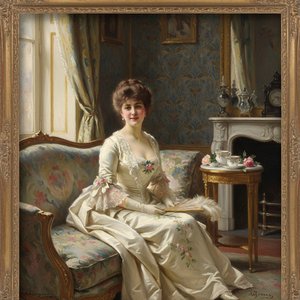
Alfred Stevens: Capturing Parisian Elegance & Fin-de-Siècle Intimacy
Discover the captivating world of Alfred Stevens, master of Parisian elegance & intimate portraiture. Explore his techniques, influences, and legacy – a prized collection for discerning art enthusiasts.