

 Náhľad v interiéri
 Odoslať ako digitálnu kartu
 Zdieľať
 Podrobnosti o dielo
 Príručka

 Stiahnuť obraz
 Podobné položky
 RTG skúška
 Prehliadanie diapozoje
 Q&A
Q&A Štatistiky
Étagère


 Zobraziť viac
Giclée / Umenotlač
Giclée tlač alebo plátno múzeálnej kvality s rýchlou výrobou a rôznymi možnosťami povrchovej úpravy. ( Kúpiť ručne maľovaný obraz Prepnúť na digitálny obraz)




P118B €10

P118H €10

P118W €10

P438Z €10

P508JH €12

P508YH €12

P805H €10

P805Z €10

P919BZ €10

P919G €10

P919XJ €10

P959ZH €10

P968JZ €12

W106C €8

W218G €10

W218JH €8

W218Y €10

W307PJ €10

W316G €10

W316PJ €8

W316Y €10

W398PJ €8

W4111J €10

W500HY €15

W500JH €15

W692G €12

W849H €8

W940BG €15

W953PJ €8




Vyberte si z našich preddefinovaných rozmerov, ktoré zodpovedajú pôvodným pomeroḿ diela.

Zadajte šírku a výšku, ktoré potrebujete, aby sa reprodukcia hodila k vášmu rámu alebo stene. Print možno len orezávať, nikdy však nemennú veľkosť zvětšiť oproti pôvodnému obrázku, preto pri inom formáte stráca časť obrazu. Pred samotným vytlačiacím procesom vám pošleme digitálny náhľad na schválenie. Obrázok zobrazený na tejto stránke nezobrazuje reálny rez — len digitálny náhľad ukazuje presný výsledok.
Celosvetová doprava () do 2 týždňov namiesto štandardných 4 až 5 týždňov. (28 október)

Bezplatná expresná doprava po celom svete

Vysokokvalitné lnianske plátno

Kompletné poistenie prepravy

Záruka vrátenia colného poplatku

Záruka presného farebného zhodnutia

100-dená politika vrátenia tovaru (iba pri vadách)

100% záruka vrátenia peňazí

Zľava pri väčšom množstve
 Možnosť skla je dostupná len pri rozmeroch pod 110 cm

Étagère
Giclée / Umenotlač
Veľkosť reprodukcie
-


Celková cena
€ 71
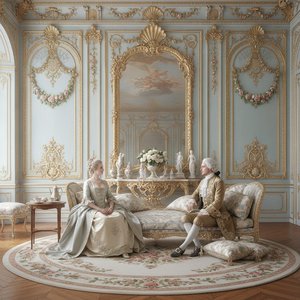
Étagère – A Reflection of Rococo Elegance
Alexandre Roux’s étagère stands as a testament to the enduring allure of the Rococo Revival style, capturing the spirit of Parisian salons in the mid-nineteenth century. More than just furniture; it embodies an aesthetic ideal—refined ornamentation, graceful curves, and a deliberate pursuit of beauty that sought to elevate domestic life. The piece’s meticulous craftsmanship speaks volumes about Roux's dedication to preserving artistic traditions while adapting them to contemporary tastes. Its presence evokes images of opulent gatherings and intellectual discourse, transporting viewers back to a time when art served as both decoration and inspiration.- Artist: Alexandre Roux (1813–1886)
- Nationality: French
- Date: ca. 1850–57
- Medium: Rosewood, chestnut, poplar, bird’s-eye maple
- Dimensions: 86 x 79 1/2 x 31 3/4 in. (218.4 x 201.9 x 80.6 cm)
A Masterpiece of Rococo Revival Design
The étagère exemplifies the stylistic principles championed by Roux and his contemporaries—a conscious revival of the aristocratic tastes of Louis XV and Marie Antoinette. The flowing lines of the mahogany legs mirror the undulating surfaces characteristic of Rococo interiors, creating a harmonious visual rhythm. Elaborate floral carvings adorn the supports, mirroring the exuberant ornamentation found in palaces and private residences during the Régence period (1830–1848). This stylistic choice wasn’t merely decorative; it signaled a desire to recapture a sense of grandeur and sophistication that had been lost amidst the utilitarian concerns of the Industrial Revolution.Detailed Craftsmanship & Material Considerations
Roux's workshop employed skilled artisans who meticulously executed every aspect of the étagère’s construction. The use of rosewood, chestnut, poplar, and bird’s-eye maple—materials prized for their beauty and durability—underscores the commitment to quality craftsmanship. Furthermore, glazing techniques were skillfully applied to achieve depth and luminosity, enhancing the richness of the wood grain and capturing the subtle nuances of color. These meticulous attention to detail reflects a broader trend in Victorian design: an appreciation for handcrafted objects as symbols of status and artistic excellence.Echoes of Parisian Salon Culture
The étagère’s form resonates deeply with the cultural milieu of its time—the Parisian salons where artists, writers, and intellectuals debated ideas and cultivated refined tastes. Like mirrors reflecting light and shelves displaying objets d'art, it served as a focal point for visual stimulation and intellectual engagement. Its presence speaks to a desire for beauty and elegance within the domestic sphere, mirroring the aspirations of wealthy families who sought to emulate the splendor of Versailles and other royal palaces. The étagère remains an enduring emblem of artistic patronage and cultural refinement—a tangible reminder of a bygone era when art played a crucial role in shaping social identity.Comparable Exemplars & Artistic Influence
Notably, Roux’s étagère shares striking similarities with the Alexander Roux étagère at The Metropolitan Museum of Art – a piece recognized for its impeccable execution and adherence to Rococo Revival ideals. This stylistic convergence underscores Roux's contribution to establishing a distinctive aesthetic tradition that continues to inspire designers and collectors today. Its legacy extends beyond mere ornamentation; it embodies a profound belief in art’s capacity to elevate the human spirit and enrich our understanding of beauty and craftsmanship.Otázky a odpovede
Aký pocit vyvoláva „Étagère“ od Alexandre Roux?
V diele „Étagère“ sprevádza Elegantný nálada Pokoj emóciu.
Môžem si „Étagère“ od Alexandre Roux pred kúpou pozrieť na vlastnej stene?
Dielo „Étagère“ od Alexandre Roux si môžete vyskúšať priamo na vašej stene pomocou rozšírenej reality na kompatibilnom zariadení na stránke Náhľad v AR pre AR náhľad.
Z akých krajín pochádzajú návštevníci diela „Étagère“ od Alexandre Roux?
Stránka Štatistiky diela „Étagère“ od Alexandre Roux prezentuje štatistiky návštevnosti: mesačnú návštevnosť tohto diela, jeho porovnanie s najnavštevovanejšími prácami daného umelca a informácie o pôvode návštevníkov.
Biografia umelca
Alexandre Roux: The Parisian Cabinetmaker Who Shaped American Style
Born in the heart of Paris in 1813, Alexandre Roux’s journey from a skilled craftsman to a celebrated furniture maker in New York City is a testament to ambition, talent, and an astute understanding of evolving aesthetic tastes. Initially trained within the traditional workshops of his native France, Roux’s career took a pivotal turn when he immigrated to America in 1844, establishing himself as a prominent figure in the burgeoning world of American furniture design. His legacy isn't defined by grand, revolutionary movements but rather by a consistent dedication to exquisite detail and a masterful command of the Rococo Revival style – a style that profoundly influenced the interiors of wealthy homes across the United States during the mid-19th century.
Roux’s early life instilled in him a deep appreciation for craftsmanship. While specific details about his family are scarce, it's clear he was raised within a lineage of artisans, absorbing techniques and an inherent understanding of materials. This foundation proved invaluable as he navigated the challenges of establishing a business in a new country. New York City, with its rapid growth and influx of European immigrants, presented both opportunities and competition. Roux quickly distinguished himself through his commitment to quality, utilizing premium materials like black walnut and incorporating intricate carvings that echoed the elegance of 18th-century France. His workshops became renowned for producing furniture that was not merely functional but also a statement of refined taste – a direct reflection of the Rococo Revival’s emphasis on ornamentation, curves, and luxurious finishes.
Notable Works and Artistic Style
Roux's work is characterized by an almost obsessive attention to detail. He wasn’t simply replicating historical styles; he was interpreting them with a distinctly American sensibility. His pieces often featured elaborate motifs – shells, scrolls, floral patterns – meticulously carved into the wood and finished with lustrous varnish. The “Parlor Cabinet,” perhaps his most celebrated creation, exemplifies this perfectly. This stunning piece showcases Roux's ability to seamlessly blend intricate designs with exquisite materials, creating a work that is both visually arresting and remarkably tactile. The inclusion of a bowl on one side and a mirror on the other adds an element of surprise and sophistication, demonstrating Roux’s understanding of how furniture could function as a sculptural object within a room.
Beyond the Parlor Cabinet, works like “Still Life Fish” offer further insight into Roux's artistic approach. While categorized as an oil painting, this piece reveals his keen eye for texture and light – qualities he undoubtedly translated to his furniture designs. The meticulous rendering of scales and reflections suggests a desire to capture not just the appearance but also the essence of the subject matter. This attention to realism, combined with a subtle impressionistic touch, sets Roux apart from purely academic painters.
Influence and Historical Context
Alexandre Roux’s rise coincided with a significant shift in American interior design. Following the War of 1812, there was a renewed interest in European styles, particularly those of the French monarchy. The Rococo Revival, characterized by its ornate detailing and emphasis on luxury, became immensely popular among wealthy Americans seeking to emulate the elegance of European aristocracy. Roux’s furniture played a crucial role in shaping this trend, providing a tangible link to the past while simultaneously reflecting the aspirations of the burgeoning American elite.
His work was showcased at the 1853 New York Crystal Palace Exhibition, a pivotal event that brought together innovations from across the globe. This exposure undoubtedly solidified Roux’s reputation and contributed to the growing demand for his furniture. The commission from the Astor family—a testament to his skill—further elevated his status within the American design community.
Legacy and Recognition
While Alexandre Roux may not be as widely recognized as some of his contemporaries, his contributions to American furniture design are undeniable. His pieces can be found in prestigious collections such as the Musée Baron Gérard in Bayeux, France, a testament to their enduring quality and artistic merit. The Metropolitan Museum of Art also holds an example of his work – a sideboard that provides valuable insight into his craftsmanship and stylistic choices. His influence extends beyond individual pieces; Roux helped establish a precedent for American furniture makers who sought to blend European tradition with local sensibilities, ultimately shaping the evolution of American design.
Alexandre Roux’s story is one of transatlantic ambition, artistic dedication, and a profound understanding of the power of beauty. His legacy lives on in the exquisite furniture he created – pieces that continue to inspire admiration for their craftsmanship, elegance, and enduring appeal.

Alexandre Roux
1813 - 1886 , France
Základné informácie
- Full Name: Alexandre Roux
- Nationality: French
- Date Of Birth: 1813
- Date Of Death: 1886
- Place Of Birth: Paris, France
- Notable Artworks:
- Parlor Cabinet
- Still life fish
- Artistic Movement Or Style: Rococo Revival, Victorian Furniture
Súvisiace články

The Elegance of Rococo: A Journey Through Pastel Dreams and Ornate Splendor
Embark on an elegant journey through the Rococo era. Discover the delicate beauty of pastel masterpieces, the intricate artistry of 18th-century French masters, and how this era of ornate splendor continues to inspire timeless luxury in fine art collecting.

The Rococo Aesthetic: Opulence, Rebellion & the Pursuit of Pleasure in 18th-Century Art
Explore the opulent world of Rococo art! Discover its origins, key artists like Watteau & Boucher, and lasting influence on design. Expert insights for collectors & enthusiasts.
Rococo Art Guide: Elegance, Ornamentation, and the Era of Luxury
Explore the elegance of Rococo art. From Watteau to Fragonard, discover the history, aesthetics, and masters of 18th-century luxury in this expert guide for art lovers and collectors.

Rococo Art Guide: Integrating Elegant Curves and Pastel Opulence into Luxury Hotel Design
Master the Rococo aesthetic for luxury hospitality. Our expert guide explores integrating pastel palettes, ornate curves, and large-scale fine art reproductions into high-end hotel design through professional procurement and custom canvas solutions.

Top 10 majstrovských diel rokokového umenia pre váš domov | OriginalUniqueArt.com
Ponorte sa do sveta rokokového umenia! Objavte top 10 majstrovských diel od Watteaua, Bouchera a ďalších. Luxusné reprodukcie obrazov pre váš domov na OriginalUniqueArt.com – inšpirujte sa pastelovými farbami a elegantnou výzdobou.
