

 Zobraziť v interiéri
 Odoslať
 Zdieľať
 Podrobnosti
 Príručka

 Stiahnuť
 Podobné položky
 RTG skúška
 Prehliadanie diapo\]
 Štatistiky
Red Lily Pads (Nénuphars rouges)


 Prečítať si viac
Giclée / Umenotlač
Giclée tlač alebo plátno múzeálnej kvality s rýchlou výrobou a rôznymi možnosťami povrchovej úpravy. ( Objednať ručne maľovanú reprodukciu Prepnúť na digitálnu verziu obrazu)




P118B $10

P118H $10

P118W $10

P438Z $10

P508JH $12

P508YH $12

P805H $10

P805Z $10

P919BZ $10

P919G $10

P919XJ $10

P959ZH $10

P968JZ $12

W106C $8

W218G $10

W218JH $8

W218Y $10

W307PJ $10

W316G $10

W316PJ $8

W316Y $10

W398PJ $8

W4111J $10

W500HY $15

W500JH $15

W692G $12

W849H $8

W940BG $15

W953PJ $8




Vyberte si z našich preddefinovaných rozmerov, ktoré zodpovedajú pôvodným pomeroḿ diela.

Môžete zadať vlastné rozmery, aby sa reprodukcia prispôsobila konkrétnemu rámu alebo priestoru. Ak zvolená veľkosť nebude zodpovedať proporciám originálu, dielo buď orežeme, alebo obraz rozšírime pomocou zrkadlenia či farebného doplnenia okrajov. Pred začatím výroby vám pošleme digitálnu ukážku na schválenie.
Máte na vedomí, že náhľad na obrazovke neodzrkadľuje skutočné orezanie alebo rozšírenie. Len digitálna ukážka presne zobrazí finálnu kompozíciu.
Hoci sú k dispozícii vlastné rozmery, pre zachovanie pôvodných proporcií odporúčame vybrať si rozmer z vopred definovaného zoznamu.
Celosvetová doprava () do 2 týždňov namiesto štandardných 4 až 5 týždňov. (25 september)

Bezplatná expresná doprava po celom svete

Vysokokvalitné lnianske plátno

Úplné poistenie prepravy

Záruka vrátenia colného poplatku

Záruka presného farebného zhodnutia

100-dená politika vrátenia tovaru (iba pri vadách)

100% záruka vrátenia peňazí

Ponuka množstevnej zľavy
 Možnosť skla je dostupná len pri rozmeroch pod 110 cm

Red Lily Pads (Nénuphars rouges)
Giclée / Umenotlač
Veľkosť reprodukcie
-


Celková cena
$ 80
A Dance of Light and Reflection: Unveiling Calder’s “Red Lily Pads”
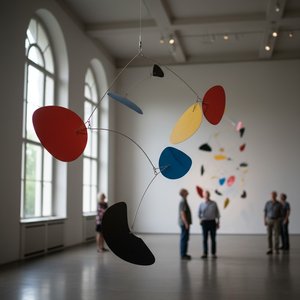
Alexander Milne Calder's "Red Lily Pads (Nénuphars rouges)" isn’t merely a depiction of a serene pond; it’s an invitation to lose oneself in the delicate balance of form, color, and movement. Created in 1956, this captivating sculpture – captured through a masterful photograph – embodies Calder's signature approach: embracing chance and celebrating the ephemeral beauty of nature within a distinctly modern aesthetic. The piece resides within a contemporary architectural space, its organic shapes echoing the curves of the surrounding walls, creating an illusion of seamless integration between art and environment.
The composition immediately draws the eye to the central arrangement of circular lily pads, rendered in a vibrant coral-red that commands attention against the cool neutrality of the white architecture. These aren’t static forms; they possess a subtle dynamism, hinting at an unseen movement – perhaps the gentle sway of water or the whisper of air currents. The delicate wires and rods connecting them are almost invisible, yet crucial to the sculpture's overall effect, suggesting a complex network of support and balance. Calder masterfully utilizes negative space, allowing the surrounding walls to contribute significantly to the artwork’s visual weight and sense of openness.
The Legacy of a Pioneer: Calder and His Architectural Sculptures
To fully appreciate “Red Lily Pads,” it's essential to understand Alexander Milne Calder’s broader artistic trajectory. Born in Aberdeen, Scotland, in 1846, he initially trained as a stonemason before embarking on a career that would ultimately define him as one of the 20th century’s most innovative sculptors. His early work focused on monumental commissions for public buildings, notably his groundbreaking design for Philadelphia City Hall – a project that spanned two decades and involved over 250 individual sculptures. This experience profoundly shaped Calder's approach to architectural sculpture, instilling in him a deep appreciation for the interplay between form, space, and function.
Calder’s fascination with movement is evident throughout his oeuvre, but it’s perhaps most powerfully expressed in his mobiles – kinetic sculptures that respond to air currents. “Red Lily Pads” represents a shift towards a more static form while retaining this core principle of dynamic balance. The photograph captures a fleeting moment of equilibrium, suggesting the constant negotiation between stability and motion that characterizes Calder's work.
Symbolism and Emotional Resonance
The lily pad itself is a potent symbol – representing tranquility, purity, and rebirth. In this context, however, Calder subverts traditional associations, transforming these symbols into an abstract meditation on form and color. The red hue adds a layer of intensity, evoking feelings of passion, energy, and perhaps even a hint of melancholy. The surrounding white walls create a sense of serenity and contemplation, inviting the viewer to lose themselves in the sculpture’s visual rhythm.
Ultimately, “Red Lily Pads” is more than just a beautiful image; it's an invitation to experience the world through Calder’s unique lens. It speaks to our innate desire for balance, harmony, and connection with nature – qualities that resonate deeply in today’s increasingly complex and chaotic environment.
Biografia umelca
Alexander Milne Calder
Alexander Milne Calder, známy ako Alexander Calder, bol škotsko-americký sochár, ktorý sa narodil v Aberdene, Škótsko, roku 1846. Je najlepšie poznaný svojimi architektúrnymi sochami Philadelphijskej hlavnej budovy a tiež tým, že jeho syn, Alexander Stirling Calder, a vnuk, Alexander ‘Sandy’ Calder, boli významnými sochármi v 20. storočí.
Raný život a kariéra
Calder začal svoju činnosť v Škótsku, kde pracoval pre sochára Johna Rhinda počas štúdii na Kráľovskom akademii v Edinburghu. Presťahoval sa do Londynu a pôsobil na Albertnom námestí. Calder emigroval do USA v roku 1868 a usadil sa v Philadelфии, kde študoval s Jozefom A. Baillym a učil sa tiež na Pennsilvánskej akadémii umenia pod vedením Toma Eakinsa.
Významné diela
Niektoré z najvýznamnejších diel Alexandra Milna Caldera zahŕňajú:
- Philadelphijsku hlavnú budovu: Tento projekt vyžadoval viac ako 250 kusov mramoru a bronzu, čo Calderovi zabralo 20 rokov dokončenia.
- William Penn: Monumentálna bronzová štúdia, ktorá mala korunovať vežu hlavnej budovy.
- Indické číslo: Socha pred jej nainštaláciou na hlavnú budovu.
- Južné a západné vrátovisko: osvetlené farebnými svetlami, čo ukazovalo Calderovu pozornosť k detailom.
Dielo Caldera vplyv
Calder bol ovplyvnený mnohými umelcami a pohybmi, medzi ktoré patrili John Rhind, Thomas Eakins a Jean Arp. Jeho práce sú súčasťou významných múzeí po celom svete, vrátane Smithsonian American Art Museum a Galleria Civica di Arte Moderna e Contemporanea Turína.
Posmrtné uznanie
Alexander Milne Calder je oslavovaný ako jeden z najvýznamnejších amerických súčasných umelcov. Jeho diela budú pokračovať v tom, že sú študované a oceňované ďalšie generácie.

Alexander Calder
1898 - 1976 , Škotsko
Rýchle fakty
- Artistic Movement Or Style: Architectural sculpture
- Artists Or Movements Influenced By This Artist: ['Surrealism']
- Artists Who Influenced This Artist: ['John Rhind']
- Date Of Birth: August 23, 1846
- Date Of Death: June 14, 1923
- Full Name: Alexander Milne Calder
- Nationality: Scottish-American
- Notable Artworks:
- Philadelphia City Hall
- William Penn statue
- Place Of Birth: Aberdeen, Scotland
Súvisiace články

The Enduring Form: Exploring Themes & Techniques in Sculpture Across Historical Periods
Explore the rich history of sculpture from ancient masterpieces to contemporary innovations. Discover key techniques, influential artists & investment potential for discerning art collectors.

Top 10 Bronzových Sôch, ktoré Zmenili Umenie Navždy | OriginalUniqueArt
Objavte top 10 legendárnych bronzových sôch, ktoré zmenili umenie! Michelangelo, Rodin a ďalší majstri. História, techniky a nadčasová krása pre váš interiér. Reprodukcie múzejnej kvality na OriginalUniqueArt.com

Wassily Kandinsky: Top 25 diel pre milovníkov umenia a dokonalý dizajn interiéru
Ponorte sa do sveta Wassilyho Kandinského s OriginalUniqueArt.com! Objavte top 25 diel abstraktného umenia, expresionizmu a farebných kompozícií. Kúpiť reprodukcie obrazov pre dokonalý dizajn interiéru. Explore the full collection online.
Alexander Calder: Kinetic Sculpture, Mobile Art & the Poetics of Chance
Explore the revolutionary world of Alexander Calder's kinetic sculptures & mobiles. Discover insights for collectors, acquisition advice, and the enduring legacy of this modern master. Expert analysis & art valuation.

Top 10 majstrovských diel abstraktného expresionizmu pre váš domov | OriginalUniqueArt.com
Ponorte sa do sveta abstraktného expresionizmu s Pollockom, Rothkom a ďalšími majstrami. Objavte príbehy za 10 ikonických diel, techniky a farby, ktoré definovali toto revolučné umenie. Kvalitné reprodukcie na OriginalUniqueArt.com.
