Náhľad v interiéri
 Odoslať ako digitálnu kartu
 Zdieľať
 Podrobnosti o dielo
 Príručka

 Stiahnuť obraz
 Podobné položky
 RTG skúška
 Prehliadanie diapozoje
 Q&A
Q&A Štatistiky
mein Agnes
 Acrylic On Canvas
- WallArt
- Renaissance
 1494
1494 156.0 x 98.0 cm
 Graphische Sammlung Albertina
 Zobraziť viac
Giclée / Umenotlač
Giclée tlač alebo plátno múzeálnej kvality s rýchlou výrobou a rôznymi možnosťami povrchovej úpravy. ( Kúpiť ručne maľovaný obraz Prepnúť na digitálny obraz)




P118B €10

P118H €10

P118W €10

P438Z €10

P508JH €12

P508YH €12

P805H €10

P805Z €10

P919BZ €10

P919G €10

P919XJ €10

P959ZH €10

P968JZ €12

W106C €8

W218G €10

W218JH €8

W218Y €10

W307PJ €10

W316G €10

W316PJ €8

W316Y €10

W398PJ €8

W4111J €10

W500HY €15

W500JH €15

W692G €12

W849H €8

W940BG €15

W953PJ €8




Vyberte si z našich preddefinovaných rozmerov, ktoré zodpovedajú pôvodným pomeroḿ diela.

Zadajte šírku a výšku, ktoré potrebujete, aby sa reprodukcia hodila k vášmu rámu alebo stene. Print možno len orezávať, nikdy však nemennú veľkosť zvětšiť oproti pôvodnému obrázku, preto pri inom formáte stráca časť obrazu. Pred samotným vytlačiacím procesom vám pošleme digitálny náhľad na schválenie. Obrázok zobrazený na tejto stránke nezobrazuje reálny rez — len digitálny náhľad ukazuje presný výsledok.
Celosvetová doprava () do 2 týždňov namiesto štandardných 4 až 5 týždňov. (29 október)

Bezplatná expresná doprava po celom svete

Vysokokvalitné lnianske plátno

Kompletné poistenie prepravy

Záruka vrátenia colného poplatku

Záruka presného farebného zhodnutia

100-dená politika vrátenia tovaru (iba pri vadách)

100% záruka vrátenia peňazí

Zľava pri väčšom množstve
 Možnosť skla je dostupná len pri rozmeroch pod 110 cm

mein Agnes
Giclée / Umenotlač
Veľkosť reprodukcie
-


Celková cena
€ 71
Mein Agnes: A Portrait of Quiet Contemplation
Albrecht Dürer’s “Mein Agnes,” created in 1494, isn't merely a portrait; it’s a profound distillation of human emotion captured with an astonishingly delicate hand. This black and white sketch, now residing within the Albertina Museum in Vienna, offers a rare glimpse into the life of Agnes Dürer, the wife of one of the Renaissance’s most celebrated artists. More than just a depiction of a woman, it's a study in introspection, a moment frozen in time that speaks volumes about the complexities of marriage and the quiet beauty of everyday existence.
The drawing itself is remarkably intimate – a young Agnes, likely around eighteen years old, sits at a table, her head resting pensively on her right hand. Her gaze is averted, suggesting a private thought or perhaps a moment of melancholy. Dürer’s masterful use of hatching and cross-hatching creates an incredible sense of texture, mimicking the drape of her clothing and the softness of her hair. The lines aren't bold declarations; instead, they are subtle whispers that build volume and depth, drawing the viewer into the scene with a gentle invitation.
The Renaissance Context: Marriage and Artistic Patronage
To fully appreciate “Mein Agnes,” it’s crucial to understand the context of its creation. Dürer returned to Nuremberg in 1494 after an extended journey through Italy, a period that profoundly shaped his artistic vision. He had married Agnes Frey just weeks before, a union arranged by their families and reflecting the prevailing social norms of the time. Marriage was often viewed as a strategic alliance, but for Dürer, it also provided him with a model – a muse, in essence – to capture on paper. The arrangement highlights the role of women within Renaissance society, not just as wives and mothers, but as subjects worthy of artistic representation.
Furthermore, Dürer’s return coincided with the rise of wealthy patrons like Emperor Maximilian I, who commissioned elaborate artworks for his court. This patronage fueled a flourishing art market and encouraged artists to experiment with new techniques and styles. Dürer's ability to blend traditional Northern European realism with Italian Renaissance influences – evident in his meticulous observation of anatomy and perspective – made him one of the most sought-after artists of his era.
Technique and Symbolism: A Masterclass in Line
The technical brilliance of “Mein Agnes” lies primarily in Dürer’s command of line. He employs a technique known as *hatching*, layering parallel lines to create tonal variations, and *cross-hatching*, intersecting lines to build darker areas. This method allows him to render the subtle nuances of light and shadow with remarkable precision, giving the figure a tangible presence. The simplicity of the materials – paper and ink – belies the complexity of his execution; it’s a testament to Dürer's extraordinary skill.
Beyond its technical merits, “Mein Agnes” is rich in symbolism. The posture itself—head resting on hand—suggests contemplation, perhaps even sadness or vulnerability. It’s a quiet moment of introspection, offering a poignant contrast to the grand narratives often depicted in Renaissance art. The sketch's intimacy and directness are particularly striking, representing a departure from the more formal portraiture conventions of the period.
Emotional Resonance: A Window into the Human Heart
“Mein Agnes” is not simply a beautiful drawing; it’s an emotionally resonant work that invites viewers to connect with the subject on a deeply personal level. Dürer's ability to capture a fleeting moment of human emotion—a hint of melancholy, a suggestion of inner thought—is truly remarkable. The sketch possesses a timeless quality, reminding us of the universal experiences of love, loss, and introspection.
Reproductions of “Mein Agnes” offer an accessible way to experience this masterpiece firsthand. Whether displayed in a private residence or a public gallery, this intimate portrait continues to captivate audiences with its quiet beauty and profound emotional depth—a testament to the enduring legacy of Albrecht Dürer’s artistic genius.
Otázky a odpovede
Kde by mala byť zavesená reprodukcia diela „mein Agnes“ od Albrecht Dürer?
Formát Tall diela „mein Agnes“ od Albrecht Dürer je ideálny pre Living Room. Formát a priestor spoločne určujú najvhodnejšie umiestnenie reprodukcie.
Ako sa štýl diela „mein Agnes“ vzťahuje k ére jeho tvorcu?
V diele „mein Agnes“ od Albrecht Dürer sa stretáva smer Renaissance s érou Renesancia.
Aké sú rozmery originálu „mein Agnes“ od Albrecht Dürer?
Pôvodné rozmery diela "mein Agnes" sú 156 x 98 cm. Pôvodné rozmery sú užitočným vodidlom pri výbere veľkosti reprodukcie.
Biografia umelca
A Life Forged in Nuremberg: The Early Years and Apprenticeship
Albrecht Dürer, meno známy ako Albrecht Ajtósi alebo Albrecht Durer, je nesporne jeden z najvýznamnejších predstaviteľov nemeckej renesancie. Narodil sa v živom umeleckom mestečku Nürnbergu v roku 1471 a jeho život bol silne spojený s tradíciou zlatníctva, ktorú mu prenášal otec, Albrecht Dürer starný. Tento skúsený zlatník emigroval z Maďarska do Nemecka a priniesol so sebou bohaté umelecké dedičstvo. Už od útleho veku sa zdalo, že Albrecht má dar k kresleniu – talent, ktorý prekracoval hranice obyčajnej remeselnosti. Aj keď jeho otec chcel, aby nasledoval cestu zlatníka, bolo jasné, že Albrecht má vášeň pre umenie a potrebu vyjadrovať sa prostredníctvom kresby. V trinásť rokoch prestúpil do dielne Michaela Wolgemuta, ktorý vted' nasýta umelecké centrum Nürnbergu. To však nebolo len obyčajné učenie; bolo to ponorenie do sveta iluminovaných rukopisov, maľovaných panelov a – čo je dôležité – rozvíjajúceho sa umenia drevorabezníkov. Objem práce produkovanej Wolgemutovou dielňou, vrátane rozsiahlych ilustrácií pre *Nürnberskú kroniku*, poskytol Albrechtovi neoceniteľnú základňu v oblasti návrhu, kompozície a mechaniky vytvárania obrazov. Výnimočný strieborný portrét z roku 1484, vytvorený keď mal len osemnásť rokov, je ohromujúca ukážka jeho precizného talentu – dôkaz rozvíjajúcej sa umeleckej identity, ktorá už začínala rásť.The Italian Influence and Artistic Maturation
Albrechtovu ambíciu však presahovala hranice Nürnbergu. Vďaka nezabudnuteľnej túžbe po poznaní a snahe stať sa majstrom maľby sa vydal na svoju prvú cestu do Talianska v roku 1494. To nebolo len turistické putovanie; bolo to púchtník do srdca renesančného sveta. Zaujímal sa o diela majstrov ako Rafael, Giovanni Bellini a Leonardo da Vinci – umelci, ktorí premenili možnosti formy, perspektívy a ľudského vyjadrenia. Tento kontakt mal hlboký dopad. Dürer nasával klasické motívy, harmonické kompozície a jemné techniky sfumato, ktoré charakterizovali talianske umenie. Ale nikdy nezložil svoje severo-nemecké zmyslenie pre precíznosť a symbolický hĺbku. V roku 1505 podnikol druhú cestu do Talianska, konkrétne do Benátok, kde sa stretol s bohatou venetskou farbou a štýlom. V tomto období sa vrátil do Nürnbergu, kde ho čakala nová zakázka – tzv. „Hellerov oltár“. V roku 1509 vytvoril sériu drevorabezníkov, známe ako Veľké Pašie, ktoré predstavujú vrchol jeho diel a zároveň odrážajú vplyv gotickej tradície.Mastering the Mediums: Painting, Engraving, and Woodcut
Dürer bol majstrom viacerých umení, z ktorých každé mu ponúkalo jedinečné možnosti pre umeleckú vyjadrenie. Jeho maľby, hoci menej početné ako jeho grafiky, demonštrujú pozoruhodný rozmer v ovládnutí oleja a schopnosť zachytiť fyzickú podobnosť aj psychologický hĺbku. Práce ako *Feast of the Rose Garlands* odrážajú bohatú paletu ovplyvnenú venetskou farbou. Avšak práve v oblasti grafiky – najmä gravírovania a drevorabezníkov – Dürer skutočne revolucionalizoval umeleckú praxu. Zvýšil ich status na nezávislé umenie schopné vyjadrovať komplexné príbehy a hlboké emócie. Séria *Apocalypse* (1498), pozostávajúca z dvanástich drevorabezníkov ilustrujúcich knihu Zjavenia, ukazuje jeho mistrovstvo v tomto médiu napriek jeho inherentným obmedzeniam. Neskoršie gravíry ako *Melencolia I* (1514) a *Saint Jerome in His Study* (1514) sú dôkazom jeho neprekonateľnej zručnosti – zložitých kompozícií plných symbolického významu a vykonaných s ohromujúcou presnosťou. Nevytváral len reprezentáciu reality; vložil do nej vrstvy intelektuálneho a duchovného významu.A Theorist and Innovator: The Legacy of Albrecht Dürer
Dürer nebol len umelcom; bol teoretik, inštruktor a inovátor, ktorý sa snažil pochopiť princípy, ktoré riadia umelecké tvorivosť. Věřil v matematické základy umenia a venoval sa tomu, aby stanovil vedecký prístup k reprezentácii. Jeho traktáty o geometrii, pomere a ľudskej anatómie – najmä *Four Books of Human Proportion* (1528) – boli revolučné pre svoju dobu, demonštrovali jeho záväzok k vedeckému pozorovaní a racionálnej analýze. Tieto diela neboli len akademické cvičenia; boli určené na zvýšenie statusu umelcov z remeselných pracovníkov na intelektuálov. Dürer prepojal severo-nemecké tradície s talianskymi renesančnými ideálmi, zavádzal klasické motívy do severného umenia a zároveň si zachoval jeho charakteristický vzhľad. Jeho teoretické prínosk zvyšovali status umelca ako intelektuála. Jeho diela sú dôkazom síl videnia, hľadania poznatkov a trvalého ľudského túžby po tvorbe krásy a významu. Jeho dielo stojí dodnes ako dôkaz síl videnia, hľadania poznatkov a trvalého ľudského túžby po tvorbe krásy a významu.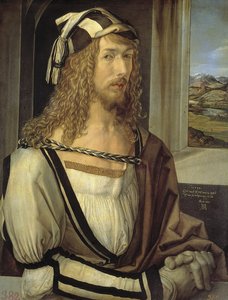
Albrecht Dürer
1471 - 1528 , Nemecko
Základné informácie
- Artistic Movement Or Style: Nemecká renesancia
- Artists Or Movements Influenced By This Artist: ['Nemecká renesancia']
- Artists Who Influenced This Artist:
- Leonardo da Vinci
- Michael Wolgemut
- Giovanni Bellini
- Date Of Birth: 21. máj 1471
- Date Of Death: 6. apríl 1528
- Full Name: Albrecht Dürer
- Nationality: Nemecký
- Notable Artworks:
- Apokalypse
- Melencolia I
- Sv. Jur Zajac
- Place Of Birth: Nürnberg, Nemecko
Súvisiace články

Top 10 slávnych obrazov v odtieňoch bielej: Krása, história a dekor pre váš domov
Objavte top 10 slávnych obrazov v odtieňoch bielej – Monet, Renoir a ďalší majstri. História umenia, techniky a inšpirácia pre váš interiér. Reprodukcie obrazov najvyššej kvality na OriginalUniqueArt.com.
The Eloquent Line: Exploring the Artistic Significance of Sketches Across Movements and Media
Explore the profound artistic significance of sketches throughout history. From Renaissance masters to modern innovators like Van Gogh & Guston, discover how these foundational works reveal technique, emotion, and vision. Learn more at OriginalUniqueArt.
Albrecht Dürer: Top 25 Majstrovských Diel pre Váš Domov | OriginalUniqueArt.com
Objavte top 25 majstrovských diel Albrechta Dürera! Pútavé príbehy, renesančné techniky a symbolizmus v ikonických obrazoch. Kvalitné reprodukcie pre váš domov na OriginalUniqueArt.com. Preskúmajte celú kolekciu online.
Top 25 umeleckých diel Britského múzea: História, krása a dekor pre váš domov
Objavte top 25 umeleckých diel Britského múzea! Prežite príbehy slávnych majstrov ako Leonardo da Vinci, Van Gogh a Rembrandt. Reprodukcie obrazov pre váš domov – nájdite inšpiráciu a luxusné dekorácie na OriginalUniqueArt.com

Albrecht Dürer: A Renaissance Master's Legacy of Innovation and Self-Portraiture
Explore the life & art of Albrecht Dürer, a pivotal German Renaissance master. Discover his groundbreaking printmaking techniques, iconic self-portraits, and lasting influence on Western art history. A deep dive into innovation & symbolism.