

 Zobraziť v interiéri
 Odoslať
 Zdieľať
 Podrobnosti
 Príručka

 Stiahnuť
 Podobné položky
 RTG skúška
 Prehliadanie diapo\]
 Štatistiky
Red Bird


 Prečítať si viac
Umelecké dielo zobrazené na tejto stránke je chránené autorským zákonom, čo znamená, že nemôžeme legálne vytvárať ani predávať jeho identickú reprodukciu. Táto ochrana je vymáhaná na základe medzinárodných dohôd, ako napríklad Bernská konvencia a národnými zákonmi, vrátane tých, ktoré sú stanovené v Autorské právo USA – Title 17. Všetky práva vyhradené.
Táto metóda plne dodržiava autorské práva, pretože nezahŕňa kopírovanie ani duplikovanie chráneného diela. Ide skôr o kreatívnu reinterpretáciu – nový obraz, ktorý je ovplybnený originálom, no nie je s ním identický.
Giclée / Umenotlač
Giclée tlač alebo plátno múzeálnej kvality s rýchlou výrobou a rôznymi možnosťami povrchovej úpravy. ( Objednať ručne maľovanú reprodukciu Prepnúť na digitálnu verziu obrazu)




P118B €10

P118H €10

P118W €10

P438Z €10

P508JH €12

P508YH €12

P805H €10

P805Z €10

P919BZ €10

P919G €10

P919XJ €10

P959ZH €10

P968JZ €12

W106C €8

W218G €10

W218JH €8

W218Y €10

W307PJ €10

W316G €10

W316PJ €8

W316Y €10

W398PJ €8

W4111J €10

W500HY €15

W500JH €15

W692G €12

W849H €8

W940BG €15

W953PJ €8




Vyberte si z našich preddefinovaných rozmerov, ktoré zodpovedajú pôvodným pomeroḿ diela.

Zadajte šírku a výšku, ktoré potrebujete, aby sa reprodukcia hodila k vášmu rámu alebo stene. Print možno len orezávať, nikdy však nemennú veľkosť zvětšiť oproti pôvodnému obrázku, preto pri inom formáte stráca časť obrazu. Pred samotným vytlačiacím procesom vám pošleme digitálny náhľad na schválenie. Obrázok zobrazený na tejto stránke nezobrazuje reálny rez — len digitálny náhľad ukazuje presný výsledok.
Celosvetová doprava () do 2 týždňov namiesto štandardných 4 až 5 týždňov. (23 október)

Bezplatná expresná doprava po celom svete

Vysokokvalitné lnianske plátno

Úplné poistenie prepravy

Záruka vrátenia colného poplatku

Záruka presného farebného zhodnutia

100-dená politika vrátenia tovaru (iba pri vadách)

100% záruka vrátenia peňazí

Ponuka množstevnej zľavy
 Možnosť skla je dostupná len pri rozmeroch pod 110 cm

Red Bird
Giclée / Umenotlač
Veľkosť reprodukcie
-


Celková cena
€ 70
The Quiet Architecture of Being
To stand before this piece is to enter a space of profound stillness. It is not an image that demands attention through drama or vibrant color; rather, it invites the viewer into a hushed conversation with structure itself. The canvas unfolds as a field of subtle cream and off-white, dominated by a meticulous yet seemingly effortless grid. These horizontal lines are the very breath of the composition—thin, rhythmic, and repeating across the surface. They suggest an underlying order, a quiet architecture that supports nothing more than contemplation. This work speaks in whispers, using line not as a boundary, but as a meditation.
A Dialogue with Minimalism and Abstraction
This piece belongs to a lineage of reductive art, echoing the profound explorations of Agnes Martin. Her commitment was always to stripping away the superfluous until only the essential remained: the mark, the plane, the breath between things. The style is pure minimalism, yet it resists being merely decorative. It possesses an intellectual rigor that speaks to decades of artistic inquiry into perception. The slight variations in line thickness and spacing—the subtle imperfections that betray the human hand—are crucial. They prevent the grid from becoming cold or mechanical; instead, they imbue the structure with a palpable sense of life lived through careful attention.
Technique and Materiality: The Hand's Signature
The execution is deceptively simple. Using what appears to be fine acrylic paint on canvas, the artist has employed a technique that requires immense patience and unwavering focus. One can almost hear the soft scratch of the brush against the prepared surface as the horizontal passages are laid down one after another. The resulting texture is whisper-light, catching the diffused light without glare. This mastery over restraint—the ability to create such depth and pattern using only near-monochromatic tones—is what elevates this work from mere drawing to profound artistic statement.
Symbolism of Order and Introspection
What does this grid symbolize? For many, it represents the comforting framework of human understanding: routine, structure, or perhaps even the gentle limitations that define our experience. Yet, because these lines are so delicate, they never feel restrictive. Instead, they act as a visual guide toward introspection. They suggest the quiet moments between thoughts, the necessary pauses in a busy life. Owning this piece is not simply decorating a wall; it is curating an atmosphere of serenity, a visual anchor for moments requiring deep thought and calm repose.
Bringing Stillness Home
For the collector or designer seeking to infuse a space with sophisticated tranquility, this reproduction offers unparalleled depth. It pairs beautifully in environments that value understated luxury—a modern library, a quiet sitting room, or an art-focused gallery wall. It is a piece that does not shout for attention but rather deepens the ambiance, allowing the natural light and the conversation within the room to become the true focal points. It is wearable calm, rendered beautifully on canvas.
Otázky a odpovede
Aká farba dominuje v kompozícii diela „Red Bird“ od Agnes Martinová?
Dominantnou farbou diela „Red Bird“ od Agnes Martinová je Putty (#e7e3d9).
Môžem si pred objednávkou pozrieť náhľad diela „Red Bird“ od Agnes Martinová?
Náhľad diela „Red Bird“ od Agnes Martinová si môžete pozrieť na stránke Náhľad daného diela.
Hacia ktorej farbe sa naklonilo dielo "Red Bird"?
Dominantným odtieňom diela „Red Bird“ od Agnes Martinová je Ochre to Sepia. Tento odtieň predstavuje základný tón palety.
Biografia umelca
Early Life and the Seeds of Abstraction
Agnes Bernice Martin, born in 1912 in the small prairie town of Macklin, Saskatchewan, Canada, embarked on a life journey that would ultimately redefine the boundaries of abstract art. Her early years were marked by a nomadic existence following her father’s death when she was just two years old; the family moved between rural communities in both Canada and the United States, eventually settling in Vancouver, British Columbia. This upbringing instilled within her a sense of detachment and an appreciation for vast, open landscapes – qualities that would profoundly influence her artistic vision later in life. Martin pursued formal education diligently, studying at Western Washington University College of Education before continuing to Teachers College, Columbia University, where she earned both Bachelor’s and Master’s degrees. While initially focused on English and art education, it was during her time in New York City that she became immersed in the burgeoning modern art scene, encountering the works of artists like Arshile Gorky, Adolph Gottlieb, and Joan Miró. These encounters sparked a deep fascination with abstraction, setting her on a path toward artistic innovation. A pivotal moment arrived in 1947 when she attended a summer field school at the University of New Mexico in Taos. The stark beauty and expansive emptiness of the desert landscape resonated deeply within her, becoming a foundational element of her aesthetic sensibility.Zen Buddhism, Minimalism, and the Emergence of a Unique Style
The 1950s witnessed Martin’s artistic style begin to coalesce. Her early work reflected influences from Precisionism, characterized by detailed depictions of industrial subjects, but she soon moved toward abstraction. A crucial turning point was her exploration of Zen Buddhism, not as a religious practice, but as a philosophical framework for living—a practical guide emphasizing simplicity, mindfulness, and inner peace. This philosophy became inextricably linked to her art. By the late 1950s, Martin found herself aligned with the Abstract Expressionist movement in New York City, yet her work distinguished itself through its quiet restraint compared to the more gestural styles of artists like Jackson Pollock and Willem de Kooning. She was deeply influenced by Ad Reinhardt’s reductive abstraction and monochrome paintings, which encouraged a stripping away of extraneous elements to reveal essential forms. This pursuit of essence led Martin to develop her signature style: delicate grid paintings composed of subtle lines drawn with graphite or diluted ink on large canvases. These grids weren't rigid structures but rather ethereal frameworks that seemed to breathe and shimmer with an inner light. She often employed pale washes of color—pinks, blues, yellows, and grays—to create luminous surfaces evoking serenity and contemplation. Despite their minimalist appearance, her paintings were imbued with emotional depth; she aimed to convey feelings of happiness, peace, and beauty through her art, famously stating, “Beauty and perfection are the same. They never occur without happiness.” Even her titles – *Happy Holiday*, *I Love the Whole World*, *The Islands*, *Mountain* – hinted at positive emotions and a connection to the natural world.A Period of Isolation and Rediscovery
In 1967, at the height of her artistic career, Agnes Martin made a startling decision: she abruptly left New York City, severing ties with the art world for nearly two decades. The reasons were complex—the loss of friends, the destruction of familiar neighborhoods, and personal relationships all contributed to her desire for solitude. She retreated to rural New Mexico, building adobe homes and living a largely reclusive life. Though she distanced herself from public view, Martin did not abandon her art entirely. In 1973, she resumed painting, continuing to refine her grid-based style with unwavering dedication. This period of isolation allowed her to deepen her artistic exploration without the pressures of the commercial art world. It wasn’t until the late 1980s and early 1990s that Martin's work began to receive renewed recognition. A major retrospective exhibition at the Hirshhorn Museum and Sculpture Garden in Washington, D.C., in 1993 solidified her position as a pivotal figure in contemporary art.Legacy and Historical Significance
Agnes Martin’s impact on the art world is profound and enduring. She is widely regarded as a pioneer of minimalism, challenging conventional notions of artistic expression by reducing painting to its most essential elements. Her work has had a lasting influence on contemporary artists working in various media, inspiring explorations of simplicity, repetition, and meditative states. Her legacy extends beyond aesthetics; Martin’s life and art have been re-examined through a feminist lens, highlighting her unconventional lifestyle and subtle critique of the male-dominated art world. Some scholars suggest she was “too engaged in a feminist relation to practice, perhaps, to objectify and label it as such.” Beyond these considerations, Martin's work possesses a deeply spiritual dimension, offering viewers an opportunity for quiet contemplation and reflection. Her paintings invite us to experience the beauty of simplicity and the power of inner peace—a testament to her belief that art could be a vehicle for transcendence. Agnes Martin’s contribution lies not just in what she removed from painting but in what she revealed: the subtle, profound emotions hidden within stillness and silence. Her work continues to resonate with audiences today, offering a sanctuary from the complexities of modern life and reminding us of the enduring power of beauty.
Agnes Martinová
1912 - 2004 , Kanada
Rýchle fakty
- Artistic Movement Or Style: Minimalizmus
- Artists Or Movements Influenced By This Artist: ['Contemporary artisti']
- Artists Who Influenced This Artist: ['Ad Reinhardt']
- Date Of Birth: March 22, 1912
- Date Of Death: December 16, 2004
- Full Name: Agnes Bernice Martin
- Nationality: Kanadská
- Notable Artworks:
- Untitled no. - (1)
- The tree
- Untitled # 9
- Place Of Birth: Macklin, Kanada
Súvisiace články
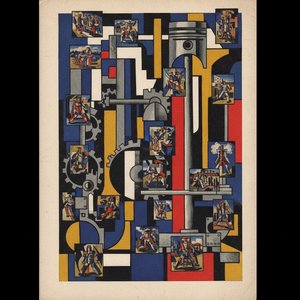
Fernand Léger: Top 25 diel pre milovníkov moderného umenia a dizajnu interiéru
Objavte top 25 diel Fernand Légera – priekopníka kubizmu a tubizmu. Prežite príbeh za ikonickými obrazmi, farebnou kompozíciou a strojovým vekom. Reprodukcie pre váš interiér na OriginalUniqueArt.com! Preskúmajte celú kolekciu online.

Top 10 majstrov geometrickej abstrakcie: Umění pre váš domov s OriginalUniqueArt.com
Ponorte sa do sveta geometrickej abstrakcie! Objavte 10 majstrovských diel od Mondriana, Kandinského a ďalších. História umenia, techniky a farebné kompozície na OriginalUniqueArt.com – reprodukcie obrazov pre váš domov.

The Beauty of Less: A Sophisticated Guide to the Soul of Minimalist Art and Geometric Harmony
Discover the profound elegance of minimalist art. Explore how geometric abstraction and the beauty of reduction create serene, sophisticated spaces through our expert guide to finding soul and harmony in every line and shape.
Top 10 minimalistických diel pre elegantný interiér | OriginalUniqueArt.com
Objavte top 10 minimalistických diel od Mondriana, Maleviča a ďalších majstrov. Inšpirujte sa jednoduchosťou, zen umením a eleganciou pre váš interiér. Kúpiť reprodukcie obrazov na OriginalUniqueArt.com!

Top 10 majstrovských diel abstraktného expresionizmu pre váš domov | OriginalUniqueArt.com
Ponorte sa do sveta abstraktného expresionizmu s Pollockom, Rothkom a ďalšími majstrami. Objavte príbehy za 10 ikonických diel, techniky a farby, ktoré definovali toto revolučné umenie. Kvalitné reprodukcie na OriginalUniqueArt.com.