

 Zobraziť v interiéri
 Odoslať
 Zdieľať
 Podrobnosti
 Príručka

 Stiahnuť
 Podobné položky
 RTG skúška
 Prehliadanie diapo\]
 Štatistiky
Mi dolgon fanciullo


 Prečítať si viac
Ručne maľovaná olejová reprodukcia
Ručne maľovaný olej na plátne vo vašej zvolenej veľkosti a v ráme, vyrobený na mieru našimi umelcami. ( Prepnúť na tlač Prepnúť na digitálnu verziu obrazu)




P118B $10

P118H $10

P118W $10

P438Z $10

P508JH $12

P508YH $12

P805H $10

P805Z $10

P919BZ $10

P919G $10

P919XJ $10

P959ZH $10

P968JZ $12

W106C $8

W218G $10

W218JH $8

W218Y $10

W307PJ $10

W316G $10

W316PJ $8

W316Y $10

W398PJ $8

W4111J $10

W500HY $15

W500JH $15

W692G $12

W849H $8

W940BG $15

W953PJ $8




Vyberte si z našich preddefinovaných rozmerov, ktoré zodpovedajú pôvodným pomeroḿ diela.

Môžete zadať vlastné rozmery tak, aby sa hodili do konkrétneho rámu alebo priestoru. Ak sa váš zvolený rozmer nezhoduje s pôvodnými proporciami obrazu, dielo buď orezáme, alebo ho doplníme ručne maľovanými prvkami. Pred začiatkom výroby vám zašleme digitálny náhľad na schválenie.
Upozorňujeme, že ukážka na obrazovke neodráža skutočné orezanie ani doplnenie. Skutočnú finálnu kompozíciu zobrazuje iba digitálny náhľad.
Hoci sú k dispozícii vlastné rozmery, odporúčame vybrať rozmer z preddefinovaného zoznamu, aby sme zachovali pôvodné proporcie.
Po odoslaní objednávky vám tím OriginalUniqueArt.com pošle e-mail s pokynmi a poskytne náhľad na návrh
Celosvetová doprava () za 3 až 4 týždne namiesto štandardných 5 týždňov. (26 september). Bez kompromisov v kvalite.

Bezplatná expresná doprava po celom svete

Vysokokvalitné lnianske plátno

Úplné poistenie prepravy

Záruka vrátenia colného poplatku

Záruka presného farebného zhodnutia

100-dená politika vrátenia tovaru (iba pri vadách)

100% záruka vrátenia peňazí

Ponuka množstevnej zľavy
 Možnosť skla je dostupná len pri rozmeroch pod 110 cm

Mi dolgon fanciullo
Spôsob reprodukcie
Veľkosť reprodukcie
-


Celková cena
$ 300
A Poignant Vision of Grief and Grace
In the delicate interplay of pencil and gold on paper, Adolfo Wildt’s Mi dolgon fanciullo emerges as a profound meditation on loss, memory, and the enduring weight of human sorrow. Created in the 1920s, this exquisite work serves as a hauntingly beautiful tribute, realized for Margherita Sarfatti in memory of her son who fell during the First World War. The piece does not merely depict a scene; it captures an archetype of grief, translating the unspeakable agony of a mother into a visual language that is both ethereal and devastatingly precise. Through Wildt’s masterful hand, the boundary between the physical world and the spiritual realm becomes blurred, inviting the viewer into a space of quiet, sacred mourning.
The composition is a masterclass in symbolic economy and emotional depth. From an indistinct black void, four grieving women emerge, their forms defined by continuous, sharp lines that seem to cut them out from the white background like silhouettes of pure emotion. One figure cradles a baby, grounding the cosmic scale of death in the intimate reality of maternal instinct. Above this earthly sorrow floats the lifeless body of a young man, a spectral presence that anchors the piece's tragic narrative. A thin, skeletal shrub with sparse leaves bisects the scene, its form subtly suggesting a cross—a symbol of sacrifice and martyrdom that elevates the personal tragedy to a universal level of spiritual significance.
The Alchemy of Line and Light
Wildt’s technique in this work reflects his background as a goldsmith, a discipline that instilled in him an unparalleled reverence for fine detail and precious materials. The use of gold on paper is not merely decorative; it acts as a divine light, illuminating the tragedy with a celestial glow that contrasts sharply with the somber subject matter. This infusion of gold lends the drawing a liturgical quality, transforming the paper into something akin to an icon. The precision of his pencil work creates a sense of hyper-realism within a dreamlike atmosphere, where every line carries the weight of a heartbeat and every shadow holds a secret.
For the discerning collector or interior designer, Mi dolgon fanciullo offers more than just aesthetic beauty; it provides a focal point of profound intellectual and emotional resonance. A high-quality reproduction of this masterpiece brings into a space a sense of historical gravity and sophisticated melancholy. It is an ideal selection for those seeking to curate environments that celebrate the complexity of the human condition, offering a conversation piece that transcends mere decoration to become a window into the soul of early 20th-century Italian Symbolism.
Biografia umelca
Adolfo Wildt – Milanese Bridging Worlds: The Life and Art of Adolfo Wildt
Adolfo Wildt, born in Milan on March 1st, 1868, to a Swiss family who had embraced Lombardy as their new home, emerged as a pivotal figure in Italian sculpture during a period of profound artistic transition. His journey was one marked by early hardship and relentless dedication, beginning not within the hallowed halls of an academy but amidst the practical demands of labor. Leaving school at the tender age of nine, Wildt’s initial forays into the working world saw him apprenticed first as a hairdresser, then as a goldsmith – experiences that instilled in him a meticulous attention to detail and a nascent understanding of form. However, it was his apprenticeship at eleven with Giuseppe Grandi, a prominent sculptor associated with the Scapigliatura movement, that truly ignited his artistic calling. Under Grandi’s tutelage, Wildt began to master the demanding art of sculpting marble, laying the foundation for a career defined by technical brilliance and emotional depth. By eighteen, his talent was already garnering recognition within Milanese artistic circles, foreshadowing the significant contributions he would make to the world of sculpture. He continued his education at the Brera Academy of Fine Arts, solidifying his theoretical knowledge alongside his burgeoning practical skills.Early Life and Apprenticeships: From Hairdressing to Marble
Wildt’s formative years instilled in him a discipline and precision that would characterize his entire artistic life. Abandoning formal schooling early on, he pursued vocational training as a hairdresser and goldsmith – trades that honed his observational abilities and fostered an appreciation for craftsmanship. These experiences weren’t merely practical skills; they cultivated a sensitivity to texture and surface detail—qualities that would later translate into the luminous quality of his marble sculptures. The pivotal encounter with Giuseppe Grandi at eleven proved transformative, introducing him to the art of sculpting marble and shaping his artistic vision. Grandi's influence extended beyond technique; he instilled in Wildt a belief in experimentation and a willingness to challenge conventional aesthetic norms—a spirit that would propel him forward as he navigated the evolving landscape of Italian sculpture. By eighteen, Wildt’s burgeoning talent attracted considerable attention within Milanese artistic circles, signaling his potential for greatness and foreshadowing his future achievements.The Scapigliatura Movement and Giuseppe Grandi's Influence
Wildt’s artistic development coincided with the rise of the Scapigliatura movement—a rebellious reaction against academic conservatism that championed individualism and emotional expression. Grandi, a leading proponent of this movement, recognized Wildt’s innate talent and encouraged him to pursue his creative impulses without restraint. This mentorship fostered a profound appreciation for stylistic innovation and a conviction that sculpture could convey complex psychological states—principles that would become central to Wildt’s artistic philosophy. Grandi championed the exploration of form and texture, urging Wildt to push beyond mere imitation and strive for genuine emotional resonance. His guidance ensured that Wildt’s work remained rooted in both tradition and daring experimentation.Recognition and Patronage: The Galleria Nazionale d'Arte Moderna and Franz Rose
Wildt’s artistic promise gained immediate validation in 1893 with the exhibition of his portrait of his wife at the Permanent Society for Fine Arts in Milan—a piece that was swiftly acquired by the Galleria Nazionale d’Arte Moderna in Rome. This prestigious sale served as a powerful endorsement of Wildt’s talent and signaled to the wider art world that he possessed exceptional artistic potential. However, perhaps the most significant catalyst for his career advancement came in 1894 when he secured an invaluable partnership with Franz Rose—a Prussian collector who possessed discerning taste and considerable financial resources. For eighteen years, Rose provided Wildt with unwavering support—both economic security and preferential access to exhibitions—allowing him to immerse himself entirely in his artistic pursuits. This patronage enabled Wildt to participate regularly in prominent exhibitions across Europe—Milan, Munich, Zurich, Berlin, and Dresden—introducing his work to an international audience and establishing him as one of the foremost sculptors of his time.Style and Technique: Marble Transparency and Expressionist Influences
Wildt’s sculptural style distinguished itself through its remarkable luminosity—a characteristic achieved by manipulating marble to create an almost translucent effect that captivated critics and fellow artists alike. Sculptors like Adolf von Hildebrand and Auguste Rodin were profoundly impressed by Wildt’s innovative approach, praising his ability to capture the essence of emotion within stone—a feat considered extraordinary for its era. His technique demanded meticulous attention to detail and a profound understanding of material properties—qualities that he cultivated through years of dedicated practice. Wildt’s work embraced both Romanticism's emotive grandeur and Secessionism’s stylistic boldness, reflecting the broader artistic currents of his time. Notably, Wildt was fascinated by Expressionist ideas, which influenced him to convey emotion in a way that went beyond mere representation—a characteristic visible in his self-portrait of 1908. His sculptures are imbued with a palpable sense of drama and psychological depth—testaments to his artistic vision and technical mastery.Major Achievements and Legacy: From Tomb Sculptures to Brera Academy
Wildt’s contribution to Italian sculpture extended beyond individual masterpieces; he established the Marble School in Milan in 1921, fostering the training of future generations of sculptors and disseminating knowledge about traditional techniques. This school was subsequently incorporated into the Brera Academy as a three-year course—a lasting testament to Wildt’s commitment to artistic education and his desire to preserve Italian sculptural heritage. Among his most celebrated pupils were Lucio Fontana, Fausto Melotti, and Luigi Broggini—artists who would themselves become influential figures in modern art—solidifying Wildt’s legacy as a pivotal innovator and mentor. His sculptures remain powerful reminders of the enduring human quest for beauty, spirituality, and emotional expression—a testament to his artistic genius and its lasting impact on Italian art history.
Adolf Wildt
1868 - 1931 , Švajcaria
Rýchle fakty
- Artistic Movement Or Style: Romanticism, Modernism
- Artists Or Movements Influenced By This Artist:
- Lucio Fontana
- Fausto Melotti
- Artists Who Influenced This Artist:
- Giuseppe Grandi
- Federico Villa
- Date Of Birth: 1868
- Date Of Death: 1931
- Full Name: Adolfo Wildt
- Nationality: Italian
- Notable Artworks:
- Fulcieri Paulucci de’ Calboli
- Saint Lucia
- St. Francis of Assisi
- Mask of Sorrow
- Place Of Birth: Milan, Italy
Súvisiace články

The Enduring Allure of Marble in Art History: From Classical Sculpture to Modern Abstraction
Explore the captivating history of marble sculpture from ancient Greece to modern art. Discover renowned artists like Canova & Michelangelo, carving techniques, and investment insights at OriginalUniqueArt.

Top 10 Bronzových Majstrovských Diel, ktoré Zmenili Umění Navždy | OriginalUniqueArt
Objavte top 10 legendárnych bronzových majstrovských diel, ktoré zmenili umenie navždy! Rodin, Michelangelo a ďalší. Prežite príbehy slávnych sôch a nájdite inšpiráciu pre váš interiér na OriginalUniqueArt.com.

The Enduring Form: Exploring Themes & Techniques in Sculpture Across Historical Periods
Explore the rich history of sculpture from ancient masterpieces to contemporary innovations. Discover key techniques, influential artists & investment potential for discerning art collectors.

Top 10 Bronzových Sôch, ktoré Zmenili Umenie Navždy | OriginalUniqueArt
Objavte top 10 legendárnych bronzových sôch, ktoré zmenili umenie! Michelangelo, Rodin a ďalší majstri. História, techniky a nadčasová krása pre váš interiér. Reprodukcie múzejnej kvality na OriginalUniqueArt.com
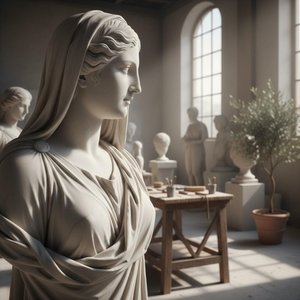
Timeless Elegance: A Complete Guide to the Sublime Beauty and Artistry of Marble Sculpture
Discover the sublime beauty of marble art through an expert exploration of Renaissance and Neoclassical masterpieces. From the delicate textures of Carpeaux to the grandeur of Sansovino, immerse yourself in a guide to timeless elegance and sculptural perfection.