Portrét Sol Lewitt

40 najznámejších obrazov od Sol Lewitt, výber z galérie

Aktualizované október 2026 · zoradené podľa našej miery popularity (vyhľadávanie, návštevy a objednávky pre každou prácu) · 42 dielov umelca Sol Lewitt v našom katalógu

Stručne povedané

Z všetkých originálov, ktoré Sol Lewitt zanechal, je najznámejší Serial Project #1 ABCD (1966), ktorý sa nachádza v zbierkach MoMA - Museum of Modern Art v meste New York. Hneď za ním nasledujú Wall drawing #1091: arcs, circles and bands (room) (2003) a Distorted Cubes Bozuk Küpler. Náš katalóg obsahuje 42 diel od Sol Lewitt; galéria si zachovala tých 40, ktoré obdivuje celý svet, pričom každý z nich je prezentovaný spolu s jeho dátumom, múzeou a príbehom.

1928 – 2007, Hartford Minimalism Najviac diel: MASS MoCA

Top 10 obrazov umelca Sol Lewitt: výber galérie

1
Serial Project #1 ABCD (1966) od Sol Lewitt

Serial Project #1 ABCD

1966 · Sculpture · MoMA - Museum of Modern Art, New York

A systematic arrangement of white cubes and rectangular prisms occupies a grid-like base, set against a stark black void. This geometric composition, titled Serial Project #1 ABCD, functions as an architectural exploration of structure and seriality. Rather than representing a specific building, the work investigates the permutations of simple shapes. The arrangement follows a predetermined algorithm, where the placement of each element is dictated by a logical sequence rather than…

2
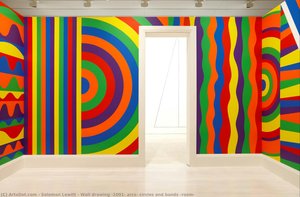
Wall drawing #1091: arcs, circles and bands (room) (2003) od Sol Lewitt

Wall drawing #1091: arcs, circles and bands (room)

2003 · Installation Art · Art Gallery of New South Wales, Sydney

To stand before Wall drawing #1091: arcs, circles and bands (room) is to witness not merely an arrangement of pigment on a surface, but the vibrant echo of artistic reinvention. This monumental piece by Solomon Lewitt captures a moment of profound resurgence in his later career. Where earlier works might have favored a more restrained palette, this drawing explodes with exuberant color—a joyous chromatic symphony applied across the architectural expanse…

3
Distorted Cubes Bozuk Küpler od Sol Lewitt

Distorted Cubes Bozuk Küpler

Painting · Borusan Contemporary, Istanbul

In the realm of conceptual mastery, few works capture the rhythmic pulse of modern abstraction as vibrantly as Sol LeWitt’s Distorted Cubes Bozuk Küpler. This captivating piece serves as a brilliant testament to the artist's ability to transform rigid mathematical precision into a dance of visual delight. At first glance, the viewer is greeted by an intricate mosaic of fourteen distinct colored squares, each meticulously arranged to create a sense…

4
Wall Drawing #391 (1983) od Sol Lewitt

Wall Drawing #391

1983 · Indian Ink · MASS MoCA, Adams

Wall Drawing #391 is an artwork by Solomon Lewitt. Created in April 1983, this two-part drawing occupies a specific space within the MASS MoCA in Adams. The work exists as a structural dialogue between two adjacent surfaces, mapping out a logic that relies on the intersection of planes and the direction of the line.

5
Wall Drawing #831 (1997) od Sol Lewitt

Wall Drawing #831

1997 · Drawing · Guggenheim Museum Bilbao, Bilbao

In the vast landscape of twentieth-century modernism, few names resonate with as much intellectual rigor as Solomon Lewitt. His Wall Drawing #831, created in 1997, serves as a breathtaking testament to the power of the idea over the hand. As a pioneer of both Minimalism and Conceptual Art, Lewitt famously posited that the concept itself is the machine that makes the art. This particular work is not merely a painting…

6
Wall Drawing #915 (1999) od Sol Lewitt

Wall Drawing #915

1999 · Installation Art · MASS MoCA, Adams

Wall Drawing #915 exists as an installation of mathematical precision. Created in 1999, the work utilizes a palette of pastels, anchored by a primary tone of steel blue. The composition relies on geometric patterns and interlocking shapes that transform architectural surfaces into active participants in the art. Through the use of arcs and circles, the piece establishes a rhythmic movement across the wall.

7
Incomplete open cube 5/6 (1974) od Sol Lewitt

Incomplete open cube 5/6

1974 · Metal · Art Gallery of New South Wales, Sydney

Incomplete Open Cube No.5-6 – A Testament to Minimalist Geometry The ‘Incomplete open cubes’ represent a pivotal moment in Sol LeWitt's artistic trajectory, encapsulating the core tenets of his conceptual approach and solidifying his position as one of the pioneers of Minimalism. Created in 1974, this sculpture—a precisely crafted aluminum structure—isn’t merely an object; it’s an embodiment of intellectual rigor distilled into a deceptively simple form. LeWitt himself famously articulated…

8
Kaldor Public Art Project 06: Sol LeWitt 1977 (1977) od Sol Lewitt

Kaldor Public Art Project 06: Sol LeWitt 1977

1977 · Drawing · Kaldor Public Art Projects, Sydney

In the quiet, transformative moment captured in this 1977 photograph, we witness more than just the documentation of a mural; we see the physical manifestation of an idea. Part of the prestigious Kaldor Public Art Project, this work by Solomon LeWitt serves as a profound testament to the power of Conceptualism. The image presents a stark, monochromatic dialogue between two observers and a monumental wall drawing that consumes the architectural…

9
Wall Drawing #146A (2000) od Sol Lewitt

Wall Drawing #146A

2000 · Crayon · MASS MoCA, Adams

In the realm of contemporary minimalism, few names resonate with as much intellectual authority as Solomon LeWitt. His work, particularly the mesmerizing Wall Drawing #14 6A, serves as a profound testament to the power of the concept over the physical object. This particular piece, captured in its striking blue crayon medium, transcends the boundaries of traditional painting to become an immersive environment. As one gazes upon the composition, the distinction…

Výber umelcov Sol Lewitt pokračuje, od 11 do 40

11Pyramid (2005) od Sol LewittPyramid2005 · Art Gallery of New South Wales 12Black with White Lines, Vertical Not Touching (1970) od Sol LewittBlack with White Lines, Vertical Not Touching1970 · MoMA - Museum of Modern Art 13Cubo od Sol LewittCuboCAMUSAC Cassino Museum of Contemporary Art 14Vertical Lines, Not Touching (1970) od Sol LewittVertical Lines, Not Touching1970 · MoMA - Museum of Modern Art 15Objectivity (1962) od Sol LewittObjectivity1962 16Irregular Grid od Sol LewittIrregular GridElgiz Museum of Contemporary Art 17Wall Drawing #822 (1997) od Sol LewittWall Drawing #8221997 · MASS MoCA 18Four Color Woodcuts-Curvy Bands I-IV (1996) od Sol LewittFour Color Woodcuts-Curvy Bands I-IV1996 · Borusan Contemporary 19Kaldor Public Art Project 11: Sol LeWitt 1998 (1998) od Sol LewittKaldor Public Art Project 11: Sol LeWitt 19981998 · Kaldor Public Art Projects 20Blue Vertical (2000) od Sol LewittBlue Vertical2000 21Wal Drawing #999 (2001) od Sol LewittWal Drawing #9992001 · MASS MoCA 22Isometric Figures in Five and Six Colors (2002) od Sol LewittIsometric Figures in Five and Six Colors2002 · Borusan Contemporary 23Wall Drawing #1171 (2005) od Sol LewittWall Drawing #11712005 · MASS MoCA 24Wall Drawing #1185 (2005) od Sol LewittWall Drawing #11852005 · MASS MoCA 25brushstrokes 2 od Sol Lewittbrushstrokes 2CAMUSAC Cassino Museum of Contemporary Art 26Lincoln Center Print od Sol LewittLincoln Center PrintBorusan Contemporary 27brushstrokes od Sol LewittbrushstrokesCAMUSAC Cassino Museum of Contemporary Art 28Wall drawing #338: Two part drawing. The wall is divided vertically into two parts. Each part is divided horizontally and vertically into four equal parts. 1st part: Lines in four directions, one direction in each quarter. 2nd part: Lines in four dir.... (1971) od Sol LewittWall drawing #338: Two part drawing. The wall is divided vertically into two parts. Each part is divided horizontally and vertically into four equal parts. 1st part: Lines in four directions, one direction in each quarter. 2nd part: Lines in four dir....1971 · Art Gallery of New South Wales 29Wall Drawing #340 (1980) od Sol LewittWall Drawing #3401980 · MASS MoCA 30Untitled od Sol LewittUntitled 31Untitled from Squares with a Different Line Direction in Each Half Square (3) od Sol LewittUntitled from Squares with a Different Line Direction in Each Half Square (3) 32Untitled from Squares with a Different Line Direction in Each Half Square od Sol LewittUntitled from Squares with a Different Line Direction in Each Half Square 33Untitled from Squares with a Different Line Direction in Each Half Square (2) od Sol LewittUntitled from Squares with a Different Line Direction in Each Half Square (2) 34Wall Drawing #154, #155, #162, #163, #157, #158 od Sol LewittWall Drawing #154, #155, #162, #163, #157, #158Modern Art Oxford 35Distorted Cubes from Distorted Cubes od Sol LewittDistorted Cubes from Distorted Cubes 36Distorted Cubes from Distorted Cubes (2) od Sol LewittDistorted Cubes from Distorted Cubes (2) 37Irregular tower od Sol LewittIrregular towerCAMUSAC Cassino Museum of Contemporary Art 38Irregular tower od Sol LewittIrregular towerCAMUSAC Cassino Museum of Contemporary Art 39Irregular Arcs, Bands and Loops od Sol LewittIrregular Arcs, Bands and LoopsBorusan Contemporary 40Eight-Pointed Stars od Sol LewittEight-Pointed StarsChrysler Museum of Art

Slávne obrazy umelca Sol Lewitt podľa jednotlivých období

Motívy, ktoré zaujali Sol Lewitt

Štyri témy, ktoré sa v týchto origináloch najčastejšie vracajú, každá s jej najvychybenejším príkladom.

Múzeá, ktoré uchovávajú originály umelca Sol Lewitt

8 múzeá, v ktorých sa nachádza najviac obrazov z tejto stránky.

Múzeá Mesto Diela umelca Sol Lewitt Obrazy z tohto zoznamu
MASS MoCA, AdamsMASS MoCA Adams 9 Wall Drawing #391, Wall Drawing #915, Wall Drawing #146A
Borusan Contemporary, IstanbulBorusan Contemporary Istanbul 5 Distorted Cubes Bozuk Küpler, Four Color Woodcuts-Curvy Bands I-IV, Isometric Figures in Five and Six Colors
CAMUSAC Cassino Museum of Contemporary Art, CassinoCAMUSAC Cassino Museum of Contemporary Art Cassino 5 Cubo, brushstrokes 2, brushstrokes
Art Gallery of New South Wales, SydneyArt Gallery of New South Wales Sydney 4 Wall drawing #1091: arcs, circles and bands (room), Incomplete open cube 5/6, Pyramid
MoMA - Museum of Modern Art, New YorkMoMA - Museum of Modern Art New York 3 Serial Project #1 ABCD, Black with White Lines, Vertical Not Touching, Vertical Lines, Not Touching
Kaldor Public Art Projects, SydneyKaldor Public Art Projects Sydney 2 Kaldor Public Art Project 06: Sol LeWitt 1977, Kaldor Public Art Project 11: Sol LeWitt 1998
Guggenheim Museum Bilbao, BilbaoGuggenheim Museum Bilbao Bilbao 1 Wall Drawing #831
Elgiz Museum of Contemporary Art, İstanbulElgiz Museum of Contemporary Art İstanbul 1 Irregular Grid

Sol Lewitt dekáda po dekáde: originál, ktorý definuje každú z nich

Diela podľa dekád

Vyberte si dekádu a pozrite si originál, ktorý ju definuje.

Otázky zberateľov o obrazoch od Sol Lewitt

Ktorým dielom je Sol Lewitt najznámejší/najznámejšia?Odhaľte odpoveď

Serial Project #1 ABCD (1966), MoMA - Museum of Modern Art, New York. Nasledujú Wall drawing #1091: arcs, circles and bands (room) (2003) a Distorted Cubes Bozuk Küpler.

V akom veku bol/a Sol Lewitt, keď vzniklo dielo Serial Project #1 ABCD?Odhaľte odpoveď

38 rokov: Serial Project #1 ABCD vzniklo v roku 1966 a Sol Lewitt sa narodil/a v roku 1928.

Ktorých desať najznámejších obrazov má Sol Lewitt?Odhaľte odpoveď

Serial Project #1 ABCD, Wall drawing #1091: arcs, circles and bands (room), Distorted Cubes Bozuk Küpler, Wall Drawing #391, Wall Drawing #831, Wall Drawing #915, Incomplete open cube 5/6, Kaldor Public Art Project 06: Sol LeWitt 1977, Wall Drawing #146A a Wall Drawing #793B Certificate. Vyššie uvedené hodnotenie uvádza rok a múzeu pre každé z nich.

Koľko obrazov zanechal umenec Sol Lewitt?Odhaľte odpoveď

Náš katalóg obsahuje 42 diel od umelca Sol Lewitt z perioda od 1962 do 2005.

V ktorých múzeách visia majstrovské diela umelca Sol Lewitt?Odhaľte odpoveď

Väčšinou v MASS MoCA (Adams), Borusan Contemporary (Istanbul) a CAMUSAC Cassino Museum of Contemporary Art (Cassino). Tabuľka múzeí vyššie ich všetky uvádza.

V ktorých rokoch vytvoril Sol Lewitt svoje najznámejšie diela?Odhaľte odpoveď

V období 2000s: 8 z 40 diel na tejto stránke bolo vytvorených vtedy, pričom Wall drawing #1091: arcs, circles and bands (room) z nich.

Aké sú prvé a posledné známe originály od Sol Lewitt?Odhaľte odpoveď

Na tejto stránke je najstaršie dielo z Objectivity (1962) a najnovšie z Pyramid (2005).

Aké témy si Sol Lewitt najčastejšie vyberal/a?Odhaľte odpoveď

Geometric abstraction (8), Conceptual art (7) a Wall drawing (5), v rámci 40 diel na tejto stránke.

Ktorú techniku používal(a) Sol Lewitt najčastejšie?Odhaľte odpoveď

Sculpture, pre 2 z 40 diel na tejto stránke.

Do ktorého umeleckého smeru patrí Sol Lewitt?Odhaľte odpoveď

Minimalism, podľa originálov na tejto stránke.

Aké diela umelca Sol Lewitt sa nachádzajú v múzeu MASS MoCA?Odhaľte odpoveď

Wall Drawing #391, Wall Drawing #915 a Wall Drawing #146A: múzeá MASS MoCA, Adams uchovávajú 9 z diel na tejto stránke.

Sol Lewitt: život a dielo

Architekt myšlienok: Život a odkaz Sol LeWitta

V nekonečnej krajine modernizmu dvadsiateho storočia máloktorá postava nezasiahla tak dlhým alebo intelektuálne hlbokým tieňom ako Solomon LeWitt. Narodený 9. septembra 1928 v Hartforde v Connecticut v rodine židovských imigrantov z Ruska, LeWittova cesta bola definovaná snahou o čistú myšľanku namiesto pouhej fyzickej realizácie. Jeho rané roky formovala prísna analytická zvedavosť, vlastnosť vychovaná štúdiom na Syracuse University v rokoch 1945 až 1949. Táto akademická základňa v matematike a geometrii sa neskôr stala samotným srdcom jeho umeleckého jazyka, čo mu umožnilo zbaviť tradičné umenie dekoračného prebytku a odhaliť skeletálnu krásu logiky a štruktúry.

LeWittova evolúcia ako umelca nebola náhlým zlomom, ale závislou migráciou od toho hmatateľného k tomu konceptuálnemu. Hoci jeho rané skúmania zahŕňali taktilnú povahu maľby a kresby, čoraz častejšie sa cítil priтяahovaný k myšlienke za samotným znakom, než k samotnému znaku. Tento posun označil narodenie pioniera, ktorý premostil priepast medzi minimalizmom a konceptualizmom. Začal vnímať umelca nie ako remeselníka viazaného rukou, ale ako architekta inštrukcií. Uprednostnením mentálneho plánu pred hotovým objektom LeWitt spochybnil samotnú definíciu autorstva a naznačil, že akonáhle je myšlienka vymyšlená, jej fyzická manifestácia je len sekundným dôsledkom.

Revolúcia nástenných kresieb

Koniec 60. rokov 20. storočia bol svedkom jednej z najradikálnejších transformácií v súčasnom umení s pojavom LeWittových ikonických nástenných kresieb. Odmietnutím trvanlivosti a vzácnosti tradičnej sochy predstavil „štruktúry“ – termín, ktorý uprednostňoval pred pojmom „sochy“, aby zdôraznil ich matematickú podstatu – a sériu pokynov, ktoré mohli vykonávať ktokoľvek vyškolený na ich dodržiavanie. Tieto diela neboli len dekoráciami, ale živými zážitkami, často zloženými z presných geometrických vzorov, oblúkov a prekrývajúcich sa tvarov, ktoré vduchovali život architektonickým priestorom, ktoré obývali.

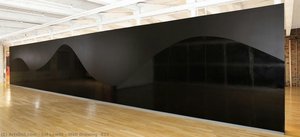
Svedkom LeWittovej nástennej kresby je pohľad na logiku premenutú v poéziu. Či už šlo o surovú, rytmickú repetitivitu nájdenú v diele Black with White Lines, Vertical Not Touching alebo o živú, exuberantnú energiu diela Wall Drawing #1om: arcs, circles and bands, jeho práca využívala silu čiary na ovládnutie priestoru. Tieto kusy často spoliehali na systém logických, často matematických inštrukcií, ktoré viedli asistentov alebo muzeálnych pracovníkov pri ich výrobe. Táto metóda demokratizovala akt tvorby a zároveň pozdvihla dôležitosť konceptu, čím zabezpečila, že umelecké dielo existuje primárne ako intelektuálny iskier predtým, než sa vôbec dotkne steny.

Trvalá stopa v modernite

Počas svojej produkčnej kariéry, ktorá trvala desiatky rokov a zahŕňala majstrovstvo v grafike, fotografii a inštalácii, LeWitt zostal neochvakiteľne verný svojej záväznosti k jasnosti a presnosti. Jeho schopnosť nájsť hlbokú krásu v najjednoduchších formách – ako je pôsobivá biela Pyramída alebo komplexné, farebné rytmy jeho nástenných prác vytvorených voskovými kreidlami – redefinovala estetické hranice neskorého 20. storočia. Dokázal, že umenie môže byť zbavené ega aj ornamentu, no stále si môže zachovať dušu, ktorá hlboko rezonuje s ľudskou túžbou po poriadku a objavovaní.

Historický význam Sol LeWitta sa nedá preháňať. Poskytol slovnú zásobu generáciám umelcov na preskúmavanie hraníc medzi myšlienkou a hmotou. Jeho odkaz žije v každom múzeu a galérii, kde sa çiziar medzi tvorcom a vykonačom rozmazáva a kde je sila myšlienky uznávaná ako najvyšší prostriedok. Keď sa pozrieme späť na jeho život, od jeho začiatkov v Hartforde až po jeho posledné dni v New Yorku v roku 2007, vidíme človeka, ktorý nekonal len umenie, ale ktorý nás naučil, ako vidieť hlbokú architektúru samotnej myšlienky.