Contemporary Art · 1985
People (И Еунро, 1985)
И Еунро (1904–1989) создал(а) People. Создано в 1985. Относится к направлению Contemporary Art. Выполнено в технике Ink On Paper. Хранится в Музей Ли Унгно в Тэгу, Южная Корея. Размер: 268 × 223 cm
- 1985
- Ink On Paper
- 268 × 223 cm
- Музей Ли Унгно, Тэгу

 Предпросмотр

 Картина маслом ручной работы
 Поделиться
 Поделиться
 Справка об объекте


 Скачать
 Похожие предметы
 Рентгенография
 Слайд-шоу
 Вопросы и ответы

 Статистика просмотров
People вкратце
- Название
- People
- Автор
- И Еунро (1904–1989)
- Дата рождения художника
- Сеул, Южная Корея
- Дата
- 1985
- Техника
- Ink On Paper
- Размеры
- 268 × 223 cm
- Где посмотреть
- Музей Ли Унгно, Тэгу, Южная Корея
- Движение
- Contemporary Art
- Период
- Modern
- Сюжет
- people, silhouettes, human figures, abstract ink, movement, crowd painting
Что изображено на People?
The Pulse of Humanity: A Symphony of Silhouettes
In the vast, evocative expanse of Yi Eungro’s 1985 masterpiece, "People," we are invited into a profound meditation on the collective human experience. This monumental work, measuring an imposing 268 x 223 cm, transcends mere portraiture to capture the very essence of movement and existence. Through a mesmerizing array of silhouettes, the artist orchestrates a dance of shadows that feels both deeply personal and universally shared. Each figure, though stripped of individual facial features, possesses a distinct vitality; some appear caught in mid-stride, while others linger in moments of quiet contemplation. The composition breathes with a rhythmic energy, as if the paper itself is vibrating with the silent whispers of a crowd gathered in a timeless, ethereal space.
The technique employed in "People" is a masterful bridge between Eastern tradition and Western abstraction. Utilizing the delicate yet powerful medium of ink on paper, Yi Eungro utilizes the fluid properties of the ink to create varying depths of tone. This creates a sense of atmospheric perspective where certain figures emerge from the void with striking clarity, while others recede into a misty, dreamlike background. The stark contrast of the black and white palette strips away the distractions of color, forcing the viewer to focus on the raw geometry of form and the emotional weight of the silhouettes. It is a sophisticated interplay of light and shadow that demands attention, making it an extraordinary focal point for any curated collection or high-end interior space.
A Legacy of Modernity and Emotion
To understand the profound impact of this work, one must look to the life of Yi Eungro himself. A pioneer who navigated the complex intersection of Korean heritage and French modernism, his journey was one of constant evolution. Having mastered the classical "four gentlemen" style of Korean inkwash painting, he eventually sought to modernize these traditions, infusing them with the expressive freedom of Western abstraction. "People" stands as a testament to this late-career mastery, where the calligraphic precision of his youth meets a mature, soulful exploration of social connectivity. The piece does not merely depict individuals; it symbolizes the interconnectedness of humanity, reflecting a world that is simultaneously fragmented and unified.
For the discerning collector or interior designer, a reproduction of "People" offers more than just aesthetic beauty; it brings an intellectual and emotional depth to a room. The artwork’s large-scale presence and dynamic composition provide a sense of movement that can transform a static environment into one of inspiration and thought. Whether placed in a minimalist contemporary gallery setting or as a sophisticated anchor in a grand living space, the painting serves as a window into the human soul. It invites onlookers to pause, to observe the dance of the shadows, and to find their own reflection within the beautiful, swirling crowd of Yi Eungro’s vision.
В каком музее находится People?
Музей Ли Унгно
Тэгу, Южная Корея
Симфония туши и современности: Наследие Ли Унгно В самом сердце культурного ландшафта Тэджона Музей Ли Унгно предстает как глубокое свидетельство преобразующей силы художественного видения. Этот институт служит мостом между эпохами, предлагая редкую возможность заглянуть в душу человека, которому удалось успешно синтезировать медитативную тяжесть восточной живописи тушью с дерзкими, экспериментальными рубежами западного модернизма. Ступить в этот музей — значит войти в пространство, где древние традиции корейской каллиграфии встречаются с электрической энергией европейского абстрактного экспрессионизма, создавая диалог, резонирующий сквозь поколения.
Изображения в высоком разрешении: People

Объект защищен авторским правом: данные файлы предназначены для личного ознакомления и не являются лицензией на переиздание.
И Еунро, People (1985).
И Еунро (1904–1989), People, 1985, ink on paper, Музей Ли Унгно, Тэгу, Южная Корея. Изображение: OriginalUniqueArt.com.
Ответы на вопросы о People
Где сегодня можно увидеть «People», И Еунро?
Картина «People», И Еунро представлена в коллекции Музей Ли Унгно, Тэгу, Южная Корея. В описании музея речь идет об оригинальном произведении, а не о репродукциях.
В какой технике выполнено произведение «People»?
Каковы реальные размеры произведения «People», И Еунро?
Что изображено на картине «People»?
Является ли произведение «People» свободным от авторских прав?
Какому художнику приписывают работу «People»?
К какому художественному направлению относится «People», И Еунро?
«People» — это произведение в стиле Contemporary Art. Данное направление указывает на художественную традицию, к которой относится эта работа.
Об авторе, И Еунро

1904–1989, Южная Корея
И Еунро
**Ранние годы и обучение** Ли Унгно, также известный как И Еунро, был выдающимся французским живописцем и графиком корейского происхождения, родившимся в Сеуле в 1904 году. Его путь к искусству начался с учебы в школе Хонсон Ботонг Хаккё, после чего, с 1920 года, он полностью посвятил себя постижению живописи под руководством мастера Ёмдже Сон Тэ Хо. **Творческий путь в Корее и Японии** Настоящее становление Ли Унгно как художника началось после его переезда в Сеул в 1922 году, когда он стал учеником прославленного каллиграфа, живописца и фотографа Хэган Ким Гю Джина. Именно в этот период он освоил классическую технику изображения «четырех благородных растений» в стиле Хэган.
Другие работы И Еунро
 Untitled1969
 Composition1970
 I Ching 64 Hexagrams Sequence (火風鼎)1974
 The travels of Marco Polo Series1980
Эссе к произведению People
 Spontaneity and Matter: Distinguishing CoBrA from Art InformelJean Dubuffet mixed sand, tar, and gravel into his 1947 works to create sculptural surfaces. Why did post-war artists reject traditional or…
 25 Masterpieces by Egon Schiele: The Raw Power of Expressionism1890s Vienna was a city caught between decadent splendor and the shadows of a fractured era. How did Schiele use jagged lines to map the so…
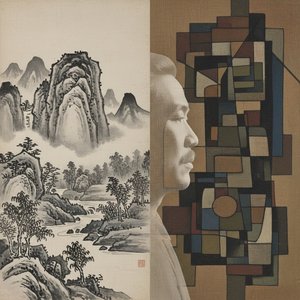 Yi Eungro: Bridging East & West in the Landscape of Korean ModernismExplore the captivating world of Yi Eungro (Lee Ungno), a pivotal figure in Korean modernism. Discover his unique fusion of Eastern and Wes…