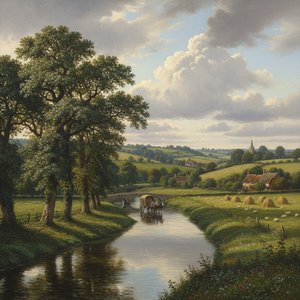
A classical landscape (William Linton)
William Linton (1791–1876) создал(а) A classical landscape.

 Предпросмотр

 Картина маслом ручной работы
 Поделиться
 Поделиться
 Информационный лист


 Скачать
 Похожие предметы
 Рентгенография
 Слайд-шоу
 Вопросы и ответы

 Статистика просмотров
A classical landscape вкратце
- Название
- A classical landscape
- Автор
- William Linton (1791–1876)
- Дата рождения художника
- Liverpool, United Kingdom
- Сюжет
- landscape
Изображения в высоком разрешении: A classical landscape
Общественное достояние: художник умер в 1876.
William Linton, A classical landscape. Общественное достояние
Ответы на вопросы о A classical landscape
Что изображено на картине «A classical landscape», William Linton?
Темы, представленные в «A classical landscape», William Linton, включают landscape. Вместе они раскрывают основной сюжет произведения.
Является ли произведение «A classical landscape» свободным от авторских прав?
Произведение «A classical landscape», William Linton находится в общественное достояние — срок действия авторского права истёк. Этот статус определяет правила воспроизведения изображения данного произведения.
Кто создал "A classical landscape"?
«A classical landscape» был создан William Linton. Информация на этой странице описывает оригинальную работу William Linton.
Каков правовой статус произведения «A classical landscape», William Linton с точки зрения авторского права?
Статус авторского права на произведение «A classical landscape» — общественное достояние — срок действия авторского права истёк — определяется датой смерти автора в 1876.
Об авторе, William Linton

1791–1876, United Kingdom
William Linton
The Romantic Visionary of Classical Landscape William Linton, born in the maritime atmosphere of Liverpool in 1791, emerged as a pivotal figure in British landscape painting during the Victorian era—a period defined by a profound fascination with both scientific observation and idealized beauty. His artistic journey began not with the grand gestures of a master, but through the humble and disciplined practice of copying the works of legends like Claude Lorrain and Richard Wilson. These early encounters were transformative, instilling in Linton a deep-seated appreciation for the interplay of natural light and the sweeping grandeur of panoramic compositions. This foundational period shaped his distinctive style, allowing him to weave classical sensibilities into the fabric of 19th-century Romanticism.
Другие работы William Linton
 The Bathing Pool
 Cottages By A River
 Bury From Blackford Bridge
 An Italianate Landscape, With Peasants And Livestock In The Foreground
Эссе к произведению A classical landscape
 John Constable: Nature, Light & the Romantic Vision of Rural EnglandExplore the life & art of John Constable, the Romantic painter who revolutionized landscape with emotive scenes of rural England. Discover …
 The Liminal Shoreline: A Historical Study of Coastal Landscape ArtExplore the history of coastal landscape art from the Dutch Golden Age to Luminism. Discover the masters of the shoreline today.
 British artworks of the 1800sBritish Romanticism in the 1800s features the iconic works of John Constable, William Blake, and Henry Raeburn. View the collection at Orig…