

 Предпросмотр
 Поделиться
 Поделиться
 Детали произведения

 Скачать
 Похожие работы
 Рентгенография
 Слайд-шоу
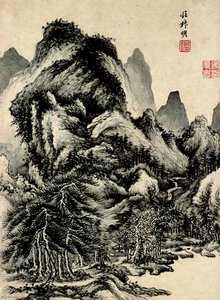
Landscapes Painted for Wang Kui


 Читать далее
Масляная репродукция ручной работы
Картина маслом на холсте в выбранном вами размере и раме, написанная на заказ нашими художниками. ( Купить принт Купить изображение)




































Выберите один из наших стандартных размеров, соответствующих оригинальным пропорциям произведения искусства.

Вы можете указать собственные размеры, чтобы картина идеально вписалась в выбранную раму или пространство. Если выбранный вами размер не соответствует пропорциям оригинала, мы либо обрежем полотно, либо расширим его за счет дополнительных элементов, написанных вручную. Цифровой макет будет отправлен вам на утверждение перед началом производства.
Обратите внимание, что предварительный просмотр на экране не отражает фактическую обрезку или расширение. Только макет точно покажет окончательную композицию.
Хотя доступны индивидуальные размеры, мы рекомендуем выбирать вариант из предопределенного списка, чтобы сохранить исходные пропорции.
После оформления заказа команда OriginalUniqueArt.com свяжется с клиентом по электронной почте для уточнения деталей и предоставит предварительный макет
Доставка по всему миру () за 3–4 недели вместо стандартных 5 недель. (21 Август). Без компромиссов в качестве.

Бесплатная экспресс-доставка по всему миру

Высококачественный льняной холст

Полное страхование доставки

Гарантия возмещения таможенных пошлин

Гарантия точного соответствия цветов

Политика возврата в течение 60 дней (только при наличии дефектов)

Гарантия возврата 100% средств

Предложение оптовых скидок
 Вариант со стеклом доступен только для размеров менее 110 см

Landscapes Painted for Wang Kui
Техника репродукции
Размер репродукции
-


Итоговая стоимость
$ 300
Биография художника
The Quiet Resonance of a Master
Born in the fertile cultural landscape of Taicang, Jiangsu, around 1598, Wang Jian emerged as a profound voice during one of China's most transformative eras. As the great-grandson of the illustrious Ming literary figure Wang Shizhen, he was steeped in a tradition of scholarly excellence from birth. His life, spanning the twilight of the Ming and the dawn of the Qing dynasty, was marked by a deliberate retreat from the political turbulence of his time. After serving briefly as the Prefers of Lianzhou, Wang Jian chose to abstain from the Manchu-led court, turning instead toward the eternal, silent realms of Shanshui painting. This period of contemplative seclusion allowed him to cultivate a spirit that would eventually define the Orthodox School of painting, earning him a place among the legendary Four Wangs and the Six Masters of the early Qing period.Through his various pseudonyms, including Xuanzhao and Xiangbi, he projected an identity rooted in the scholarly pursuit of nature's essence. His work was never merely about the depiction of scenery; it was a spiritual endeavor to capture the very breath of the earth.
A Tapestry of Ancient Lineages
Wang Jian’s artistic journey was not a solitary pursuit but a deep, reverent dialogue with the ghosts of the past. Under the masterful guidance of the influential painter-theorist Dong Qichang, Wang honed a technique that sought to preserve the very essence of ancient brushwork. He did not merely copy; he reinterpreted the masters through a lens of profound respect, ensuring that the distinctive characteristics of their ink and brush were preserved even as they were infused with his own interpretative spirit.His stylistic DNA was woven from the most celebrated traditions of the Song and Yuan dynasties, creating a bridge between eras. This commitment to lineage is evident in how he engaged with several key influences:
- The soft, flowing streams and ethereal mists characteristic of Dong Yuan.
- The rugged, tactile textures and "raindrop" strokes reminiscent of Fan Kuan.
- The structural integrity and monumental presence found in the works of Jing Hao and Guan Tong.
The Alchemy of Ink and Atmosphere
To gaze upon a Wang Jian landscape is to enter a world of profound serenity and controlled emotion. Eschewing the flamboyant ornamentation that occasionally characterized his contemporaries, Wang championed a philosophy of simplicity and restraint. His palette was a masterclass in subtlety, favoring muted hues and delicate gradations of ink wash that could evoke the dampness of a mountain mist or the solid weight of a granite cliff.In masterpieces such as "Mountain Scenery with Streams and Pavilions" (1667), one can witness his technical brilliance. He utilized layered washes to create a palpable sense of depth, where light seems to filter through layers of atmosphere rather than strike surfaces directly. This technique does more than depict scenery; it creates a space for Confucian contemplation, inviting the viewer to find harmony within the natural order. Every stroke, from the finest texture to the broadest wash, serves the ultimate goal of capturing the qi—the vital life force—of the landscape.
An Enduring Legacy of the Orthodox School
The historical significance of Wang Jian lies in his role as a guardian of tradition during a period of immense cultural shift. By anchoring his practice in the classical styles of the Song and Yuan dynasties, he provided a sense of continuity and stability for Chinese art amidst the transition from Ming to Qing rule. His prolific output, ranging from large-scale compositions to intimate, meticulously rendered albums, ensured that the Orthodox School would remain a dominant force in the aesthetic consciousness of the era.His legacy remains etched in the mountains and streams he so lovingly rendered. Through his dedication to the mastery of ancient styles, Wang Jian did not just paint the landscape; he preserved the soul of a civilization within the enduring beauty of ink and paper.
Wang Jian
1598 - 1677 , China
Основные сведения
- Artistic Movement Or Style: Dong Yuan Style
- Artists Or Movements Influenced By This Artist: ['Four Wangs']
- Artists Who Influenced This Artist: ['Dong Yuan']
- Date Of Birth: 1598
- Date Of Death: 1677
- Full Name: Wang Jian
- Nationality: Chinese
- Notable Artworks:
- Landscapes Painted for Wang Kui
- Miniature Landscapes in Ancient Styles\n\nLeaf 1
- Mountain Scenery with Streams and Pavilions in the Style of Fan Kuan
- Place Of Birth: Taicang, China
Похожие статьи

Романтический пейзаж: 10 шедевров, изменивших искусство | OriginalUniqueArt.com
Погрузитесь в мир романтического пейзажа! 10 шедевров Фридриха, Тёрнера и других гениев. Узнайте историю создания культовых картин и вдохновитесь для декора интерьера. Репродукции высокого качества на OriginalUniqueArt.com.

Evocations of Place: A Historical Journey Through Landscape Art
Explore the rich history of landscape art with OriginalUniqueArt. Discover renowned artists, movements like Impressionism & Romanticism, and expert guidance for collecting timeless pieces. Find your perfect serene escape today!

Джон Констебль: 25 шедевров английского пейзажа для вашего интерьера
Погрузитесь в мир английского пейзажа с Джоном Констеблом! 25 шедевров романтизма, история создания картин и вдохновение для вашего интерьера. Репродукции высокого качества на OriginalUniqueArt.com – искусство для ценителей.
Capturing Stillness: A Curated Exploration of the Most Iconic Lake Landscapes in Art History
Journey through art history's most serene lake landscapes. From Romantic vistas to light-drenched Impressionist waters, discover the stories behind these iconic masterpieces and find museum-quality, hand-painted oil reproductions for your private collection.

Evocations of Place: A Historical Journey Through Landscape Art
Explore the rich history of landscape art with OriginalUniqueArt. Discover renowned artists, movements like Impressionism & tonalism, and expert guidance for collecting timeless pieces. Find your perfect serene escape today!

