

 Примерить в интерьере
 Отправить
 Поделиться
 Подробнее
 Руководство

 Скачать
 Похожие объекты
 Рентгенография
 Слайд-шоу
 Статистика
Let Us Now Praise Famous Men


 Развернуть текст
Произведение искусства, представленное на этой странице, защищено законом об авторском праве, что исключает возможность законного создания или продажи его точной репродукции. Данная защита обеспечивается международными соглашениями, такими как Бернская конвенция и национальным законодательством, включая положения, изложенные в Закон США об авторском праве — Раздел 17.
Этот метод полностью соответствует нормам авторского права, так как он не предполагает копирования или дублирования защищенного произведения. Напротив, это творческая реинтерпретация — создание новой картины, которая вдохновлена оригиналом, но не является его точной копией.
Жикле / Арт-принты
Печать (жикле) или холст музейного качества с быстрыми сроками изготовления и широким выбором вариантов отделки. ( Заказать репродукцию ручной работы Перейти к цифровым изображениям)




P118B $10

P118H $10

P118W $10

P438Z $10

P508JH $12

P508YH $12

P805H $10

P805Z $10

P919BZ $10

P919G $10

P919XJ $10

P959ZH $10

P968JZ $12

W106C $8

W218G $10

W218JH $8

W218Y $10

W307PJ $10

W316G $10

W316PJ $8

W316Y $10

W398PJ $8

W4111J $10

W500HY $15

W500JH $15

W692G $12

W849H $8

W940BG $15

W953PJ $8




Выберите один из наших стандартных размеров, соответствующих оригинальным пропорциям произведения искусства.

Введите необходимую ширину и высоту, чтобы репродукция подошла к вашей раме или стене. При печати изображение можно только уменьшить, но нельзя увеличить больше оригинала, поэтому при выборе другого формата часть изображения может быть обрезана. Перед печатью мы отправим вам цифровой макет на утверждение. Изображение на этой странице не отображает реальную обрезку — ее можно увидеть только на макете.
Доставка по всему миру () за 2 недели вместо стандартных 4–5 недель. (23 Октябрь)

Бесплатная экспресс-доставка по всему миру

Высококачественный льняной холст

Полное страхование при транспортировке

Гарантия возврата таможенных пошлин

Гарантия точного цветового соответствия

100-дневный период возврата (только при обнаружении дефектов)

Гарантия возврата 100% средств

Скидка при заказе нескольких работ
 Вариант со стеклом доступен только для размеров менее 110 см

Let Us Now Praise Famous Men
Жикле / Арт-принты
Размер репродукции
-


Итоговая стоимость
$ 80
A Testament to Resilience: Walker Evans’ “Let Us Now Praise Famous Men”
Walker Evans' "Let Us Now Praise Famous Men," born from a 1936 assignment for *Fortune* magazine, isn’t merely a photographic record; it’s a profound meditation on the dignity of human existence amidst crushing poverty. Published in 1941, this seminal work transcends its documentary origins to become a hauntingly beautiful exploration of rural America during the Great Depression. Evans, initially tasked with capturing the realities of sharecropping families in Alabama, quickly recognized that simply documenting hardship wasn’t enough. He sought to reveal something deeper – the quiet strength and enduring spirit of individuals facing unimaginable challenges.
The photographs themselves are characterized by a stark, almost brutal honesty. Evans employed his large-format 8x10 view camera, a deliberate choice that demanded meticulous attention to detail and forced him to truly *see* his subjects. The images aren’t romanticized; they present the families in their rawest state – weathered faces etched with worry, threadbare clothing clinging to gaunt bodies, humble dwellings offering little protection from the elements. Yet, within this austerity lies a remarkable grace. Evans's masterful use of light and shadow, coupled with his deliberate cropping and composition, elevates these portraits beyond simple documentation, transforming them into powerful statements about human endurance.
The Collaboration: Agee’s Voice and Evans’ Vision
Crucially, "Let Us Now Praise Famous Men" is a collaborative effort between photographer Walker Evans and writer James Agee. Initially rejected by *Fortune* for its unconventional approach – eschewing sensationalism in favor of nuanced observation – the project was eventually published as a book, with Agee’s accompanying text providing invaluable context and emotional depth. Agee's writing isn’t simply descriptive; it’s deeply empathetic, offering glimpses into the families’ lives through intimate conversations and detailed observations. He avoids judgment, instead focusing on capturing their humanity – their hopes, fears, and quiet dignity.
The dynamic between Evans and Agee is a fascinating one. Evans, often described as a reticent and solitary figure, provided the visual anchor of the project, while Agee served as the interpreter, weaving together the photographs with his prose to create a cohesive narrative. Their partnership represents a rare example of artistic synergy – a testament to the power of collaboration in capturing truth and conveying complex emotions.
Symbolism and Context: A Nation in Crisis
“Let Us Now Praise Famous Men” is inextricably linked to the historical context of the Great Depression and the New Deal era. The photographs offer a stark visual representation of the economic devastation that gripped America during this period, exposing the plight of countless rural families who had been displaced by industrialization and left vulnerable in the wake of the Dust Bowl. The title itself – borrowed from Sirach— carries significant weight, suggesting a recognition of the inherent worth and dignity of these individuals, elevating them beyond mere statistics.
Beyond the immediate circumstances of poverty, the images resonate with broader themes of displacement, resilience, and the search for meaning in a rapidly changing world. The simple, almost austere settings – the dilapidated shacks, the barren fields – evoke a sense of isolation and vulnerability, while the subjects’ unwavering gaze conveys an enduring spirit of hope.
A Legacy of Influence: Art, Journalism, and Beyond
The impact of “Let Us Now Praise Famous Men” extends far beyond its initial publication. It profoundly influenced generations of photographers, writers, and artists, establishing a new standard for documentary photography that prioritized empathy, observation, and the dignity of the subject. Aaron Copland’s opera, *The Tender Land*, directly inspired by the book, stands as a testament to its enduring power.
Today, reproductions of Evans' photographs continue to captivate audiences worldwide, serving as poignant reminders of America’s past and offering valuable insights into the human condition. Whether displayed in a museum or adorning a wall, “Let Us Now Praise Famous Men” remains a powerful and enduring work of art – a testament to the resilience of the human spirit and the transformative power of photography.
Вопросы и ответы
Произведение «Let Us Now Praise Famous Men» в целом скорее светлое или темное?
Для работы «Let Us Now Praise Famous Men», Волкер Эванс зафиксирован уровень яркости brilliant при показателе светлоты Luminous.
Насколько насыщенны цвета в «Let Us Now Praise Famous Men», Волкер Эванс?
Цвета в работе «Let Us Now Praise Famous Men», Волкер Эванс обладают Monochromatic интенсивностью.
Насколько гармонично сочетаются цвета в работе "Let Us Now Praise Famous Men"?
Цвета в работе «Let Us Now Praise Famous Men», Волкер Эванс демонстрируют Unified Palette гармонию. Гармония описывает взаимосвязь цветов между собой.
Биография художника
Walker Evans: A Witness to America’s Soul
Walker Evans, born in St. Louis in 1903, wasn't merely a photographer; he was an architect of perception, meticulously crafting images that resonated with the quiet dignity and stark realities of American life. His name is inextricably linked with the visual record of the Great Depression, but to reduce his artistic journey to this single period would be a profound injustice – it obscures the breadth of his vision and the enduring influence he exerted on photography itself. Evans’s early years were marked by constant relocation—from Toledo to Chicago, then to New York City—a restless movement that instilled in him an acute awareness of America's diverse landscapes and its people. Despite a somewhat sporadic academic record, including brief stints at Phillips Academy Andover and Williams College, his true education unfolded through self-directed study, immersing himself in the works of literary giants like T.S. Eliot, D.H. Lawrence, James Joyce, and e.e. cummings – writers who valued precision of language and a keen observation of the human condition. This intellectual foundation profoundly shaped his photographic approach.The Seeds of a New Vision: Influences and Early Work
Evans’s artistic sensibilities were nurtured by a confluence of influences. He deeply admired Eugène Atget, whose intimate photographs of Parisian streets captured a timeless quality, and August Sander, whose portraits aimed for an objective cataloging of German society. Equally significant were the writings of American modernists—writers who championed clarity, directness, and a rejection of sentimentality. These literary and photographic models coalesced in Evans’s developing aesthetic: a commitment to visual precision, a deliberate avoidance of melodrama, and a profound respect for the dignity of ordinary subjects. His early work, produced during the late 1920s and early 1930s, often reflected this influence, featuring semi-abstract patterns derived from skyscrapers and other machine-age products—a fascination with the geometry of modern life. However, it was his time in Paris in 1926 that proved pivotal, exposing him to European artistic trends and solidifying his desire to move beyond purely decorative photography. Returning to New York City, he found work as a bookstore clerk and library assistant, providing him with ample opportunity to cultivate his passion for literature and to hone his observational skills.Documenting America’s Hardships: The Farm Security Administration
The turning point in Evans's career arrived in 1935 when he accepted a position with the Farm Security Administration (FSA), a New Deal agency tasked with documenting the plight of rural communities during the Great Depression. Initially assigned to photograph a resettlement community in West Virginia, Evans quickly realized that his role extended far beyond simply recording statistics—he was driven by a deep empathy for the people he photographed and a desire to capture their stories with honesty and nuance. He rejected the FSA’s prescribed itineraries and ideological agenda, instead focusing on capturing the essence of American life from the simple and the ordinary. His photographs of roadside stands, small-town churches, and weathered faces became iconic representations of hardship, resilience, and the dignity of rural America. The collaboration with writer James Agee on *Let Us Now Praise Famous Men* (1941) is a testament to this commitment—a lyrical exploration of three tenant farming families in Alabama that combined stark photographs with evocative prose. This project, initially rejected by *Fortune* magazine for its unconventional length and style, remains a landmark achievement in documentary literature and photography.Beyond the FSA: Portraits and Shifting Perspectives
Following his work with the FSA, Evans’s artistic trajectory continued to evolve. The 1938 exhibition “Walker Evans: American Photographs” at the Museum of Modern Art marked a watershed moment, solidifying his reputation as a major figure in photography and establishing a new standard for realism and objectivity. However, he resisted being confined to the role of simply a documentary photographer. He increasingly turned his attention towards portraits and street photography, capturing candid moments of urban life in New York City with an understated elegance. These later works reveal a subtle shift in focus—less concerned with social commentary and more interested in exploring the aesthetic qualities of everyday scenes. In the 1960s, Evans embraced color photography, producing vibrant images of interiors, architecture, and commonplace objects – a bold move that challenged conventional notions of photographic representation. This experimentation demonstrated a willingness to push boundaries and explore new avenues for artistic expression.A Lasting Legacy: Influence and Enduring Power
Walker Evans’s legacy extends far beyond the iconic images he created during the Great Depression. He is widely considered one of the most important figures in the history of documentary photography, having established a new standard for realism and objectivity in photographic representation. His work profoundly influenced generations of photographers, inspiring them to look at the world with fresh eyes and to find beauty and meaning in the ordinary. His impact on social realism is undeniable, as his FSA photographs became powerful symbols of hardship and resilience during a pivotal moment in American history. But perhaps his greatest contribution lies in demonstrating how photography could serve not only as a tool for social commentary but also as a medium for aesthetic exploration. He proved that even the most seemingly mundane subjects could be transformed into works of art through careful observation, precise composition, and a commitment to visual truth. Evans’s work continues to resonate today, reminding us of the power of photography to document our world, challenge our perceptions, and connect us to the shared human experience. His photographs are not merely images; they are windows into another time, offering a profound glimpse into the soul of America.
Волкер Эванс
1903 - 1975 , Соединенные Штаты Америки
Краткая справка
- Artistic Movement Or Style: Документальная фотография
- Artists Or Movements Influenced By This Artist:
- Шерри Левин
- Социальный реализм
- Artists Who Influenced This Artist:
- Эжен Атего
- Август Сандер
- Date Of Birth: 1903
- Date Of Death: 1975
- Full Name: Walker Evans
- Nationality: Американский
- Notable Artworks:
- Let Us Now Praise Famous Men
- Silverware
- Barn with Porch Addition
- Place Of Birth: Сент-Луис, США
Похожие статьи

Топ-25 шедевров Кацусики Хокусая: Искусство Японии для вашего интерьера
Погрузитесь в мир гения Кацусики Хокусая! 25 легендарных гравюр укиё-э, включая "Великую волну". История искусства Японии и вдохновение для вашего интерьера. Репродукции высокого качества на OriginalUniqueArt.com.

Топ-25 шедевров Клода Моне: Искусство света и импрессионизма для вашего интерьера
Погрузитесь в мир Клода Моне! 25 шедевров импрессионизма, от "Водных лилий" до знаменитых пейзажей. Узнайте историю создания картин и вдохновитесь для декора интерьера. Репродукции музейного качества на OriginalUniqueArt.com.
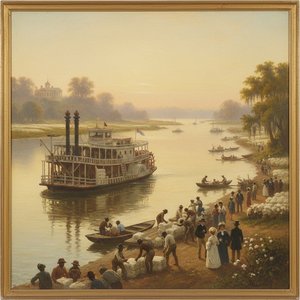
William Aiken Walker: A Southern Luminist's Vision of River Life & Antebellum Society
Explore the evocative paintings of William Aiken Walker, a master of Southern Luminism. Discover his poignant depictions of post-Civil War life, African American culture & antebellum landscapes. Learn about this important artist's legacy.
Топ-10 шедевров документальной фотографии: искусство, изменившее взгляд на мир | OriginalUniqueArt.com
Топ-10 шедевров документальной фотографии, изменивших мир искусства. Узнайте истории культовых фотографов и их работ, вдохновившихся реализмом и социальными темами. Репродукции высокого качества на OriginalUniqueArt.com – для вашего интерьера!
Топ-25 шедевров Венецианской биеннале: искусство для вашего дома от OriginalUniqueArt
Откройте для себя 25 шедевров Венецианской биеннале! Узнайте истории великих художников, техники и вдохновение за культовыми работами. Репродукции картин высокого качества от OriginalUniqueArt.com – искусство для вашего дома. Explore the full collection online!