Перейти к печатным копиям
 Читать далее







































 Для произведений искусства или репродукций, размер которых превышает 105 см (приблизительно 41 дюйм) по любой из сторон, рама будет доставлена в разобранном виде (в виде комплекта). Этот метод обеспечивает безопасную доставку и предотвращает повреждения при транспортировке.


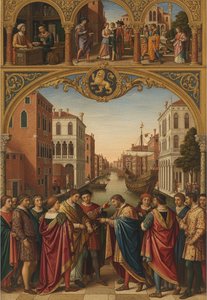
A Somber Reflection on Mortality: Vittore Carpaccio’s “The Dead Christ”
Vittore Carpaccio's "The Dead Christ," painted circa 1520, stands as a poignant testament to the artistic sensibilities of Venice during the High Renaissance. More than just a depiction of religious iconography—the lifeless body of Jesus cradled by grieving figures—it embodies a profound meditation on death and mourning, reflecting the anxieties prevalent in a period grappling with theological upheaval and humanist inquiry. This monumental canvas (145 x 185 cm) resides within the Gallerie dell’Accademia, offering visitors an unparalleled opportunity to experience Carpaccio's masterful execution of narrative painting.Style and Influences: A Conservative Voice Amidst Change
Carpaccio distinguishes himself from his contemporaries through a remarkably restrained artistic style. Unlike the burgeoning humanist movement that championed classical ideals and vibrant color palettes—evident in works by Giovanni Bellini and Andrea Mantegna—Carpaccio adhered to a more conservative approach, prioritizing clarity of form and emotional resonance over stylistic innovation. His visual vocabulary draws heavily from Antonello da Messina’s influence, particularly his meticulous attention to detail and use of oil paint, alongside early Netherlandish art's emphasis on realism and psychological depth. This confluence resulted in an aesthetic that prioritizes solemn contemplation rather than dramatic spectacle.Technique: The Art of Layered Detail
Carpaccio employed a technique characterized by painstaking layering—a hallmark of Venetian painting at the time—to achieve remarkable textural richness and luminosity. He meticulously built up his composition using thin glazes of oil paint, allowing underlying pigments to subtly interact and create nuanced tonal variations. This method ensured that every surface was rendered with meticulous precision, capturing the contours of Christ’s body and the expressions of sorrowful onlookers alike. The artist skillfully utilized chiaroscuro—the dramatic interplay between light and shadow—to heighten the emotional impact of the scene, directing viewers' gaze towards the central figure and emphasizing the solemn atmosphere.Historical Context: Grief and Remembrance in Renaissance Venice
Painted during a time marked by religious fervor and intellectual debate, “The Dead Christ” speaks to the broader cultural concerns of Renaissance Venice. The depiction of mourning figures—a common motif in devotional art—reflects the pervasive preoccupation with mortality and the desire for spiritual solace amidst uncertainty. Carpaccio’s work aligns itself with the theological debates surrounding indulgences and papal authority, subtly conveying a sense of humility before divine judgment. Furthermore, it underscores the importance of remembrance and veneration within Christian tradition.Symbolism: The Body as Emblematic Representation
The central image—the crucified Christ—serves as an enduring symbol of sacrifice and redemption. Carpaccio’s portrayal emphasizes the physicality of Christ's suffering, grounding the theological narrative in tangible reality. The surrounding figures—primarily mourners—represent humanity grappling with grief and loss, mirroring the universal experience of mortality. Their gestures of compassion and sorrow underscore the importance of empathy and spiritual contemplation. The inclusion of a tree nearby – a traditional symbol of life and resurrection – subtly reinforces the overarching theme of hope amidst despair.Emotional Impact: A Profound Meditation on Suffering
“The Dead Christ” transcends mere visual representation; it evokes a powerful emotional response in viewers. Carpaccio’s masterful use of color—primarily muted browns and reds—creates an atmosphere of solemnity and melancholy, mirroring the profound sorrow experienced by those witnessing the crucifixion. The artist's meticulous attention to detail captures not only the physical appearance of Christ but also the psychological state of his mourners, fostering a sense of empathy and prompting reflection on themes of faith, grief, and human vulnerability. It remains an enduring masterpiece—a poignant reminder of humanity’s capacity for compassion and its unwavering belief in spiritual transcendence.Вопросы и ответы
В каком возрасте Виttore Карпаччо создал(а) «The Dead Christ»?
Когда в 1520 году было создано произведение «The Dead Christ», художнику Виttore Карпаччо (родившемуся в 1465) было 55 лет.
Является ли произведение «The Dead Christ», Виttore Карпаччо общественным достоянием?
Произведение «The Dead Christ», Виttore Карпаччо находится в общественное достояние — срок действия авторского права истёк. Этот статус определяет правила воспроизведения изображения данного произведения.
В какой технике выполнено произведение «The Dead Christ» и каков его размер?
«The Dead Christ» выполнена в технике Oil On Canvas, её оригинальный размер составляет 145 x 185 cm.
 Предпросмотр
 Поделиться
 Поделиться
 Детали произведения
 Руководство

 Скачать
 Похожие предметы
 Рентгенография
 Слайд-шоу
 Вопросы и ответы
 Статистика просмотров