Примерить в интерьере
 Отправить
 Поделиться
 Подробнее
 Руководство

 Скачать
 Похожие объекты
 Рентгенография
 Слайд-шоу
 Статистика
Tree roots
 Акрил на холсте
- Настенный декор
- Post-Impressionism
 1890
1890 50.0 x 100.0 cm
 Развернуть текст
Жикле / Арт-принты
Печать (жикле) или холст музейного качества с быстрыми сроками изготовления и широким выбором вариантов отделки. ( Заказать репродукцию ручной работы Перейти к цифровым изображениям)




P118B $10

P118H $10

P118W $10

P438Z $10

P508JH $12

P508YH $12

P805H $10

P805Z $10

P919BZ $10

P919G $10

P919XJ $10

P959ZH $10

P968JZ $12

W106C $8

W218G $10

W218JH $8

W218Y $10

W307PJ $10

W316G $10

W316PJ $8

W316Y $10

W398PJ $8

W4111J $10

W500HY $15

W500JH $15

W692G $12

W849H $8

W940BG $15

W953PJ $8




Выберите один из наших стандартных размеров, соответствующих оригинальным пропорциям произведения искусства.

Вы можете указать свои собственные размеры, чтобы репродукция идеально подошла под конкретную раму или пространство. Если выбранный вами размер не будет соответствовать пропорциям оригинала, мы либо обрежем произведение, либо дополним изображение зеркальным отражением краев или однотонной заливкой. Перед началом производства вам будет отправлен цифровой макет для утверждения.
Пожалуйста, обратите внимание, что предварительный просмотр на экране не отображает фактическую обрезку или расширение изображения. Только макет точно покажет финальную композицию.
Несмотря на возможность заказа индивидуальных размеров, мы рекомендуем выбирать размер из предопределенного списка, чтобы сохранить оригинальные пропорции.
Доставка по всему миру () за 2 недели вместо стандартных 4–5 недель. (25 Сентябрь)

Бесплатная экспресс-доставка по всему миру

Высококачественный льняной холст

Полное страхование при транспортировке

Гарантия возврата таможенных пошлин

Гарантия точного цветового соответствия

100-дневный период возврата (только при обнаружении дефектов)

Гарантия возврата 100% средств

Скидка при заказе нескольких работ
 Вариант со стеклом доступен только для размеров менее 110 см

Tree roots
Жикле / Арт-принты
Размер репродукции
-


Итоговая стоимость
$ 80
A Final Vision: Decoding Van Gogh’s “Tree Roots”
Vincent van Gogh's "Tree Roots," painted in July 1890 during his stay in Auvers-sur-Oise, stands as a profoundly moving and arguably *final* statement from one of art history’s most celebrated figures. More than just a landscape, it is an intensely personal exploration of life, struggle, and the raw power of nature – a visual echo of Van Gogh's own turbulent inner world. This painting offers a glimpse into his unique perspective during the last weeks of his life, making it a particularly poignant work within his vast oeuvre.Subject & Composition: A Tangled Embrace
The composition is dominated by a dense network of tree roots and trunks, rendered with an almost claustrophobic intensity. Unlike traditional landscape paintings that emphasize open vistas, “Tree Roots” draws the viewer *into* the earth itself. The perspective is flattened, creating a sense of being enveloped by the natural world. There are no human figures present – a notable departure from some of his other works – focusing solely on the primal energy and complex structure of the trees. This deliberate omission amplifies the painting’s introspective quality, inviting contemplation on themes of growth, decay, and resilience.Style & Technique: Impasto and Emotional Expression
“Tree Roots” exemplifies Van Gogh's signature Post-Impressionist style. The canvas is alive with thick, swirling brushstrokes – a technique known as *impasto* – that imbue the painting with remarkable texture and dynamism. The colors, while not overtly bright, are used expressively to convey mood and emotion. Deep browns, greens, and blues intertwine, creating a sense of both vitality and melancholy. The energetic application of paint isn’t merely descriptive; it's an embodiment of Van Gogh’s emotional state, reflecting his inner turmoil and passionate engagement with the subject matter.Historical Context: A Final Chapter
Painted in the last months of his life, “Tree Roots” is often considered one of Van Gogh’s final works before his tragic death. Having recently left the asylum at Saint-Rémy, he sought solace and inspiration in the countryside near Paris. This period was marked by both hope and continued struggle with mental illness. The painting's creation coincided with a renewed sense of artistic purpose, yet also foreshadowed the profound sadness that would ultimately consume him. Interestingly, the location where Van Gogh painted this scene has been recently identified on the rue Daubigny in Auvers-sur-Oise, adding another layer to its historical significance.Symbolism & Emotional Impact: Life’s Struggle
The imagery of tree roots is rich with symbolic meaning. Roots represent foundations, origins, and the hidden forces that sustain life. However, their tangled and exposed nature also suggests vulnerability, struggle, and the inevitability of decay. Some scholars believe Van Gogh intended to depict a visual metaphor for his own personal battles – the unseen struggles that underpinned his artistic genius. The painting evokes feelings of unease, intensity, and a profound connection to the natural world. It’s a work that resonates deeply with viewers on an emotional level, prompting introspection and contemplation about the complexities of existence.Legacy & Collecting
“Tree Roots” remains a powerful testament to Van Gogh's enduring legacy. Its raw emotion, innovative technique, and symbolic depth continue to captivate audiences worldwide. For collectors and interior designers seeking a piece that embodies both artistic brilliance and emotional resonance, a high-quality reproduction of this masterpiece offers an opportunity to bring a touch of Van Gogh’s genius into any space.- Explore more Van Gogh: Discover additional works at OriginalUniqueArt, offering handmade oil painting reproductions: https://OriginalUniqueArt.com.
- Further Research: Delve deeper into the history and symbolism of “Tree Roots” through resources like Wikipedia: https://en.wikipedia.org/wiki/Tree_Roots
- Van Gogh Museum: Visit the Van Gogh Museum website for detailed information and images of his artwork.
Биография художника
A Life Painted in Emotion: The World of Vincent van Gogh
Vincent Willem van Gogh, a name synonymous with artistic passion and turbulent genius, remains one of the most recognizable and beloved figures in Western art history. Born on March 30, 1853, in Groot-Zundert, Netherlands, his journey was not one of immediate acclaim but rather a slow burn of dedication, struggle, and ultimately, profound influence. The eldest of six children born to a Protestant minister, Theodorus van Gogh, Vincent’s early life was steeped in religious contemplation, a sensibility that would subtly permeate much of his later work. Though he displayed an inclination towards drawing from a young age, his path wasn't immediately clear; he explored various vocations – art dealer, teacher, and missionary – before fully embracing the artist’s life. These experiences, though seemingly disparate, proved formative, instilling in him a deep empathy for the working class and a profound sense of spiritual seeking that would become hallmarks of his artistic vision. Early influences included the Dutch Masters like Rembrandt van Rijn and Frans Hals, whose masterful use of light and shadow resonated with young Vincent, as well as contemporary French painters Jean-François Millet and Camille Corot, who depicted scenes of rural life with a poignant realism.From Darkness to Light: Artistic Development and Style
Van Gogh’s serious engagement with painting began around 1880, largely self-taught, driven by an inner compulsion to express the world as he perceived it. His initial works reflected his compassion for the marginalized, focusing on the lives of peasants and laborers – exemplified in pieces like The Potato Eaters. These early paintings are characterized by dark, earthy tones and a raw, almost brutal honesty that sought to capture the hardship and dignity of rural existence. The figures aren’t idealized; they're depicted with unflinching realism, their faces etched with toil and worry. A pivotal moment arrived with his move to Paris in 1886, where he was exposed to the vibrant world of Impressionism and Post-Impressionism. This encounter proved transformative, injecting brighter colors into his palette and encouraging experimentation with new techniques. He absorbed the lessons of artists like Monet, Renoir, and Pissarro, but never fully adopted their style; instead, he forged a path uniquely his own. His brushstrokes became looser, more expressive, and he began to explore color in ways that were both bold and emotionally charged. He wasn’t simply copying what he saw; he was translating *feeling* onto the canvas – the weight of poverty, the beauty of nature, the intensity of human connection.Periods of Intensity: Key Works and Artistic Phases
Van Gogh’s artistic journey can be broadly divided into distinct periods, each marked by unique characteristics and significant works. The Dutch Period (1880-1886), as mentioned, was defined by somber tones and depictions of peasant life – scenes of rural labor, simple interiors, and portraits of ordinary people. These paintings were often executed in muted browns and greens, reflecting the bleakness of the lives he depicted. The subsequent Parisian Period (1886-1888) saw a dramatic shift towards brighter colors and experimentation with Impressionist techniques. He studied the works of artists like Degas and Toulouse-Lautrec, absorbing their innovative approaches to composition and color. However, it was during the Arles Period (1888-1889), in the south of France, that Van Gogh reached a peak of creative intensity. Surrounded by the radiant light and vibrant landscapes of Provence, he produced some of his most iconic works: Sunflowers – bursting with golden hues and radiating an almost overwhelming energy; *The Night Café* – a claustrophobic interior bathed in unsettling artificial light; and *Starry Night Over the Rhône* - capturing the shimmering reflections of city lights on the water. These paintings are not merely depictions of scenes; they are emotional landscapes, pulsating with life and imbued with a sense of longing. His distinctive style solidified during this period – thick impasto, swirling brushstrokes, and an intense use of color to convey emotion. His final years, spent in Saint-Rémy and Auvers-sur-Oise (1889-1890), were marked by continued artistic output despite increasing mental distress. Confined to an asylum at Saint-Rémy following a breakdown, he found solace in painting the surrounding countryside, resulting in masterpieces like The Starry Night – a swirling vortex of color and emotion that continues to captivate viewers today. Even during this period of profound suffering, his portraits – particularly those of Dr. Gachet – reveal an extraordinary sensitivity and psychological depth.A Legacy Forged in Suffering: Achievements and Historical Significance
Despite facing rejection and struggling with mental illness throughout his life, Van Gogh created over 2,100 artworks in just over a decade—approximately 860 oil paintings. This astonishing output is testament to his unwavering dedication and relentless creative drive. Remarkably, during his lifetime, only one painting – The Red Vineyard – was sold. Recognition came posthumously, slowly at first, then with increasing momentum in the early 20th century. His work profoundly influenced the development of modern art, particularly Expressionism and Fauvism, inspiring artists to prioritize emotional expression over realistic representation. His bold use of color, distorted forms, and expressive brushwork paved the way for new artistic possibilities. Today, Van Gogh’s paintings are among the most recognizable and valuable artworks in the world, commanding record prices at auction and drawing millions of visitors to museums worldwide. But his legacy extends far beyond monetary value; he remains a cultural icon, representing the archetype of the “tortured artist” – though this narrative often overshadows his skill, dedication, and artistic vision. The Van Gogh Museum in Amsterdam stands as a testament to his enduring influence, showcasing his work and celebrating his life for generations to come. His art continues to resonate with audiences because it speaks to universal human experiences—love, loss, hope, despair—with an honesty and vulnerability that transcends time and culture.- Major Influences: Dutch Masters (Rembrandt, Hals), Millet, Corot.
- Key Periods: Dutch, Parisian, Arles, Saint-Rémy/Auvers-sur-Oise.
- Notable Works: The Potato Eaters, Sunflowers, Starry Night, The Night Café.
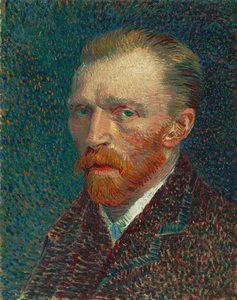
vincent willem van gogh
1853 - 1890 , Нидерланды
Краткая справка
- Artistic Movement Or Style: Постимпрессионизм
- Artists Or Movements Influenced By This Artist:
- Экспрессионизм
- Фовизм
- Artists Who Influenced This Artist:
- Рембрандт
- Жюльен Милле
- Date Of Birth: 30 марта 1853
- Date Of Death: 29 июля 1890
- Full Name: Vincent Willem van Gogh
- Nationality: Нидерландский
- Notable Artworks:
- Помидорщики
- Подсолнухи
- Звёздная ночь
- Place Of Birth: Зюндерт, Нидерланды
Похожие статьи
Decoding Van Gogh's Turmoil: OriginalUniqueArt’s Masterful Reproductions of Emotional Depth
Discover exquisite Van Gogh reproductions from OriginalUniqueArt – expert art specialists offering museum-quality prints & custom paintings. Trust our authentic process and elevate your collection today.

Impressionism vs. Post-Impressionism: A Masterclass in the Revolution of Light, Color, and Emotion
Master the nuances of Impressionism vs. Post-Impressionism with our expert guide. Explore the revolutionary shift from Monet’s fleeting light to Van Gogh’s emotional depth. Discover how these iconic movements continue to inspire fine art collectors and modern interiors today.

Рембрандт ван Рейн: Топ-25 шедевров великого голландского мастера | OriginalUniqueArt
Погрузитесь в мир великого Рембрандта! 25 шедевров голландского барокко, истории создания картин и уникальные техники художника. Купите репродукции картин Рембрандта высочайшего качества для вашего интерьера на OriginalUniqueArt.com

10 Шедевров Постимпрессионизма, Определивших Эпоху | OriginalUniqueArt.com
Погрузитесь в мир постимпрессионизма! Откройте 10 шедевров Ван Гога, Моне, Сезанна и других великих художников. История искусства, техники живописи и вдохновение для вашего интерьера на OriginalUniqueArt.com. Изысканные репродукции картин ждут вас!

Beyond Impressionism: Exploring the Emotional Depth of Post-Impressionist Painting
Explore the profound emotional depth & innovative techniques of Post-Impressionism with OriginalUniqueArt. Discover Cézanne, Van Gogh, Gauguin & more – and their lasting impact on modern art.