

 Примерить в интерьере
 Отправить
 Поделиться
 Подробнее
 Руководство

 Скачать
 Похожие объекты
 Рентгенография
 Слайд-шоу
 Статистика
Joseph Banks


 Развернуть текст
Жикле / Арт-принты
Печать (жикле) или холст музейного качества с быстрыми сроками изготовления и широким выбором вариантов отделки. ( Заказать репродукцию ручной работы Перейти к цифровым изображениям)




P118B $10

P118H $10

P118W $10

P438Z $10

P508JH $12

P508YH $12

P805H $10

P805Z $10

P919BZ $10

P919G $10

P919XJ $10

P959ZH $10

P968JZ $12

W106C $8

W218G $10

W218JH $8

W218Y $10

W307PJ $10

W316G $10

W316PJ $8

W316Y $10

W398PJ $8

W4111J $10

W500HY $15

W500JH $15

W692G $12

W849H $8

W940BG $15

W953PJ $8




Выберите один из наших стандартных размеров, соответствующих оригинальным пропорциям произведения искусства.

Введите необходимую ширину и высоту, чтобы репродукция подошла к вашей раме или стене. При печати изображение можно только уменьшить, но нельзя увеличить больше оригинала, поэтому при выборе другого формата часть изображения может быть обрезана. Перед печатью мы отправим вам цифровой макет на утверждение. Изображение на этой странице не отображает реальную обрезку — ее можно увидеть только на макете.
Доставка по всему миру () за 2 недели вместо стандартных 4–5 недель. (24 Октябрь)

Бесплатная экспресс-доставка по всему миру

Высококачественный льняной холст

Полное страхование при транспортировке

Гарантия возврата таможенных пошлин

Гарантия точного цветового соответствия

100-дневный период возврата (только при обнаружении дефектов)

Гарантия возврата 100% средств

Скидка при заказе нескольких работ
 Вариант со стеклом доступен только для размеров менее 110 см

Joseph Banks
Жикле / Арт-принты
Размер репродукции
-


Итоговая стоимость
$ 80
A Portrait of Scientific Grandeur: Joseph Banks by Thomas Phillips
Thomas Phillips’s “Portrait of Joseph Banks” is more than simply a likeness; it's a meticulously crafted tableau of scientific ambition, colonial aspiration, and the burgeoning confidence of the British Enlightenment. Completed in 1809, this remarkable painting captures Sir Joseph Banks – a man who profoundly shaped our understanding of the natural world – at the apex of his influence as President of the Royal Society and a key figure in Captain James Cook’s groundbreaking voyages. The image isn't merely a representation of a man; it’s an embodiment of a nation’s expanding horizons, a visual testament to the era’s fervent belief in exploration and discovery.
The composition immediately draws the eye to Banks himself, seated with dignified composure within the opulent confines of the Royal Society's Presidential chair. The chair, adorned with its coat of arms – a potent symbol of authority and scientific prestige – anchors him firmly within his position of leadership. His posture is one of quiet strength, yet there’s an undeniable air of intellectual curiosity about him; his gaze, directed directly at the viewer, invites engagement and suggests a mind constantly engaged in observation and analysis. The subtle tilt of his head, combined with the slight downward cast of his eyes, hints at a contemplative nature, a man deeply immersed in the intricacies of the natural world.
The Language of Detail: Technique and Style
Phillips’s mastery lies not just in capturing Banks's likeness but in rendering the textures and nuances of his attire and surroundings with astonishing precision. The painting is executed in the style of English portraiture prevalent during the early 19th century, characterized by a refined elegance and an emphasis on realistic detail. The use of oil paints allows for a remarkable depth of color and shading, creating a sense of three-dimensionality that brings the scene to life. Note the meticulous rendering of Banks’s coat – the rich fabric, the subtle sheen of the buttons, the intricate embroidery—each element contributing to an overall impression of wealth, status, and scholarly dedication.
The background is equally significant. The marble fireplace, with its lion's head motif, speaks to the grandeur of the Royal Society’s headquarters. The inclusion of a manuscript detailing botanical discoveries – a clear reference to Banks’s life’s work – subtly reinforces his scientific credentials. Even the placement of the mace cushion and inkstand, symbols of authority and intellectual pursuit, are carefully considered, adding layers of meaning to the composition.
A Symbol of Colonial Ambition
“Portrait of Joseph Banks” is inextricably linked to the era’s colonial ambitions. Banks's role in Cook’s voyages was pivotal in establishing British presence in Australia and shaping early scientific understanding of the Pacific region. The painting, therefore, can be interpreted as a visual endorsement of this expansionist policy. Banks’s confident demeanor and association with the Royal Society project an image of British intellectual superiority—a narrative designed to justify colonial endeavors.
However, it's crucial to acknowledge the complexities inherent in this interpretation. While the painting undoubtedly celebrates British scientific achievement, it also reflects the ethical dilemmas associated with colonialism. Banks’s legacy is one of both remarkable discovery and complicity in a system that profoundly impacted Indigenous populations. Considering these historical nuances adds depth and resonance to our understanding of the artwork.
Emotional Resonance and Lasting Legacy
Beyond its historical context, “Portrait of Joseph Banks” possesses a powerful emotional resonance. The painting evokes a sense of intellectual curiosity, quiet determination, and the enduring human desire to explore and understand the world around us. Banks’s gaze invites viewers to share in his passion for knowledge and his belief in the transformative power of scientific discovery.
Reproductions of this iconic portrait continue to captivate audiences today, serving as a reminder of a pivotal figure in the history of science and exploration. It stands not just as a beautiful work of art but as a window into a fascinating era—an era defined by both remarkable progress and profound ethical challenges.
Вопросы и ответы
Какой цвет наиболее заметен в произведении «Joseph Banks»?
Espresso (#443225) — преобладающий цвет в работе «Joseph Banks», Томас Филлипс.
Какому этапу творчества Томас Филлипс соответствует работа «Joseph Banks»?
«Joseph Banks» представляет собой Early Maturity художника Томас Филлипс.
Какое место занимает «Joseph Banks» среди привычных тем Томас Филлипс?
Повторяющиеся темы в творчестве Томас Филлипс включают neoclassical ideals, scientific observation, british colonial ambitions, exploration, royal society patronage, prestige, portraiture’s social commentary”, banks's legacy; работа "Joseph Banks" сосредоточена на portraiture, naturalism, botany, science, exploration, society, british art.
Биография художника
Early Life and Artistic Foundations
Thomas Phillips, born in Dudley, Worcestershire, in 1770, emerged from relatively modest beginnings to become a prominent figure in the British art scene of the late 18th and early 19th centuries. His initial artistic training wasn’t within the traditional confines of painting, but rather in the craft of glass-painting under Francis Eginton in Birmingham. This foundational experience instilled in him a meticulous attention to detail and an understanding of color and light – skills that would prove invaluable when he later transitioned to portraiture. The intricate designs and vibrant hues of stained glass demanded precision and a keen eye for composition, shaping his early artistic sensibilities. A pivotal moment arrived in 1790 when Phillips journeyed to London, armed with an introduction to Benjamin West, a leading artist of the time and a key figure in the Royal Academy. West’s guidance proved transformative, opening doors to opportunities within the established art world and providing him with invaluable mentorship. He was immediately immersed in the atmosphere of London's artistic circles, absorbing the techniques and philosophies of his esteemed teacher.A Rising Portraitist: Style and Subject Matter
Phillips quickly found his niche in portraiture, though not without navigating a competitive landscape already populated by renowned artists like Thomas Lawrence and John Hoppner. Initially, his sitters were largely unknown individuals – tradesmen, minor officials, and members of the gentry seeking to immortalize their likenesses. However, through dedication, skill, and an innate ability to capture personality, he steadily ascended the social ladder, attracting increasingly prominent figures to his studio. His style was characterized by a remarkable realism, reflecting both the influence of his early training in glass-painting – particularly his understanding of light and shadow – and the prevailing artistic tastes of the era. He possessed an extraordinary talent for not just replicating physical likenesses but also conveying something of the sitter’s character, intellect, and inner life. This ability to capture a sense of presence and emotion was what truly distinguished his work from mere imitation. He often employed subtle details – a fleeting expression, a particular gesture – to reveal the essence of his subjects. His portraits weren't simply representations; they were windows into the souls of those he depicted.Royal Patronage and Academic Recognition
The year 1804 marked a significant turning point in Phillips’ career with his election as an associate of the Royal Academy, alongside William Owen. This recognition solidified his position within the artistic establishment and signaled a period of increased demand for his services. Shortly thereafter, he relocated to 8 George Street, Hanover Square, a prestigious address that would remain his home and studio for the next four decades – a symbol of his rising status and success. His clientele continued to expand dramatically, encompassing members of the royal family (including Prince of Wales), the aristocracy, and leading figures in various fields – scientists, writers, poets, and explorers. He painted portraits of the Prince of Wales (later George IV), the Marchioness of Stafford, Lord Thurlow, and many others, each portrait reflecting his meticulous attention to detail and his ability to capture the unique character of his subjects. The demand for his work was so high that he often had multiple commissions underway simultaneously, a testament to his reputation as one of London’s most sought-after portrait painters.Notable Works and Artistic Evolution
Among Phillips's most celebrated works are *The Death of Talbot, Earl of Shrewsbury, at the Battle of Castillon* (1793), a dramatic historical scene showcasing his mastery of composition and color; *Ruth and her Mother-in-law* (1794), a poignant depiction of domestic life imbued with emotional depth; and *Elijah restoring the Widow’s Son* (1795), demonstrating his ability to convey religious themes with sensitivity and grace. However, it was in 1807 that he produced one of his most enduring portraits – a captivating likeness of William Blake, the visionary poet and artist. This painting, now housed in the National Portrait Gallery, is particularly admired for its evocative portrayal of Blake’s intense gaze and spiritual intensity. Phillips's artistic style evolved subtly over time, becoming increasingly refined and expressive. He experimented with different techniques and approaches, always striving to capture the essence of his subjects while maintaining a consistent level of technical excellence. His later works often displayed a greater sense of psychological depth and emotional complexity than his earlier portraits.Legacy and Historical Significance
Thomas Phillips’s contributions to British art are considerable. He was not merely a skilled portrait painter; he was also a dedicated teacher and a keen observer of the cultural landscape of his time. His appointment as Professor of Painting at the Royal Academy in 1825 provided him with an opportunity to share his knowledge and expertise with aspiring artists, shaping the artistic sensibilities of a generation. His *Lectures on the History and Principles of Painting*, published in 1833, offered valuable insights into his artistic philosophy and pedagogical approach. Phillips’s legacy extends beyond his individual works; he helped to establish portraiture as a respected and enduring art form in Britain. His meticulous realism, combined with his sensitivity to character and emotion, continues to resonate with viewers today. He left behind a body of work that reflects both the technical skill and the intellectual curiosity of an artist deeply engaged with the cultural and social currents of his era – a testament to his lasting contribution to British art history.
Томас Филлипс
1770 - 1845 , Великобритания
Краткая справка
- Artistic Movement Or Style: Романтизм
- Artists Or Movements Influenced By This Artist: ['Романтизм']
- Artists Who Influenced This Artist: ['Бенджамин Уэст']
- Date Of Birth: 1770
- Date Of Death: 1845
- Full Name: Thomas Phillips
- Nationality: Британский
- Notable Artworks:
- Венера и Адонис
- Лорд Байрон
- Place Of Birth: Дудли, Великобритания
Похожие статьи

Sir Thomas Lawrence: Portraiture, Power & Regency Society's Aesthetics
Explore the captivating world of Sir Thomas Lawrence, Regency England's premier portraitist. Discover his artistic techniques, powerful representations of society, and enduring legacy. Expert insights for discerning art collectors.

Thomas Phillips: Portraiture, Patronage & the Rise of Victorian Society Art
Explore the life & work of Thomas Phillips (1770-1845), a leading Victorian portrait painter renowned for his captivating portrayals of Britain's 'men of genius'. Discover his artistic journey, patronage, and lasting legacy.
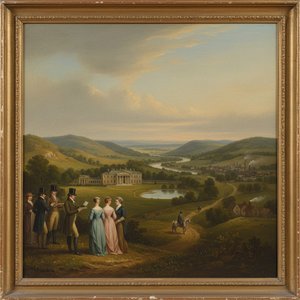
Thomas Barker of Bath: Landscape Painting & Societal Reflection in Early 19th-Century England
Explore the life & work of Thomas Barker of Bath, a key figure in 19th-century English Romanticism. Discover his Parisian success, iconic paintings like 'The Bride of Death', and lasting artistic legacy. Learn more at OriginalUniqueArt.

Majesty on Canvas: A Definitive Guide to Iconic Royal Portraits Through Art History
Explore the profound history of royal portraiture. From Baroque grandeur to Victorian elegance, discover how master artists captured power and lineage on canvas through the timeless medium of oil painting.

Sir Francis Grant: Portraiture, Patronage & Victorian Society
Explore the life & work of Sir Francis Grant, a leading Victorian portraitist. Discover his aristocratic clientele, role at the Royal Academy, and enduring artistic legacy. Learn about art patronage in 19th-century Britain.