Contemporary Realism · 1874
Forgiven (Томас Фэйд, 1874)
Томас Фэйд (1826–1900) создал(а) Forgiven. Создано в 1874. Относится к направлению Contemporary Realism. Выполнено в технике Oil On Canvas. Хранится в Guildhall Art Gallery в Лондон, Соединенное Королевство. Размер: 36 × 48 cm
- 1874
- Oil On Canvas
- 36 × 48 cm
- Guildhall Art Gallery, Лондон

 Предпросмотр

 Картина маслом ручной работы
 Поделиться
 Поделиться
 Справка об объекте


 Скачать
 Похожие предметы
 Рентгенография
 Слайд-шоу
 Вопросы и ответы

 Статистика просмотров
Forgiven вкратце
- Название
- Forgiven
- Автор
- Томас Фэйд (1826–1900)
- Дата рождения художника
- Керкубри, Великобритания
- Дата
- 1874
- Техника
- Oil On Canvas
- Размеры
- 36 × 48 cm
- Где посмотреть
- Guildhall Art Gallery, Лондон, Соединенное Королевство
- Движение
- Contemporary Realism
- Период
- 19th Century
- Сюжет
- family portrait, domestic scene, victorian era, warmth, rural life, intimate moment
Что изображено на Forgiven?
Identification of Forgiven by Thomas Faed
In this intimate oil on canvas, titled Forgiven, the Scottish artist Thomas Faed explores the quietude of domestic life. Created in 1874, the work offers a glimpse into the sentimental realism that defined much of Faed's career. The piece is modest in scale, measuring 36 x 48 cm, which encourages a close, personal encounter with the figures depicted.
Faed, born in 1826 in Gatehouse of Fleet, United Kingdom, possessed a particular sensitivity to the textures of everyday existence. Through Forgiven, he captures a specific moment of familial connection, utilizing the medium of oil to build a sense of warmth within a humble setting. The work remains a significant example of his ability to translate human emotion into a visual narrative.
The Composition and Visual Elements
The scene unfolds within a dimly lit, rustic interior, capturing a quiet moment of domesticity. At the center of the composition, a family group is gathered around a table, consisting of an older man, a woman, and a young child. The arrangement feels somewhat cluttered, with various objects scattered throughout the space to suggest a lived-in, humble setting. This density of detail creates a sense of immediacy, as if we have stumbled upon a private, unposed instance of daily life.
Lighting is used with great subtlety here. The primary source of illumination emanates from a fireplace located on the left side of the frame, casting soft light across the figures and creating deep shadows that provide a sense of volume. This interplay of light and shadow allows for a clear sense of depth, achieved through the careful layering of the figures and the surrounding furniture. The atmosphere remains somber and quiet, grounded by a color palette dominated by muted greens, browns, and grays.
Technique and Style
The work is executed in oil on canvas, utilizing a painterly technique that prioritizes the immediate sensation of the scene. You can see the visible brushstrokes throughout the composition, which lend a sense of immediacy to the domestic setting. The lines are predominantly organic and slightly loose, avoiding the rigid precision of more academic works. This approach allows the forms to settle into the space with a natural, unforced quality.
The lighting is subdued, emanating from a fireplace to the side, which has a profound effect on how the shapes are perceived. Because of this soft illumination, the edges of the figures and objects lack sharpness; instead, they appear somewhat softened, blending gently into the shadows. This creates a palpable sense of volume and depth within the rustic interior. You can feel the tactile nature of the environment through the way the paint is applied to the rough wooden surfaces and the heavy folds of the fabric.
Where to See This Work Today
You may find this work at the Guildhall Art Gallery in London, United Kingdom. It is part of the collection held by the City of London, England. The gallery is situated within the Moorgate area, offering a quiet space to observe the nuances of Faed's brushwork.
The museum itself is housed in a stone building designed in a semi-Gothic style. It provides a dignified setting for such intimate domestic scenes. If you find yourself in the city, the architecture of the gallery complements the historical weight of the pieces within its walls.
Related Works by Thomas Faed
To understand the breadth of Faed's output, one might look toward his earlier compositions, such as His Only Pair, which dates from about 1860. This period of his career also produced Listeners Ne'er Hear Any Good Of Themselves, a work that reflects his interest in the nuances of human interaction. His ability to handle narrative was further demonstrated in The Last of the Clan, completed in 1865. These pieces offer a glimpse into the development of his specific approach to genre painting and the quietude of domestic life.
Several of his most significant paintings are held in permanent collections, allowing for a deeper study of his technical skill. The Silken Gown is part of the collection at the Tate Gallery. In the Aberdeen Art Gallery, one can find both Highland Mary and The Reaper. These works, alongside celebrated pieces like The Motherless Bairn and Scott and His Literary Friends at Abbotsford, illustrate the range of his subject matter, from intimate studies to more expansive, literary-inspired scenes.
В каком музее находится Forgiven?
Guildhall Art Gallery
Лондон, Соединенное Королевство
Полотно времени: где викторианское великолепие встречается с эхом Рима В самом сердце исторического района Сити, в пульсирующем центре Лондона, Галерея искусств Гильдхолл предлагает нечто гораздо большее, чем просто созерцание полотен; она дарит глубокое сенсорное путешествие скволозь слои человеческой цивилизации. Переступить порог этого музея — значит войти в пространство, где утонченная элегантность викторианской эпохи дышит в унисон с суровыми и вечными камнями римской Британии. Это уникальное учреждение совершает редкий для музейного мира подвиг, бесшовно переплетая деликатные мазки мастеров девятнадцатого века с осязаемым подземным эхом древней империи.

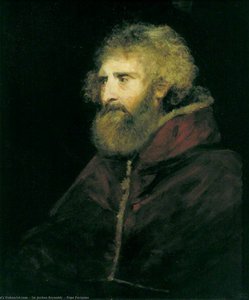

Изображения в высоком разрешении: Forgiven
Общественное достояние: художник умер в 1900.
Томас Фэйд, Forgiven (1874), Guildhall Art Gallery. Общественное достояние
Ответы на вопросы о Forgiven
Где можно увидеть оригинал «Forgiven», Томас Фэйд?
Вы можете увидеть оригинал произведения «Forgiven» в Guildhall Art Gallery, Лондон, Соединенное Королевство.
В каком году было создано произведение «Forgiven»?
«Forgiven», Томас Фэйд был создан в 1874 году.
В какой технике выполнено произведение «Forgiven», Томас Фэйд?
Для создания «Forgiven» Томас Фэйд использовал(а) технику Oil On Canvas. Эта техника определяет материальную природу оригинального произведения.
Каковы реальные размеры произведения «Forgiven», Томас Фэйд?
Размер оригинала «Forgiven», Томас Фэйд составляет 36 x 48 cm.
Что изображено на картине «Forgiven»?
Темы, представленные в «Forgiven», Томас Фэйд, включают family portrait, domestic scene, victorian era, warmth, rural life, intimate moment, family bonds, soft lighting. Вместе они раскрывают основной сюжет произведения.
Является ли произведение «Forgiven» свободным от авторских прав?
Произведение «Forgiven», Томас Фэйд находится в общественное достояние — срок действия авторского права истёк. Этот статус определяет правила воспроизведения изображения данного произведения.
Кто создал "Forgiven"?
Авторство работы «Forgiven» приписывается Томас Фэйд.
К какому художественному направлению относится «Forgiven», Томас Фэйд?
«Forgiven», Томас Фэйд относится к направлению Contemporary Realism. Это направление определяет стилистический контекст произведения.
К какому периоду творчества Томас Фэйд относится произведение «Forgiven»?
«Forgiven» относится к Mature Period художника Томас Фэйд.
Об авторе, Томас Фэйд

1826–1900, Великобритания
Томас Фэйд
Наследие шотландской души Томас Фэйд занимает исключительное место в анналах шотландского искусства; к нему часто относятся с тем глубоким почтением, которое принято проявлять к влиянию Роберта Бёрнса на шотландскую песню. Рожденный в Керкубришире, на мельнице Барлей-Милл, Фэйд был частью выдающейся семьи творцов: его братья Джеймс и Джон, а также сестра Сьюзан, разделяли это глубокое художественное призвание. Его ранние годы были неразрывно связаны с суровыми и прекрасными пейзажами Галлоуэя — средой, которая, без сомнения, наполнила теплотой и домашним уютом его самые заветные полотна. Получив формальное художественное образование в Школе дизайна в Эдинбурге, он начал путь, который привел его из самого сердца Шотландии в престижные студии Лондона.
Другие работы Томас Фэйд
 Worn Out
 Highland Mary1857
 Faults on Both Sides1861
 The Doctor's Visit1889
Эссе к произведению Forgiven
 The Timeless Beauty of Oil on Canvas: A Masterclass in Texture, Impasto, and Artistic MasteryDiscover the profound allure of oil on canvas. Explore the mastery of impasto textures, the science of pigment longevity, and expert guides…
 Masterpieces of Quinten Metsys: The Top 25 Essential ArtworksExplore 25 iconic works by Quinten Metsys, the master of the Antwerp School. Discover his Flemish Renaissance gems on OriginalUniqueArt.com.
 Masterpieces of Realism: The Top 25 Artworks by Thomas EakinsExplore the top 25 masterpieces of American Realism by Thomas Eakins. Discover his iconic works and find curated art on OriginalUniqueArt.c…