Contemporary Realism · 1898
Taking the Count (Томас Икинс, 1898)
Томас Икинс (1844–1916) создал(а) Taking the Count. Создано в 1898. Относится к направлению Contemporary Realism. Выполнено в технике Oil On Canvas. Хранится в Yale University Art Gallery в Хартфорд, США.
- 1898
- Oil On Canvas
- Yale University Art Gallery, Хартфорд

 Предпросмотр

 Картина маслом ручной работы
 Поделиться
 Поделиться
 Информационный лист


 Скачать
 Похожие предметы
 Рентгенография
 Слайд-шоу
 Вопросы и ответы

 Статистика просмотров
Taking the Count вкратце
- Название
- Taking the Count
- Автор
- Томас Икинс (1844–1916)
- Дата рождения художника
- Филадельфия, США
- Дата
- 1898
- Техника
- Oil On Canvas
- Где посмотреть
- Yale University Art Gallery, Хартфорд, США
- Движение
- Contemporary Realism
- Период
- 19th Century
- Сюжет
- boxing match, anatomy, crowd spectators, referee, philadelphia, realism
Что изображено на Taking the Count?
The Raw Pulse of Philadelphia: A Masterclass in Realism
In the dim, electric atmosphere of Philadelphia’s Arena in 1898, a moment of profound human vulnerability is frozen in time. Thomas Eakins, a titan of American Realism, does not merely paint a boxing match; he dissects the very essence of endurance and physical struggle. In Taking the Count, we are thrust into the center of the ring, where the sweat, the tension, and the heavy breathing of the combatants feel almost palpable. This is not the romanticized, heroic athleticism often found in sporting art; instead, Eakins presents a gritty, unvarnished truth. The scene captures a fallen fighter at his most precarious moment, caught in the agonizing interval between a devastating blow and the referee's decisive count. It is a study of the human body under duress, rendered with a scientific precision that reflects Eakins’ lifelong obsession with anatomy.
The composition draws the eye through a complex web of gazes and physical postures. At the heart of the drama, the kneeling figure embodies a desperate struggle for recovery, his muscles taut and his spirit tested. Surrounding him, the referee and the standing opponent create a triangular tension that anchors the viewer within the ring. Beyond the immediate combatants, the presence of the crowd—a shadowy, watchful collective—adds a layer of psychological depth, reminding us that this private agony is being consumed as public spectacle. For the collector or the lover of fine art, this painting offers more than just a depiction of sport; it provides a window into the late 19th-century urban experience, where the boundaries between physical prowess and human frailty are perpetually blurred.
Anatomy of a Masterpiece: Technique and Light
Eakins’s technical mastery is most evident in his ability to marry scientific rigor with emotional resonance. Having spent years studying the intricacies of musculature and bone structure through dissection, he approaches the canvas with the eye of an anatomist. Every sinew and strained limb in Taking the Count is rendered with an uncompromising accuracy that makes the figures appear to possess weight and volume. His use of light does not serve to beautify the scene but to illuminate its harsh realities. The lighting within the arena creates deep, dramatic shadows that sculpt the bodies of the boxers, emphasizing the physical toll of the fight and adding a sense of cinematic gravity to the composition.
The palette, while grounded in the earthy, somber tones characteristic of Eakins’s realism, is used to direct the viewer's emotional journey. The muted colors of the background allow the pale, strained skin of the athletes to emerge from the gloom, focusing our attention on the visceral reality of the struggle. For interior designers seeking a centerpiece for a sophisticated space, this work offers a profound sense of gravitas. A high-quality reproduction of this masterpiece brings with it an air of intellectual depth and historical weight, making it an ideal choice for galleries, studies, or living spaces that value art which challenges the eye and stirs the soul.
A Legacy of Unflinching Honesty
To understand Taking the Count is to understand the rebellious spirit of Thomas Eakins himself. At a time when many of his contemporaries were retreating into the soft, fleeting impressions of light or the idealized myths of history, Eakins stood firm in his commitment to the real. He found beauty not in perfection, but in the truth of the human condition—in the grit of the city, the precision of science, and the raw intensity of life lived on the edge. This painting remains a testament to that courage.
Owning or displaying a reproduction of this work is an invitation to contemplate the themes of resilience and the cyclical nature of struggle. It serves as a powerful reminder that even in moments of defeat, there is a profound dignity in the attempt to rise again. Whether viewed as a historical document of Philadelphia’s sporting culture or as a timeless exploration of human anatomy, Taking the Count continues to captivate, offering an enduring source of inspiration for those who find beauty in the authentic and the unadorned.
В каком музее находится Taking the Count?
Yale University Art Gallery
Хартфорд, США
Истоки и история галереи История Yale University Art Gallery берет свое начало в 1832 году. Ее фундамент был заложен благодаря щедрому дару — коллекции, принадлежавшей Джону Трамбуллу. В те ранние годы внимание исследователей было сосредоточено преимущественно на полотнах, запечатлевших события Американской революции, и именно эта тематика составила первоначальное ядро собрания института.


Изображения в высоком разрешении: Taking the Count
Общественное достояние: художник умер в 1916.
Томас Икинс, Taking the Count (1898), Yale University Art Gallery. Общественное достояние
Ответы на вопросы о Taking the Count
Где можно увидеть оригинал «Taking the Count», Томас Икинс?
Картина «Taking the Count», Томас Икинс представлена в коллекции Yale University Art Gallery, Хартфорд, США. В описании музея речь идет об оригинальном произведении, а не о репродукциях.
В каком году было создано произведение «Taking the Count», Томас Икинс?
«Taking the Count» датируется 1898 годом. Эта дата позволяет определить место произведения в творчестве Томас Икинс и в контексте его эпохи.
В какой технике выполнено произведение «Taking the Count», Томас Икинс?
Для создания «Taking the Count» Томас Икинс использовал(а) технику Oil On Canvas. Эта техника определяет материальную природу оригинального произведения.
Что изображено на картине «Taking the Count»?
На полотне «Taking the Count», Томас Икинс изображены: boxing match, anatomy, crowd spectators, referee, philadelphia, realism, athlete.
Является ли произведение «Taking the Count» свободным от авторских прав?
Статус авторского права для «Taking the Count», Томас Икинс: произведение находится в общественное достояние — срок действия авторского права истёк. Это определяет, допускается ли свободное воспроизведение изображения.
Кто создал "Taking the Count"?
«Taking the Count» был создан Томас Икинс. Информация на этой странице описывает оригинальную работу Томас Икинс.
К какому художественному направлению относится «Taking the Count», Томас Икинс?
«Taking the Count», Томас Икинс относится к направлению Contemporary Realism. Это направление определяет стилистический контекст произведения.
К какому периоду творчества Томас Икинс относится произведение «Taking the Count»?
В творческом наследии Томас Икинс работа «Taking the Count» относится к периоду Mature Period. Этот этап позволяет сопоставить её с другими произведениями художника.
В каком возрасте Томас Икинс создал(а) «Taking the Count»?
Томас Икинс было 54 лет, когда в 1898 году была создана работа "Taking the Count". Возраст рассчитан на основе года рождения художника, 1844.
Об авторе, Томас Икинс

1844–1916, США
Томас Икинс
Жизнь Томаса Эйкинса Томас Эйкинс родился 25 июля 1844 года в Филадельфии, штат Пенсильвания, и его жизнь была неразрывно связана с этим городом. Он был человеком многих талантов: живописцем, фотографом, скульптором и выдающимся педагогом в области изящных искусств. И хотя его творческие поиски часто уводили его за пределы родины, география его существования оставалась сосредоточенной в Филадельфии. Он проникал в интеллектуальные и социальные круги города, внимательно наблюдая за людьми и той физической реальностью, которая определяла облик местного ландшафта.
Другие работы Томас Икинс
 Хирургическая клиника1875
 Плавание1885
 Макс Шмитт в одноместной лодке1871
 Portrait of Samuel Murray1889
Эссе к произведению Taking the Count
 Precision in Portraiture: The Technical Rigor of Anatomical Mastery and Hyper-RealismMaster the technical rigor of hyper-realism and anatomical precision. Explore the evolution of portraiture mastery now.
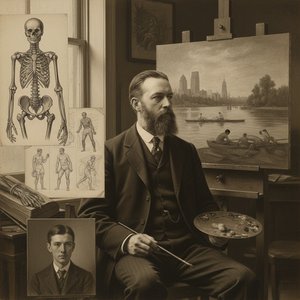 Thomas Eakins: Realism, Anatomy & the American Spirit – A Comprehensive Exploration of Life and LegacyExplore the life & legacy of Thomas Eakins, a pivotal American Realist painter. Discover his groundbreaking techniques, anatomical precisio…
 Romantic Realism's Finest: 10 Masterpieces for Your Home | OriginalUniqueArtExplore 10 defining masterpieces of Romantic Realism! Discover Courbet, Millet & Daumier's powerful paintings—capturing emotion and social …