Hudson River School · 1847
Prometheus Bound (Томас Коул, 1847)
Томас Коул (1801–1848) создал(а) Prometheus Bound. Создано в 1847. Относится к направлению Hudson River School. Выполнено в технике Oil. Хранится в Музеи изящных искусств Сан-Франциско в Сан-Франциско, США. Размер: 162 × 243 cm
- 1847
- Oil
- 162 × 243 cm
- Музеи изящных искусств Сан-Франциско

 Предпросмотр

 Картина маслом ручной работы
 Поделиться
 Поделиться
 Информационный лист


 Скачать
 Похожие предметы
 Рентгенография
 Слайд-шоу
 Вопросы и ответы

 Статистика просмотров
Prometheus Bound вкратце
- Название
- Prometheus Bound
- Автор
- Томас Коул (1801–1848)
- Дата рождения художника
- Болтон, Великобритания
- Дата
- 1847
- Техника
- Oil
- Размеры
- 162 × 243 cm
- Где посмотреть
- Музеи изящных искусств Сан-Франциско, Сан-Франциско, США
- Движение
- Hudson River School
- Сюжет
- landscape, prometheus, mythology, mountains, allegory, romanticism
Что изображено на Prometheus Bound?
The Weight of Myth: Thomas Cole’s “Prometheus Bound”
Thomas Cole's "Prometheus Bound," painted in 1847, isn’t merely a landscape; it’s a profound meditation on defiance, punishment, and the enduring human spirit. This monumental canvas, now residing within the Fine Arts Museums of San Francisco, transcends its subject matter to become a powerful allegory for the struggles inherent in challenging authority and forging one's own destiny. Cole, a pivotal figure in the Hudson River School movement, masterfully blends Romanticism with an underlying moral urgency, creating an image that continues to resonate deeply with viewers today.
The scene depicts Prometheus, chained to a towering rock formation amidst a desolate, snow-laden mountainscape. The composition is strikingly dramatic – a vast expanse of jagged peaks dominates the background, dwarfing the solitary figure of the Titan and emphasizing his isolation and vulnerability. A vulture circles overhead, a constant reminder of Zeus’s relentless retribution, while a subtle hint of Jupiter, the Roman equivalent of Zeus, watches from above, embodying the cold indifference of divine power. Cole's use of light is particularly masterful; a diffused, almost ethereal glow illuminates the scene, casting long shadows and creating an atmosphere of both grandeur and despair. The color palette—primarily cool blues, grays, and whites—reinforces this sense of bleakness, punctuated by the fiery red underpaint used to render the snow-covered mountains – a deliberate choice that subtly hints at Prometheus’s stolen fire.
A Myth Made Manifest: Exploring the Narrative
The painting draws directly from Aeschylus's Greek tragedy, “Prometheus Bound,” a story of rebellion against the gods. Prometheus, in this narrative, is not simply a titan but a symbol of humanity’s relentless pursuit of knowledge and progress. He steals fire from Mount Olympus, gifting it to mankind – an act of defiance that ultimately earns him eternal torment at the hands of Zeus. Cole doesn't shy away from the brutality of the punishment; the stark depiction of Prometheus’s chains and the looming threat of the vulture vividly convey the weight of his transgression. However, within this scene of suffering, there is also a palpable sense of resilience. Prometheus’s gaze, fixed upon the viewer, exudes an almost defiant serenity—a refusal to succumb to despair.
The inclusion of the chorus, comprised of figures emerging from the depths of the mountains, adds another layer of complexity to the narrative. They represent the forces of nature, witnesses to Prometheus's plight, and perhaps even a subtle acknowledgment of his heroic struggle. Their hesitant approach, marked by curiosity and apprehension, suggests that even those seemingly untouched by divine wrath recognize the significance of Prometheus’s actions.
The Hudson River School: A New American Vision
“Prometheus Bound” is a quintessential example of the Hudson River School's artistic philosophy. Unlike earlier European landscape paintings that often focused on idyllic pastoral scenes, Cole sought to capture the raw power and sublime beauty of the American wilderness. He employed a technique known as “atmospheric perspective,” subtly blurring distant elements to create a sense of depth and vastness. This approach wasn’t simply about replicating reality; it was about conveying an emotional response—a feeling of awe and reverence for nature's grandeur.
Cole’s work also reflects the burgeoning American identity of the mid-19th century, grappling with themes of independence, self-reliance, and the relationship between humanity and the natural world. The painting can be interpreted as a metaphor for America’s own struggle to assert its sovereignty against established powers – a sentiment particularly relevant in the context of westward expansion and the nation's growing tensions with European empires.
A Timeless Masterpiece: Reproduction & Beyond
Reproductions of “Prometheus Bound” offer an exceptional opportunity to bring this powerful image into any setting. The meticulous detail, evocative atmosphere, and profound symbolism ensure that a high-quality reproduction will serve as both a beautiful work of art and a compelling conversation piece. Consider framing the artwork in a manner that complements its dramatic scale and reinforces its thematic resonance – perhaps within a contemporary interior space to juxtapose the ancient myth with modern life.
For those seeking an authentic experience, exploring the original painting at the Fine Arts Museums of San Francisco is highly recommended. It’s a truly immersive encounter with one of America's most significant artistic achievements—a testament to Thomas Cole’s genius and a timeless exploration of human courage in the face of overwhelming adversity.
В каком музее находится Prometheus Bound?
Музеи изящных искусств Сан-Франциско
Сан-Франциско, США
История Музеев изящных искусств Сан-Франциско Путь Музеев изящных искусств Сан-Франциско берет свое начало в 1871 году, когда были заложены основы этого великого культурного института. На протяжении десятилетий история музея писалась через расширение его горизонтов: сначала в 1895 году открыл свои двери музей де Янга, а затем, в 1924 году, был основан Музей легиона чести. Долгое время эти два самобытных учреждения развивались независимо друг от друга, сохраняя свою уникальную идентичность, пока в 1972 году, под руководством Иана Маккиббина Уайта, они не были официально объединены в единый мощный комплекс.


Изображения в высоком разрешении: Prometheus Bound

Общественное достояние: художник умер в 1848.
Другие размеры, фрагменты и цитирование →Томас Коул, Prometheus Bound (1847), Музеи изящных искусств Сан-Франциско. Общественное достояние
Ответы на вопросы о Prometheus Bound
Где можно увидеть оригинал «Prometheus Bound», Томас Коул?
Оригинал произведения «Prometheus Bound», Томас Коул хранится в Музеи изящных искусств Сан-Франциско, Сан-Франциско, США. Репродукция позволяет украсить этим шедевром ваш дом.
В каком году было создано произведение «Prometheus Bound», Томас Коул?
Создание «Prometheus Bound», Томас Коул датируется 1847 годом.
В какой технике выполнено произведение «Prometheus Bound»?
Для создания «Prometheus Bound» Томас Коул использовал(а) технику Oil. Эта техника определяет материальную природу оригинального произведения.
Каковы размеры оригинала «Prometheus Bound», Томас Коул?
Размер оригинала «Prometheus Bound», Томас Коул составляет 243 x 162 cm.
Что изображено на картине «Prometheus Bound», Томас Коул?
Сюжеты произведения «Prometheus Bound» — это landscape, prometheus, mythology, mountains, allegory, romanticism, wilderness.
Является ли произведение «Prometheus Bound», Томас Коул общественным достоянием?
Что касается авторских прав, произведение «Prometheus Bound» находится в общественное достояние — срок действия авторского права истёк.
Какому художнику приписывают работу «Prometheus Bound»?
Автор произведения «Prometheus Bound» — Томас Коул. Работа внесена в каталог под именем Томас Коул.
К какому художественному направлению относится «Prometheus Bound», Томас Коул?
«Prometheus Bound», Томас Коул относится к направлению Hudson River School. Это направление определяет стилистический контекст произведения.
К какому периоду творчества Томас Коул относится работа «Prometheus Bound»?
«Prometheus Bound» относится к Late Period художника Томас Коул.
Об авторе, Томас Коул

1801–1848, Великобритания
Томас Коул
Жизнь и искусство Томаса Коула Томас Коул родился 1 февраля 1801 года в Болтоне-ле-Мурс, Ланкашир, Англия, и его первые шаги по жизни прошли вдали от тех ландшафтов, которые впоследствии прославят его имя. В 1818 году его семья эмигрировала в Соединенные Штаты в поисках новой жизни на землях бескрайних, еще не нанесенных на карты территорий. В те ранние годы он был человеком многих ремесел: работал гравером, а с 1822 года нашел постоянное призвание в портретной живописи. Будучи во многом самоучкой, он развивал свой художественный взгляд через пристальное наблюдение за миром и изучение книг, а не через строгую академическую школу.
Другие работы Томас Коул
 Оксбоу
 Мечта архитектора1840
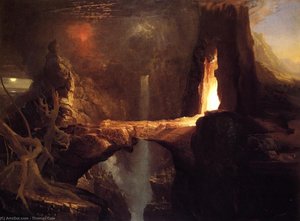 Вывод: Эрупсьон. Луна и свет огня1828
 Вид Флоренции с Сан Миниато1837

Эссе к произведению Prometheus Bound
 Masterpieces of Light: The Top 25 Artworks by Duccio di BuoninsegnaJourney through the Sienese brilliance of Duccio di Buoninsegna. Explore 25 iconic masterpieces, from the Rucellai Madonna to the Maestà, f…
 Nature's Nation: The Hudson River School and the Art of the American SublimeExplore the spiritual depth of the Hudson River School through its masters. Discover the power of the American Sublime today.
 Топ-10 шедевров Высокого Возрождения: искусство для вашего дома от OriginalUniqueArtПогрузитесь в эпоху Высокого Возрождения! Узнайте истории Леонардо да Винчи, Рафаэля и Микеланджело. Шедевры Ренессанса для вашего интерьер…