

 Примерить в интерьере
 Отправить
 Поделиться
 Подробнее
 Руководство

 Скачать
 Похожие объекты
 Рентгенография
 Слайд-шоу
 Q&A
Q&A Статистика
Composition I (still life)


 Развернуть текст
Жикле / Арт-принты
Печать (жикле) или холст музейного качества с быстрыми сроками изготовления и широким выбором вариантов отделки. ( Заказать репродукцию ручной работы Перейти к цифровым изображениям)




P118B $10

P118H $10

P118W $10

P438Z $10

P508JH $12

P508YH $12

P805H $10

P805Z $10

P919BZ $10

P919G $10

P919XJ $10

P959ZH $10

P968JZ $12

W106C $8

W218G $10

W218JH $8

W218Y $10

W307PJ $10

W316G $10

W316PJ $8

W316Y $10

W398PJ $8

W4111J $10

W500HY $15

W500JH $15

W692G $12

W849H $8

W940BG $15

W953PJ $8




Выберите один из наших стандартных размеров, соответствующих оригинальным пропорциям произведения искусства.

Введите необходимую ширину и высоту, чтобы репродукция подошла к вашей раме или стене. При печати изображение можно только уменьшить, но нельзя увеличить больше оригинала, поэтому при выборе другого формата часть изображения может быть обрезана. Перед печатью мы отправим вам цифровой макет на утверждение. Изображение на этой странице не отображает реальную обрезку — ее можно увидеть только на макете.
Доставка по всему миру () за 2 недели вместо стандартных 4–5 недель. (29 Октябрь)

Бесплатная экспресс-доставка по всему миру

Высококачественный льняной холст

Полное страхование при транспортировке

Гарантия возврата таможенных пошлин

Гарантия точного цветового соответствия

100-дневный период возврата (только при обнаружении дефектов)

Гарантия возврата 100% средств

Скидка при заказе нескольких работ
 Вариант со стеклом доступен только для размеров менее 110 см

Composition I (still life)
Жикле / Арт-принты
Размер репродукции
-


Итоговая стоимость
$ 80
A Symphony of Geometry: Rediscovering Theo van Doesburg’s Composition I
In the quiet evolution of modernism, few works capture the radical shift from representation to pure abstraction as poignantly as Theo van Doesburg’s Composition I (still life). Created in 1916, this masterpiece serves as a profound bridge between the tangible world and the spiritual realm of geometry. At first glance, the viewer is presented with a familiar tableau—the humble arrangement of bowls, cups, apples, and a vase resting upon a table. Yet, as one lingers, the recognizable forms begin to dissolve. The objects are not merely depicted; they are distilled. Through a masterful application of Neoplasticism, van Doesburg strips away the superficial textures of reality to reveal a skeletal structure of horizontal lines, vertical axes, and overlapping circles that pulse with an internal, rhythmic life.
The technique employed in this work is a testament to the artist's disciplined pursuit of clarity. Eschewing the expressive, thick impasto of his contemporaries, van Does andburg utilized precise, meticulous brushstrokes to apply pigment onto the canvas. This method ensures that every intersection of line and every curve of a circle feels intentional and balanced. The composition is anchored by a central, tree-like structure composed of concentric circles, which draws the eye inward, creating a sense of depth that defies the flatness of the abstract plane. This interplay between the weight of the geometric forms and the lightness of the negative space creates a visual equilibrium that is both intellectually stimulating and aesthetically soothing.
The Spirit of De Stijl: Historical and Symbolic Resonance
To understand Composition I, one must look toward the turbulent era of its birth. Painted amidst the shadows of World War I, the work emerged from a period of intense intellectual ferment. Van Doesburg, alongside luminaries like Piet Mondriaan, sought to establish the De Stijl movement—a collective mission to redefine art’s role in a fractured society. They believed that by moving away from the "sensory" and toward the "universal," art could foster a new sense of cosmic harmony. The painting is not merely an experiment in shape; it is a philosophical manifesto. The dominant circles within the work are deeply symbolic, representing spiritual unity and the infinite nature of the cosmos—concepts heavily influenced by the writings of Wassily Kandinsky.
For the discerning collector or interior designer, this piece offers more than just visual interest; it provides an emotional anchor of warmth and stability. Despite its austere, geometric vocabulary, the palette—rich with warm hues—imbues the canvas with a surprising sense of intimacy. It is a work that demands contemplation, inviting the viewer to transcend the chaos of the external world and enter a realm of pure intellect and emotion. Whether placed in a contemporary gallery setting or as a focal point in a sophisticated modern interior, Composition I radiates a timeless elegance, making it an incomparable choice for those who appreciate art that speaks to both the mind and the soul.
Вопросы и ответы
Под какими еще именами известен Тео ван Досбург?
Тео ван Досбург также известен под другими именами: Христиан Эмиль Мари Кюпер, И.К. Бонсет, Альдо Камини, Доэс.
Сколько человек просматривают «Composition I (still life)»?
Статистика по произведению «Composition I (still life)», Тео ван Досбург представлена на странице Статистика: ежемесячное количество просмотров данного произведения, посещаемость других работ художника, а также распределение недавних посетителей по странам и языкам.
В какой части дома будет хорошо смотреться репродукция «Composition I (still life)»?
Для работы «Composition I (still life)», Тео ван Досбург рекомендуется Living Room. Это предложение основано на сюжете, цветовой гамме и настроении произведения.
Биография художника
The Architect of Abstraction: A Life in Geometric Harmony
Theo van Doesburg, born Christian Emil Marie Küpper in 1883 in Utrecht, Netherlands, wasn’t merely a painter; he was a revolutionary force who fundamentally reshaped the very foundations of modern art. His journey began amidst the lingering echoes of Impressionism and Post-Impressionism – initially mirroring styles reminiscent of Vincent van Gogh – both in subject matter and emotional intensity. However, this early phase served as a crucial prelude, a necessary stepping stone toward the radical transformation that would define his enduring legacy. A pivotal moment arrived in 1913 with his encounter with Wassily Kandinsky’s *Rückblicke*. This text ignited within van Doesburg a profound realization: true artistic expression lay not in replicating the external world but in channeling an inner, spiritual reality through pure abstraction. It was this conviction that birthed Neoplasticism – more commonly known as De Stijl – a movement he founded and fiercely championed, becoming its most ardent advocate.Forging a New Visual Language: The Principles of De Stijl
De Stijl wasn’t simply an artistic style; it was a comprehensive philosophical manifesto translated into visual form. Van Doesburg believed in stripping art down to its most essential elements – straight lines, right angles, and the primary colors of red, yellow, and blue, alongside black, white, and gray. This austere palette wasn't born from limitation but from a desire for universality—a belief that these fundamental forms resonated with an underlying cosmic order. He envisioned a *total* work of art, extending beyond the canvas to encompass architecture, design, and even everyday objects. Collaboration was key; van Doesburg worked closely with architects like J.J.P. Oud and Gerrit Rietveld, designing stained glass windows, furniture, and entire interiors that embodied the principles of De Stijl. His collaborations extended to fellow artists such as Piet Mondrian, with whom he co-founded the influential journal *De Stijl*, a platform for disseminating their ideas and attracting like-minded creatives. However, despite their shared origins, tensions arose between van Doesburg and Mondrian regarding the rigidity of Neoplasticism. Van Doesburg introduced “Elementarism” in 1926, advocating for diagonal lines and more dynamic compositions – a departure that ultimately led to a schism within the movement, revealing his restless spirit and constant pursuit of artistic evolution.The Early Years & Influences: From Impressionism to Kandinsky
Van Doesburg’s early artistic development was deeply influenced by the vibrant colors and emotional intensity of Vincent van Gogh. His initial paintings often depicted landscapes and portraits imbued with a sense of melancholy and introspection, mirroring Van Gogh's expressive brushstrokes and use of color. However, this early phase served as a crucial prelude, a necessary stepping stone toward the radical transformation that would define his enduring legacy. The turning point came in 1913 with his encounter with Wassily Kandinsky’s *Rückblicke*. This text, exploring the spiritual dimension of art and advocating for abstraction, profoundly impacted van Doesburg's artistic vision. He began to experiment with simplified forms and non-representational imagery, moving away from traditional subject matter and seeking a more direct connection to inner experience. The influence of Japanese prints – particularly their use of flat planes of color and geometric patterns – also played a significant role in shaping his aesthetic sensibilities.A Revolutionary Movement: The Birth of De Stijl
De Stijl, meaning “The Style,” emerged as a multifaceted movement encompassing painting, architecture, design, and typography. It wasn’t merely an artistic style; it was a comprehensive philosophical manifesto translated into visual form. Van Doesburg believed in stripping art down to its most essential elements – straight lines, right angles, and the primary colors of red, yellow, and blue, alongside black, white, and gray. This austere palette wasn't born from limitation but from a desire for universality—a belief that these fundamental forms resonated with an underlying cosmic order. He envisioned a *total* work of art, extending beyond the canvas to encompass architecture, design, and even everyday objects. The core tenets of De Stijl were rigorously defined: absolute geometric abstraction, the use of primary colors and neutral tones, and a rejection of illusionistic space. The group’s journal, *De Stijl*, became a vital vehicle for disseminating these ideas and attracting like-minded creatives, fostering a vibrant intellectual community dedicated to exploring the possibilities of pure abstraction.Beyond Painting: A Multifaceted Artistic Vision
While celebrated as a painter, van Doesburg’s artistic pursuits were remarkably diverse. He was a prolific writer, poet, and critic, using his pen to articulate the theoretical underpinnings of De Stijl and challenge conventional notions of art. His engagement with Dadaism in the early 1920s further broadened his artistic horizons, leading to experimental works that incorporated collage and typography. This period also saw him teaching at the Bauhaus, where he shared his ideas with a new generation of artists and designers. He wasn’t content to remain within the confines of traditional art forms; van Doesburg actively sought to integrate art into everyday life, believing it had the power to transform society. His designs for interiors and furniture weren't merely aesthetic exercises but attempts to create harmonious living spaces that reflected the principles of De Stijl. A prime example is his collaboration with Sophie Taeuber-Arp and Georges Vantongerloo on designing artist residences, showcasing a holistic approach to artistic creation – an attempt to build a world *in* the image of his ideals.Legacy & Enduring Influence: A Pioneer of Modernism
Theo van Doesburg’s life was tragically cut short in 1931 at the age of 47, yet his impact on modern art remains profound. De Stijl, though relatively short-lived as a cohesive movement, exerted an enormous influence on subsequent artistic developments, including Bauhaus design, Minimalism, and Constructivism. His emphasis on geometric abstraction, pure color, and functionalism continues to resonate with artists and designers today. His work serves as a reminder that art is not merely about representation but about the exploration of fundamental forms and ideas. Van Doesburg’s legacy extends beyond his paintings and designs; it lies in his unwavering commitment to artistic innovation and his belief in the transformative power of abstraction. His vision of a unified, harmonious world – expressed through the language of De Stijl – continues to inspire those who seek to create a more beautiful and meaningful environment.Key Works & Lasting Impact
- Study for Simultaneous Compositions XXII (1922): A quintessential example of Neoplasticism, showcasing the movement’s signature geometric forms and limited color palette.
- Composition with half values (1928): Demonstrates van Doesburg's exploration of tonal variations within the De Stijl aesthetic.
- Dancers (1917-1918): Represents a transitional phase in his work, blending figurative elements with emerging abstract tendencies.
- Collaboration on *De Stijl* journal: A crucial platform for disseminating the movement’s ideas and fostering dialogue among artists and intellectuals.
- Elementarism (1926): Van Doesburg's attempt to inject dynamism into Neoplasticism, introducing diagonal lines and a more fluid approach to composition.

Тео ван Досбург
1883 - 1931 , Нидерланды
Краткая справка
- Artistic Movement Or Style: Де Стиль, Неопластицизм
- Artists Or Movements Influenced By This Artist:
- Бхауэиз
- Минимализм
- Artists Who Influenced This Artist:
- Ван Гог
- Кандинский
- Date Of Birth: 30 августа 1883
- Date Of Death: 7 марта 1931
- Full Name: Тео ван Досбург
- Nationality: Нидерландский
- Notable Artworks:
- Изучение для одновременных композиций XXII
- Композиция с полутонами
- Танцоры
- Place Of Birth: Утрехт, Нидерланды
Похожие статьи

Геометрическая абстракция: 10 шедевров, изменивших искусство | OriginalUniqueArt.com
Погрузитесь в мир геометрической абстракции! От Кандинского до Малевича – 10 шедевров, изменивших искусство. Узнайте историю создания и значение культовых картин. Репродукции музейного качества на OriginalUniqueArt.com. Вдохновение для вашего интерьера!
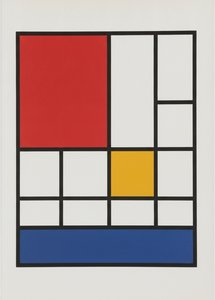
Pure Harmony: Discover the Bold Geometry and Spiritual Order of De Stijl Art
Explore the profound beauty of De Stijl art. Discover how masters like Piet Mondrian used bold geometry and primary colors to seek universal harmony through Neoplasticism. A deep dive into the spiritual order behind the world's most iconic abstract movements.

Beyond Form & Color: Geometric Abstraction's Evolution in 20th/21st Century Art
Explore the evolution of geometric abstraction from Cubism to contemporary art. Discover key artists like Malevich & Mondrian, investment insights, and expert collecting advice at OriginalUniqueArt.
Beyond Form: Exploring the Philosophical Foundations of Geometric Abstraction
Explore the philosophical roots & artistic evolution of geometric abstraction with OriginalUniqueArt. Discover Mondrian, Malevich, De Stijl & more. Expert insights for collectors and art enthusiasts.
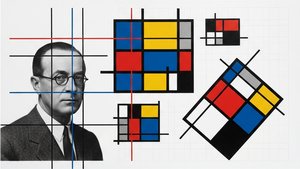
Theo van Doesburg: Pioneering De Stijl & the Evolution of Neo-Plasticism
Explore the revolutionary De Stijl movement & Neo-Plasticism with our expert guide. Discover Piet Mondrian, Theo van Doesburg, and the lasting impact of this influential art style. Learn about collecting & investing in De Stijl masterpieces.
