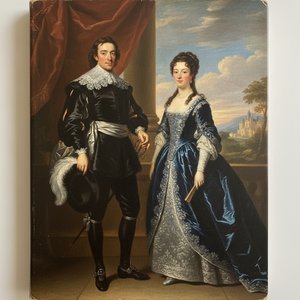
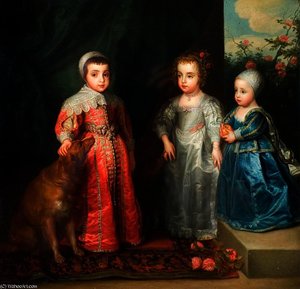
() ·

A painting made for you, by hand

Jacqueline van Caestre

Масляная репродукция ручной работы

Картина маслом на холсте в выбранном вами размере и раме, написанная на заказ нашими художниками. ( Переключиться на печать Перейти к цифровым изображениям)

Описание предмета

Admire 'Jacqueline van Caestre' by Anthony van Dyck! This Baroque portrait captures a wealthy noblewoman with exquisite detail, showcasing luxurious attire & elegant grace. A masterpiece of Flemish art.

Биография художника

Антион ван Дейк (1599-1641): выдающийся художник-портретист эпохи барокко, известный портретами европейской аристократии и короля Карла I. Влияние на английское искусство.

from ·

Chapter 1

How large should it be?

Slide to change the size; the picture on the left shows the frame at its real width. The proportions of the original are kept.

Стандартный размер
индивидуальный заказ
CM
INCH

Выберите один из наших стандартных размеров, соответствующих оригинальным пропорциям произведения искусства.

ширина
высота

Введите необходимую ширину и высоту, чтобы репродукция подошла к вашей раме или стене. Поскольку работа выполняется вручную, при изменении пропорций художник может немного увеличить область вокруг картины или, наоборот, обрезать края — выбор за вами. Перед началом работы мы пришлем вам цифровой макет на утверждение. Изображение на этой странице не является точным результатом — увидеть реальный вид можно только на макете.

Chapter 2

How should it arrive?

Choose the edges of the stretched canvas

Choose your frame

Corner sample of the WhiteWrap canvas edge finish, stretched on массив дерева bars
White $1
Corner sample of the BlurSideWrap canvas edge finish, stretched on массив дерева bars
Blurside $1
Corner sample of the ExtendedWrap canvas edge finish, stretched on массив дерева bars
Extended $1
Corner sample of the P118B picture frame: формованный полистирол, 5 cm wide and 3 cm thick
P118B $10
Corner sample of the P118H picture frame: формованный полистирол, 5 cm wide and 3 cm thick
P118H $10
Corner sample of the P118W picture frame: формованный полистирол, 5 cm wide and 3 cm thick
P118W $10
Corner sample of the P438Z picture frame: формованный полистирол, 5.5 cm wide and 3.5 cm thick
P438Z $10
Corner sample of the P508JH picture frame: формованный полистирол, 7 cm wide and 3.5 cm thick
P508JH $12
Corner sample of the P508YH picture frame: формованный полистирол, 7 cm wide and 3.5 cm thick
P508YH $12
Corner sample of the P805H picture frame: формованный полистирол, 5 cm wide and 3.5 cm thick
P805H $10
Corner sample of the P805Z picture frame: формованный полистирол, 5 cm wide and 3.5 cm thick
P805Z $10
Corner sample of the P919BZ picture frame: формованный полистирол, 7 cm wide and 3.5 cm thick
P919BZ $10
Corner sample of the P919G picture frame: формованный полистирол, 7 cm wide and 3.5 cm thick
P919G $10
Corner sample of the P919XJ picture frame: формованный полистирол, 7 cm wide and 3.5 cm thick
P919XJ $10
Corner sample of the P959ZH picture frame: формованный полистирол, 5 cm wide and 3 cm thick
P959ZH $10
Corner sample of the P968JZ picture frame: формованный полистирол, 6 cm wide and 4 cm thick
P968JZ $12
Corner sample of the W106C picture frame: массив дерева, 5 cm wide and 3 cm thick
W106C $8
Corner sample of the W218G picture frame: массив дерева, 5 cm wide and 3 cm thick
W218G $10
Corner sample of the W218JH picture frame: массив дерева, 5 cm wide and 3 cm thick
W218JH $8
Corner sample of the W218Y picture frame: массив дерева, 5 cm wide and 3 cm thick
W218Y $10
Corner sample of the W307PJ picture frame: массив дерева, 6 cm wide and 3 cm thick
W307PJ $10
Corner sample of the W316G picture frame: массив дерева, 6 cm wide and 3 cm thick
W316G $10
Corner sample of the W316PJ picture frame: массив дерева, 6 cm wide and 3 cm thick
W316PJ $8
Corner sample of the W316Y picture frame: массив дерева, 6 cm wide and 3 cm thick
W316Y $10
Corner sample of the W398PJ picture frame: массив дерева, 5 cm wide and 3 cm thick
W398PJ $8
Corner sample of the W4111J picture frame: массив дерева, 6.5 cm wide and 3.5 cm thick
W4111J $10
Corner sample of the W500HY picture frame: массив дерева, 7 cm wide and 5 cm thick
W500HY $15
Corner sample of the W500JH picture frame: массив дерева, 7 cm wide and 5 cm thick
W500JH $15
Corner sample of the W692G picture frame: массив дерева, 8 cm wide and 4 cm thick
W692G $12
Corner sample of the W849H picture frame: массив дерева, 5 cm wide and 3 cm thick
W849H $8
Corner sample of the W940BG picture frame: массив дерева, 7.5 cm wide and 4.5 cm thick
W940BG $15
Corner sample of the W953PJ picture frame: массив дерева, 6 cm wide and 3.5 cm thick
W953PJ $8
Corner sample of the H24-GOLD picture frame: резное дерево с левкасом, 10 cm wide and 6 cm thick
H24-GOLD $30
Corner sample of the H24-SILVER picture frame: резное дерево с левкасом, 10 cm wide and 6 cm thick
H24-SILVER $30
Corner sample of the H36-GOLD picture frame: резное дерево с левкасом, 15 cm wide and 6.5 cm thick
H36-GOLD $45
Corner sample of the H36-SILVER picture frame: резное дерево с левкасом, 15 cm wide and 6.5 cm thick
H36-SILVER $45
Предпросмотр в раме
В раме

Moulding: . Overall size with the frame: .

Chapter 3

Who paints it, and should anything change?

Examples of what can be changed: Replace face with customer photo; Add pet (e.g., replace cat with dog); Include hidden message in background; Change background landscape or elements.
After order, OriginalUniqueArt.com team will email client for instructions and provide a mockup preview

Доставка по всему миру () за 3–4 недели вместо стандартных 5 недель. (1 Ноябрь). Без компромиссов в качестве.

Chapter 4

The finishing touches

A nameplate, as in a museum?

Детали гравировки на бронзовой плакетке

This elegant plaque features the artist's name and the title of the artwork, finely engraved for a timeless presentation.

It is made from bronze with a refined, elegant finish. The text is precisely laser-engraved for a sharp and permanent result. Measuring 9x2 cm, the plaque is compact yet easy to read. It's built to be durable and scratch-resistant, offering a professional, museum-quality look. Mounting is simple thanks to the included adhesive backing.

Информация об акриловой табличке

The plaque includes essential engraved details such as the artist's name, the title of the artwork, the date it was created, the type of media used-like oil on canvas or watercolor-a brief description of the piece, and a QR code that links to the complete artwork information.

It is crafted from clear acrylic, offering a sleek, modern appearance. The text is UV-engraved in black to ensure strong visual contrast. With a size of 10x15 cm, it ensures optimal readability. It comes equipped with two metal hooks for secure wall mounting. The plaque is designed to be weather-resistant, making it suitable for various environments, and it includes interactive features that work seamlessly with smartphone scanning.

Информация о чёрной акриловой табличке

This elegant plaque includes engraved information such as the artist's name, the title of the artwork, the date it was created, the type of media used (like oil on canvas or watercolor), a short description of the artwork, and a QR code for quick access to more information.

The plaque itself is made from refined black acrylic with a premium finish. The text is laser-engraved in white for high contrast and readability. Its size is 10x15 cm, designed to be easy to read. It comes with two metal hooks for professional mounting. The design is sleek and fits any interior style. It is also weather-resistant and durable, with built-in digital integration for mobile compatibility.

A protective varnish?

When do you need it?

Chapter 5

Your painting, as you ordered it

Jacqueline van Caestre

Материал репродукции

Размер репродукции

-

Ведущий мастер элитного уровня

Более высокая детализация, изысканность и дополнительное время на создание работы

-

Рама для репродукции

-

-

Для произведений искусства или репродукций, размер которых превышает 105 см (приблизительно 41 дюйм) по любой из сторон, рама будет доставлена в разобранном виде (в виде комплекта). Этот метод обеспечивает безопасную доставку и предотвращает повреждения при транспортировке.

Требуется профессиональная сборка — это не продукт для самостоятельной сборки (DIY).
Комплект должен быть собран, а холст натянут опытным мастером по багетным рамам с использованием клеевого ПВА (не входит в комплект), струбцин для натяжки холста и зажимов, чтобы удерживать подрамник ровным до полного высыхания клея. Неправильная сборка или неравномерное натяжение холста могут привести к необратимому повреждению произведения искусства и не являются гарантийным случаем.

  • В комплект входят все бруски из массива дерева, точно вырезанные по размеру.

  • Собирается с помощью предоставляемых винтов, а также столярного клея для угловых соединений, который не входит в комплект и должен быть приобретен вашим мастером.

  • Требуются профессиональные инструменты, не входящие в комплект: щипцы для натяжки холста (натяжитель) и зажимы, чтобы удерживать рейки ровно во время высыхания клея.

Важно:
Для соединения углов требуется клей для дерева, перекладины необходимо зафиксировать струбцинами до полного высыхания клея, а для натяжки холста на собранную раму требуются щипцы для натяжки холста. Ни один из этих инструментов не входит в комплект. Пожалуйста, убедитесь в наличии опытного мастера по багетным работам перед заказом рамы такого размера.

Экспликация

-

-

Защитный лак

Глянцевый лак (насыщает цвета, защищает от воздействия света и влаги)

-

Настроить мою картину

Примеры возможных изменений: замена лица на фото клиента; добавление домашнего питомца (например, замена кошки на собаку); добавление скрытого сообщения на фоне; изменение пейзажа или элементов фона.

-

Срочно

Доставка по всему миру () за 3–4 недели вместо стандартных 5 недель. (1 Ноябрь). Без компромиссов в качестве.

-

Экспресс-доставка

Доставка по всему миру () в течение 5 недель. (8 Ноябрь).

Включено

Итоговая стоимость

$ 300

Итоговая стоимость $ 300

Вариант со стеклом доступен только для размеров менее 110 см

Included with every order

  • Бесплатная экспресс-доставка по всему миру
  • Высококачественный льняной холст
  • Полное страхование при транспортировке
  • Гарантия возврата таможенных пошлин
  • Гарантия точного цветового соответствия
  • 100-дневный период возврата (только при обнаружении дефектов)
  • Гарантия возврата 100% средств
  • Скидка при заказе нескольких работ

A Portrait of Grace and Power: Unveiling Jacqueline van Caestre by Anthony van Dyck

The portrait of Jacqueline van Caestre, painted in 1622 by the masterful Sir Anthony van Dyck, is more than a mere likeness; it’s a carefully constructed tableau of wealth, status, and burgeoning domesticity. Within its richly layered composition lies a captivating story of a noblewoman navigating the complexities of marriage and courtly life in 17th-century Antwerp. Van Dyck, already establishing his signature style—characterized by an almost sensual realism and a profound understanding of light’s transformative power—crafted this piece not just as a representation of a woman, but as a statement about her position within a world of privilege.

The painting immediately draws the eye to Jacqueline herself. Dressed in a sumptuous black gown, adorned with intricate gold embroidery and delicate lace trim, she embodies the opulence of her patrician family. The fabric’s sheen is rendered with exquisite detail—a testament to Van Dyck's meticulous technique—while the subtle variations in texture suggest the weight and richness of the material. Her hands, resting gracefully in her lap, are a study in poise and control, hinting at the composure expected of a woman of her station. Her gaze, direct and engaging, invites the viewer into her world, creating an intimate connection despite the formality of the portrait.

The Baroque Dance of Light and Shadow

Van Dyck’s genius lies not only in his ability to capture likeness but also in his masterful manipulation of light. The scene is bathed in a diffused, almost ethereal glow emanating from the left side of the canvas—a technique known as chiaroscuro—that dramatically sculpts Jacqueline's form and highlights the intricate details of her attire. This strategic use of light creates a sense of depth and volume, imbuing the portrait with a palpable three-dimensionality. The subtle gradations of tone – from the deep shadows that define the folds of her gown to the luminous highlights on her skin—are executed with breathtaking precision, showcasing Van Dyck’s unparalleled skill as a colorist.

The muted blue background serves as a sophisticated counterpoint to the richness of Jacqueline's dress. It doesn’t compete for attention but rather provides a subtle yet crucial backdrop, emphasizing the subject and contributing to the overall sense of harmony. The simplicity of the setting allows the viewer to focus entirely on the figure, reinforcing her importance within the composition.

A Window into a World of Aristocracy

The portrait’s historical context is equally compelling. Jacqueline van Caestre was married to Jean-Charles de Cordes, a member of one of Antwerp's wealthiest noble families. The painting likely commemorates their union, capturing her in the height of her beauty and social standing. Research reveals that she came from a family deeply rooted in municipal authority, adding another layer of significance to her portrait – a representation not just of personal wealth but also of familial influence.

Interestingly, this particular painting is believed to be a copy after an original lost prototype created around 1618 by either Rubens or a young Van Dyck. The existence of this earlier version—a full-length portrait—suggests that Jacqueline’s image held considerable artistic value and was deemed worthy of multiple iterations. The Brussels replica, alongside its pendant depicting her husband, provides invaluable insight into the evolution of Van Dyck's style and his relationship with his influential patron, Rubens.

Symbolism and Enduring Appeal

Beyond its technical brilliance, the portrait is rich in symbolism. Jacqueline’s composed expression speaks to her dignity and grace—qualities highly valued within aristocratic circles. The pearl necklace she wears, a symbol of purity and wealth, further reinforces her status. The overall effect is one of understated elegance and quiet power – a testament to Van Dyck's ability to capture not just the outward appearance but also the inner essence of his subject.

Today, this portrait continues to captivate viewers with its timeless beauty and masterful execution. It stands as a remarkable example of Baroque portraiture—a window into a world of privilege, power, and enduring artistic legacy. Reproductions offer an accessible way to appreciate the artistry of Van Dyck’s masterpiece, bringing its grace and sophistication into any space.

Вопросы и ответы

Является ли произведение «Jacqueline van Caestre» общественным достоянием?

Статус авторского права для «Jacqueline van Caestre», Антоний Ван Дейк: произведение находится в является общественным достоянием — срок действия авторского права истек. Это определяет, допускается ли свободное воспроизведение изображения.

Какой формат и ориентацию печати рекомендуют для «Jacqueline van Caestre», Антоний Ван Дейк?

Для «Jacqueline van Caestre» рекомендуется использовать размер Medium и Portrait ориентацию.

Какое место занимает «Jacqueline van Caestre» среди привычных тем Антоний Ван Дейк?

Повторяющиеся темы в творчестве Антоний Ван Дейк включают rubens’ dynamic influence, courtly aristocratic portraiture, wealth, status symbolism, van dyck’s stylistic peak, english court patronage”; работа "Jacqueline van Caestre" сосредоточена на jacqueline van caestre, jean-charles de cordes, anthony van dyck, baroque, portraiture, wealth, status.

More about this painting

Примерить в интерьере Примерить в AR Переключиться на печать Перейти к цифровым изображениям Отправить
Подробнее Руководство Добавить в избранное Скачать Похожие объекты Рентгенография Слайд-шоу Q&A Статистика

In numbers

  • 1622the year it was painted
  • 29frames to choose from
  • standard sizes, in its own proportions
  • 5weeks to paint and deliver it
Антоний Ван Дейк

Антоний Ван Дейк

1599 - 1641, Бельгия

Quick facts about Антоний Ван Дейк

  • Artistic Movement Or Style: Барокко
  • Artists Or Movements Influenced By This Artist: ['Английская живопись']
  • Artists Who Influenced This Artist: ['Пьер Паоло Рубенс']
  • Date Of Birth: 22 марта 1599
  • Date Of Death: 9 декабря 1641
  • Full Name: Sir Anthony van Dyck
  • Nationality: Нидерландский
  • Notable Artworks:
    • Портрет женщины и ребенка
    • Самёт короля Карла I
    • Лорд Джон Стюарт и брат
    • Благотворительность
    • Карл I в трёх позах
  • Place Of Birth: Антверпен, Бельгия

Биография художника

A Flemish Master at the Courts of Europe

Sir Anthony van Dyck, born in Antwerp in 1599, emerged as one of the most celebrated and influential portraitists of the Baroque era. His life, though tragically cut short at just forty-two years old, was a whirlwind of artistic exploration and prestigious commissions that took him from his native Flanders to Italy and ultimately to the heart of the English court. From an early age, van Dyck displayed remarkable talent, entering Hendrick van Balen’s workshop as a young apprentice and quickly absorbing the prevailing styles of the time. However, it was his association with Peter Paul Rubens – not merely as a student but as a collaborator – that truly shaped his artistic foundation. He learned from Rubens' dynamic compositions, rich color palettes, and masterful handling of light and shadow, yet van Dyck soon began to forge his own distinct path, one characterized by an elegance and refinement that would become his signature. This early influence is evident in the dramatic lighting and emotional intensity found in many of his works, a direct inheritance from Rubens’s powerful style.

Italian Sojourns and the Birth of a Style

The years van Dyck spent in Italy, beginning around 1621, proved pivotal in his artistic development. He resided primarily in Genoa, where he found favor among the city’s aristocratic families. It was here that he began to cultivate the sophisticated style for which he would become renowned – a style marked by graceful poses, luxurious fabrics, and an almost palpable sense of nobility. Unlike the robust energy often found in Rubens' work, van Dyck’s Italian portraits exuded a refined composure, capturing not just physical likeness but also the inner character and social standing of his sitters. He meticulously studied the works of Titian and other Italian masters, absorbing their techniques for rendering skin tones, drapery, and atmospheric perspective. During this period, he also embarked on his *Iconography*, a series of meticulously rendered portrait etchings featuring prominent figures of his time – artists, scholars, and rulers alike. This project showcased his exceptional technical skill and established him as a leading printmaker; the intricate detail and subtle nuances in these images demonstrated his mastery of the etching process. These etchings weren’t simply records; they were carefully constructed images designed to immortalize the subjects and convey their status and intellect, reflecting a deliberate artistic intent beyond mere documentation.

The King's Painter: Van Dyck in England

In 1632, van Dyck received an invitation that would forever alter his career trajectory – a summons from Charles I of England to become the court painter. This appointment marked a turning point, not only for van Dyck but also for English portraiture. He arrived in London with a considerable reputation and quickly became indispensable to the king, tasked with creating images that projected an aura of power, majesty, and divine right. Van Dyck’s portraits of Charles I are particularly noteworthy; he moved away from the stiff, formal representations favored by earlier artists, instead portraying the king as a dynamic, charismatic leader. He employed innovative techniques – dramatic lighting, sweeping gestures, and carefully chosen backgrounds – to create images that were both visually stunning and politically charged. His influence extended beyond the royal family, shaping the visual culture of the English aristocracy for generations to come. He didn’t just paint portraits; he crafted an image of kingship, influencing how royalty was perceived for over a century. The relationship between van Dyck and Charles I was complex, evolving from professional admiration to genuine friendship, reflected in the intimacy and warmth captured within many of the paintings.

Legacy and Enduring Influence

Van Dyck's untimely death in 1641 robbed the art world of a prodigious talent, but his legacy endures to this day. His impact on English portraiture is immeasurable; he established a standard of elegance and sophistication that subsequent artists would strive to emulate.
  • Technical Innovation: He was a master of both oil painting and etching, constantly experimenting with new techniques – particularly in the use of light and shadow to create depth and drama.
  • Stylistic Refinement: His portraits are characterized by their graceful poses, luxurious fabrics, and subtle psychological insights; he possessed an uncanny ability to capture not just appearance but also character and mood.
  • Courtly Influence: He transformed the image of the English monarchy, creating a visual language of power and prestige that shaped perceptions for decades.
Beyond his technical prowess, van Dyck possessed an exceptional ability to capture the essence of his sitters – their personality, their social standing, and their aspirations. His works continue to captivate audiences with their beauty, elegance, and enduring psychological depth. The Balbi Children, Charles I in Three Positions, and countless other masterpieces stand as testaments to his genius, ensuring that Sir Anthony van Dyck remains one of the most celebrated artists of the Baroque period. His influence can still be seen today in fashion, photography, and contemporary portraiture, a testament to the timeless appeal of his art. He is remembered not just for his skill, but also for his ability to elevate the status of portraiture itself, transforming it from a simple likeness into a powerful statement about identity and social standing.

Краткая справка

  • Artistic style: Elegant portraiture
  • Dimensions: 57 cm (22.4 in)
  • Movement: Baroque
  • Location: Musées Royaux Beaux Arts, Belgium
  • Artist: Sir Anthony van Dyck
  • Influences:
    • Rubens
    • Van Dyck

Викторина по искусству

В каждом вопросе только один правильный ответ.

Вопрос 1:
What is the primary subject of the painting "Jacqueline van Caestre"?
Вопрос 2:
According to the description, when was the painting likely created?
Вопрос 3:
Which artist is credited with creating the original prototype that "Jacqueline van Caestre" is based on?
Вопрос 4:
What artistic technique is prominently featured in the painting, contributing to its sense of realism?
Вопрос 5:
The description mentions that Jacqueline van Caestre came from a family with significant influence. What was her father's role?