Примерить в интерьере
 Отправить
 Поделиться
 Подробнее
 Руководство

 Скачать
 Похожие объекты
 Рентгенография
 Слайд-шоу
 Статистика
Self-Portrait
 Oil On Canvas
- WallArt
- Baroque
 1615
1615- Early Modern
 64.0 x 48.0 cm
 Musée Réattu
 Развернуть текст
Масляная репродукция ручной работы
Картина маслом на холсте в выбранном вами размере и раме, написанная на заказ нашими художниками. ( Переключиться на печать Перейти к цифровым изображениям)




P118B $10

P118H $10

P118W $10

P438Z $10

P508JH $12

P508YH $12

P805H $10

P805Z $10

P919BZ $10

P919G $10

P919XJ $10

P959ZH $10

P968JZ $12

W106C $8

W218G $10

W218JH $8

W218Y $10

W307PJ $10

W316G $10

W316PJ $8

W316Y $10

W398PJ $8

W4111J $10

W500HY $15

W500JH $15

W692G $12

W849H $8

W940BG $15

W953PJ $8




Выберите один из наших стандартных размеров, соответствующих оригинальным пропорциям произведения искусства.

Type the width and the height you need, to fit your frame or your wall. This is hand-painted, so for a size with a different shape the artist can paint a bit more around the picture, or cut a bit — you choose. We send you a digital mockup to approve before the painting starts. The picture shown on this page does not show the real result — only the mockup does.
После оформления заказа команда OriginalUniqueArt.com свяжется с клиентом по электронной почте для уточнения деталей и предоставит предварительный макет
Доставка по всему миру () за 3–4 недели вместо стандартных 5 недель. (14 Октябрь). Без компромиссов в качестве.

Бесплатная экспресс-доставка по всему миру

Высококачественный льняной холст

Полное страхование при транспортировке

Гарантия возврата таможенных пошлин

Гарантия точного цветового соответствия

100-дневный период возврата (только при обнаружении дефектов)

Гарантия возврата 100% средств

Скидка при заказе нескольких работ
 Вариант со стеклом доступен только для размеров менее 110 см

Self-Portrait
Материал репродукции
Размер репродукции
-


Итоговая стоимость
$ 300
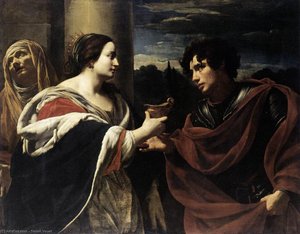
A Glimpse into Baroque Grandeur: The Self-Portrait of Simon Vouet
To stand before this self-portrait is to encounter not merely paint on canvas, but a direct conduit to the vibrant, ambitious spirit of early 17th-century Paris. Painted around 1615, this work captures the artist at a pivotal moment in his career—a time when he was solidifying his reputation as a master painter navigating the transition from Mannerism into the dramatic sweep of the Baroque style. The subject gazes out with an intense, knowing directness; it is the gaze of a man acutely aware of his own artistic power.
The Allure of the Subject and Attire
The sitter presents himself in meticulous detail, commanding attention through both his bearing and his costume. His prominent beard, featuring a carefully sculpted mustache and goatee, speaks to the fashionable masculinity of the era. He is clad in rich browns, offset by the exquisite formality of a ruffled collar—a hallmark of period portraiture that speaks volumes about social standing. The artist has paid painstaking attention to rendering these textures; one can almost feel the crisp linen of the ruff against the depth of his woolen garments. This careful presentation suggests a man of means, an intellectual, and perhaps, most importantly, a celebrated artisan.
Mastery in Technique and Composition
Technically, the painting is a testament to Simon Vouet’s burgeoning skill. The handling of light against shadow—the dramatic chiaroscuro that defines so much of Baroque art—is masterful. The dark background serves not as an empty void, but rather as a velvet curtain drawn back to illuminate the subject. This technique forces the viewer's eye directly onto the face and hands, emphasizing psychological depth over mere physical likeness. Vouet’s ability to render skin tones with such luminosity, contrasted against the deep shadows, elevates this portrait beyond simple documentation into something deeply emotive.
Historical Echoes and Emotional Resonance
Considering Simon Vouet's own biography—a painter whose early travels took him from England through the Ottoman Empire to Venice—this self-portrait feels imbued with the spirit of a cosmopolitan artist. He is channeling the energy of those grand European journeys, bringing back influences that fuel his unique vision. Owning a reproduction of this piece allows one to bring home not just an image, but a tangible echo of Baroque ambition: a period defined by drama, emotional intensity, and unparalleled artistic self-regard. It serves as a powerful focal point for any space seeking historical gravitas and undeniable artistic flair.
Вопросы и ответы
Какова техника исполнения и размеры работы «Self-Portrait», Симон Воюэт?
Техника исполнения работы «Self-Portrait», Симон Воюэт — Oil On Canvas, а её зафиксированные размеры составляют 64 x 48 cm.
Является ли «Self-Portrait», Симон Воюэт картиной, рисунком или принтом?
«Self-Portrait» — это произведение в технике WallArt.
Какова дата создания и художественный стиль произведения «Self-Portrait», Симон Воюэт?
Работа «Self-Portrait», Симон Воюэт датирована 1615 годом и относится к направлению Baroque.
Биография художника
Simon Vouet: A Pioneer of French Baroque Painting
Simon Vouet was a pivotal figure in the transition of French painting from Mannerism to the Baroque style—a transformation that fundamentally reshaped the artistic landscape of France and cemented his place as one of the most important artists of the seventeenth century. Born into an artistic family – Laurent Vouet, his father, was himself a painter – Simon received early training that instilled in him a deep appreciation for artistic innovation and meticulous craftsmanship. His grandson, Ludovico Dorigny, would continue the Vouet lineage’s dedication to art, ensuring the preservation of their distinctive aesthetic vision.Early Career and Italian Influences (1608-1627)
Vouet's artistic journey began in Paris, where he honed his skills as a portraitist—a profession that would define much of his early career. Demonstrating remarkable talent from a young age, he embarked on a formative trip to England in 1608, commissioned to depict a prominent noble family. This experience exposed him to the burgeoning artistic fervor of Northern Europe and solidified his reputation as a rising star. However, Vouet’s ambitions extended beyond national borders; he eagerly embraced opportunities for exploration and learning abroad. His fascination with Italian art culminated in a momentous decision: in 1611, he joined the entourage of Baron de Sancy, France's ambassador to the Ottoman Empire—a journey that transported him to Constantinople and subsequently to Venice in 1612. These travels were not merely expeditions for pleasure; they served as invaluable catalysts for artistic growth. In Venice, Vouet immersed himself in the vibrant atmosphere of the Serenissima Republic, absorbing the stylistic precepts championed by Paolo Veronese and Giovanni Battista Tiepolo—artists who epitomized the grandeur and theatricality of the Venetian Baroque. Rome, from 1614 to 1627, proved to be Vouet’s crucible – a period of intense artistic experimentation and profound intellectual engagement. He resided within the epicenter of Baroque innovation, surrounded by luminaries such as Caravaggio, Guido Reni, Lanfranco, and Domenichino. These masters profoundly influenced Vouet's stylistic sensibilities, prompting him to meticulously analyze their techniques—particularly their masterful use of chiaroscuro (the dramatic interplay of light and shadow)—and to incorporate elements of Mannerism into his compositions. He wasn’t merely imitating; he was synthesizing disparate influences into a singular artistic idiom that would become his hallmark.Development of Vouet’s Distinctive Style
The culmination of Vouet's Italian sojourn arrived in 1624 when he ascended to the presidency of Accademia di San Luca—Rome’s premier art institution—a prestigious honor reflecting both his exceptional skill and the recognition accorded him by fellow artists. This position afforded him unparalleled access to artistic discourse and enabled him to champion innovative approaches to painting. During this time, Vouet perfected a style characterized by its remarkable ability to absorb and transform diverse influences into a cohesive whole. He achieved this feat through painstaking observation of nature—a practice that informed his meticulous rendering of drapery folds and anatomical detail—and by embracing the principles of di sotto in su (foreshortened perspective), pioneered by Veronese, which created an illusion of depth and grandeur.Major Achievements and Legacy
Upon returning to France in 1627, Vouet immediately established himself as a leading figure in Parisian artistic circles—a role he would maintain until his death in 1649. He was appointed *Premier peintre du Roi* (First Painter to the King)—a position of considerable prestige and influence—by Louis XIII—who recognized Vouet’s unparalleled talent and unwavering dedication to artistic excellence. This patronage afforded him access to royal commissions that allowed him to produce monumental paintings adorning Versailles and other palaces, solidifying his reputation as a master of decorative art. Vouet's workshop flourished during his lifetime, nurturing the careers of numerous aspiring artists—among them Charles Le Brun, Valentin de Boulogne, Pierre Mignard, Eustache Le Sueur, Claude Mellan—who would carry Vouet’s stylistic legacy throughout France. His influence extended beyond individual works; he established a distinctively Baroque school of painting that profoundly shaped the artistic sensibilities of subsequent generations. Vouet's enduring contribution to French art lies in his role as a catalyst for stylistic innovation and in his unwavering commitment to upholding the highest standards of artistic craftsmanship—a testament to his place among the titans of seventeenth-century European painting.
Симон Воюэт
1590 - 1649 , Франция
Краткая справка
- Artistic Movement Or Style: Барокко
- Artists Or Movements Influenced By This Artist: ['Французское барокко']
- Artists Who Influenced This Artist:
- Караваджо
- Паоло Веронезе
- Date Of Birth: Янв 9, 1590
- Date Of Death: Июнь 30, 1649
- Full Name: Simon Vouet
- Nationality: Франция
- Notable Artworks: ['Анотация с Благовещением Святой Маргариты и Святого Ансана']
- Place Of Birth: Париж, Франция
Похожие статьи
Simon Vouet: A Baroque Master's Journey from Italian Influence to French Classicism
Explore the life & art of Simon Vouet, a pivotal French Baroque painter who introduced Italian styles to France. Discover his masterpieces and lasting influence on 17th-century art.
Charles Le Brun: Master of French Baroque Classicism & His Enduring Legacy
Explore the life & art of Charles Le Brun, master of French Baroque Classicism. Discover his royal commissions, influence on Versailles, and enduring legacy through detailed analysis & stunning artworks.

Baroque Classicism: The Grandeur of Order and Drama in 17th-Century Art History
Explore the profound elegance of Baroque Classicism. Discover how 17th-century masters synthesized dramatic emotion with classical order through the lens of the Counter-Reformation and the works of legends like Carlo Maratta and Andrea Sacchi.

10 Шедевров Барокко: Искусство, изменившее мир | OriginalUniqueArt.com
Погрузитесь в мир барокко! 10 шедевров Караваджо, Рембрандта и других великих художников. Узнайте историю создания культовых картин и найдите идеальную репродукцию для вашего интерьера на OriginalUniqueArt.com
Decoding Baroque Grandeur: A Guide to the Drama and Emotion of 17th-Century Art
Explore the breathtaking drama of 17th-century Baroque art. Our expert guide decodes the use of chiaroscuro, emotional intensity, and historical grandeur to help you appreciate and curate timeless masterpieces for your collection.