Примерить в интерьере
 Отправить
 Поделиться
 Подробнее
 Руководство

 Скачать
 Похожие объекты
 Рентгенография
 Слайд-шоу
 Статистика
Last Supper
 Oil On Canvas
- WallArt
- High Renaissance
 1713
1713 67.0 x 104.0 cm
 Национальная галерея искусств
 Развернуть текст
Жикле / Арт-принты
Печать (жикле) или холст музейного качества с быстрыми сроками изготовления и широким выбором вариантов отделки. ( Заказать репродукцию ручной работы Перейти к цифровым изображениям)




P118B $10

P118H $10

P118W $10

P438Z $10

P508JH $12

P508YH $12

P805H $10

P805Z $10

P919BZ $10

P919G $10

P919XJ $10

P959ZH $10

P968JZ $12

W106C $8

W218G $10

W218JH $8

W218Y $10

W307PJ $10

W316G $10

W316PJ $8

W316Y $10

W398PJ $8

W4111J $10

W500HY $15

W500JH $15

W692G $12

W849H $8

W940BG $15

W953PJ $8




Выберите один из наших стандартных размеров, соответствующих оригинальным пропорциям произведения искусства.

Введите необходимую ширину и высоту, чтобы репродукция подошла к вашей раме или стене. При печати изображение можно только уменьшить, но нельзя увеличить больше оригинала, поэтому при выборе другого формата часть изображения может быть обрезана. Перед печатью мы отправим вам цифровой макет на утверждение. Изображение на этой странице не отображает реальную обрезку — ее можно увидеть только на макете.
Доставка по всему миру () за 2 недели вместо стандартных 4–5 недель. (24 Октябрь)

Бесплатная экспресс-доставка по всему миру

Высококачественный льняной холст

Полное страхование при транспортировке

Гарантия возврата таможенных пошлин

Гарантия точного цветового соответствия

100-дневный период возврата (только при обнаружении дефектов)

Гарантия возврата 100% средств

Скидка при заказе нескольких работ
 Вариант со стеклом доступен только для размеров менее 110 см

Last Supper
Жикле / Арт-принты
Размер репродукции
-


Итоговая стоимость
$ 80
A Moment Frozen in Time: The Story of the Last Supper
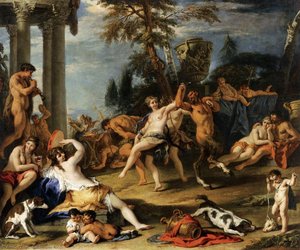
Sebastiano Ricci’s “Last Supper,” a monumental fresco dominating the refectory of Santa Maria delle Grazie in Milan, isn't merely a depiction of a biblical event; it’s a profound exploration of human emotion and betrayal. Painted between 1713 and 1714, this work captures the immediate aftermath of Jesus’ announcement that one among his disciples will betray him – a moment charged with disbelief, apprehension, and simmering resentment. Ricci masterfully conveys the palpable tension in the room, drawing the viewer into the heart of this dramatic exchange. The composition is carefully orchestrated; Jesus sits at the center, radiating an almost serene authority, while the apostles react with a spectrum of responses—shock, denial, suspicion, and outright anger – each face meticulously rendered to reveal their individual personalities and inner turmoil.
The painting’s historical context is crucial to understanding its power. Commissioned during the late Baroque period, Ricci's work reflects the era’s fascination with dramatic narratives and intense emotional expression. The Renaissance ideals of humanism are present, not in a purely idealized form, but through the realistic portrayal of flawed humanity – the vulnerability beneath the bravado, the fear masked by defiance. Ricci was part of a vibrant artistic milieu in Venice, influenced by masters like Dal Simè and Titian, yet he developed a distinct style characterized by a luminous palette and dynamic compositions. His work stands as a bridge between the grandeur of the High Renaissance and the more emotionally charged sensibilities of the Baroque.
Technique and Materials: A Delicate Balance
What sets Ricci’s “Last Supper” apart is not just its subject matter, but also the innovative – and ultimately problematic – techniques he employed. Unlike traditional fresco methods, which involve painting directly onto wet plaster, Ricci utilized tempera on a prepared gesso ground. This allowed for greater flexibility in altering details after the paint had dried, a crucial element for a work of this scale and complexity. However, it also introduced instability; the materials used were not entirely compatible with the wall’s structure, leading to rapid deterioration over centuries. The painting's surface has undergone numerous restorations, each attempting to mitigate the damage caused by humidity, temperature fluctuations, and the inherent fragility of tempera paint.
- The Gesso Ground: A carefully prepared layer of gesso provided a stable base for the pigment.
- Tempera Paint: Ricci used tempera, a fast-drying emulsion of pigments in egg yolk, known for its luminosity and rich colors.
- Pitch and Mastic: These substances were applied to seal the wall and create a barrier against moisture, though they ultimately proved insufficient to protect the delicate paint layer.
Symbolism and Emotional Resonance
Beyond the immediate narrative of betrayal, Ricci’s “Last Supper” is rich in symbolic detail. The arrangement of the apostles around the table reflects their social standing and relationships within the group. Judas Iscariot, often depicted with a subtly averted gaze and a gesture of offering, embodies deceit and treachery. The use of light and shadow – *chiaroscuro* – dramatically emphasizes key figures and creates a sense of drama and psychological intensity. Notice how Ricci uses subtle shifts in color to convey the emotional state of each apostle; the vibrant reds and yellows associated with Jesus contrast sharply with the muted blues and grays used for the disciples, highlighting their internal conflict.
The inclusion of the dog at the bottom left corner is a particularly intriguing detail. While its precise meaning remains debated by art historians, it’s often interpreted as representing loyalty or perhaps even the impending doom that awaits Judas. The overall effect is one of profound emotional depth – a visceral portrayal of human fallibility and the devastating consequences of betrayal.
A Timeless Masterpiece: Reproduction and Legacy
“The Last Supper” remains one of the most studied and admired paintings in the world, captivating viewers with its dramatic composition, masterful technique, and profound emotional resonance. High-quality reproductions capture much of the original’s power, offering a window into this pivotal moment in Christian history. When selecting a reproduction, consider factors such as print quality, color accuracy, and archival suitability to ensure that you are preserving the essence of Ricci's masterpiece for years to come. This iconic image continues to inspire artists, designers, and art lovers alike, solidifying its place as a cornerstone of Western artistic heritage.
Вопросы и ответы
Можно ли увидеть «Last Supper», Себастьяно Риччи при другом освещении?
Рентгеновский вид работы «Last Supper», Себастьяно Риччи доступен на странице Рентгеновский снимок: это интерактивное исследование изображения через одиннадцать оптических слоев.
Какую эмоцию передает работа "Last Supper", относящаяся к направлению High Renaissance?
Melancholic эмоциональность произведения «Last Supper» дополняет его стиль High Renaissance.
К какому периоду творчества Себастьяно Риччи относится произведение «Last Supper»?
«Last Supper» относится к Late Renaissance в творчестве Себастьяно Риччи. Данная классификация позволяет проследить развитие мастера.
Биография художника
Биография энергичного и лучезарного мастера
Себастьяно Риччи, выдающийся итальянский живописец из Беллуно, оставил в истории искусства неизгладимый след. Рожденный 1 августа 1659 года и ушедший из жизни 15 мая 1734 года, он стал одной из ключевых фигур поздней венецианской школы барокко, прославившись своим величественным стилем фресковой живописи.
Ранние годы и становление таланта
Творческий путь Риччи начался еще в юности. В 1671 году он стал учеником Федерико Червелли из Венеции, однако некоторые исторические источники утверждают, что его первым наставником был Себастьяно Маццони. Именно в эти годы закладывался фундамент его мастерства, который позже позволит ему виртуозно владеть цветом и светом.
Знаменитые шедевры и заказы
Творческое наследие Риччи наполнено работами, поражающими своим масштабом. Среди них выделяется «Вакх и Ариадна» (Национальная галерея, Лондон), полотно, демонстрирующее истинное мастерство художника в барочной манере. Не менее впечатляющим является мемориал адмиралу сэру Клаудисли Шовелю (холст, масло), ставший свидетельством его способности запечатлеть саму суть мгновения. Особое место в его биографии занимает работа над украшением оратория Мадонны дель Серальо (1685–1687) в сотрудничестве с Фердинандо Галли-Бибьеной, за которую художник получил внушительное вознаграждение в размере 4 482 лиры.
Художественный стиль и истоки влияния
Стиль Риччи не был изолированным явлением; на его манеру письма глубоко повлияла эстетика Джованни Джозеффо Даль Соле во время пребывания мастера в Болонье. Его полотна часто пронизаны грандиозными, светлыми и энергичными темами, что сделало его истинным представителем позднего венецианского барокко, способным наполнять пространство драматизмом и сиянием.
Наследие и закат жизни
Жизненный путь Риччи не был гладким: его карьера была отмечена периодами потрясений, включая тюремное заключение и громкие скандалы. Тем не менее, несмотря на все невзгоды, он продолжал создавать выдающиеся произведения, такие как «Венера прощается с Адонисом», в которой мастерски переданы небесные образы. В конечном итоге он принял предложение иностранного покровительства в Лондоне, где работал над заказом для лорда Берлингтона.
- Посмотрите работы Себастьяно Риччи на OriginalUniqueArt.com
- Узнайте больше о венецианской школе барокко и ее влиянии в Wikipedia
- Откройте для себя других выдающихся художников той эпохи, таких как Луиджи Бонацца, на OriginalUniqueArt.com
Важно: Данная статья основана на доступной информации с сайта OriginalUniqueArt.com и может быть дополнена по мере появления новых данных.

Себастьяно Риччи
1659 - 1734 , Италия
Краткая справка
- Artistic Movement Or Style: Позднее барокко
- Artists Or Movements Influenced By This Artist: ['Марко Риччи']
- Artists Who Influenced This Artist: ['Джованни Джозеффо дал Соле']
- Date Of Birth: 1 августа 1659 г.
- Date Of Death: 15 мая 1734 г.
- Full Name: Себастьяно Риччи
- Nationality: Итальянец
- Notable Artworks:
- Вакх и Ариадна
- Венера прощается
- Сон Эскулапа
- Place Of Birth: Беллуно, Италия
Похожие статьи
Леонардо да Винчи: Топ-25 шедевров для ценителей искусства и роскошного интерьера
Погрузитесь в мир гения Леонардо да Винчи! 25 шедевров эпохи Возрождения, истории создания картин и техники великого мастера. Репродукции высокого качества для вашего интерьера на OriginalUniqueArt.com. Откройте всю коллекцию онлайн!
Leonardo da Vinci: A Renaissance Master’s Synthesis of Art, Science & Human Observation – Reinterpreted for the Collector
Explore Leonardo da Vinci’s timeless masterpieces with OriginalUniqueArt. Discover insights into his art, science, and legacy – trusted expertise for discerning collectors seeking authentic reproductions & investment opportunities.
25 Шедевров Уффици: Путешествие в Сердце Ренессанса | OriginalUniqueArt
Погрузитесь в мир Ренессанса с 25 шедеврами галереи Уффици! От Боттичелли до Леонардо да Винчи – истории, техники и вдохновение для вашего интерьера. Купите репродукции картин высочайшего качества на OriginalUniqueArt.com.
Возрождение гуманизма: 10 шедевров искусства, изменивших мир | OriginalUniqueArt
Погрузитесь в эпоху Возрождения! 10 шедевров Леонардо да Винчи, Микеланджело и Рафаэля, отражающих гуманизм. Узнайте историю создания культовых картин и найдите идеальную репродукцию для вашего интерьера на OriginalUniqueArt.com
Топ-25 шедевров Лувра: искусство, история и вдохновение для вашего интерьера
Погрузитесь в мир искусства с 25 шедеврами Лувра! Узнайте истории создания Мона Лизы, Венеры Милосской и других легендарных картин. Вдохновение для интерьера и репродукции музейного качества на OriginalUniqueArt.com. Откройте всю коллекцию онлайн!