Предпросмотр
 Поделиться
 Поделиться
 Детали произведения
 Руководство

 Скачать
 Похожие предметы
 Рентгенография
 Слайд-шоу
 Вопросы и ответы
 Статистика просмотров
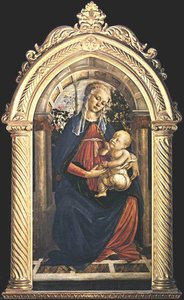
Last Communion of St. Jerome


 Читать далее
Жикле и арт-принты
Печать (жикле) или холст музейного качества с быстрыми сроками изготовления и широким выбором вариантов отделки. ( Купить картину ручной работы Перейти к цифровым изображениям)




P118B $10

P118H $10

P118W $10

P438Z $10

P508JH $12

P508YH $12

P805H $10

P805Z $10

P919BZ $10

P919G $10

P919XJ $10

P959ZH $10

P968JZ $12

W106C $8

W218G $10

W218JH $8

W218Y $10

W307PJ $10

W316G $10

W316PJ $8

W316Y $10

W398PJ $8

W4111J $10

W500HY $15

W500JH $15

W692G $12

W849H $8

W940BG $15

W953PJ $8




Выберите один из наших стандартных размеров, соответствующих оригинальным пропорциям произведения искусства.

Введите необходимую ширину и высоту, чтобы репродукция подошла к вашей раме или стене. При печати изображение можно только уменьшить, но нельзя увеличить больше оригинала, поэтому при выборе другого формата часть изображения может быть обрезана. Перед печатью мы отправим вам цифровой макет на утверждение. Изображение на этой странице не отображает реальную обрезку — ее можно увидеть только на макете.
Доставка по всему миру () за 2 недели вместо стандартных 4–5 недель. (3 Ноябрь)

Бесплатная экспресс-доставка по всему миру

Высококачественный льняной холст

Полное страхование при доставке

Гарантия возмещения таможенных пошлин

Гарантия точного цветового соответствия

100-дневная гарантия возврата (только при обнаружении дефектов)

Гарантия возврата 100% средств

Скидка при оптовом заказе
 Вариант со стеклом доступен только для размеров менее 110 см

Last Communion of St. Jerome
Жикле и арт-принты
Размер репродукции
-


Итоговая стоимость
$ 81
A Moment of Grace: Botticelli’s *Last Communion of St. Jerome*
Sandro Botticelli's *Last Communion of St. Jerome*, painted between 1495 and 1500, isn’t merely a depiction of a religious scene; it’s a profound meditation on mortality, faith, and the quiet dignity of suffering. Housed within the Museo Civico in Padua, Italy, this oil-on-panel artwork offers a rare glimpse into the artist's evolving style during the heart of the Early Italian Renaissance – a period marked by an intense reawakening of interest in classical ideals yet firmly rooted in Christian iconography. The painting captures a poignant moment: St. Jerome, nearing his death, receives the Eucharist, a symbolic act representing spiritual nourishment and preparation for the afterlife. Botticelli masterfully uses light and shadow to create a sense of intimacy, drawing the viewer into this deeply personal scene.
The Language of Form and Color
Botticelli’s technical prowess is immediately evident in *Last Communion of St. Jerome*. He employed the oil-on-panel technique with remarkable precision, allowing for a richness of color and detail that was revolutionary at the time. Notice how he renders the textures – the folds of the drapery, the smoothness of the skin, even the delicate leaves of the potted plants flanking the scene. This commitment to naturalism is characteristic of the Renaissance, yet Botticelli imbues it with an ethereal quality, a sense of otherworldly beauty. The palette is restrained but effective: muted earth tones—ochres, browns, and greens—are punctuated by subtle highlights that draw attention to key figures and details. The composition itself is carefully balanced, guiding the eye through the scene from Jerome’s prone form towards the attentive faces surrounding him.
Historical Context and Humanistic Vision
To understand *Last Communion of St. Jerome*, it's crucial to consider the broader context of the Early Renaissance in Italy. The rediscovery of classical antiquity fueled a renewed interest in humanism – an emphasis on human potential, reason, and individual experience. Botticelli’s portrayal of St. Jerome reflects this shift. He isn’t depicted as a remote saint but as a vulnerable human being facing his own mortality. The presence of the attendants, their expressions of concern and devotion, underscores the communal nature of faith and the importance of support in times of suffering. This departure from purely symbolic representation marks a significant step towards a more psychologically nuanced approach to religious subjects – a hallmark of Botticelli’s later work.
Symbolism and Emotional Resonance
Beyond its immediate narrative, *Last Communion of St. Jerome* is rich in symbolism. The potted plants, particularly the one near the top left corner, are often interpreted as representing earthly life and beauty, juxtaposed against the spiritual reality of the scene. The act of receiving communion itself symbolizes a profound connection with God – a merging of the physical and spiritual realms. Botticelli’s skill lies in conveying not just *what* is happening but also *how* it feels. The painting evokes a sense of quiet contemplation, sorrow, and ultimately, hope. It's a testament to the enduring power of faith and the acceptance of life’s inevitable end.
At OriginalUniqueArt.com, we offer meticulously crafted hand-painted reproductions that capture the essence of Botticelli’s masterpiece. Experience the beauty and depth of *Last Communion of St. Jerome* in stunning detail – a timeless work of art for your home or office. Explore our collection of Sandro Botticelli reproductions today.
Вопросы и ответы
Каково место «Last Communion of St. Jerome», Боттичелли в истории искусства?
С исторической точки зрения, «Last Communion of St. Jerome» — это произведение в стиле Early Italian Renaissance, относящееся к более широкой эпохе Early Medieval.
В какой технике и в каком стиле выполнено произведение «Last Communion of St. Jerome», Боттичелли?
«Last Communion of St. Jerome» выполнено в технике Oil On Panel в стиле Early Italian Renaissance.
Является ли «Last Communion of St. Jerome», Боттичелли портретной, пейзажной или квадратной композицией?
«Last Communion of St. Jerome», Боттичелли — это композиция в формате Portrait. Перед выбором размера печати стоит проверить пропорции.
Биография художника
Early Life and Florentine Beginnings
Sandro Botticelli, born Alessandro di Mariano di Vanni Filipepi around 1445 in Florence, Italy, emerged during a period of extraordinary cultural ferment—the Early Renaissance. His life was deeply rooted in the city’s artistic and social fabric; he never strayed far from his neighborhood of Ognissanti, a testament to both familial ties and the vibrant creative ecosystem that nurtured him. His father, Mariano Filipepi, initially a goldsmith and later a tanner, provided an early exposure to craftsmanship and meticulous detail—qualities that would profoundly influence Botticelli’s artistic approach. Though initial reports suggested training as a goldsmith, he soon found his calling under the tutelage of Fra Filippo Lippi, a leading painter of the time. This apprenticeship proved pivotal, immersing him in the techniques and aesthetics of the Florentine school while also connecting him to influential patrons like the Medici family. Botticelli’s early years were shaped by the bustling atmosphere of Florence, a city brimming with artistic innovation and political intrigue—a backdrop that would profoundly impact his creative vision.A Style Defined by Grace and Myth
Botticelli’s artistic style is instantly recognizable for its lyrical beauty, characterized by elegant linearity, flowing contours, and a delicate use of color. He masterfully bridged the gap between the late Gothic traditions and the burgeoning Renaissance aesthetic, absorbing influences from masters like Fra Angelico and Paolo Uccello yet forging a uniquely personal vision. His figures possess an ethereal quality, often depicted with elongated proportions and graceful poses that convey both serenity and a subtle melancholy. A defining feature of his work is the frequent incorporation of classical mythology—a reflection of the humanist interests sweeping through Renaissance Florence. He didn’t merely illustrate these ancient tales; he imbued them with new layers of meaning, exploring themes of love, beauty, and spiritual longing. Botticelli's approach to composition was revolutionary for its time, moving away from the rigid conventions of medieval art towards a more dynamic and expressive style. His use of color was equally innovative, favoring delicate pastel hues that created an atmosphere of dreamlike beauty.Iconic Masterpieces and Artistic Development
Botticelli’s legacy rests upon a handful of iconic paintings that continue to captivate audiences centuries later. The Birth of Venus, completed around 1486, stands as perhaps his most celebrated work—an allegorical depiction of the goddess emerging from a seashell, embodying Renaissance ideals of beauty and harmony. Its graceful composition, delicate color palette, and evocative symbolism have made it an enduring symbol of the era. Equally renowned is Primavera, created around 1482, a complex and enigmatic painting celebrating spring and love, populated with symbolic figures drawn from classical mythology. These works showcase Botticelli’s mastery of composition, his ability to create atmospheric depth, and his profound understanding of human emotion. His artistic journey unfolded in distinct phases. The early 1470s saw him focusing on religious subjects, honing his technical skills and establishing a reputation for skillful execution. The 1480s marked the peak of his creative powers, with the creation of his most famous mythological paintings. However, the late 1490s witnessed a shift in his style, influenced by the fervent preaching of Girolamo Savonarola—a Dominican friar who condemned what he saw as the decadence and moral corruption of Florence. This period resulted in more austere and emotionally charged works, reflecting a growing spiritual intensity.Major Works
- The Birth of Venus (c. 1486): An iconic depiction embodying Renaissance ideals of beauty.
- Primavera (c. 1482): A complex allegorical painting celebrating spring and love.
- Adoration of the Magi (1475-1476): Demonstrates early mastery of composition and perspective.
- Mystic Nativity (1501): Reflects a shift towards spiritual themes in his later career.
Legacy and Rediscovery
Following his death in 1510, Botticelli’s reputation gradually faded into obscurity. For nearly three centuries, his work was largely forgotten, overshadowed by the achievements of High Renaissance masters like Leonardo da Vinci and Michelangelo. However, a remarkable rediscovery occurred in the late 19th century with the rise of the Pre-Raphaelite Brotherhood—a group of English artists who rejected academic conventions and sought inspiration in the art of the early Italian Renaissance. They were captivated by Botticelli’s linear grace, vibrant colors, and poetic sensibility, recognizing him as a kindred spirit. This renewed appreciation sparked a widespread reassessment of his work, establishing him as one of the most important artists of the Early Renaissance. Today, Botticelli is celebrated for his unique artistic vision, his masterful technique, and his enduring ability to evoke beauty, emotion, and spiritual contemplation. His influence can be seen in subsequent generations of artists who have sought to capture the same sense of grace and elegance in their own work. He remains a symbol of Florentine artistic achievement and a testament to the power of Renaissance humanism.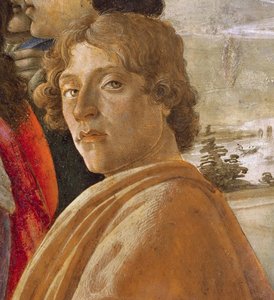
Боттичелли
1445 - 1510 , Италия
Об авторе
- Artistic Movement Or Style: Раннего Возрождения
- Artists Or Movements Influenced By This Artist: ['Прерафаэлиты']
- Artists Who Influenced This Artist:
- Фра Филиппо Липпи
- Паоло Учелло
- Date Of Birth: 1445
- Date Of Death: 1510
- Full Name: Alessandro di Mariano Filipepi
- Nationality: Итальянский
- Notable Artworks:
- Рождение Венеры
- Весна
- Поклонение волхвов
- Place Of Birth: Флоренция, Италия
Похожие статьи
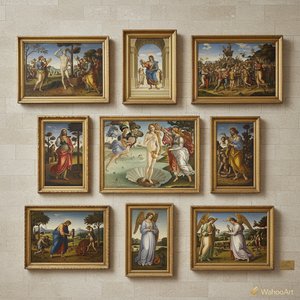
Топ-10 шедевров Раннего Возрождения: искусство для вашего дома от OriginalUniqueArt.com
Погрузитесь в эпоху Возрождения! Откройте 10 шедевров Леонардо да Винчи, Рафаэля и Боттичелли. Узнайте историю создания культовых картин и вдохновитесь для декора вашего дома с OriginalUniqueArt.com. Explore the full collection online!

Топ-25 шедевров Сандро Боттичелли: искусство Ренессанса для вашего дома
Погрузитесь в мир Сандро Боттичелли! 25 шедевров Ренессанса – "Рождение Венеры", "Весна" и другие культовые картины. Узнайте историю, технику и вдохновение великого художника. Репродукции высокого качества для вашего интерьера на OriginalUniqueArt.com.

The Enduring Legacy of Oil on Canvas: Technique, History & Aesthetic Impact
Explore the rich history & techniques of oil painting – from Renaissance masters to Impressionism. Discover pigments, layering methods, and why this timeless medium endures. Expert insights for artists & art enthusiasts.

Oil on Canvas: A Historical & Technical Exploration of a Timeless Artistic Medium
Explore the rich history & enduring techniques of oil painting on canvas. Discover the science behind its longevity, conservation practices, and contemporary relevance. Expert insights for art enthusiasts.

The Enduring Power of Painting: A Historical & Contemporary Exploration of Form and Emotion
Explore the rich history & enduring techniques of oil painting with OriginalUniqueArt. Discover masterpieces, learn about art collecting, and find authentic handmade reproductions crafted by skilled artists.