

 Примерить в интерьере
 Отправить
 Поделиться
 Подробнее
 Руководство

 Скачать
 Похожие объекты
 Рентгенография
 Слайд-шоу
 Q&A
Q&A Статистика
Road in Laon
 Oil On Canvas
- WallArt
- Orphism
 1912
1912- 19th Century
 81.0 x 100.0 cm
 Развернуть текст
Масляная репродукция ручной работы
Картина маслом на холсте в выбранном вами размере и раме, написанная на заказ нашими художниками. ( Переключиться на печать Перейти к цифровым изображениям)




P118B $10

P118H $10

P118W $10

P438Z $10

P508JH $12

P508YH $12

P805H $10

P805Z $10

P919BZ $10

P919G $10

P919XJ $10

P959ZH $10

P968JZ $12

W106C $8

W218G $10

W218JH $8

W218Y $10

W307PJ $10

W316G $10

W316PJ $8

W316Y $10

W398PJ $8

W4111J $10

W500HY $15

W500JH $15

W692G $12

W849H $8

W940BG $15

W953PJ $8




Выберите один из наших стандартных размеров, соответствующих оригинальным пропорциям произведения искусства.

Введите необходимую ширину и высоту, чтобы репродукция подошла к вашей раме или стене. Поскольку работа выполняется вручную, при изменении пропорций художник может немного увеличить область вокруг картины или, наоборот, обрезать края — выбор за вами. Перед началом работы мы пришлем вам цифровой макет на утверждение. Изображение на этой странице не является точным результатом — увидеть реальный вид можно только на макете.
После оформления заказа команда OriginalUniqueArt.com свяжется с клиентом по электронной почте для уточнения деталей и предоставит предварительный макет
Доставка по всему миру () за 3–4 недели вместо стандартных 5 недель. (28 Октябрь). Без компромиссов в качестве.

Бесплатная экспресс-доставка по всему миру

Высококачественный льняной холст

Полное страхование при транспортировке

Гарантия возврата таможенных пошлин

Гарантия точного цветового соответствия

100-дневный период возврата (только при обнаружении дефектов)

Гарантия возврата 100% средств

Скидка при заказе нескольких работ
 Вариант со стеклом доступен только для размеров менее 110 см

Road in Laon
Материал репродукции
Размер репродукции
-


Итоговая стоимость
$ 300
Robert Delaunay’s ‘Road in Laon’: A Symphony of Color and Modernity
Robert Delaunay's 1912 painting, ‘Road in Laon,’ isn’t merely a depiction of a street scene; it’s a vibrant manifesto of the Orphism movement – a radical departure from representational art that sought to capture pure emotion through color and geometric form. This oil on canvas, measuring 81 x 100 cm, offers a captivating glimpse into the burgeoning artistic landscape of early 20th-century Europe, showcasing Delaunay’s pioneering approach to abstraction and his profound influence on subsequent generations of artists.
The painting immediately draws the eye with its bold composition. A central road, rendered in strong, linear strokes, cuts through a bustling urban scene – buildings flanking either side, populated by two figures who seem almost lost within the dynamism of the artwork. The inclusion of a parked automobile, a relatively new addition to city life at the time, adds a layer of modernity and subtly underscores the painting’s engagement with the rapidly changing world around it. Delaunay masterfully employs flat planes and geometric shapes – rectangles and cubes dominate – creating a sense of visual clarity and controlled energy that is characteristic of Orphism.
The Birth of Orphism: Apollinaire's Vision
‘Road in Laon’ emerged from the fertile ground of Orphism, a movement coined by the poet Guillaume Apollinaire. Orphism wasn’t simply about abstracting forms; it was an attempt to evoke spiritual and emotional responses through color alone – ‘orphaned’ of recognizable subject matter. Delaunay, alongside figures like Frantisek Kupka, sought to create works that resonated with pure feeling, a philosophy deeply rooted in the theories of scientists and mathematicians exploring the nature of light and perception. The influence of Henri Matisse's Fauvism is palpable here, but Delaunay pushes further, prioritizing color as the primary vehicle for expression.
Consider the palette: vibrant yellows, browns, blues, and greens are applied with broad brushstrokes, creating a sense of movement and energy. The diffused light suggests either a late afternoon or early morning setting, adding to the painting’s overall atmosphere of quiet contemplation amidst urban activity. The technique itself – visible brushwork, impasto – isn't about meticulous detail; it’s about conveying texture and volume through the deliberate application of paint.
A Window into 1912: Technique and Context
Delaunay’s ‘Road in Laon’ was created during a period of intense artistic experimentation. The photograph reveals a loose, expressive style, reminiscent of early Fauvism, with simplified forms and an emphasis on texture. The use of perspective is somewhat flattened, prioritizing the emotional impact of color over strict spatial accuracy – a hallmark of Orphism. This painting reflects Delaunay’s evolving approach to abstraction, moving away from his earlier Neo-Impressionist roots.
Interestingly, the Battle of Laon (referenced in additional research) occurred around the same time, highlighting the broader socio-political context of this artistic movement – a period of rapid change and upheaval that fueled experimentation across all disciplines. The inclusion of everyday objects like the car adds to the painting’s narrative, reflecting the growing urbanization of Europe at the beginning of the 20th century.
OriginalUniqueArt offers meticulously crafted hand-painted reproductions of ‘Road in Laon,’ allowing you to bring this seminal work of Orphism into your own space. Explore our collection and discover how Delaunay’s vision can enrich your interior design or become a treasured addition to your art collection.
Вопросы и ответы
Какая техника и стиль характеризуют «Road in Laon», Роберт Делаunay?
«Road in Laon», Роберт Делаunay сочетает в себе технику Oil On Canvas и стиль Orphism. Техника и направление описывают способ создания и художественный стиль произведения.
О чем произведение «Road in Laon»?
Темы, представленные в «Road in Laon», Роберт Делаunay, включают urban landscape, geometric abstraction, vibrant colors, modern cityscape, orphism style, early 20th century, european street scene. Вместе они раскрывают основной сюжет произведения.
Насколько известна работа «Road in Laon» автора Роберт Делаunay?
«Road in Laon» классифицируется как Iconic.
Биография художника
Robert Delaunay: A Pioneer of Abstract Color
Robert Delaunay, born in Paris on April 12, 1885, emerged as a pivotal figure in the radical artistic transformations of the early twentieth century. Though initially drawn to more traditional forms of painting—particularly decorative arts—his artistic journey swiftly propelled him toward an exploration of color and light that would ultimately define his legacy and contribute significantly to the genesis of abstract art. Delaunay wasn’t merely concerned with *representing* reality; he aspired to capture its essence through a vibrant language of geometric shapes and luminous hues, co-founding the Orphism movement alongside Sonia Delaunay, Jean Metzinger, and others who shared his visionary perspective. His formative years were marked by familial instability—his parents divorced when he was young—yet this perhaps fostered an independent spirit that proved invaluable in challenging artistic conventions prevalent at the time. He commenced his artistic pursuits with a focus on theatrical design, honing his skills in composition and visual storytelling before dedicating himself to painting, debuting at the Salon des Indépendents as early as 1904, demonstrating immediate talent and ambition.Early Influences: Divisionism and Impressionism
Delaunay’s initial artistic explorations were deeply rooted in Neo-Impressionism, or Divisionism. Absorbing Henri Matisse’s pioneering approach to color theory—specifically the principle of applying small, distinct dots of pigment—he meticulously replicated optical phenomena, striving for a shimmering effect that mirrored the natural world. However, Delaunay quickly transcended mere replication; he interrogated the expressive potential inherent within color itself. This intellectual curiosity found fertile ground in his friendship with Jean Metzinger, who collaboratively investigated fragmented forms and mosaic-like compositions—a technique that would foreshadow their later involvement in Cubism. These formative collaborations established a bedrock for their subsequent explorations of Cubist aesthetics, though Delaunay ultimately distinguished himself from its more analytical tendencies. Rejecting the dissection of objects into geometric components championed by Picasso and Braque, he prioritized synthesizing disparate elements into dynamic arrangements imbued with rhythm and movement—a decisive shift that cemented his position as an innovator.The Birth of Orphism: Color as Emotion
A pivotal moment in Delaunay’s artistic trajectory arrived with the emergence of Orphism—a term coined by poet Guillaume Apollinaire—which sought to liberate art from representational constraints and evoke profound emotional responses through chromatic intensity. Unlike Cubism's objective analysis, Orphism prioritized subjective experience, mirroring the burgeoning Expressionist movement. Delaunay and Sonia Delaunay established a unique artistic language characterized by bold hues, geometric abstraction, and a lyrical quality that aimed to harmonize visual elements with musical principles—a daring departure from accepted artistic norms. Their collaborative endeavors culminated in monumental murals for the 1937 Paris International Exposition, showcasing their mastery of color and architectural design. This ambitious project solidified Delaunay’s conviction that art could transcend mere visual perception, engaging viewers on an emotional level and reflecting the spirit of a transformative era.Iconic Works: The Eiffel Tower and Beyond
Delaunay's artistic legacy rests upon several seminal works that exemplify his distinctive style and conceptual breakthroughs. Among these stand out “The Eiffel Tower” (1909-1911) and “Simultaneous Contrasts: Sun and Moon” (1913)—pieces that encapsulate the essence of Orphism’s core tenets. In “The Eiffel Tower,” Delaunay meticulously deconstructed the iconic Parisian landmark into a network of intersecting planes—a technique reminiscent of Cubist fragmentation—yet simultaneously imbued it with vibrant hues that conveyed a sense of dynamism and movement. This masterful manipulation of color wasn't merely decorative; it served as a conduit for conveying emotional resonance, mirroring Apollinaire’s poetic vision. Similarly, “Simultaneous Contrasts” presented a complex interplay of geometric shapes and chromatic contrasts—a testament to Delaunay’s unwavering belief in the transformative power of color theory.A Lasting Influence: Shaping Modern Art
Robert Delaunay's theoretical contributions extended beyond his artistic practice, profoundly impacting subsequent generations of artists. His conviction that color possessed an active role in shaping perceptual experience resonated deeply with figures like Paul Klee, Franz Marc, August Macke, and even Russian avant-garde movements—artists who embraced abstraction and prioritized emotional expression over meticulous realism. Delaunay’s pioneering work irrevocably altered the trajectory of modern art, establishing a precedent for exploring visual forms divorced from representational conventions. His enduring influence continues to inspire artists today, reminding us that true artistic innovation lies in challenging established paradigms and embracing the boundless potential of color as a medium for conveying emotion and stimulating intellectual contemplation.
Роберт Делаunay
1885 - 1941 , Франция
Краткая справка
- Artistic Movement Or Style: Орфизм и Кубизм
- Artists Or Movements Influenced By This Artist:
- Генри Маке
- Русское авангардизм
- Artists Who Influenced This Artist:
- Жан Мецтингер
- Сонья Делаunay
- Date Of Birth: April 12, 1885
- Date Of Death: Oct. 25, 1941
- Full Name: Robert Delaunay
- Nationality: Французский
- Notable Artworks:
- Эйфелева башня
- Совместные контрасты: Солнце и Луна
- Окна открываются одновременно
- Place Of Birth: Paris, France
Похожие статьи

Геометрическая абстракция: 10 шедевров, изменивших искусство | OriginalUniqueArt.com
Погрузитесь в мир геометрической абстракции! От Кандинского до Малевича – 10 шедевров, изменивших искусство. Узнайте историю создания и значение культовых картин. Репродукции музейного качества на OriginalUniqueArt.com. Вдохновение для вашего интерьера!
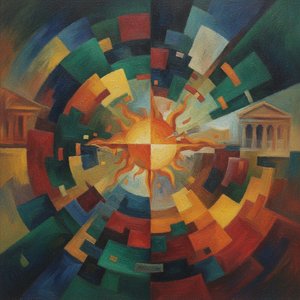
Orphism Unveiled: The Radiant Dance of Color and Light in the Evolution of Abstract Art
Discover the luminous world of Orphism. Explore how masters like Robert and Sonia Delaunay revolutionized art through a radiant dance of color, light, and geometric abstraction in this deep dive into modern art history.
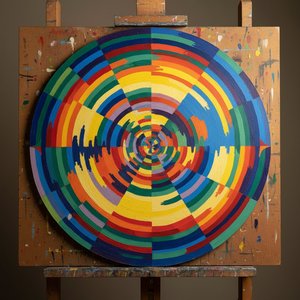
Sonia Delaunay: A Life in Color – Exploring the Rhythms of Abstraction and Synesthesia
Explore the vibrant world of Sonia Delaunay, a pioneer of abstract art and co-founder of Orphism. Discover her revolutionary use of color, geometric forms, and influence on modern design. A deep dive into her life & legacy.
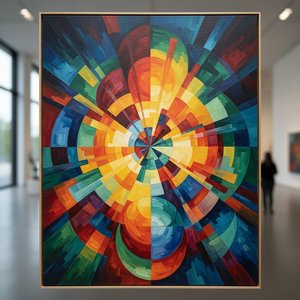
Orphism: A Symphony of Color and Form – Exploring the Abstract Roots of Modern Art
Explore Orphism, the vibrant abstract art movement pioneered by Robert & Sonia Delaunay. Discover its unique color theory, lasting influence on modern art, and how to bring this 'symphony of color' into your home with OriginalUniqueArt.
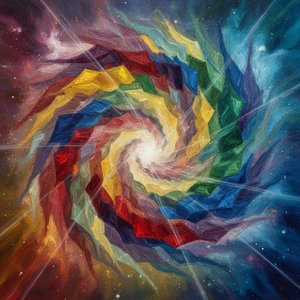
Orphism Unlocked: The High-Energy Color Revolution That Defined Abstract Art
Dive into the high-energy world of Orphism. Discover how this color revolution broke Cubism's rules to define modern abstraction through light, motion, and pure visual impact. Explore the legacy of the Delaunays and bring bold, vibrant energy to your contemporary space.

