

 Примерить в интерьере
 Отправить
 Поделиться
 Подробнее
 Руководство

 Скачать
 Похожие объекты
 Рентгенография
 Слайд-шоу
 Q&A
Q&A Статистика
Landscape (Wanaka)
 Watercolor
- WallArt
- Impressionism
 1939
1939 22.0 x 27.0 cm
 Te Papa
 Развернуть текст
Произведение искусства, представленное на этой странице, защищено законом об авторском праве, что исключает возможность законного создания или продажи его точной репродукции. Данная защита обеспечивается международными соглашениями, такими как Бернская конвенция и национальным законодательством, включая положения, изложенные в Закон США об авторском праве — Раздел 17.
Этот метод полностью соответствует нормам авторского права, так как он не предполагает копирования или дублирования защищенного произведения. Напротив, это творческая реинтерпретация — создание новой картины, которая вдохновлена оригиналом, но не является его точной копией.
Жикле / Арт-принты
Печать (жикле) или холст музейного качества с быстрыми сроками изготовления и широким выбором вариантов отделки. ( Заказать репродукцию ручной работы Перейти к цифровым изображениям)




P118B $10

P118H $10

P118W $10

P438Z $10

P508JH $12

P508YH $12

P805H $10

P805Z $10

P919BZ $10

P919G $10

P919XJ $10

P959ZH $10

P968JZ $12

W106C $8

W218G $10

W218JH $8

W218Y $10

W307PJ $10

W316G $10

W316PJ $8

W316Y $10

W398PJ $8

W4111J $10

W500HY $15

W500JH $15

W692G $12

W849H $8

W940BG $15

W953PJ $8




Выберите один из наших стандартных размеров, соответствующих оригинальным пропорциям произведения искусства.

Введите необходимую ширину и высоту, чтобы репродукция подошла к вашей раме или стене. При печати изображение можно только уменьшить, но нельзя увеличить больше оригинала, поэтому при выборе другого формата часть изображения может быть обрезана. Перед печатью мы отправим вам цифровой макет на утверждение. Изображение на этой странице не отображает реальную обрезку — ее можно увидеть только на макете.
Доставка по всему миру () за 2 недели вместо стандартных 4–5 недель. (30 Октябрь)

Бесплатная экспресс-доставка по всему миру

Высококачественный льняной холст

Полное страхование при транспортировке

Гарантия возврата таможенных пошлин

Гарантия точного цветового соответствия

100-дневный период возврата (только при обнаружении дефектов)

Гарантия возврата 100% средств

Скидка при заказе нескольких работ
 Вариант со стеклом доступен только для размеров менее 110 см

Landscape (Wanaka)
Жикле / Арт-принты
Размер репродукции
-


Итоговая стоимость
$ 80
A Moment Frozen in Time: Rita Angus’s “Landscape (Wanaka)”
Rita Angus's "Landscape (Wanaka)," painted in 1939, isn’t merely a depiction of a New Zealand vista; it’s a carefully constructed meditation on light, memory, and the profound connection between humanity and the natural world. Captured with her signature hard-edged style – a deliberate rejection of Impressionism's hazy atmosphere – Angus presents a remarkably precise yet deeply felt portrayal of the Wanaka landscape. The painting immediately draws the eye to the rolling tussock hills, rendered in fluid washes of color that suggest both the ruggedness and the surprising softness of the terrain. The purple-tinged mountain ranges in the distance aren’t simply sketched; they're imbued with a sense of ethereal mystery, hinting at the vastness and timelessness of the region.
Angus’s technique is particularly noteworthy. She employs a wet-on-wet watercolor approach, layering translucent washes to build up form and texture. The deliberate use of white paper – leaving sections untouched with unpainted areas – creates a dynamic interplay between color and void, adding a surprising element of lightness and highlighting the delicate structure of the landscape. These ‘holes’ in the paint aren't accidental; they are integral to Angus’s vision, acting as visual punctuation marks that draw attention to key elements and contribute to the painting’s overall sense of immediacy. The fine lines meticulously capturing trees and a distant fence suggest an almost obsessive attention to detail, balanced by the broader, more atmospheric treatment of the hills and mountains.
A Pioneer's Perspective: Contextualizing Angus’s Vision
To fully appreciate “Landscape (Wanaka),” it’s essential to understand Rita Angus’s place in New Zealand art history. Born in 1908, she emerged as a leading figure during a period of intense artistic experimentation and national identity formation. Following her father's work as a construction manager, Angus spent much of her childhood moving between Palmerston North and Napier, an experience that instilled in her a keen observational eye and a sense of independence. Her early training at the Canterbury College School of Art laid the foundation for her distinctive style, influenced by movements like Cubism and Byzantine art – influences she skillfully integrated into her own unique vision.
The painting was created during a time of significant social and political change in New Zealand. The Great Depression loomed large, and there was a growing desire to define a distinctly ‘New Zealand’ aesthetic—one that moved beyond European artistic traditions. Angus's work, with its focus on the landscape and its rejection of romanticized notions of beauty, can be seen as part of this broader movement. Her decision to sign her paintings as Rita McKenzie after a personal upheaval reflects a deliberate assertion of agency and control over her own identity and artistic legacy.
Symbolism in the Landscape: More Than Meets the Eye
Beyond its purely visual appeal, “Landscape (Wanaka)” is rich with symbolic meaning. The vast expanse of green pasture, punctuated by white flowers, evokes a sense of abundance and fertility – a direct reference to the pastoral traditions of New Zealand. The distant mountains, rendered in cooler tones, represent permanence and stability, anchoring the scene within a broader historical context. The carefully placed picket fence, a seemingly minor detail, serves as a subtle reminder of human presence and intervention within this wild landscape.
Furthermore, the painting’s stark clarity can be interpreted as a response to the uncertainties of the era. Angus's deliberate rejection of atmospheric perspective—flattening the depth of field—suggests a desire to confront reality head-on, rather than softening it with illusionistic techniques. The painting isn’t simply about depicting a beautiful scene; it’s about capturing a specific moment in time and conveying a complex range of emotions – from tranquility and serenity to a sense of quiet contemplation.
Bringing “Landscape (Wanaka)” into Your Space
Reproductions of Rita Angus's "Landscape (Wanaka)" offer a remarkable opportunity to bring this evocative artwork into your home or office. The painting’s bold colors, sharp lines, and dynamic composition create a striking visual impact that will undoubtedly become a focal point in any room. The interplay between color and white space adds depth and dimension, while the meticulous detail invites close inspection and contemplation.
Whether you're an art collector seeking to expand your collection or simply looking for a piece of artwork that embodies New Zealand’s unique beauty and artistic spirit, “Landscape (Wanaka)” is a truly exceptional choice. Its timeless appeal and profound emotional resonance ensure that it will continue to captivate viewers for generations to come.
Вопросы и ответы
Насколько сильно цвета в произведении «Landscape (Wanaka)» кажутся отражающими свет?
Уровень яркости, зафиксированный для «Landscape (Wanaka)», Рита Анджус, составляет Bright Balance.
Можно ли использовать дополненную реальность, чтобы увидеть «Landscape (Wanaka)», Рита Анджус в своей комнате?
У произведения «Landscape (Wanaka)» есть функция предварительного просмотра в дополненной реальности: на странице Предпросмотр в AR вы можете увидеть работу в своем собственном пространстве с помощью совместимого устройства.
Как я могу получить цифровой файл «Landscape (Wanaka)», Рита Анджус?
Чтобы получить цифровой файл работы «Landscape (Wanaka)», Рита Анджус, закажите скачивание цифрового изображения в высоком разрешении на странице Цифровое изображение.
Биография художника
Rita Angus: A Visionary Voice of New Zealand
Rita Angus, born Henrietta Catherine Angus in Hastings on March 12, 1908, remains one of the most compelling and distinctive figures in the history of New Zealand art. Her life was a tapestry woven with both profound personal challenges and an unwavering dedication to her artistic vision – a vision that defied convention and ultimately established her as a uniquely powerful voice within the burgeoning modern art scene of her time. From her nomadic childhood, shaped by her father’s itinerant carpentry work, to her later struggles with mental illness, Angus's experiences profoundly informed her art, imbuing it with an emotional depth and symbolic richness rarely found in contemporary painting.Early Years and Artistic Foundations
Rita’s early life was marked by constant relocation, a circumstance that instilled within her a keen observational eye and a spirit of independence – qualities that would prove crucial to her artistic development. Recognizing her innate talent for drawing at a young age, her parents secured private lessons, nurturing a passion that quickly blossomed. Her formal education at Palmerston North Girls’ High School from 1922 to 1926 provided a solid foundation in traditional techniques – life drawing, still-life composition, and landscape painting – under the guidance of dedicated teachers who recognized and encouraged her burgeoning abilities. Crucially, however, it was her exposure to art history lectures that truly ignited her imagination, introducing her to the grandeur of Renaissance masters like Raphael and Michelangelo, as well as the evocative symbolism of medieval Byzantine art. These influences would later become integral to her distinctive style, informing both her formal approach and her thematic concerns. The work of Christopher Perkins, a British painter known for his dramatic landscapes, also exerted a significant impact, particularly his ability to capture the unique light and atmosphere of New Zealand’s varied terrains.Forging a Unique Style: Fragmentation and Emotion
The years following her studies at Canterbury College School of Art (1927-1933) witnessed the emergence of Angus's truly singular artistic style – one characterized by bold, hard-edged forms, simplified shapes, and an intensely vibrant color palette. She deliberately moved away from strict realism, embracing a modernist expression that prioritized personal vision over mere representation. This stylistic shift wasn’t simply a rejection of convention; it was a conscious effort to distill her experiences and emotions onto the canvas. Her paintings often depicted fragmented figures and landscapes, reflecting both the instability of her personal life and a broader sense of dislocation in the modern world. The influence of Cubism is evident in her use of geometric shapes and multiple perspectives, while her incorporation of Byzantine symbolism – particularly its emphasis on spiritual themes and potent imagery – added layers of meaning to her work. This complex interplay of influences resulted in paintings that were both visually arresting and deeply psychologically resonant.Themes of Identity, Peace, and the Human Condition
Angus’s artistic output spanned a wide range of subjects, but several recurring themes emerged throughout her career. Portraits, particularly self-portraits, offered intimate glimpses into her evolving identity – exploring facets of her personality, her struggles with mental health, and her complex relationship with herself. Her depictions of landscapes, often imbued with symbolic meaning, reflected both the beauty and the harshness of New Zealand’s environment. During the 1940s, in response to the looming threat of war, she created a powerful series of “goddess” paintings – *Rutu*, *Diana*, and *Hecate* – which served as potent symbols of peace, resilience, and feminine strength. These works demonstrated her commitment to social justice and her belief in the transformative power of art. Her later work continued to grapple with themes of loss, memory, and the human condition, culminating in poignant depictions of the 1931 Hawke’s Bay earthquake and the demolition of historic buildings in Wellington.Legacy and Enduring Influence
Despite facing significant personal challenges – including a difficult divorce and periods of mental illness – Rita Angus left an indelible mark on New Zealand art. Her distinctive style, characterized by its emotional intensity and symbolic depth, continues to inspire artists today. Her paintings are held in major collections throughout New Zealand and internationally, and her life story serves as a testament to the power of artistic vision in the face of adversity. The Rita Angus Cottage in Wellington, now a residency for contemporary artists, stands as a lasting tribute to her legacy – a space where creativity can flourish and where the spirit of this extraordinary artist continues to resonate. Her commitment to art, coupled with her profound belief in its power to express peace, humanity, and individual identity, ensures that Rita Angus’s work will remain a vital part of New Zealand's cultural heritage for generations to come.Key Works
- Cass (1936): A deceptively simple depiction of a Canterbury railway station, celebrated for its clarity and symbolic depth.
- Rutu (1940s): A powerful representation of peace and feminine strength, embodying her commitment to social justice.
- Central Otago (early 1950s): An evocative landscape capturing the stark beauty of New Zealand’s interior.
- Fay and Jane Birkinshaw (1946): A compelling portrait showcasing her skill in capturing personality and relationships.
- Self-Portraits (various dates): Over fifty self-portraits offering intimate glimpses into the artist's evolving identity.

Рита Анджус
1908 - 1970 , Новая Зеландия
Краткая справка
- Artistic Movement Or Style: Современный, Региональный
- Artists Who Influenced This Artist:
- Кристофер Перкинс
- Вимпер Сёренсен
- Date Of Birth: 12 марта 1908
- Date Of Death: 25 января 1970
- Full Name: Henrietta Catherine Angus
- Nationality: Новозеландка
- Notable Artworks:
- Cass (1936)
- Rutu
- Central Otago
- Fay и Jane Birkinshaw
- Автопортреты
- Place Of Birth: Хастингс, Новая Зеландия
Похожие статьи

Ephemeral Visions: Exploring the Artistic Legacy & Contemporary Practice of Watercolor Painting
Explore the captivating world of watercolor painting! Discover its rich history, essential techniques, influential artists & collecting tips. A comprehensive guide for art enthusiasts from OriginalUniqueArt.

Топ-10 легендарных акварелей, изменивших искусство навсегда | OriginalUniqueArt
Погрузитесь в мир акварели! Откройте топ-10 легендарных картин Turner, Monet и других великих художников. История искусства, техники живописи и вдохновение для вашего интерьера. Репродукции музейного качества на OriginalUniqueArt.com.

Ephemeral Visions: Exploring the History & Emotional Resonance of Watercolor Painting
Explore the captivating history of watercolor painting, from ancient techniques to modern masters like Kandinsky & Blake. Discover essential artists, collecting tips & the emotional power of this luminous medium. Expert insights for art enthusiasts.

Ephemeral Visions: Exploring the Artistic Legacy & Nuances of Watercolor Painting
Explore the captivating world of watercolor painting! Discover its rich history, essential techniques, influential artists & collecting tips from art experts. A comprehensive guide for enthusiasts.
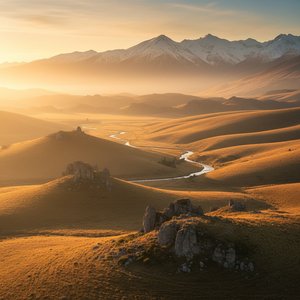
Grahame Sydney: Evoking Otago's Soul Through Light & Landscape
Explore the captivating landscapes of Sir Grahame Sydney, a leading New Zealand artist renowned for his magic realism & evocative depictions of Otago's beauty. Discover key works and delve into his artistic legacy.