
 Примерить в интерьере
 Отправить
 Поделиться
 Подробнее
 Руководство

 Скачать
 Похожие объекты
 Рентгенография
 Слайд-шоу
 Статистика
Down at Jimmy Kelly
 Acrylic
- WallArt
- Social Realism
 91.0 x 76.0 cm
 Chrysler Museum of Art
 Развернуть текст
Жикле / Арт-принты
Печать (жикле) или холст музейного качества с быстрыми сроками изготовления и широким выбором вариантов отделки. ( Заказать репродукцию ручной работы Перейти к цифровым изображениям)




P118B $10

P118H $10

P118W $10

P438Z $10

P508JH $12

P508YH $12

P805H $10

P805Z $10

P919BZ $10

P919G $10

P919XJ $10

P959ZH $10

P968JZ $12

W106C $8

W218G $10

W218JH $8

W218Y $10

W307PJ $10

W316G $10

W316PJ $8

W316Y $10

W398PJ $8

W4111J $10

W500HY $15

W500JH $15

W692G $12

W849H $8

W940BG $15

W953PJ $8




Выберите один из наших стандартных размеров, соответствующих оригинальным пропорциям произведения искусства.

Вы можете указать свои собственные размеры, чтобы репродукция идеально подошла под конкретную раму или пространство. Если выбранный вами размер не будет соответствовать пропорциям оригинала, мы либо обрежем произведение, либо дополним изображение зеркальным отражением краев или однотонной заливкой. Перед началом производства вам будет отправлен цифровой макет для утверждения.
Пожалуйста, обратите внимание, что предварительный просмотр на экране не отображает фактическую обрезку или расширение изображения. Только макет точно покажет финальную композицию.
Несмотря на возможность заказа индивидуальных размеров, мы рекомендуем выбирать размер из предопределенного списка, чтобы сохранить оригинальные пропорции.
Доставка по всему миру () за 2 недели вместо стандартных 4–5 недель. (8 Октябрь)

Бесплатная экспресс-доставка по всему миру

Высококачественный льняной холст

Полное страхование при транспортировке

Гарантия возврата таможенных пошлин

Гарантия точного цветового соответствия

100-дневный период возврата (только при обнаружении дефектов)

Гарантия возврата 100% средств

Скидка при заказе нескольких работ
 Вариант со стеклом доступен только для размеров менее 110 см

Down at Jimmy Kelly
Жикле / Арт-принты
Размер репродукции
-


Итоговая стоимость
$ 80
Reginald Marsh: Capturing Urban Grit and Artistic Vision
Reginald Marsh (1898-1954) stands as a pivotal figure in American Social Realism, renowned for his strikingly detailed depictions of New York City during the 1920s and 1930s. More than just documenting scenes of Coney Island beaches or burlesque performances—though these undeniably populate his oeuvre—Marsh’s art embodies a profound engagement with the textures and rhythms of urban life, underpinned by an unwavering commitment to artistic exploration. His legacy resides not only in his iconic images but also in his pioneering techniques and enduring influence on subsequent generations of artists. Born in Paris above the Café du Dome, Marsh's formative years were steeped in artistic heritage. The son of Frederick Dana Marsh—a muralist who championed American Impressionism—and Alice Randall, a miniaturist painter—Marsh’s family fostered an environment where creativity flourished. His father’s early embrace of modernist aesthetics established a foundation for Marsh’s own distinctive approach to visual representation.The Canvas of Coney Island
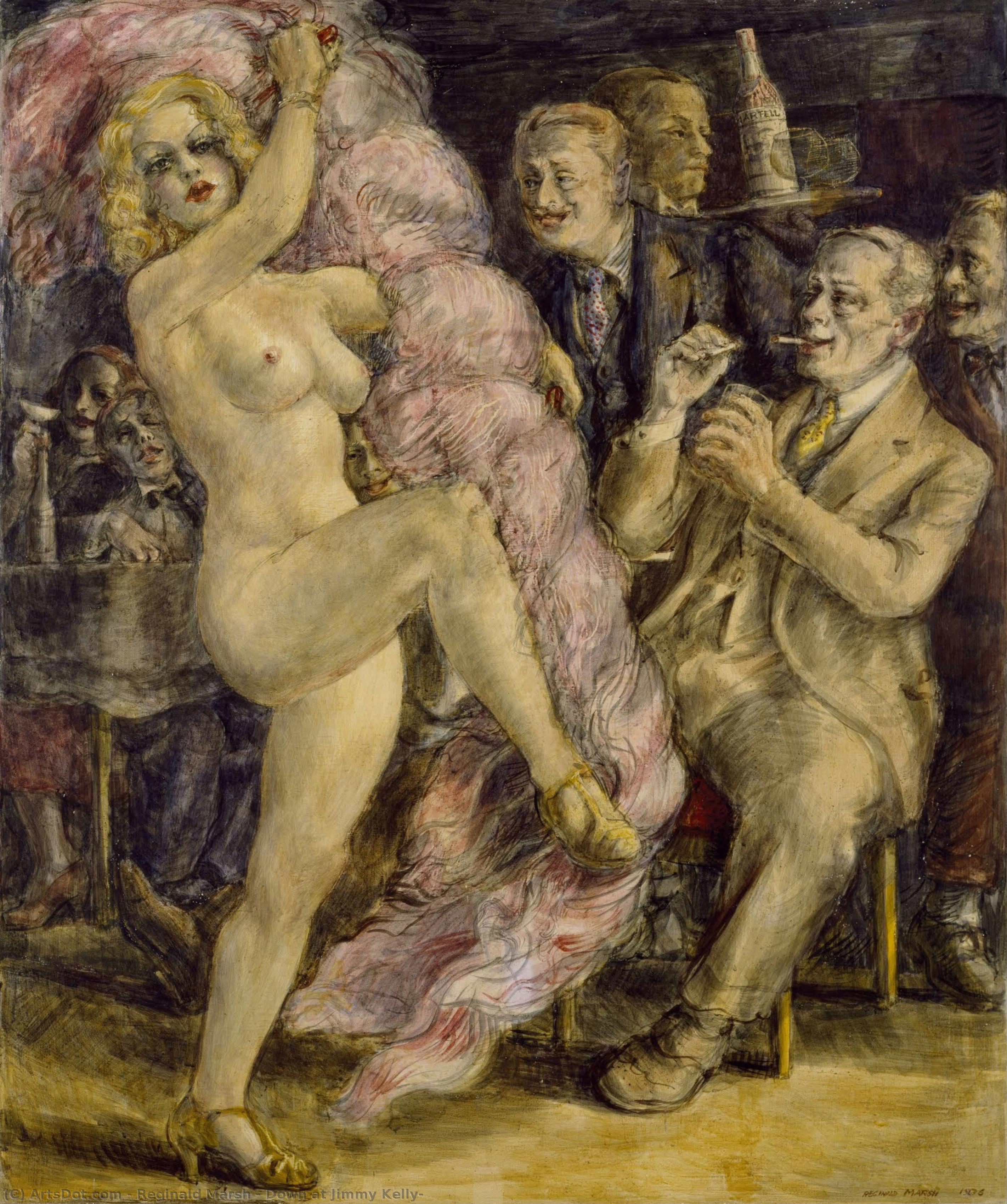
Marsh's fascination with the burgeoning American urban landscape found its most immediate expression in works like “Down at Jimmy Kelly’s,” a vibrant tableau capturing the frenetic energy of a burlesque nightclub. Painted in 1936, this piece exemplifies Marsh’s masterful use of conte crayon and gouache—a technique he honed to achieve unparalleled realism—resulting in an astonishing level of detail that transports viewers directly into the smoky atmosphere of Jimmy Kelly's. The composition is deliberately asymmetrical, mirroring the chaotic dynamism of the scene itself; figures jostle for space amidst a backdrop of tables, bottles, and performers, creating a palpable sense of immediacy. Marsh’s meticulous rendering of light and shadow further enhances this effect, emphasizing the physicality of the environment and conveying its emotional impact—a celebration of hedonistic indulgence juxtaposed with an underlying awareness of social disparity.Symbolism Within Spectacle
Marsh wasn't merely recording what he saw; he was actively interpreting it through a lens informed by Social Realist principles. The inclusion of portraits, notably Lloyd Goodrich—a prominent art critic and Marsh’s close collaborator—serves as more than just stylistic embellishment. Goodrich represents the intellectual discourse surrounding artistic innovation at the time, highlighting the tension between aesthetic beauty and social responsibility. Furthermore, the depiction of a woman performing in burlesque underscores themes of female agency and vulnerability within a societal context marked by shifting gender roles. Marsh’s subtle use of symbolism elevates “Down at Jimmy Kelly’s” beyond mere visual representation, prompting contemplation about the complexities of urban culture and its influence on human experience.A Pioneer's Technique
Marsh’s groundbreaking approach to painting—characterized by his unwavering dedication to meticulous observation and painstaking execution—established him as a leader in American Social Realism. He rejected idealized representations, favoring instead unflinching portrayals of everyday life that confronted social issues head-on. His mastery of conte crayon and gouache allowed him to achieve remarkable tonal range and textural depth, capturing the gritty surfaces of urban spaces with astonishing accuracy. This technique—a deliberate departure from Impressionistic tendencies—became a cornerstone of Marsh’s artistic vision, ensuring that his images retained an enduring power to engage viewers emotionally and intellectually.Legacy and Influence
Reginald Marsh's influence extends far beyond his own lifetime, inspiring countless artists who followed in his footsteps. His commitment to realism combined with a keen awareness of social commentary continues to resonate within contemporary art practice. “Down at Jimmy Kelly’s,” as well as his broader body of work—including depictions of Coney Island and the Bowery—remains a testament to Marsh's enduring legacy as one of America’s most compelling Social Realist painters, securing his place in art history as an artist who captured not only the visual splendor of his era but also its underlying moral dilemmas.Вопросы и ответы
Кто создал "Down at Jimmy Kelly"?
Автор произведения «Down at Jimmy Kelly» — Реджинальд Марш. Работа внесена в каталог под именем Реджинальд Марш.
Какую атмосферу привносит «Down at Jimmy Kelly», Реджинальд Марш в интерьер?
Благодаря своей Serene атмосфере, работа «Down at Jimmy Kelly» идеально подойдет для Living Room.
Какой размер печати «Down at Jimmy Kelly», Реджинальд Марш подойдет для рекомендованной комнаты?
Рекомендуемое сочетание для «Down at Jimmy Kelly», Реджинальд Марш: принт размером Large в интерьере Living Room.
О чем произведение «Down at Jimmy Kelly»?
На полотне «Down at Jimmy Kelly», Реджинальд Марш изображены: burlesque show, nyc nightlife, jazz age, performance art, social commentary, urban spectacle, male figure.
Где я могу купить принт работы «Down at Jimmy Kelly», Реджинальд Марш?
Принт работы «Down at Jimmy Kelly», Реджинальд Марш можно заказать прямо на странице эта страница: художественная печать на хлопковом холсте или архивной холст-бумаге.
Можно ли заказать масляную репродукцию картины «Down at Jimmy Kelly»?
«Down at Jimmy Kelly» доступна в виде репродукция маслом ручной работы на льняном холсте. Заказ можно оформить на эта страница, выбрав подходящий размер.
Как я могу посмотреть «Down at Jimmy Kelly», Реджинальд Марш в режиме слайд-шоу?
Работу «Down at Jimmy Kelly», Реджинальд Марш можно просмотреть в формате слайд-шоу на странице Слайд-шоу произведения.
Биография художника
Reginald Marsh: Capturing Urban Grit and Artistic Vision
Reginald Marsh (1898-1954) stands as a pivotal figure in American Social Realism, renowned for his strikingly detailed depictions of New York City during the 1920s and 1930s. More than just documenting scenes of Coney Island beaches or burlesque performances—though these undeniably populate his oeuvre—Marsh’s art embodies a profound engagement with the textures and rhythms of urban life, underpinned by an unwavering commitment to artistic exploration. His legacy resides not only in his iconic images but also in his pioneering techniques and enduring influence on subsequent generations of artists. Born in Paris above the Café du Dome, Marsh's formative years were steeped in artistic heritage. The son of Frederick Dana Marsh—a muralist who championed American Impressionism—and Alice Randall, a miniaturist painter—Marsh’s family fostered an environment where creativity flourished. His father’s early embrace of modernist aesthetics instilled in him a deep appreciation for the transformative power of art and its ability to convey complex emotions and ideas. Moving to Nutley, New Jersey, at the age of two, Marsh benefited from proximity to Frank Fowler's Artist Colony—a haven for American painters seeking inspiration and camaraderie—further cementing his connection to the artistic tradition. Marsh pursued formal education diligently, earning a Bachelor’s degree in Law from Yale University in 1920 and subsequently delving into art studies at Yale Art School. There he honed his skills as illustrator for Campus Humor magazine's *Yale Record*, immersing himself in the vibrant spirit of collegiate life and developing an early mastery of visual storytelling. This formative period solidified his artistic sensibilities and prepared him for a career dedicated to capturing the essence of human experience through compelling imagery. His professional journey began in New York City, where Marsh tirelessly sought freelance illustration work—a pursuit that ultimately led him to a pivotal collaboration with Peter Arno at *The New Yorker*. Beginning in 1925, Marsh’s contributions to the magazine spanned nearly two decades, establishing him as a respected voice within American journalism and cementing his reputation for astute observation and nuanced storytelling. Beyond caricature, he produced evocative illustrations for publications like *The Masses*, reflecting his commitment to social commentary and artistic experimentation. Marsh's artistic technique was characterized by remarkable versatility. Primarily working in egg tempera and oil paints—though he also embraced watercolor, ink wash drawings, and prints—he consistently pushed the boundaries of conventional painting methods. Influenced profoundly by European masters like Raphael, Leonardo da Vinci, and Michelangelo—whose reproductions adorned his father’s studio—Marsh sought to emulate their compositional strategies and expressive power. Notably, a chance encounter with Thomas Hart Benton in Paris ignited his fascination with Baroque art, prompting him to adopt Benton's stylistic approach—characterized by monumental scale and dramatic lighting—a deliberate effort to elevate his own artistic vision. He studied the techniques employed by Titian, Tintoretto, and Rubens, absorbing their mastery of color and texture. This immersion in Old Master traditions culminated in a transformative encounter with Kenneth Hayes Miller and George Luks—artists who championed realism and social engagement—who encouraged him to prioritize artistic integrity over commercial considerations. Miller’s guidance instilled in Marsh the conviction that “these awkward things are your work. These are real. Stick to these things and don't let anyone dissuade you!” He continued his artistic development under Miller’s mentorship, embracing experimentation with watercolor and oil—a testament to his unwavering dedication to honing his craft. Marsh’s exploration of European painting extended beyond mere admiration; he actively studied the techniques employed by Titian, Tintoretto, and Rubens, absorbing their mastery of color and texture. This immersion in Old Master traditions culminated in a transformative encounter with Kenneth Hayes Miller and George Luks—artists who championed realism and social engagement—who encouraged him to prioritize artistic integrity over commercial considerations. Miller’s guidance instilled in Marsh the conviction that “these awkward things are your work. These are real. Stick to these things and don't let anyone dissuade you!” He continued his artistic development under Miller’s mentorship, embracing experimentation with watercolor and oil—a testament to his unwavering dedication to honing his craft. His artistic journey intersected with the influence of Jacques Maroger—a former restorer at the Louvre who championed a revolutionary painting medium derived from cooking white lead in linseed oil—whose teachings instilled in him a belief that mastering technique was paramount to achieving artistic excellence. He collaborated closely with John Steuart Curry and Maroger, adopting their innovative methods and furthering his exploration of artistic expression. Marsh’s meticulous attention to detail—documented through detailed records of plate etching processes and pigment mixing—reflected his unwavering commitment to preserving the legacy of Old Master techniques while forging new paths for artistic innovation. His enduring contribution to American art lies in his ability to capture both the grandeur of historical influences and the immediacy of urban experience, securing his place as a cornerstone of Social Realism and an exemplar of artistic integrity.
Реджинальд Марш
1898 - 1954 , Франция
Краткая справка
- Artistic Movement Or Style: Социальный реализм
- Artists Or Movements Influenced By This Artist:
- Тициан
- Тинторетто
- Рубенс
- Artists Who Influenced This Artist:
- Фрэнк Фоулер
- Джон Слоан
- Кеннет Хэйс Миллер
- Джордж Льюкс
- Date Of Birth: Париж, Франция
- Date Of Death: 3 июля 1954 г.
- Full Name: Reginald Marsh
- Nationality: Американский
- Notable Artworks:
- Морской лайнер в порту
- Стрельбище
- Пип и Флип
- Place Of Birth: Париж
Похожие статьи

Romantic Realism's Finest: 10 Masterpieces for Your Home | OriginalUniqueArt
Explore 10 defining masterpieces of Romantic Realism! Discover Courbet, Millet & Daumier's powerful paintings—capturing emotion and social realities. Find museum-quality reproductions for your home at OriginalUniqueArt.com.

Echoes of Society: Exploring Social Realism's Enduring Legacy in Art
Explore the powerful world of Social Realism art! Discover key artists, masterpieces & its profound social commentary. Expert insights into this influential movement's history and enduring legacy.

The Poetic Truth of Observation: Exploring 19th-Century Realism in Painting
Explore the captivating world of 19th-century Realism! Discover key artists like Courbet & Millet, masterpieces, and the powerful social commentary behind this influential art movement. Expert insights at OriginalUniqueArt.
Realism in Art: A Professional Guide to Authentic Detail and Lifelike Masterpieces for Large-Scale Interior Projects
Master the use of Realism in professional interiors. This expert guide explores 19th-century masterpieces, offering procurement managers and designers technical insights into selecting authentic, hand-painted oil reproductions for high-end hotel and corporate projects.

The Evocative Embrace of Reality: Exploring Romantic Realism in 19th-Century Painting
Explore the captivating world of Romantic Realism! Discover key artists like Courbet & Millet, masterpieces, and the social context behind this influential art movement. Expert insights for collectors at OriginalUniqueArt.
