Высокое Возрождение
Disputa (Рафаэль Санти)
Disputa is a work by Рафаэль Санти (1483–1520). It belongs to the Высокое Возрождение movement. It is made in Фреска.
- Фреска

 Картина маслом ручной работы
 Поделиться
 Поделиться
 Руководство


 Скачать
 Похожие предметы
 Слайд-шоу
 Вопросы и ответы

 Статистика просмотров
Disputa: the essentials
- Title
- Disputa
- Artist
- Рафаэль Санти (1483–1520)
- Artist born in
- Урбино, Италия
- Medium
- Фреска
- Movement
- Высокое Возрождение
- Period
- — Эпоха Возрождения
Looking at Disputa
A Divine Dialogue: Unveiling Raphael’s *Disputa*
Raphael's *Disputa*, painted between 1509 and 1510, is a cornerstone of High Renaissance art, residing within the breathtaking Stanze di Raffaello in the Apostolic Palace at Vatican City. This monumental fresco isn’t merely a painting; it’s a theological statement rendered with unparalleled grace and intellectual depth, inviting viewers into a visual discourse on faith, reason, and divine truth.Subject & Composition: Heaven Meets Earth
The *Disputa* presents a complex yet harmonious composition divided into two distinct realms. The upper portion depicts a celestial gathering of theologians, saints, prophets, and martyrs arranged in a semi-circular formation around Christ and the Virgin Mary. They engage in animated discussion, their gestures conveying reverence and intellectual fervor. Below, on an architectural platform resembling a classical temple apse, earthly theologians – recognizable figures like Saint Augustine, Saint Thomas Aquinas, and Saint Gregory – continue the debate concerning the Holy Sacrament. This deliberate juxtaposition visually represents the convergence of heavenly wisdom and human inquiry. The composition is masterfully structured with a pyramidal form culminating in Christ, drawing the eye upwards towards the divine source.Style & Technique: The High Renaissance Ideal
*Disputa* exemplifies the hallmarks of the High Renaissance: balance, clarity, and idealized beauty. Raphael’s mastery of perspective creates a convincing sense of depth, while his use of *sfumato* – subtle gradations of light and shadow – lends an ethereal quality to the figures. Executed as a fresco, the painting demonstrates Raphael's technical brilliance in applying pigments to wet plaster, resulting in vibrant colors that have endured for centuries. The figures are not static; they possess dynamic poses and expressive faces, conveying a sense of lively intellectual exchange.Historical Context & Symbolism
Commissioned by Pope Julius II as part of the decoration of his private library (the *Stanza della Segnatura*), *Disputa* reflects the humanist spirit of the Renaissance – a renewed interest in classical learning and philosophical inquiry alongside religious faith. The room itself was intended to represent different branches of human knowledge: theology, law, poetry, and philosophy. The painting’s symbolism is rich and layered. The Holy Spirit, represented as a dove emanating light, signifies divine inspiration. The inclusion of prominent theologians underscores the importance of reason and scholarship in understanding religious doctrine. The architectural setting evokes the grandeur of ancient Rome, linking Christian theology to classical tradition.Emotional Impact & Lasting Legacy
*Disputa* transcends its theological subject matter to evoke a profound sense of awe, reverence, and intellectual curiosity. The painting’s harmonious composition and idealized figures inspire contemplation on the nature of truth, faith, and knowledge. It is not merely a depiction of a debate but an invitation to participate in it – to engage with the eternal questions that have occupied humanity for centuries. Raphael's *Disputa* remains a testament to his artistic genius and continues to captivate viewers with its beauty, intellectual depth, and enduring spiritual power.- Explore high-quality reproductions of *The Disputation of the Holy Sacrament* to bring Renaissance grandeur into your space.
- Discover more about Raphael’s life and artistic contributions within the context of the High Renaissance movement.
Disputa in high resolution

Рафаэль Санти, Disputa. Public domain.
Questions about Disputa
Какое пространство лучше всего сочетается с цветами «Disputa», Рафаэль Санти?
Благодаря своей цветовой палитре Землистые тона, полотно «Disputa» идеально дополнит интерьер Гостиная.
Какое настроение передает «Disputa», Рафаэль Санти в рамках направления Высокое Возрождение?
«Disputa» пронизано Возвышенный настроением, характерным для направления Высокое Возрождение.
Какое национальное происхождение лежит в основе Высокое Возрождение произведения «Disputa»?
«Disputa» был создан Рафаэль Санти, уроженцем Италия, в рамках направления Высокое Возрождение. Происхождение художника связывает это произведение с Высокое Возрождение в том виде, в котором его развивали мастера из Италия.
Какой основной тон у работы «Disputa»?
В работе «Disputa», Рафаэль Санти преобладает От охры до сепии-й оттенок.
Для какого использования и в каком интерьере рекомендуется размещать «Disputa», Рафаэль Санти?
«Disputa» идеально подходит для Центральный акцент; рекомендуемое место для размещения — Гостиная.
Для какого пространства рекомендуется «Disputa», Рафаэль Санти?
Репродукция «Disputa» будет отлично смотреться в Гостиная.
Кому стоит подарить «Disputa», Рафаэль Санти?
В качестве подарка для Годовщина рекомендуется «Disputa», Рафаэль Санти. Это произведение также прекрасно подойдет и для других случаев.
К какому периоду творчества Рафаэль Санти относится произведение «Disputa»?
В творческом наследии Рафаэль Санти работа «Disputa» относится к периоду Mature Period. Этот этап позволяет сопоставить её с другими произведениями художника.
Какую атмосферу принесет в интерьер репродукция «Disputa», Рафаэль Санти?
Благодаря своей Эфирный атмосфере, работа «Disputa» идеально подойдет для Гостиная.
About the artist, Рафаэль Санти

1483–1520, Италия
Рафаэль Санти
Жизнь и сущность Рафаэля Рафаэль, известный истории под разными именами, включая Раффаэлло Санцио, Раффаэлло Санти и Раффаэлло Санцио да Урбино, был центральной фигурой итальянского Высокого Возрождения. Его жизнь была определена двойным мастерством — в живописи и архитектуре; эта универсальность позволяла ему легко переходить от интимного масштаба портрета к монументальным требованиям папского строительства. Он родился 6 апреля 1483 года в Урбино, Италия, в мире, пронизанном интеллектуальной и художественной деятельностью. Его карьера отличалась невероятной продуктивностью, требовавшей управления огромной мастерской для удовлетворения нужд его покровителей.
Also by Рафаэль Санти
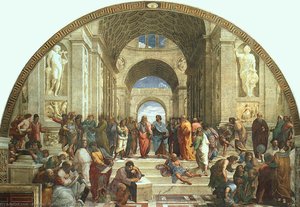 Афинская школа1511
 Си́стите Мадонна1513
 Преображение1520
 Свадьба девы Марии1504

Essays around Disputa
 Giotto di Bondone: Revolutionizing Late Medieval Painting through Narrative InnovationExplore the revolutionary art of Giotto di Bondone! Discover his groundbreaking techniques, iconic frescoes like those in the Arena Chapel,…
 Masterpieces of Light: The Top 25 Artworks by Duccio di BuoninsegnaJourney through the divine elegance of Duccio di Buoninsegna. Explore 25 iconic Sienese masterpieces, from the Maestà to the Rucellai Madon…
 Рафаэль: 25 шедевров великого художника для ценителей искусства и декора интерьераПогрузитесь в мир Рафаэля! 25 величайших шедевров эпохи Возрождения, полные гармонии и красоты. Узнайте истории создания картин, технику жи…