

 Примерить в интерьере
 Отправить
 Поделиться
 Подробнее
 Руководство

 Скачать
 Похожие объекты
 Рентгенография
 Слайд-шоу
 Статистика
Oranges
 Oil On Canvas
- WallArt
- Post-Impressionism
 1908
1908- Modern
 68.0 x 72.0 cm
 Развернуть текст
Жикле / Арт-принты
Печать (жикле) или холст музейного качества с быстрыми сроками изготовления и широким выбором вариантов отделки. ( Заказать репродукцию ручной работы Перейти к цифровым изображениям)




P118B $10

P118H $10

P118W $10

P438Z $10

P508JH $12

P508YH $12

P805H $10

P805Z $10

P919BZ $10

P919G $10

P919XJ $10

P959ZH $10

P968JZ $12

W106C $8

W218G $10

W218JH $8

W218Y $10

W307PJ $10

W316G $10

W316PJ $8

W316Y $10

W398PJ $8

W4111J $10

W500HY $15

W500JH $15

W692G $12

W849H $8

W940BG $15

W953PJ $8




Выберите один из наших стандартных размеров, соответствующих оригинальным пропорциям произведения искусства.

Введите необходимую ширину и высоту, чтобы репродукция подошла к вашей раме или стене. При печати изображение можно только уменьшить, но нельзя увеличить больше оригинала, поэтому при выборе другого формата часть изображения может быть обрезана. Перед печатью мы отправим вам цифровой макет на утверждение. Изображение на этой странице не отображает реальную обрезку — ее можно увидеть только на макете.
Доставка по всему миру () за 2 недели вместо стандартных 4–5 недель. (25 Октябрь)

Бесплатная экспресс-доставка по всему миру

Высококачественный льняной холст

Полное страхование при транспортировке

Гарантия возврата таможенных пошлин

Гарантия точного цветового соответствия

100-дневный период возврата (только при обнаружении дефектов)

Гарантия возврата 100% средств

Скидка при заказе нескольких работ
 Вариант со стеклом доступен только для размеров менее 110 см

Oranges
Жикле / Арт-принты
Размер репродукции
-


Итоговая стоимость
$ 80
Pyotr Konchalovsky's "Oranges": A Study in Impressionistic Still Life
- Artist: Pyotr Konchalovsky
- Year: 1908
- Dimensions: 68 x 72 cm
- Style: Post-Impressionism, influenced by Fauvism
Subject and Composition
“Oranges,” painted in 1908 by Pyotr Konchalovsky, is a captivating still life that exemplifies the artist's embrace of Impressionistic techniques while subtly incorporating elements of Fauvism. The painting depicts a simple yet elegant arrangement of fruit on a table – two vibrant oranges and one lemon are the primary subjects. These fruits are positioned with deliberate care; the oranges occupy the central space, drawing the viewer’s eye, while the lemon is slightly offset, creating visual balance. A cup sits near the left edge, adding another layer to the composition's depth. The background remains relatively undefined, allowing the focus to remain squarely on the luminous fruits.
Style and Technique
Konchalovsky’s style in "Oranges" is characterized by bold brushstrokes and a vibrant color palette—hallmarks of Post-Impressionism. He moves beyond mere representation, employing thick, visible strokes that imbue the painting with a sense of energy and immediacy. The oranges are rendered with a rich, saturated orange hue, while the lemon provides a contrasting burst of yellow. It is believed Konchalovsky mixed his paints with clay to achieve this thickness and vibrancy. This technique creates texture and depth, giving the fruit a tangible quality. The influence of Fauvism—known for its expressive use of color—is evident in the painting’s bold and unconventional color choices.
Historical Context: Jack of Diamonds and Artistic Innovation
“Oranges” was created during a period of significant artistic ferment in Russia. Konchalovsky was a founding member of "Jack of Diamonds," an avant-garde group that challenged traditional academic art styles. This collective sought to break free from established norms, embracing influences from French Post-Impressionism and Fauvism. The painting reflects this spirit of innovation, rejecting grand historical narratives in favor of everyday subjects rendered with expressive freedom. The Jack of Diamonds aimed to introduce modern artistic trends to Russia, and "Oranges" stands as a testament to their efforts.
Symbolism and Emotional Impact
While seemingly simple, “Oranges” carries subtle symbolic weight. The fruit itself can be interpreted as symbols of abundance, vitality, and warmth. The vibrant colors evoke feelings of joy and optimism. Konchalovsky’s skillful rendering of light and shadow creates a sense of realism while simultaneously conveying an emotional resonance. The painting's overall effect is one of quiet contemplation—a celebration of the beauty found in ordinary objects. It invites viewers to appreciate the simple pleasures of life, rendered with artistic skill and passion.
Вопросы и ответы
Для чего рекомендуется использовать репродукцию «Oranges», Петр Кончаловский?
Рекомендуемый способ использования репродукции «Oranges», Петр Кончаловский — Accent. Она также может служить для других целей.
Является ли произведение «Oranges» работы Петр Кончаловский общественным достоянием, и почему?
«Oranges», Петр Кончаловский находится в является общественным достоянием — срок действия авторского права истек. Срок действия авторского права исчисляется со смерти художника, которая наступила в 1956.
Какова цветовая палитра произведения «Oranges», Петр Кончаловский?
Колористика произведения «Oranges», Петр Кончаловский: палитра в стиле Neutrals, где преобладает Celadon (#bec4b7).
Биография художника
A Life Immersed in the Russian Artistic Spirit
Pyotr Petrovich Konchalovsky, born February 21, 1876, in the village of Slavianka near Kharkiv, was more than just a painter; he was a visual chronicler of a Russia undergoing profound transformation. His artistic journey mirrored the nation’s own tumultuous passage through revolution and ideological shifts, marked by a relentless search for new forms of expression. Konchalovsky's upbringing steeped him in an atmosphere rich with intellectual and creative currents. His father, Petr Petrovich Konchalovsky, was a respected translator and art publisher whose Moscow home became a vibrant hub frequented by leading artists of the era—Valentin Serov, Mikhail Vrubel, Vasily Surikov all graced their residence after the family’s move to the capital in 1889. This early exposure wasn't merely observational; it instilled within young Pyotr a deep appreciation for artistic expression and laid the foundation for his future path. Weekends spent absorbing the masterpieces at the Tretyakov Gallery proved formative, shaping his aesthetic sensibilities with the power of Russian masters.From Parisian Influences to Avant-Garde Innovation
Konchalovsky’s formal training began at the Moscow School of Painting, Sculpture and Architecture, but a pivotal period followed in Paris from 1896 to 1898 at the Académie Julian. This immersion in the French art world proved transformative. He encountered the groundbreaking work of Paul Cézanne and Vincent van Gogh, artists who challenged conventional representation and explored new ways of perceiving form and color. Cézanne’s emphasis on structure and geometric forms resonated deeply with Konchalovsky, while Van Gogh's expressive use of color and emotional intensity ignited a passion for conveying subjective experience. A subsequent journey to Arles allowed him a deeper understanding of Van Gogh’s artistic vision—a pilgrimage into the heart of expressive intensity. He meticulously studied Van Gogh’s brushstrokes, his layering of colors, and his ability to imbue ordinary subjects with profound emotion. Returning to Russia, he continued his studies at the Imperial Academy of Arts in Saint Petersburg, graduating in 1907. However, it was upon his return that Konchalovsky truly began to forge his own distinctive style. He became a central figure in the Russian avant-garde movement, co-founding the influential “Jack of Diamonds” (Knave of Diamonds) society in 1910. This group rejected academic traditions and championed experimentation, seeking inspiration not only from Western European modernism but also from Russia’s own folk art traditions—icons, tavern signs, and colorful popular prints known as *lubok*. The members of the “Jack of Diamonds” were united by a desire to break free from established artistic conventions and explore new possibilities.Navigating Shifting Ideologies: Style and Subject Matter
Konchalovsky’s artistic style evolved throughout his career, reflecting both personal exploration and the changing political climate of Russia. Initially influenced by Fauvism and Cézanne, his early works were characterized by bold colors, simplified forms, and a focus on structure. Paintings like “Still Life with a Coffeepot” exemplify this period, showcasing a vibrant palette and a dynamic composition. The use of intense color was particularly striking—a hallmark of the Fauvist movement, but filtered through Konchalovsky’s own unique sensibility. Following service in the Russian army during World War I, Konchalovsky’s style began to shift. The rise of Socialist Realism under the Soviet regime demanded art that served ideological purposes, celebrating socialist ideals and portraying prominent figures. While this represented a departure from his earlier avant-garde explorations, Konchalovsky adapted, becoming known for his ceremonial portraits. He skillfully rendered officials with a sense of dignity and authority, conveying an image of strength and stability—qualities deemed essential by the new regime. Despite these changes, he maintained a distinctive artistic voice, infusing even his more politically charged works with a sense of solidity and monumentality. His ability to synthesize diverse influences—Fauvism, Cézanne, and later Socialist Realism—demonstrated his versatility as an artist.Key Themes & Subjects
Konchalovsky’s vast body of work reveals recurring themes and subjects that demonstrate his artistic preoccupations. Still lifes were a constant throughout his career, allowing him to explore form, color, and composition in a controlled environment. He often depicted everyday objects—fruits, flowers, dishes—imbuing them with a sense of weight and presence. The meticulous detail he applied to these seemingly simple subjects revealed a deep appreciation for the beauty of the ordinary. Landscapes, particularly those inspired by his travels, also held a special place in his oeuvre, capturing the beauty and grandeur of the natural world. He was drawn to the vastness of the Russian countryside—the rolling fields, the dense forests, and the dramatic skies—and sought to convey their power and majesty through his paintings. However, it was perhaps in portraiture that Konchalovsky truly excelled, creating compelling likenesses of his contemporaries, often imbued with psychological depth. His portraits ranged from intimate depictions of family members to grand ceremonial representations of Soviet officials. He skillfully captured not only physical appearance but also the inner lives of his subjects—their personalities, their aspirations, and their anxieties. The sheer volume of his work—over 5,000 pieces—is a testament to his tireless dedication and unwavering commitment to the art of painting. *He was a master of observation, capable of transforming the mundane into something extraordinary through the power of his vision.*Legacy and Enduring Significance
Pyotr Konchalovsky’s contribution to Russian art is undeniable. He bridged the gap between early modernism and Socialist Realism, navigating complex political currents while remaining a significant artistic force. His first solo exhibition at the Tretyakov Gallery in 1922 solidified his reputation as one of Russia's leading artists. Beyond his own work, Konchalovsky fostered a family deeply involved in the arts; his son, Mikhail Petrovich Konchalovsky, became a renowned film director, and his daughter, Natalia Konchalovskaya, was an accomplished artist herself. His paintings are not merely aesthetically pleasing objects but historical documents, reflecting the tumultuous period in which they were created. They offer valuable insights into the evolution of Russian art and the challenges faced by artists operating within a rapidly changing society. Konchalovsky’s ability to adapt while maintaining a distinctive style cemented his place as a key figure in Russian art history, leaving behind a legacy that continues to inspire and captivate audiences today. His work stands as a testament to the resilience of artistic expression in the face of political upheaval, and his influence can still be seen in contemporary Russian art.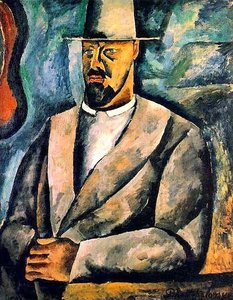
Петр Кончаловский
1876 - 1956 , Россия
Краткая справка
- Artistic Movement Or Style: Авангард, Фавтуризм, Реализм
- Artists Or Movements Influenced By This Artist:
- Джек Дьявол
- Мир Искусства
- Artists Who Influenced This Artist:
- Кезан
- Ван Гог
- Date Of Birth: 21 февраля 1876
- Date Of Death: 2 февраля 1956
- Full Name: Pyotr Petrovich Konchalovsky
- Nationality: Русский
- Notable Artworks:
- Натюрморт с кофеваркой
- Горожане
- Place Of Birth: Харьков, Россия
Похожие статьи
Beyond Impressionism: Exploring the Emotional Depth of Post-Impressionist Painting
Explore the profound emotional depth & innovative techniques of Post-Impressionism with OriginalUniqueArt. Discover Cézanne, Van Gogh, Gauguin & more – and their lasting impact on modern art.

25 Шедевров Поля Сезанна: Открывая Новую Эру в Искусстве | OriginalUniqueArt
Откройте для себя 25 величайших шедевров Поля Сезанна! Узнайте истории создания картин импрессионизма и постимпрессионизма, технику художника и вдохновение для вашего интерьера. Репродукции картин Сезанна высокого качества на OriginalUniqueArt.com.

10 Шедевров Постимпрессионизма, Определивших Эпоху | OriginalUniqueArt.com
Погрузитесь в мир постимпрессионизма! Откройте 10 шедевров Ван Гога, Моне, Сезанна и других великих художников. История искусства, техники живописи и вдохновение для вашего интерьера на OriginalUniqueArt.com. Изысканные репродукции картин ждут вас!

За пределами света и цвета: Импрессионизм против постимпрессионизма для взыскательного коллекционера
Углубленное исследование импрессионизма и постимпрессионизма для ценителей искусства. Анализ ключевых художников, инвестиционный потенциал и коллекционная ценность шедевров.
Sun-Drenched Citrus: The Vibrant Beauty of Oranges in Impressionist Masterpieces
Embark on a sensory journey through Impressionist masterpieces. Discover how Renoir and Cézanne captured the vibrant light and luscious textures of sun-drenched oranges in exquisite still life paintings designed to inspire and transform your home.
