Перейти к печатным копиям
 Читать далее







































 Для произведений искусства или репродукций, размер которых превышает 105 см (приблизительно 41 дюйм) по любой из сторон, рама будет доставлена в разобранном виде (в виде комплекта). Этот метод обеспечивает безопасную доставку и предотвращает повреждения при транспортировке.


The Enigmatic Grace of Pinturicchio: A Renaissance Master
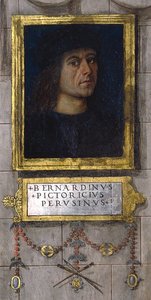
Bernardino di Betto, universally known as Pinturicchio – a nickname affectionately bestowed upon him for his diminutive stature – stands as a captivating figure within the vibrant tapestry of 15th-century Italian art. Born in Perugia in 1454, Pinturicchio’s life unfolded during a period of profound artistic transformation, the High Renaissance blossoming across Italy while he carved out a unique and enduring legacy. Unlike the monumental ambition of giants like Leonardo da Vinci or the dramatic realism of Michelangelo, Pinturicchio cultivated a style defined by refined grace, intricate detail, and a luminous, decorative sensibility – a testament to his exceptional skill in transforming established forms into something uniquely captivating.
His early training remains somewhat shrouded in mystery, likely nurtured within the workshops of lesser-known Perugian painters. However, it’s clear that Pinturicchio absorbed the essence of the Umbrian School of Painting, inheriting its characteristic elegance and a deep appreciation for color. This foundation would later inform his work across various commissions, from the opulent Borgia Apartments in Rome to the serene beauty of the Piccolomini Library in Siena. His career wasn’t one of revolutionary upheaval, but rather a meticulous refinement – a testament to his mastery of technique and his ability to imbue even seemingly simple subjects with profound emotional resonance.
“Deux Children Sitting”: A Study in Innocence and Connection
"Deux Children Sitting" is a captivating depiction of two young children nestled together on the ground, their hands clasped in a gesture of quiet contemplation. Painted in 1513 by Pinturicchio, this work transcends mere representation; it’s an exploration of innocence, vulnerability, and the profound connection between human beings. The scene unfolds with remarkable intimacy – the children are positioned close to one another, bathed in soft light that suggests a timeless serenity. Their nakedness is not presented as provocative but rather as a symbol of purity and unburdened joy, highlighting their inherent beauty and innocence.
The composition itself is remarkably balanced, with the figures occupying the central space and creating a sense of harmonious unity. The surrounding details – the scattered smaller figures, the suggestion of a landscape beyond – contribute to a feeling of quiet contemplation and invite the viewer to share in the children’s peaceful moment. Pinturicchio's masterful use of color—muted earth tones punctuated by subtle highlights—further enhances the work’s sense of tranquility and understated beauty.
A Master at Work: Technique and Context
Pinturicchio was renowned for his meticulous technique, a hallmark of his style. He employed tempera on panel, a medium that allowed him to achieve remarkable detail and luminosity. His brushwork is incredibly delicate, with subtle gradations of color creating a sense of depth and texture. The artist’s attention to anatomical accuracy is evident in the children's forms, yet he avoids the rigid formality often associated with Renaissance portraiture, instead favoring a more fluid and expressive approach.
Furthermore, understanding Pinturicchio requires acknowledging his historical context. He worked during a period of immense artistic innovation, influenced by Perugino, Luca Signorelli, and other masters of the Umbrian School. Yet, he maintained a distinct voice, prioritizing grace and decorative elegance over dramatic grandeur. His work reflects the humanist ideals of the Renaissance, celebrating human beauty and fostering a sense of connection between individuals and the natural world.
Rediscovering Pinturicchio: Reproductions for Today
Today, “Deux Children Sitting” is available as a stunning hand-painted reproduction by OriginalUniqueArt.com, offering art lovers the opportunity to bring this timeless masterpiece into their homes or offices. The meticulous attention to detail and vibrant colors of the original are faithfully reproduced using traditional techniques, ensuring that every piece captures the essence of Pinturicchio’s artistic vision. Whether you're an admirer of Renaissance art, a collector seeking unique pieces, or simply someone who appreciates beauty and tranquility, this reproduction offers a captivating glimpse into the world of one of Italy’s most enigmatic masters.
Вопросы и ответы
Какой размер печати «Deux Children Sitting,», Пинтуриккио подойдет для рекомендованной комнаты?
Для помещения Living Room для работы «Deux Children Sitting,» рекомендуется размер печати Medium.
Для какого использования и в каком интерьере рекомендуется размещать «Deux Children Sitting,», Пинтуриккио?
«Deux Children Sitting,» идеально подходит для Statement; рекомендуемое место для размещения — Living Room.
Из какой страны происходит работа в стиле Italian Renaissance «Deux Children Sitting,»?
«Deux Children Sitting,» был создан Пинтуриккио, уроженцем Италия, в рамках направления Italian Renaissance. Происхождение художника связывает это произведение с Italian Renaissance в том виде, в котором его развивали мастера из Италия.
 Предпросмотр
 Поделиться
 Поделиться
 Детали произведения
 Руководство

 Скачать
 Похожие предметы
 Рентгенография
 Слайд-шоу
 Вопросы и ответы
 Статистика просмотров