

 Примерить в интерьере
 Отправить
 Поделиться
 Подробнее
 Руководство

 Скачать
 Похожие объекты
 Рентгенография
 Слайд-шоу
 Статистика
Bacchus und Ariadne
 Oil On Canvas
- WallArt
- Baroque
 1740
1740- Early Modern
 72.0 x 95.0 cm
 Дворец Сан-Суси
 Развернуть текст
Жикле / Арт-принты
Печать (жикле) или холст музейного качества с быстрыми сроками изготовления и широким выбором вариантов отделки. ( Заказать репродукцию ручной работы Перейти к цифровым изображениям)




P118B $10

P118H $10

P118W $10

P438Z $10

P508JH $12

P508YH $12

P805H $10

P805Z $10

P919BZ $10

P919G $10

P919XJ $10

P959ZH $10

P968JZ $12

W106C $8

W218G $10

W218JH $8

W218Y $10

W307PJ $10

W316G $10

W316PJ $8

W316Y $10

W398PJ $8

W4111J $10

W500HY $15

W500JH $15

W692G $12

W849H $8

W940BG $15

W953PJ $8




Выберите один из наших стандартных размеров, соответствующих оригинальным пропорциям произведения искусства.

Введите необходимую ширину и высоту, чтобы репродукция подошла к вашей раме или стене. При печати изображение можно только уменьшить, но нельзя увеличить больше оригинала, поэтому при выборе другого формата часть изображения может быть обрезана. Перед печатью мы отправим вам цифровой макет на утверждение. Изображение на этой странице не отображает реальную обрезку — ее можно увидеть только на макете.
Доставка по всему миру () за 2 недели вместо стандартных 4–5 недель. (27 Октябрь)

Бесплатная экспресс-доставка по всему миру

Высококачественный льняной холст

Полное страхование при транспортировке

Гарантия возврата таможенных пошлин

Гарантия точного цветового соответствия

100-дневный период возврата (только при обнаружении дефектов)

Гарантия возврата 100% средств

Скидка при заказе нескольких работ
 Вариант со стеклом доступен только для размеров менее 110 см

Bacchus und Ariadne
Жикле / Арт-принты
Размер репродукции
-


Итоговая стоимость
$ 80
A Baroque Rhapsody: Cazes’s “Bacchus und Ariadne”
Pierre-Jacques Cazes's "Bacchus und Ariadne," painted around 1740, is more than just a depiction of a classical myth; it’s a vibrant explosion of color and movement, a testament to the flourishing Baroque style in 18th-century France. The painting transports us to the sun-drenched shores of Naxos, where the god Bacchus, pursued by Cupid's fateful arrow, dramatically claims the abandoned Ariadne. Cazes masterfully captures the intoxicating energy of this pivotal moment, weaving together elements of drama, sensuality, and divine intervention into a single, unforgettable scene.
The composition itself is a carefully orchestrated dance of figures. Ariadne, positioned on the left, gestures towards the departing ship of Theseus, a poignant reminder of her abandonment and a subtle foreshadowing of the tragic romance to come. Bacchus, resplendent in flowing robes and a confident stride, dominates the center, his hand outstretched as if inviting her into his ecstatic world. The backdrop—a stylized seascape hinting at the island’s rugged coastline—provides a dramatic stage for this mythological encounter. Beyond the immediate narrative, Cazes employs a dynamic diagonal thrust that pulls the viewer's eye through the crowded scene, creating a sense of perpetual motion and heightened emotion.
A Masterclass in Baroque Technique
Cazes’s skill as a painter is immediately evident in his masterful use of oil paint on canvas. The texture is rich and layered, achieved through impasto techniques – visible brushstrokes that build up the forms and create a palpable sense of volume. The colors are intensely saturated, particularly the reds and golds used to depict Bacchus’s garments and the shimmering light reflecting off the sea. Notice how he expertly blends warm hues with cooler blues in the background, establishing depth and creating an atmospheric perspective that draws us into the scene.
Furthermore, Cazes demonstrates a keen understanding of chiaroscuro – the dramatic interplay of light and shadow. Strong contrasts highlight key figures like Bacchus and Ariadne, while softer lighting envelops the surrounding revelers, contributing to the painting’s overall sense of drama and theatricality. The meticulous detail evident in each figure's drapery, facial expression, and even the expressions on the faces of the Bacchantin adds a remarkable level of realism and engagement.
Symbolism Woven into Myth
“Bacchus und Ariadne” is replete with symbolic elements that enrich its narrative beyond a simple retelling of the myth. The laurel tree, prominently featured in the background, represents Daphne’s transformation – a crucial element of the story where she becomes immortalized as the constellation Corona Borealis after being pursued by Apollo. The presence of Hymenaios, the god of marriage, descending with his torch signifies the union between Bacchus and Ariadne, promising a future filled with abundance and celebration. Even the drunken Silen on the donkey, a symbol of excess and revelry, underscores the intoxicating nature of Bacchus’s world.
The inclusion of numerous figures – Bacchantins dancing wildly, playful Genies, and a slumbering tiger – further amplifies the painting's themes of fertility, intoxication, and the wildness of the divine. These elements contribute to a vibrant tapestry of imagery that speaks to the core values of the Baroque period: exuberance, emotion, and an embrace of the sensual.
A Legacy of Artistic Influence
Originally commissioned by King Friedrich II of Prussia, “Bacchus und Ariadne” reflects the artistic tastes of the European elite. The painting’s opulent style and dramatic composition were highly valued during this era, serving as a symbol of royal power and refined taste. Cazes's work exemplifies the academic tradition of French art, emphasizing historical and mythological subjects rendered with meticulous detail and a strong sense of realism. His influence can be seen in the works of subsequent generations of artists, cementing his place as a pivotal figure in the development of French Baroque painting.
Today, reproductions of “Bacchus und Ariadne” continue to captivate audiences with their vibrant colors, dynamic composition, and evocative storytelling. It remains a powerful example of Baroque artistry—a timeless celebration of myth, passion, and the intoxicating allure of the divine.
Вопросы и ответы
Какая техника и стиль характеризуют «Bacchus und Ariadne», Pierre Jacques Cazes?
В произведении «Bacchus und Ariadne» техника Oil On Canvas встречается с направлением Baroque.
Является ли «Bacchus und Ariadne» типичным для того, что обычно создавал Pierre Jacques Cazes?
Повторяющиеся темы в творчестве Pierre Jacques Cazes включают baroque drama & grandeur, classical mythology's allure, religious allegory – divine love", royal patronage & prestige, "teaching artist, stylistic guide", french courtly art tradition, mythological narratives popular; работа "Bacchus und Ariadne" сосредоточена на mythological scene, classical mythology, bacchus and ariadne, greek gods, naxos island, baroque drama, ecstatic figures.
К какой исторической эпохе относится «Bacchus und Ariadne», Pierre Jacques Cazes?
Исторический период произведения «Bacchus und Ariadne», Pierre Jacques Cazes — Early Modern. Данная классификация определяет место работы в истории искусства.
Похожие статьи
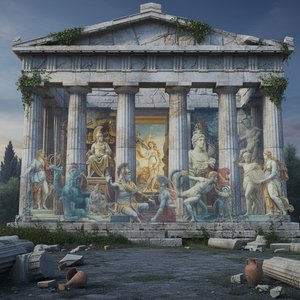
Echoes of Olympus: Mythological Narratives in Western Art Through the Ages
Explore the captivating history of mythological narratives in Western art! From ancient Greece to modern masterpieces, discover iconic artworks & symbolism. Expert analysis and high-quality reproductions at OriginalUniqueArt.

Топ-25 шедевров Ренуара: искусство, история и вдохновение для интерьера
Погрузитесь в мир Ренуара! 🎨 Откройте топ-25 шедевров импрессионизма, историю создания картин и вдохновляющую красоту. Купите репродукции высокого качества для вашего интерьера на OriginalUniqueArt.com – музейное искусство онлайн!

10 Шедевров Барокко: Искусство, изменившее мир | OriginalUniqueArt.com
Погрузитесь в мир барокко! 10 шедевров Караваджо, Рембрандта и других великих художников. Узнайте историю создания культовых картин и найдите идеальную репродукцию для вашего интерьера на OriginalUniqueArt.com

Барочная драма: Искусство величия в современном интерьере
Погрузитесь в мир роскоши и величия барокко! Узнайте об истории стиля, ключевых элементах интерьера и архитектуре. Вдохновляйтесь с и создайте свой неповторимый дизайн.

The Dramatic Flourish: Exploring the Baroque Movement's Enduring Legacy in Art History
Explore the dramatic world of Baroque art! Discover iconic artists like Caravaggio & Rubens, defining techniques, and its lasting impact on art history. Expert insights for collectors & enthusiasts at OriginalUniqueArt.