 Предпросмотр
 Поделиться
 Поделиться
 Детали произведения
 Руководство

 Скачать
 Похожие предметы
 Рентгенография
 Слайд-шоу
 Вопросы и ответы
 Статистика просмотров
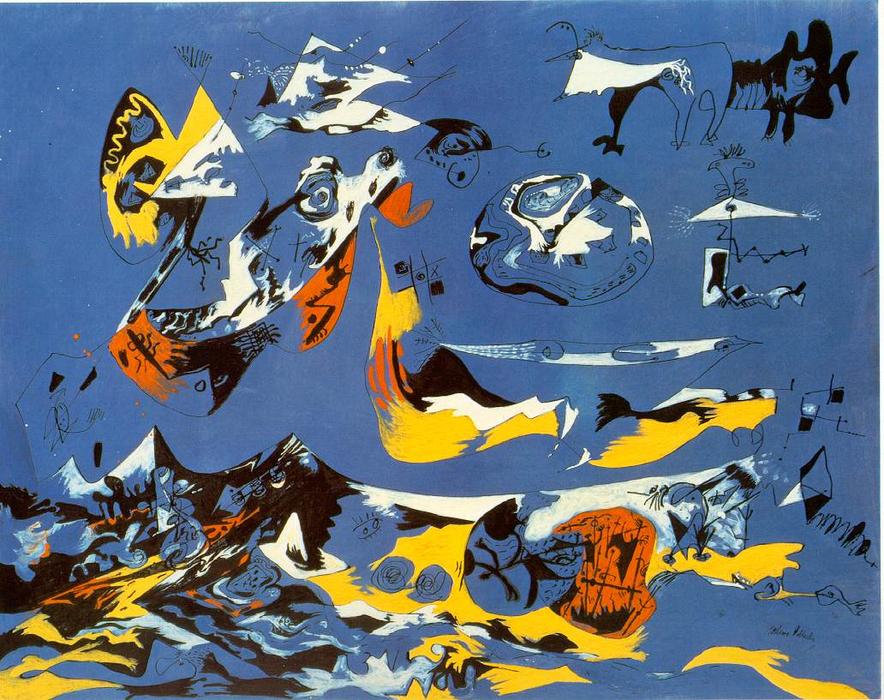
Blue (Moby Dick)


 Читать далее
Жикле и арт-принты
Печать (жикле) или холст музейного качества с быстрыми сроками изготовления и широким выбором вариантов отделки. ( Купить картину ручной работы Перейти к цифровым изображениям)




P118B $10

P118H $10

P118W $10

P438Z $10

P508JH $12

P508YH $12

P805H $10

P805Z $10

P919BZ $10

P919G $10

P919XJ $10

P959ZH $10

P968JZ $12

W106C $8

W218G $10

W218JH $8

W218Y $10

W307PJ $10

W316G $10

W316PJ $8

W316Y $10

W398PJ $8

W4111J $10

W500HY $15

W500JH $15

W692G $12

W849H $8

W940BG $15

W953PJ $8




Выберите один из наших стандартных размеров, соответствующих оригинальным пропорциям произведения искусства.

Введите необходимую ширину и высоту, чтобы репродукция подошла к вашей раме или стене. При печати изображение можно только уменьшить, но нельзя увеличить больше оригинала, поэтому при выборе другого формата часть изображения может быть обрезана. Перед печатью мы отправим вам цифровой макет на утверждение. Изображение на этой странице не отображает реальную обрезку — ее можно увидеть только на макете.
Доставка по всему миру () за 2 недели вместо стандартных 4–5 недель. (10 Ноябрь)

Бесплатная экспресс-доставка по всему миру

Высококачественный льняной холст

Полное страхование при доставке

Гарантия возмещения таможенных пошлин

Гарантия точного цветового соответствия

100-дневная гарантия возврата (только при обнаружении дефектов)

Гарантия возврата 100% средств

Скидка при оптовом заказе
 Вариант со стеклом доступен только для размеров менее 110 см

Blue (Moby Dick)
Жикле и арт-принты
Размер репродукции
-


Итоговая стоимость
$ 81
The Echoes of Moby Dick: Jackson Pollock’s Blue Abstraction
Jackson Pollock's “Blue (Moby Dick),” painted in 1943, isn’t merely a canvas splashed with color; it’s an immersive experience, a visual embodiment of the anxieties and primal forces that fueled Herman Melville’s epic tale. This work, residing within the Ohara Museum of Art in Kurashiki, Japan, stands as a pivotal moment in the trajectory of Abstract Expressionism, revealing Pollock's unique approach to translating complex emotions onto the canvas. It’s a piece that invites prolonged contemplation, rewarding viewers with layers of meaning and a profound sense of unease – mirroring, perhaps, the relentless pursuit of the unattainable.
Initially conceived as “Moby Dick,” the painting quickly underwent a transformation, reflecting Pollock's evolving artistic process and his engagement with psychological theories. The early iteration, a more explicitly figurative work, was deemed too constrained by conventional representation. Pollock, influenced by Jungian psychology and seeking to express raw emotion rather than depict concrete forms, abandoned this initial approach, opting instead for an all-over composition that prioritized the act of painting itself. This shift marked a crucial step toward his signature “drip” technique – a method where paint was poured, dripped, and flung onto the canvas from above, creating a dynamic web of color and texture.
A Symphony in Blue: Technique and Composition
The dominant hue is, unsurprisingly, blue—a deep, resonant shade that immediately establishes a mood of mystery and depth. However, this isn’t a simple monochromatic statement. Pollock masterfully employs a range of complementary colors – vibrant yellows, stark whites, and touches of black and orange – to create a swirling, almost turbulent effect. These contrasting hues aren't juxtaposed in a static manner; instead, they bleed into one another, suggesting movement, chaos, and the relentless power of nature. The composition itself is deliberately ambiguous, featuring amorphous shapes that evoke marine life—fish, whales, perhaps even the ominous form of Moby Dick himself—suspended within a dynamic field of color.
Pollock’s technique is central to the painting's impact. He utilized a mixed medium of gouache and ink on composition board, allowing for both precision and spontaneity. The “drip” method, perfected over years of experimentation, allowed him to bypass traditional brushstrokes, creating an immediate connection between his body and the artwork. The resulting surface is not smooth or polished; it’s textured, layered, and imbued with a palpable energy—a testament to the physicality of the act of painting.
Decoding the Symbolism: Melville and the Unconscious
While Pollock himself remained notoriously reticent about interpreting his work, scholars have identified several symbolic connections between “Blue (Moby Dick)” and Melville’s novel. The recurring motif of the table—a subtle yet persistent element within the composition—can be interpreted as a representation of the human psyche, a space where conflicting forces collide. The figures that populate the painting are not clearly defined; they exist in a state of flux, mirroring the instability and uncertainty inherent in the pursuit of knowledge and understanding – a key theme in *Moby Dick*.
Furthermore, the painting’s intense emotionality—the sense of dread, obsession, and ultimately, futility—resonates with the novel's exploration of human ambition and the limitations of reason. The whale itself, a symbol of both power and destruction, looms large in the subconscious of the viewer, prompting questions about humanity’s relationship to nature and its own destructive tendencies. It is believed that Pollock was influenced by Melville’s work, perhaps even drawing parallels between his own struggles with alcoholism and Ahab's relentless pursuit.
A Legacy of Emotion: Reproductions and Beyond
“Blue (Moby Dick)” stands as a powerful example of Abstract Expressionism’s ability to evoke profound emotional responses. OriginalUniqueArt offers meticulously hand-painted reproductions that capture the essence of this iconic work, allowing you to experience its depth and complexity firsthand. These reproductions faithfully recreate Pollock's dynamic technique and vibrant color palette, bringing the painting’s raw energy into your space. Whether displayed in a contemporary setting or as a thoughtful addition to a classic interior, a reproduction of “Blue (Moby Dick)” serves as a constant reminder of the power of art to challenge our perceptions and connect us to the deepest recesses of human emotion.
Explore OriginalUniqueArt’s collection of Jackson Pollock reproductions today and discover how you can bring this masterpiece into your world. View “Blue (Moby Dick)” reproduction here
Вопросы и ответы
Какую атмосферу привносит «Blue (Moby Dick)», Джексон Поллок в интерьер?
Благодаря своей Calm атмосфере, работа «Blue (Moby Dick)» идеально подойдет для Living Room.
Для какого использования и в каком интерьере рекомендуется размещать «Blue (Moby Dick)», Джексон Поллок?
Рекомендуется использовать «Blue (Moby Dick)», Джексон Поллок для Statement, в идеале — в помещении типа Living Room. Сочетание способа использования и пространства поможет определить, где именно будет уместна репродукция.
Для какой комнаты лучше всего подойдет «Blue (Moby Dick)», Джексон Поллок, учитывая его цветовую гамму?
Благодаря своей палитре Dark, работа «Blue (Moby Dick)», Джексон Поллок идеально подойдет для Living Room; именно цветовая гамма легла в основу этой рекомендации.
Биография художника
Early Life and the Seeds of Innovation
Paul Jackson Pollock, born in Cody, Wyoming, in 1912, was a restless spirit from the very beginning. His early life was marked by constant movement; his father, LeRoy Pollock, pursued work as a land surveyor across the vast landscapes of the American West, leading the family on a nomadic journey through Arizona and California. This itinerant existence instilled in young Pollock a deep connection to the natural world – he developed an appreciation for Native American art during these surveying trips, absorbing their visual language and spiritual intensity. Though he never consciously imitated Indigenous styles, these early experiences undoubtedly left an indelible mark on his artistic sensibility, shaping his later exploration of raw energy and primal expression.
Pollock’s formal artistic training commenced at the Manual Arts High School in Los Angeles, followed by studies at the Art Students League of New York under the tutelage of Thomas Hart Benton. Benton, a prominent figure in the Regionalist movement, emphasized rhythmic composition and narrative themes rooted in American life. Initially, Pollock absorbed Benton's lessons diligently, learning to create works that depicted scenes of rural America with a sense of dynamism and social commentary. However, his inherent inclination leaned toward more abstract explorations – he was drawn to the expressive potential of color and form, seeking ways to convey emotions and ideas beyond representational accuracy.
Furthermore, Pollock was profoundly influenced by Mexican muralists like José Clemente Orozco, whose monumental works depicted social struggles and historical events with a powerful emotional intensity. The scale, dynamism, and symbolic language of these murals resonated deeply with Pollock, inspiring him to seek ways to create art that could capture the complexities of human experience on a grander scale.
The Birth of Action Painting and a Revolutionary Technique
The 1930s witnessed Pollock’s experimentation with various techniques, driven by a desire to move beyond traditional brushwork. He began pouring paint directly onto canvases, exploring its fluidity and unpredictable nature – this was not simply applying color; it was an attempt to capture the very essence of movement and spontaneity. However, it was around 1947 that his artistic trajectory underwent a radical transformation. Abandoning the easel altogether, Pollock laid canvases directly on the floor, initiating what would become known as his “drip technique.” He then proceeded to drip, splash, and fling paint onto the canvas from above, orchestrating a dynamic dance between artist, medium, and surface – this wasn’t merely about applying paint; it was about embodying the act of creation itself.
This innovative approach fundamentally altered the way painting was conceived. Pollock's canvases became arenas for physical expression, capturing the immediacy of his gestures and emotions. The resulting paintings are characterized by their “all-over” composition – a lack of central focus that invites the viewer to explore the entire surface as a unified field of energy. Intricate networks of lines and colors intertwine, creating a visual complexity that is both captivating and challenging. He employed unconventional tools—sticks, knives, even syringes—to manipulate the paint in unpredictable ways, further emphasizing the spontaneous nature of his process.
This revolutionary technique positioned Pollock as a central figure in the burgeoning Abstract Expressionist movement, which emerged in post-World War II New York City. Abstract Expressionism prioritized spontaneous gesture, large scale, and non-representational imagery – reflecting a broader cultural shift away from traditional artistic conventions. His marriage to fellow artist Lee Krasner was also pivotal; she provided unwavering emotional support and actively encouraged his artistic development, recognizing the groundbreaking nature of his work.
Iconic Works and Lasting Legacy
Pollock’s most celebrated works—such as Number 1, 1950 (Lavender Mist), One: Number 31, 1950, Blue Poles: Number 11, 1952, and *Convergence*—are testaments to his revolutionary technique. These paintings are not simply images; they are records of a performance, imbued with the artist’s physical presence and emotional intensity. The dynamic energy that emanates from these canvases is palpable, drawing viewers into a world of pure abstraction.
The significance of Pollock's work extends beyond mere aesthetics; it represents an exploration of process over product. He sought to capture the immediacy of his actions and emotions on canvas, rejecting traditional notions of composition and representation. He delved into Jungian psychology, exploring archetypes and the subconscious in his art, seeking to tap into universal symbols and primal energies.
Pollock’s impact on the history of art is immeasurable. He fundamentally altered the way artists approached painting, breaking free from easel-based methods and embracing a more performative approach. His work helped solidify New York City's position as a global center for modern art, shifting the focus away from European dominance. His influence can be seen in the work of countless artists who followed, including those associated with Color Field painting and later forms of abstract expressionism.
A Complex Figure and Enduring Influence
Despite his groundbreaking achievements, Pollock’s life was marked by personal struggles. He battled alcoholism for much of his adult life, a condition that exacerbated his volatile personality and contributed to his untimely death in 1956 at the age of 44. However, it is important to recognize Pollock not just as an artist but also as a complex individual grappling with profound emotional challenges.
His legacy continues to evolve and inspire artists today. His work remains a subject of intense debate and interpretation, prompting viewers to consider the relationship between art, emotion, and experience. The drip technique he pioneered is still practiced by many contemporary painters, demonstrating the enduring relevance of his innovations. Jackson Pollock’s paintings are not merely decorative objects; they are windows into the artist's psyche, offering a glimpse into the depths of human consciousness.

Джексон Поллок
1912 - 1956 , Соединенные Штаты Америки
Об авторе
- Artistic Movement Or Style: Абстрактный экспрессионизм
- Artists Or Movements Influenced By This Artist:
- Полевые цвета
- Экспрессионизм
- Artists Who Influenced This Artist:
- Бентон
- Орозко
- Массон
- Date Of Birth: 28 января 1912 г.
- Date Of Death: 11 августа 1956 г.
- Full Name: Paul Jackson Pollock
- Nationality: Американский
- Notable Artworks:
- Lavender Mist
- One: 31
- Blue Poles
- Convergence
- Place Of Birth: Кодий, США
Похожие статьи

Топ-10 шедевров абстрактного экспрессионизма: искусство для вашего интерьера от OriginalUniqueArt.com
Погрузитесь в мир абстрактного экспрессионизма! Откройте для себя 10 шедевров Поллока, Ротко и других гениев. История искусства, техники живописи и вдохновение для вашего интерьера от OriginalUniqueArt.com. Explore the full collection online!
Beyond Representation: Exploring the Emotional Landscape of Abstract Expressionism
Explore the profound emotional world of Abstract Expressionism with OriginalUniqueArt. Discover key artists like Pollock & Rothko, learn about collecting, and find museum-quality reproductions to inspire your space.
Paul Jackson Pollock: A Radical Departure – Exploring Abstract Expressionism's Pioneering Figure and His Enduring Legacy
Explore the revolutionary art of Jackson Pollock & Abstract Expressionism. Discover his iconic drip paintings, lasting impact, and considerations for collecting this pivotal American artist. Expert insights at OriginalUniqueArt.

Топ-25 шедевров Василия Кандинского: Абстрактное искусство для вашего интерьера
Погрузитесь в мир абстрактного искусства с Василием Кандинским! 25 шедевров экспрессионизма, баухауса и русского авангарда. Репродукции картин Кандинского для вдохновения и декора вашего интерьера. Откройте всю коллекцию на OriginalUniqueArt.com

Топ-10 знаменитых картин в оттенках серо-голубого: искусство и декор от OriginalUniqueArt
Погрузитесь в мир серо-голубых оттенков! От Моне до Ренуара – 10 знаменитых картин, вдохновляющих на создание уникального интерьера. Репродукции высокого качества от OriginalUniqueArt.com. Explore the full collection online!


