
 Примерить в интерьере
 Отправить
 Поделиться
 Подробнее
 Руководство

 Скачать
 Похожие объекты
 Рентгенография
 Слайд-шоу
 Статистика
Emblem


 Развернуть текст
Жикле / Арт-принты
Печать (жикле) или холст музейного качества с быстрыми сроками изготовления и широким выбором вариантов отделки. ( Заказать репродукцию ручной работы Перейти к цифровым изображениям)




P118B $10

P118H $10

P118W $10

P438Z $10

P508JH $12

P508YH $12

P805H $10

P805Z $10

P919BZ $10

P919G $10

P919XJ $10

P959ZH $10

P968JZ $12

W106C $8

W218G $10

W218JH $8

W218Y $10

W307PJ $10

W316G $10

W316PJ $8

W316Y $10

W398PJ $8

W4111J $10

W500HY $15

W500JH $15

W692G $12

W849H $8

W940BG $15

W953PJ $8




Выберите один из наших стандартных размеров, соответствующих оригинальным пропорциям произведения искусства.

Введите необходимую ширину и высоту, чтобы репродукция подошла к вашей раме или стене. При печати изображение можно только уменьшить, но нельзя увеличить больше оригинала, поэтому при выборе другого формата часть изображения может быть обрезана. Перед печатью мы отправим вам цифровой макет на утверждение. Изображение на этой странице не отображает реальную обрезку — ее можно увидеть только на макете.
Доставка по всему миру () за 2 недели вместо стандартных 4–5 недель. (24 Октябрь)

Бесплатная экспресс-доставка по всему миру

Высококачественный льняной холст

Полное страхование при транспортировке

Гарантия возврата таможенных пошлин

Гарантия точного цветового соответствия

100-дневный период возврата (только при обнаружении дефектов)

Гарантия возврата 100% средств

Скидка при заказе нескольких работ
 Вариант со стеклом доступен только для размеров менее 110 см

Emblem
Жикле / Арт-принты
Размер репродукции
-


Итоговая стоимость
$ 80
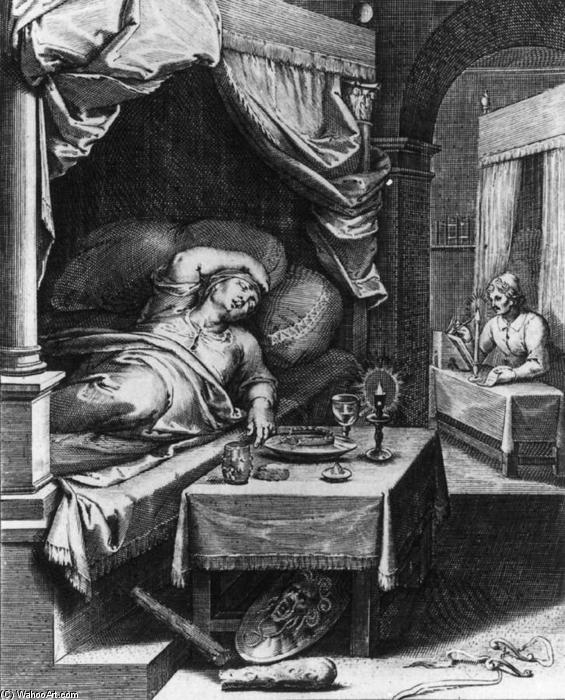
Otto van Veen’s Emblem: A Baroque Meditation on Grief
The engraving “Emblem,” created by Otto van Veen in 1607, stands as a testament to the artistic fervor of the Baroque period—a time marked by dramatic emotion and opulent visual grandeur. More than just a depiction of imagery, it's an immersive experience into the spiritual anxieties of its era, skillfully rendered with meticulous detail and imbued with profound symbolic resonance. This artwork resides within the North Carolina Museum of Art’s collection (Object Number: NCMA 1987.36), offering visitors a glimpse into the artistic sensibilities of Flemish Baroque art. ### Artistic Style and Technique – The Language of Emotion Van Veen's approach to engraving exemplifies the stylistic conventions prevalent during his time. Characterized by thick, expressive linework—primarily hatching and cross-hatching—the artist prioritizes conveying emotion over strict realism. Unlike Renaissance artists who sought idealized representations, Baroque painters like Van Veen embraced dramatic chiaroscuro (light and shadow), amplifying visual impact and fostering a palpable sense of sorrow. The engraving utilizes a burin tool to carve lines into a metal plate, transferring ink onto paper with remarkable precision—a technique that allowed for nuanced tonal gradations and heightened textural qualities. This careful execution contributes significantly to the artwork’s overall mood and reinforces its thematic concerns. ### Historical Context – Faith Amidst Turbulent Times “Emblem” emerged during a period of intense religious upheaval in Europe, specifically within the Low Countries. The Protestant Reformation had irrevocably fractured Christendom, sparking conflicts between Catholic and Protestant factions. Van Veen's artistic milieu was profoundly influenced by this turbulent landscape; he worked alongside humanist thinkers like Dominicus Lampsonius and Jean Ramée who championed classical learning and challenged traditional dogma. This intellectual climate fostered a preoccupation with mortality—a central theme explored in “Emblem”—reflecting anxieties about divine judgment and the fragility of human existence. The engraving’s solemn composition speaks to the spiritual fervor of its time, mirroring broader societal concerns regarding faith and morality. ### Symbolism – Death, Mourning, and Divine Lamentation The artwork's visual elements are laden with symbolic significance. At its core lies a reclining figure—likely representing Christ—surrounded by attendants who convey grief and sorrow. The opulent drapery and furnishings serve as emblems of wealth and status, yet simultaneously underscore the pervasive atmosphere of loss. The pyramidal structure of the image draws the viewer’s gaze upwards towards the central figure, emphasizing spiritual contemplation. Furthermore, the scene evokes themes of biblical lamentation—a common motif in Baroque art—reflecting a belief in divine compassion amidst human suffering. Each carefully positioned element contributes to the artwork's overarching narrative and invites viewers to contemplate profound existential questions. ### Emotional Impact – A Window into Baroque Soul Ultimately, “Emblem” succeeds in capturing the emotional intensity characteristic of Baroque art. The dramatic lighting casts deep shadows that heighten the mood of despair, while the meticulous linework conveys a palpable sense of sorrow and solemnity. Viewing this engraving is akin to stepping into a darkened chapel—a space designed for contemplation and reverence. It’s an artwork that transcends mere visual representation; it communicates profound spiritual truths through masterful technique and evocative imagery. Like Gerard Seghers' “Christ and the Penitent Sinners,” (NCMA 1987.36), “Emblem” exemplifies the Baroque preoccupation with conveying emotion and exploring themes of faith and mortality—a legacy that continues to inspire artists and collectors today.Вопросы и ответы
Какой размер печати рекомендуется для работы "Emblem"?
Для работы "Emblem" рекомендуется размер печати Large. Также доступны другие размеры с сохранением тех же пропорций.
Какой цвет преобладает в композиции «Emblem», Отто ван Вийн?
Phthalo Green (#252525) — преобладающий цвет в работе «Emblem», Отто ван Вийн.
Из чего создано произведение «Emblem»?
Техника исполнения работы «Emblem», Отто ван Вийн — Engraving. Репродукции стремятся максимально точно передать особенности этой техники.
Биография художника
Otto van Veen: A Bridge Between Eras – The Humanist Painter and His Legacy
Otto van Veen, a name that resonates through the halls of Flemish art history, represents a fascinating confluence of Renaissance ideals and Baroque sensibilities. Born around 1556 in Leiden, Netherlands, into a family steeped in civic leadership—his father serving as burgomaster—Van Veen’s life unfolded as a journey of shifting allegiances and artistic evolution, profoundly shaped by the turbulent religious landscape of his time. His relocation to Antwerp in 1572, driven by their Catholic faith amidst the rising tide of Protestantism, wasn't merely a geographical move; it was a pivotal moment that exposed him to the intellectual currents of the Low Countries and laid the foundation for his artistic development. This period witnessed his engagement with influential figures like Dominicus Lampsonius and Jean Ramée, individuals who nurtured his humanist sensibilities and instilled in him a deep appreciation for classical learning – qualities that would become central to his artistic practice. The subsequent journey to Rome around 1574 or 1575 proved transformative; immersing himself within the heart of the Italian Renaissance, Van Veen absorbed the stylistic nuances that would define his mature work: the elegance, the refined compositions, and the emphasis on idealized forms characteristic of Mannerism. While the precise nature of his Roman tutelage remains a subject of scholarly debate – some suggesting a period under Federico Zuccari – its impact is undeniable; he returned to the Low Countries imbued with a renewed sense of artistic purpose and a sophisticated understanding of Renaissance aesthetics.Patronage, Pedagogy, and the Shaping of a Master
Upon his return from Italy, Van Veen swiftly established himself as a highly sought-after artist, securing a prestigious position as court painter to Alexander Farnese, Duke of Parma, governor of the Southern Netherlands, in Brussels. This patronage afforded him not only financial stability but also invaluable access to a sophisticated artistic milieu and opportunities for large-scale commissions – projects that showcased his burgeoning talent and solidified his reputation within the artistic circles of the era. He was formally recognized as a master within Antwerp’s Guild of St. Luke in 1593, a significant milestone signifying his professional standing and acceptance within the established art community. However, Van Veen's legacy extends far beyond his own paintings; it is inextricably linked to another artist – Peter Paul Rubens – with whom he shared a formative relationship. From approximately 1594 or 1595 until 1598, Van Veen served as Rubens’ teacher, imparting not just technical skills but also a rigorous classical education and a profound understanding of humanist principles. This mentorship was crucial in shaping Rubens' intellectual framework and artistic sensibilities, laying the groundwork for his future triumphs – a testament to the enduring influence of his former teacher. During this period, Van Veen continued to undertake religious commissions, adorning churches with altarpieces and chapels, demonstrating his versatility and growing reputation as a skilled and reliable artist capable of fulfilling complex and demanding projects.Mannerist Sensibility and the Language of Emblems
Van Veen’s artistic style is firmly rooted in Mannerism, an aesthetic movement characterized by elongated figures, graceful poses, sophisticated compositions, and a refined palette. His paintings often exude an air of elegance and intellectual contemplation – reflecting his commitment to incorporating humanist themes into his work. Unlike the more grounded realism of earlier periods, Mannerist art prioritized stylized beauty and emotional intensity over strict naturalism. Van Veen’s works frequently feature figures with exaggerated proportions, dynamic gestures, and a sense of dramatic tension. He was known as a *pictor doctus* – a learned painter – and this designation reflects his dedication to integrating classical mythology, philosophy, and literature into his artistic creations. Beyond painting, Van Veen made significant contributions to the burgeoning field of emblem books—a popular genre that combined images with text to convey moral and philosophical messages. His *Quinti Horatii Flacci Emblemata* (1607), *Amorum Emblemata* (1608), and *Amoris Divini Emblemata* (1615) are prime examples of this form, showcasing his skill as both an artist and a scholar. The *Amorum Emblemata*, in particular, achieved widespread influence, serving as a model for subsequent emblem books and inspiring artists across various disciplines. Its depictions of putti enacting scenes from classical literature and mythology, accompanied by witty mottos, captured the spirit of Renaissance humanism and its fascination with love—both earthly and divine. The intricate symbolism embedded within these works demonstrates Van Veen’s deep understanding of humanist thought and his ability to translate complex ideas into visually compelling narratives.Later Years and Enduring Influence
Even as artistic tastes began to shift towards the dynamism of the Baroque, Van Veen continued to thrive, maintaining connections with the Archdukes Albert and Isabella, though without holding a formal court appointment. A significant undertaking during this period was a series of twelve paintings depicting battles between Romans and Batavians, commissioned by the Dutch States General based on earlier engravings he had produced – a testament to his adaptability and ability to cater to diverse artistic demands. Throughout his career, Van Veen remained actively involved in Antwerp’s artistic community, serving as dean of both the Guild of St. Luke (1602) and the Romanists (1606). He came from a family with considerable artistic talent; his brother Gijsbert was an accomplished engraver, his daughter Gertruid also pursued painting, and several nephews worked as pastel artists. Otto van Veen died in Brussels in 1629, leaving behind a legacy that extended far beyond his own oeuvre. Arnold Houbraken, the renowned Dutch art historian, recognized him as the most impressive artist and scholar of his time, even featuring his portrait on the title page of his influential *De Groote Schouburgh der Nederlantsche Konstschilders en Schildersessen*. His enduring significance lies not only in his own artistic achievements but also in his pivotal role as a teacher – most notably to Peter Paul Rubens – and his contribution to the intellectual and artistic currents of his era. He stands as a compelling figure, bridging the gap between the Renaissance and Baroque periods, embodying the ideals of the humanist artist, and leaving an indelible mark on the history of Flemish painting.
Отто ван Вийн
1556 - 1629 , Нидерланды
Краткая справка
- Artistic Movement Or Style: Маньеризм
- Artists Or Movements Influenced By This Artist: ['Пьетр Пауль Рубенс']
- Artists Who Influenced This Artist: ['Ференц Зуккари']
- Date Of Birth: 1556
- Date Of Death: 1629
- Full Name: Otto van Veen
- Nationality: Нидерландский
- Notable Artworks:
- Битвы романистов
- Мир и согласие
- Смерть Аполлона
- Place Of Birth: Леиден, Нидерланды
Похожие статьи

Рембрандт ван Рейн: Топ-25 шедевров великого голландского мастера | OriginalUniqueArt
Погрузитесь в мир великого Рембрандта! 25 шедевров голландского барокко, истории создания картин и уникальные техники художника. Купите репродукции картин Рембрандта высочайшего качества для вашего интерьера на OriginalUniqueArt.com

Величие барокко: как свет, движение и драма оживляют искусство XVII века
Узнайте секреты света и драмы в шедеврах барокко от экспертов. Погрузитесь в величие великих мастеров прямо сейчас.

10 шедевров гравюры, изменивших искусство навсегда | OriginalUniqueArt
Откройте для себя 10 легендарных шедевров гравюры от Дюрера, Гойи и Рембрандта! Узнайте историю создания этих культовых работ и их влияние на искусство. Репродукции высокого качества для вашего интерьера – OriginalUniqueArt.

Baroque Classicism: The Grandeur of Order and Drama in 17th-Century Art History
Explore the profound elegance of Baroque Classicism. Discover how 17th-century masters synthesized dramatic emotion with classical order through the lens of the Counter-Reformation and the works of legends like Carlo Maratta and Andrea Sacchi.
Шедевры XVII века: Топ-10 картин для вдохновения и декора от OriginalUniqueArt
Погрузитесь в мир искусства XVII века! От Рембрандта до Вермеера – 10 шедевров барокко и фламандской живописи. Узнайте истории великих художников и вдохновитесь для декора вашего интерьера. Репродукции картин премиум-качества на OriginalUniqueArt.com