

 Примерить в интерьере
 Отправить
 Поделиться
 Подробнее
 Руководство

 Скачать
 Похожие объекты
 Рентгенография
 Слайд-шоу
 Статистика
The student


 Развернуть текст
Произведение искусства, представленное на этой странице, защищено законом об авторском праве, что исключает возможность законного создания или продажи его точной репродукции. Данная защита обеспечивается международными соглашениями, такими как Бернская конвенция и национальным законодательством, включая положения, изложенные в Закон США об авторском праве — Раздел 17.
В качестве достойной и законной альтернативы мы предлагаем авторские картины ручной работы, вдохновленные оригиналом. Наши опытные профессиональные художники тщательно изучают стиль, настроение и художественную суть оригинала, чтобы создать новое, уникальное произведение, которое вызывает те же чувства, оставаясь при этом самостоятельным оригинальным творением.
Этот метод полностью соответствует нормам авторского права, так как он не предполагает копирования или дублирования защищенного произведения. Напротив, это творческая реинтерпретация — создание новой картины, которая вдохновлена оригиналом, но не является его точной копией.
Масляная репродукция ручной работы
Картина маслом на холсте в выбранном вами размере и раме, написанная на заказ нашими художниками. ( Переключиться на печать Перейти к цифровым изображениям)




P118B $10

P118H $10

P118W $10

P438Z $10

P508JH $12

P508YH $12

P805H $10

P805Z $10

P919BZ $10

P919G $10

P919XJ $10

P959ZH $10

P968JZ $12

W106C $8

W218G $10

W218JH $8

W218Y $10

W307PJ $10

W316G $10

W316PJ $8

W316Y $10

W398PJ $8

W4111J $10

W500HY $15

W500JH $15

W692G $12

W849H $8

W940BG $15

W953PJ $8




Выберите один из наших стандартных размеров, соответствующих оригинальным пропорциям произведения искусства.

Введите необходимую ширину и высоту, чтобы репродукция подошла к вашей раме или стене. Поскольку работа выполняется вручную, при изменении пропорций художник может немного увеличить область вокруг картины или, наоборот, обрезать края — выбор за вами. Перед началом работы мы пришлем вам цифровой макет на утверждение. Изображение на этой странице не является точным результатом — увидеть реальный вид можно только на макете.
После оформления заказа команда OriginalUniqueArt.com свяжется с клиентом по электронной почте для уточнения деталей и предоставит предварительный макет
Доставка по всему миру () за 3–4 недели вместо стандартных 5 недель. (26 Октябрь). Без компромиссов в качестве.

Бесплатная экспресс-доставка по всему миру

Высококачественный льняной холст

Полное страхование при транспортировке

Гарантия возврата таможенных пошлин

Гарантия точного цветового соответствия

100-дневный период возврата (только при обнаружении дефектов)

Гарантия возврата 100% средств

Скидка при заказе нескольких работ
 Вариант со стеклом доступен только для размеров менее 110 см

The student
Материал репродукции
Размер репродукции
-


Итоговая стоимость
$ 300
A Quiet Introspection: The Soul of Mario Sironi’s The Student
In the quiet corners of art history, certain works possess the power to halt time, inviting the viewer into a sanctuary of thought and stillness. The Student, a masterful creation by the Italian maestro Mario Sironi, is one such masterpiece. This evocative portrait captures a woman lost in a moment of profound introspection, seated at a table that serves as an altar to intellect and solitude. Clad in somber black attire, her dark hair framing a face of contemplative depth, she sits before a mirror—a classic symbol of self-reflection and the duality of identity. The scene is not merely a depiction of a person, but an invitation into a private, cerebral world where the boundaries between the physical room and the internal mind begin to blur.
The composition is rich with an atmosphere of scholarly elegance. Surrounding the central figure is a curated landscape of artistic and intellectual artifacts: statues that stand like silent sentin Riens, vases that anchor the space with classical grace, and a single book resting near her hand, suggesting a life dedicated to the pursuit of knowledge. The presence of these objects transforms the setting from a simple room into an atelier of the soul. For the discerning collector or interior designer, this painting offers more than just visual beauty; it provides a focal point of sophisticated gravity, making it an ideal centerpiece for spaces dedicated to study, libraries, or refined living areas where conversation and thought are encouraged.
Technique and the Luminosity of Divisionism
To understand the emotional weight of The Student, one must look closely at Sironi’s early mastery of Divisionism. Before his later shifts toward more monumental and architectural styles, Sironi utilized this technique to breathe life into his subjects through a delicate interplay of light. Rather than blending colors on the palette, he applied small, distinct strokes of pigment that, when viewed from a distance, coalesce in the eye of the beholder to create a shimmering, luminous effect. This method allows the shadows in the woman's black clothing to feel deep and velvety, while simultaneously capturing the subtle glints of light reflecting off the porcelain vases and the smooth surfaces of the surrounding sculptures.
This meticulous approach to color and light creates a sense of vibrating stillness. The technique lends a dreamlike quality to the scene, where the air itself feels heavy with the scent of old paper and the quiet dust of a sunlit studio. For those seeking a high-quality reproduction, this complexity of texture is what makes a hand-painted version so captivating; the physical layering of paint recreates the rhythmic energy of Sironi’s brushwork, ensuring that the light seems to dance across the canvas just as it does in the original work.
A Legacy of Intellectual Elegance
Mario Sironi’s journey from a student of engineering to a titan of modern Italian art is reflected in the structural integrity of this piece. There is an architectural precision to how he places the statues and objects within the frame, creating a balanced, harmonious environment that feels both grounded and ethereal. The Student serves as a bridge between the classical traditions of his heritage and the burgeoning modernism of the early 20th century. It captures a moment of transition—much like the subject herself—between the external world of objects and the internal world of ideas.
Integrating a reproduction of this caliber into a contemporary interior allows for a profound connection to the history of European modernism. It is a piece that speaks to the timelessness of human curiosity and the beauty found in solitude. Whether placed in a sun-drenched gallery or a moody, dark-toned study, The Student brings with it an aura of prestige and a deep, resonant emotional intelligence that continues to inspire art lovers and decorators across the globe.
Вопросы и ответы
Цвета в работе «The student», Марио Сиро́ни яркие или приглушенные?
Цвета произведения «The student», Марио Сиро́ни демонстрируют Muted насыщенность при Monochromatic интенсивности.
Как мне скачать изображение «The student», Марио Сиро́ни?
Для произведения «The student» доступна загрузка: на странице Скачать вы можете скачивание цифрового изображения в высоком разрешении.
Какие сюжет и атмосферу сочетает в себе «The student», Марио Сиро́ни?
На полотне «The student» запечатлены woman, black clothing, mirror, statues, vases, book, table, а передаваемая им атмосфера — Classic.
Биография художника
Мэрио Сирони: Жизнь в современном итальянском искусстве
Ранние годы и образование
- Родился 12 мая 1885 года в Сассари, Сардиния, Италия.
- Его отец был инженером, а дед по материнской линии, Иньяцио Вилла, был уважаемым архитектором и скульптором, что обеспечило художнику раннее знакомство с миром прекрасного.
- Первоначально он изучал инженерное дело в Римском университете, но оставил учебу в 1903 году после нервного срыва. Этот кризис стал поворотным моментом, направившим его к искусству.
- Свое официальное художественное обучение он начал в Scuola Libera del Nudo при Римской академии изящных искусств, где встретил своего первого значимого наставника — Джакомо Балла.
Художественное развитие и влияния
- Ранние работы мастера находились под сильным влиянием дивизионизма — техники, использующей разделение цветов для создания эффекта свечения, что ярко проявилось в таких произведениях, как «Студент».
- В районе 1914 года он ненадолго экспериментировал с футуризмом, выставляясь в галерее Спровиери в Риме. Однако вскоре он перерос увлечение скоростью и динамизмом, характерными для этого направления.
- Коренной перелом произошел после Первой мировой войны: сформировался стиль, отличающийся массивными, неподвижными формами и геометрическими фигурами. На это повлияли его военный опыт и растущее чувство изоляции.
- Ключевыми источниками вдохновения стали Джакомо Балла (раннее обучение), Джорджо де Кирико и Карло Карра (влияние метафизической живописи на форму), а также элементы неоклассицизма и примитивистского классицизма.
Novecento Italiano и зрелый стиль
- В 1922 году Сирони стал одним из основателей движения Novecento Italiano — стремления к «возвращению к порядку» в послевоенном европейском искусстве, делавшего акцент на ясности и традициях.
- Его зрелый стиль характеризуется следующими чертами:
- Акцент на геометрических формах и упрощенных силуэтах.
- Намеренно тяжеловесная, грузная эстетика в поздних работах.
- Темы одиночества, отчуждения и человеческого существования.
- Исследование индустриальных ландшафтов и жизни рабочего класса.
- Знаковыми произведениями этого периода являются «Венера» (1921–1923) и «Solitudine» («Одиночество», 1925).
Политические взгляды и поздние годы
- Сирони был сторонником Бенито Муссолини и внес огромный вклад в фашистские издания, создав более 1700 карикатур.
- Он верил в неразрывное единство искусства и архитектуры, стремясь создавать монументальные произведения для общественных пространств, что отражало идеалы фашистского режима.
- После Второй мировой войны его связь с фашизмом привела к падению популярности и утрате признания критиков.
- В значительной степени он ушел из общественной жизни, продолжая писать картины в относительной изоляции до самой смерти.
Главные достижения и историческое значение
- Творчество Сирони представляет собой важнейший вклад в итальянский модернизм, став мостом между футуризмом и последующими художественными течениями.
- Его исследование тем одиночества и отчуждения нашло глубокий отклик в тревогах человека XX века.
- Несмотря на споры вокруг его политических взглядов, его искусство выставлялось на крупнейших мировых площадках, включая Центр Помпиду (1981) и Королевскую академию в Лондоне (1989).
- Скончался 13 августа 1961 года в Милане.
- Его наследие заключается в уникальном стилистическом синтезе и мощном изображении человеческой судьбы в стремительно меняющемся мире.

Марио Сиро́ни
1885 - 1961 , Италия
Краткая справка
- Artistic Movement Or Style: Новеченто Итальянское
- Artists Or Movements Influenced By This Artist: ['Эрнесто Черико']
- Artists Who Influenced This Artist: ['Джакомо Балла']
- Date Of Birth: 1885-05-12
- Date Of Death: 1961-08-13
- Full Name: Mario Sironi
- Nationality: Итальянский
- Notable Artworks:
- Венера (1921–1923)
- Одиночество (1925)
- Place Of Birth: Саррази, Италия
Похожие статьи
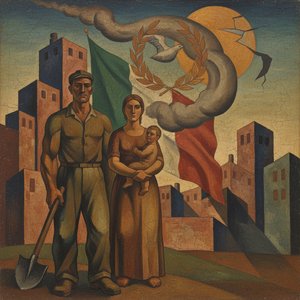
Mario Sironi: A Poetic of Modern Italian Identity Through Symbolism & Social Commentary
Explore the profound works of Mario Sironi, a key figure in Italian Modernism. Discover his evolution from Futurism to Metaphysical painting and his powerful social commentary. Learn about his legacy at OriginalUniqueArt.
Reflections of Reality: Exploring the Metaphysical Power of Mirror Images in Fine Art
Explore the profound symbolism of mirror images in fine art. From Surrealist distortions to classical self-portraits, discover how masters use reflections to explore reality, identity, and the infinite through a sophisticated art-historical lens.
Reflections of Reality: The Metaphysical Power of Mirrors in Fine Art History
Explore the profound symbolism of mirrors in fine art history. From Surrealist distortions to Vanitas themes, discover how masters use reflections to capture reality and the metaphysical soul.
The Mirror Stage of Art History: Exploring Reflection & Identity in Painting
Explore the captivating history of reflection in art! Discover symbolism, technique & psychological depth in masterpieces from Renaissance self-portraits to modern works. Expert insights for discerning collectors.

Mirroring the Soul: A Curated Exploration of Reflection and Self-Perception in Art History
Embark on a sophisticated journey through art history's most captivating masterpieces of reflection. Explore how legendary artists used mirrors to explore identity, surrealism, and the soul through expert art historical analysis.
