

 Отправить
 Поделиться
 Подробнее
 Руководство

 Скачать
 Похожие объекты
 Слайд-шоу
 Статистика
Paris Air


 Развернуть текст
Произведение искусства, представленное на этой странице, защищено законом об авторском праве, что исключает возможность законного создания или продажи его точной репродукции. Данная защита обеспечивается международными соглашениями, такими как Бернская конвенция и национальным законодательством, включая положения, изложенные в Закон США об авторском праве — Раздел 17.
В качестве достойной и законной альтернативы мы предлагаем авторские картины ручной работы, вдохновленные оригиналом. Наши опытные профессиональные художники тщательно изучают стиль, настроение и художественную суть оригинала, чтобы создать новое, уникальное произведение, которое вызывает те же чувства, оставаясь при этом самостоятельным оригинальным творением.
Этот метод полностью соответствует нормам авторского права, так как он не предполагает копирования или дублирования защищенного произведения. Напротив, это творческая реинтерпретация — создание новой картины, которая вдохновлена оригиналом, но не является его точной копией.
Масляная репродукция ручной работы
Картина маслом на холсте в выбранном вами размере и раме, написанная на заказ нашими художниками. ( Переключиться на печать Перейти к цифровым изображениям)




































Выберите один из наших стандартных размеров, соответствующих оригинальным пропорциям произведения искусства.

Введите необходимую ширину и высоту, чтобы репродукция подошла к вашей раме или стене. Поскольку работа выполняется вручную, при изменении пропорций художник может немного увеличить область вокруг картины или, наоборот, обрезать края — выбор за вами. Перед началом работы мы пришлем вам цифровой макет на утверждение. Изображение на этой странице не является точным результатом — увидеть реальный вид можно только на макете.
После оформления заказа команда OriginalUniqueArt.com свяжется с клиентом по электронной почте для уточнения деталей и предоставит предварительный макет
Доставка по всему миру () за 3–4 недели вместо стандартных 5 недель. (21 Октябрь). Без компромиссов в качестве.

Бесплатная экспресс-доставка по всему миру

Высококачественный льняной холст

Полное страхование при транспортировке

Гарантия возврата таможенных пошлин

Гарантия точного цветового соответствия

100-дневный период возврата (только при обнаружении дефектов)

Гарантия возврата 100% средств

Скидка при заказе нескольких работ
 Вариант со стеклом доступен только для размеров менее 110 см

Paris Air
Материал репродукции
Размер репродукции
-


Итоговая стоимость
$ 300
A Breath of Parisian Air: Duchamp’s Conceptual Sculpture
Marcel Duchamp's *Paris Air* (1919) isn’t merely a glass ampoule; it’s an audacious provocation, a distilled moment captured in fragile form. This readymade, born from a seemingly simple souvenir purchased by the artist during his time in Paris, embodies the core tenets of Dadaism and challenges our very understanding of art's definition. Duchamp, ever the iconoclast, took a commonplace object – an empty apothecary vial – and imbued it with profound philosophical weight. He emptied it of its original contents, a physiological serum, and then meticulously refilled it with air from Paris itself, sealing it within the glass as a tangible memory. The resulting sculpture isn’t about beauty or craftsmanship in the traditional sense; instead, it's an exploration of value, perception, and the ephemeral nature of experience. Duchamp deliberately stripped away any illusion of artistic skill, presenting us with an object that demands we question what constitutes “art” – is it the material itself, the process of creation, or the idea behind it? *Paris Air* forces a confrontation with these questions, inviting viewers to contemplate the inherent absurdity and intellectual rigor at the heart of Dada.The Readymade: A Revolutionary Act
Duchamp’s concept of the “readymade” – an object chosen from everyday life and elevated to the status of art simply by its selection and presentation – was revolutionary for its time. Prior to this, artistic value was inextricably linked to skill, labor, and the artist's hand. Duchamp deliberately circumvented these conventions, asserting that the artist’s role lay in the act of choosing and presenting, rather than in creating something entirely new. *Paris Air* exemplifies this perfectly; it requires no technical expertise to appreciate – its beauty lies not in its form but in its conceptual depth. The deliberate choice of an empty vial, a vessel devoid of inherent artistic merit, is precisely what makes the piece so compelling. It’s a statement about the arbitrary nature of value and a rejection of traditional notions of aesthetic judgment. Duchamp wasn't trying to create something visually stunning; he was creating a thought experiment, a challenge to our assumptions about art and its purpose.A Fragile Memory: Materiality and Symbolism
The physical qualities of *Paris Air* are crucial to understanding its impact. The delicate glass ampoule, now meticulously repaired after an accidental breakage in 1949, embodies the fragility of memory and experience. It’s a tangible reminder that even seemingly solid concepts – like the air itself – can be fleeting and easily disrupted. The inscription “Serum Physiologique” on the vial further complicates the work's meaning, blurring the line between reality and representation. Duchamp knowingly misrepresented the contents, creating an illusion of authenticity while simultaneously undermining it. This deliberate ambiguity is characteristic of Dadaism’s playful rejection of logic and reason. The act of sealing the air within a confined space also speaks to themes of containment, isolation, and the desire to preserve something ephemeral – perhaps even a moment in time or a feeling associated with Paris itself.A Legacy of Conceptual Art
*Paris Air* profoundly influenced the development of conceptual art, paving the way for artists who prioritized ideas over traditional artistic techniques. Its impact can be seen in the work of numerous subsequent generations of artists, including Yves Klein and Joseph Kosuth. Duchamp’s willingness to challenge established norms and embrace absurdity continues to resonate today, reminding us that art doesn't have to conform to conventional expectations. *Paris Air* remains a potent symbol of artistic innovation – a small, unassuming object that holds within it a vast and complex philosophical statement. It is a testament to the power of conceptual thinking and a reminder that sometimes, the most profound works of art are those that defy easy definition. Reproductions of this piece offer a unique opportunity to engage with Duchamp’s radical ideas and experience the intellectual thrill of his groundbreaking work.Вопросы и ответы
Насколько популярно произведение «Paris Air» в рамках Dadaism?
«Paris Air» имеет уровень популярности Iconic среди работ направления Dadaism в каталоге.
Доступна ли загрузка для "Paris Air"?
Цифровой файл «Paris Air», Марсель Дюшан можно скачать на странице произведения Скачать, выбрав вариант скачивание цифрового изображения в высоком разрешении.
Цвета в работе «Paris Air», Марсель Дюшан яркие или приглушенные?
В работе «Paris Air», Марсель Дюшан запечатлена Muted насыщенность и Monochromatic интенсивность цвета.
Биография художника
Marcel Duchamp: A Revolutionary Spirit
Marcel Duchamp, born Henri-Robert-Marcel Duchamp in 1887 in Blainville-Crevon, Normandy, was more than an artist; he was a philosophical provocateur who fundamentally altered the course of modern art. His early life, though seemingly conventional – nurtured within a family that appreciated artistic expression with both brothers pursuing successful careers as artists – hinted at the iconoclasm to come. Duchamp initially pursued formal training, mastering traditional techniques and experimenting with post-impressionist styles. However, this academic foundation served not as an end in itself, but as a springboard for questioning the very nature of art, its purpose, and its definition. He wasn’t content merely to depict the world; he sought to challenge how we perceive it, and what constitutes artistic value. This restless intellectual curiosity would become the defining characteristic of his prolific career.Early Artistic Explorations: Cubism and Impressionism
Duchamp's initial foray into art began with a fascination for Cubism, spearheaded by Pablo Picasso and Georges Braque. Influenced by Cézanne’s exploration of geometric forms and spatial relationships, Duchamp produced works like *Portrait of Chess Players* (1911), demonstrating an early grasp of fragmented perspectives and multiple viewpoints – a decisive departure from the single-point perspective dominant in traditional painting. Yet, he swiftly recognized that simply rearranging visual elements wasn't sufficient to address the deeper philosophical concerns animating him. He diligently honed his skills in watercolor and gouache, mastering techniques that allowed for nuanced tonal gradations and subtle textural variations. These formative experiences instilled a disciplined approach to artistic practice, informing his later conceptual explorations.The Dadaist Rebellion: Challenging Artistic Conventions
The horrors of World War I profoundly impacted Duchamp’s worldview, fueling a vehement rejection of the prevailing cultural values and intellectual complacency of the time. This disillusionment propelled him into the embrace of Dadaism – a movement born from nihilistic protest against rationality, logic, and bourgeois morality. Dada artists deliberately undermined established artistic conventions, embracing absurdity and chance as expressive tools. Duchamp’s Dadaist output included collages and assemblages that juxtaposed disparate materials in jarring combinations, disrupting conventional notions of visual harmony. He famously declared “Dada is not a painting,” encapsulating the movement's rejection of aesthetic judgment and its insistence on questioning artistic dogma. The Dadaists sought to dismantle the hierarchy between art and everyday life, arguing that true creativity resided in challenging accepted norms.The Birth of Conceptual Art: ‘Ready-Made’ Sculpture
Duchamp’s most enduring contribution to art history arrived with his groundbreaking concept of “ready-made” sculpture – a radical departure from traditional sculptural practice. Rejecting the notion that artistic skill was paramount, Duchamp questioned whether an object could be considered art simply by virtue of its selection and presentation as such. In 1917, he submitted *Fountain*, a porcelain urinal signed "R. Mutt," to Marcel Broodthaers’s exhibition in Cologne – a deliberate provocation designed to expose the arbitrariness of aesthetic judgment and dismantle the distinction between artist and craftsman. This audacious act ignited considerable controversy, sparking debates about authorship, originality, and the very definition of art itself. *Fountain* became emblematic of Conceptual Art, establishing Duchamp as its progenitor and cementing his legacy as one of the most influential figures in 20th-century art.Legacy and Enduring Influence
Marcel Duchamp’s impact on subsequent generations of artists is undeniable. He fundamentally reshaped our understanding of artistic expression, prioritizing conceptual ideas over visual aesthetics—a paradigm shift that continues to resonate within contemporary art practice. His unwavering commitment to questioning assumptions and challenging conventions serves as an inspiration for artists striving to push boundaries and redefine the role of art in society. Notable works include *L.H.O.O.Q.* (1919), a satirical reworking of Leonardo da Vinci’s Mona Lisa, and *The Large Glass* (1915–1923), an ambitious multi-faceted installation that explores themes of illusion, perception, and the subconscious—a testament to his intellectual rigor and enduring influence. Duchamp's legacy extends beyond specific artworks; it resides in his unwavering belief that art should provoke thought and inspire dialogue—a conviction that continues to shape artistic discourse today.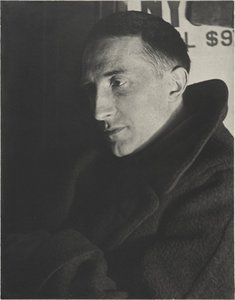
Марсель Дюшан
1887 - 1968 , Франция
Краткая справка
- Artistic Movement Or Style:
- Кубизм
- Дадаизм
- Концептуальное искусство
- Artists Or Movements Influenced By This Artist: ['Минимализм']
- Date Of Birth: 28 июля 1887 г.
- Date Of Death: 2 октября 1968 г.
- Full Name: Marcel Duchamp
- Nationality: Французский
- Notable Artworks:
- Фонтан
- Л.Х.О.О.К.
- Большое стекло
- Place Of Birth: Блейнвиль-сур-Мер, Франция
Похожие статьи
Luminous Masterpieces: The Captivating Beauty and Timeless Elegance of Stained Glass Artworks
Embark on a visual journey through the luminous world of stained glass art. Discover the exquisite craftsmanship, historical significance, and captivating beauty of masterworks from Art Nouveau to the Gothic era, curated for the discerning fine art enthusiast.

10 легендарных бронзовых шедевров, изменивших искусство | OriginalUniqueArt
Погрузитесь в мир великих бронзовых шедевров! От Давида Донателло до Мыслителя Родена – узнайте историю создания, технику и значение легендарных скульптур. Вдохновение для интерьера и музейное качество репродукций на OriginalUniqueArt.com.

The Enduring Form: Exploring Themes & Techniques in Sculpture Across Historical Periods
Explore the rich history of sculpture from ancient masterpieces to contemporary innovations. Discover key techniques, influential artists & investment potential for discerning art collectors.

The Enduring Form: Sculpture Across History, Technique & Emotional Resonance
Explore the rich history of sculpture with OriginalUniqueArt. Discover key techniques, influential artists & investment potential for discerning collectors. Expert insights into valuing and collecting timeless masterpieces.

10 легендарных бронзовых скульптур, изменивших искусство навсегда | OriginalUniqueArt
Погрузитесь в мир великих бронзовых скульптур! От Давида Микеланджело до работ Родена – история искусства, техники и вдохновения. Купите репродукции шедевров для вашего интерьера на OriginalUniqueArt.com


