

 Примерить в интерьере
 Отправить
 Поделиться
 Подробнее
 Руководство

 Скачать
 Похожие объекты
 Рентгенография
 Слайд-шоу
 Статистика
Con mi lengua en mi mejilla

 Развернуть текст
Приобретите цифровое изображение высокого разрешения в улучшенном качестве, которое значительно превосходит онлайн-превью.
Каждый файл проходит тщательную подготовку нашими специалистами с использованием передовых инструментов и экспертной ручной ретуши. Мы гарантируем исключительную четкость, безупречную точность цветопередачи и детальную проработку каждого изображения.
Финальный файл доставляется по электронной почте в течение 72 часов и оптимизирован для немедленного использования в профессиональной среде, при верстке и печати. Это тот же уровень качества, которому доверяют ведущие дизайнерские студии, издательства и галереи.
Цифровое изображение
Скачайте файл высокого разрешения для личного использования, печати и творческих проектов. ( Переключиться на печать Заказать репродукцию ручной работы)
Включено в каждый заказ цифровых изображений
Гарантия профессиональной цифровой доставки
Выбирая OriginalUniqueArt.com, вы получаете не просто изображение — вы приобретаете профессионально обработанное цифровое произведение искусства, созданное с безупречной точностью и под защитой гарантии качества. Вот всё, что автоматически входит в ваш заказ:

Быстрая доставка по e-mail
Ваш цифровой файл в высоком разрешении будет отправлен по электронной почте в течение 72 часов после оформления заказа и сразу станет доступен для использования.

Цифровой файл с ИИ-обработкой
Ваше произведение искусства проходит профессиональную оптимизацию с использованием передовых инструментов ИИ и ручной обработки, что гарантирует максимальную детализацию, четкость и точность цветопередачи.

Бессрочная бесплатная повторная отправка
Случайно удалили или потеряли файл? Не беспокойтесь — мы отправим его вам повторно в любое время и совершенно бесплатно.

Без импортных пошлин — навсегда
Наслаждайтесь вашим произведением искусства мгновенно без таможенных пошлин, сборов или затрат на доставку — цифровые загрузки всегда не облагаются налогом.

Гарантия точности цветопередачи
Мы гарантируем максимально точное соответствие цифрового изображения оригиналу благодаря использованию профессиональных инструментов и систем управления цветом.

Гарантия удовлетворенности 100 дней
Если вы не будете удовлетворены своим цифровым изображением, мы внесем правки или вернем 100% стоимости в течение 100 дней — без лишних вопросов.

100% Гарантия возврата средств
Не удовлетворены покупкой? Мы вернем вам полную стоимость в течение 100 дней после получения цифрового файла — без лишних вопросов.

Скидки на оптовые заказы
Купите 3 изображения — скидка 10%; купите 5 — скидка 15%; от 10 изображений — скидка 20%. Отличное решение для творческих проектов, галерей и агентств.
Con mi lengua en mi mejilla: A Surrealist Exploration of Identity
Marcel Duchamp’s “With My Tongue in My Cheek,” created in 1959, stands as a deceptively simple yet profoundly unsettling testament to the artist's revolutionary spirit and his unwavering interrogation of artistic conventions. This unassuming pencil sketch on paper—measuring just 24.8 x 15 cm—holds within it layers of conceptual complexity that continue to fascinate art historians and collectors alike.
- Subject Matter & Context: The artwork is fundamentally a self-portrait, reflecting Duchamp’s preoccupation with exploring the boundaries between representation and subjectivity. Produced during his Surrealist period, “With My Tongue in My Cheek” aligns perfectly with Dada’s rejection of traditional artistic values and its embrace of chance and absurdity—a deliberate provocation against established aesthetic norms.
- Style & Technique: Duchamp's approach defies categorization; it blends sketching precision with a deliberately casual execution. The drawing utilizes meticulous shading to convey volume and depth, particularly evident in the bulbous form of the nose, which dominates the composition. Scattered dots and stippling—a technique characteristic of Surrealism—add textural richness and contribute to an overall impression of spontaneity.
- Composition & Perspective: The cropped perspective isolates a segment of the face, creating an intimate visual experience that simultaneously draws attention to detail and disrupts conventional portraiture. The asymmetrical arrangement emphasizes the nose’s prominence, furthering the artwork's unsettling effect. A subtle profile line extending from the nose upwards towards the eye introduces a linear element that contrasts with the textured surface of the paper.
- Symbolism & Emotional Impact: Beyond its formal qualities, “With My Tongue in My Cheek” invites contemplation on themes of identity and self-awareness. The deliberate inclusion of perforations—a visual gesture mirroring Duchamp’s conceptual concerns—suggests a rejection of polished perfection and an embrace of imperfection as forms of artistic expression. The title itself – “With My Tongue in My Cheek”—hints at irony and playful defiance, challenging viewers to reconsider their assumptions about art and its role in conveying emotion.
- Historical Significance: Duchamp’s work represents a pivotal moment in the history of modern art, marking a decisive break from representational painting and ushering in an era of conceptual art. “With My Tongue in My Cheek” exemplifies this paradigm shift by prioritizing intellectual engagement over visual beauty—a legacy that continues to inspire artists and thinkers today.
This reproduction captures the essence of Duchamp’s artistic vision, offering a glimpse into his groundbreaking exploration of form and concept. Its understated elegance belies its profound philosophical implications, making it an ideal addition to any discerning collection or interior space.
Биография художника
Marcel Duchamp: A Revolutionary Spirit
Marcel Duchamp, born Henri-Robert-Marcel Duchamp in 1887 in Blainville-Crevon, Normandy, was more than an artist; he was a philosophical provocateur who fundamentally altered the course of modern art. His early life, though seemingly conventional – nurtured within a family that appreciated artistic expression with both brothers pursuing successful careers as artists – hinted at the iconoclasm to come. Duchamp initially pursued formal training, mastering traditional techniques and experimenting with post-impressionist styles. However, this academic foundation served not as an end in itself, but as a springboard for questioning the very nature of art, its purpose, and its definition. He wasn’t content merely to depict the world; he sought to challenge how we perceive it, and what constitutes artistic value. This restless intellectual curiosity would become the defining characteristic of his prolific career.Early Artistic Explorations: Cubism and Impressionism
Duchamp's initial foray into art began with a fascination for Cubism, spearheaded by Pablo Picasso and Georges Braque. Influenced by Cézanne’s exploration of geometric forms and spatial relationships, Duchamp produced works like *Portrait of Chess Players* (1911), demonstrating an early grasp of fragmented perspectives and multiple viewpoints – a decisive departure from the single-point perspective dominant in traditional painting. Yet, he swiftly recognized that simply rearranging visual elements wasn't sufficient to address the deeper philosophical concerns animating him. He diligently honed his skills in watercolor and gouache, mastering techniques that allowed for nuanced tonal gradations and subtle textural variations. These formative experiences instilled a disciplined approach to artistic practice, informing his later conceptual explorations.The Dadaist Rebellion: Challenging Artistic Conventions
The horrors of World War I profoundly impacted Duchamp’s worldview, fueling a vehement rejection of the prevailing cultural values and intellectual complacency of the time. This disillusionment propelled him into the embrace of Dadaism – a movement born from nihilistic protest against rationality, logic, and bourgeois morality. Dada artists deliberately undermined established artistic conventions, embracing absurdity and chance as expressive tools. Duchamp’s Dadaist output included collages and assemblages that juxtaposed disparate materials in jarring combinations, disrupting conventional notions of visual harmony. He famously declared “Dada is not a painting,” encapsulating the movement's rejection of aesthetic judgment and its insistence on questioning artistic dogma. The Dadaists sought to dismantle the hierarchy between art and everyday life, arguing that true creativity resided in challenging accepted norms.The Birth of Conceptual Art: ‘Ready-Made’ Sculpture
Duchamp’s most enduring contribution to art history arrived with his groundbreaking concept of “ready-made” sculpture – a radical departure from traditional sculptural practice. Rejecting the notion that artistic skill was paramount, Duchamp questioned whether an object could be considered art simply by virtue of its selection and presentation as such. In 1917, he submitted *Fountain*, a porcelain urinal signed "R. Mutt," to Marcel Broodthaers’s exhibition in Cologne – a deliberate provocation designed to expose the arbitrariness of aesthetic judgment and dismantle the distinction between artist and craftsman. This audacious act ignited considerable controversy, sparking debates about authorship, originality, and the very definition of art itself. *Fountain* became emblematic of Conceptual Art, establishing Duchamp as its progenitor and cementing his legacy as one of the most influential figures in 20th-century art.Legacy and Enduring Influence
Marcel Duchamp’s impact on subsequent generations of artists is undeniable. He fundamentally reshaped our understanding of artistic expression, prioritizing conceptual ideas over visual aesthetics—a paradigm shift that continues to resonate within contemporary art practice. His unwavering commitment to questioning assumptions and challenging conventions serves as an inspiration for artists striving to push boundaries and redefine the role of art in society. Notable works include *L.H.O.O.Q.* (1919), a satirical reworking of Leonardo da Vinci’s Mona Lisa, and *The Large Glass* (1915–1923), an ambitious multi-faceted installation that explores themes of illusion, perception, and the subconscious—a testament to his intellectual rigor and enduring influence. Duchamp's legacy extends beyond specific artworks; it resides in his unwavering belief that art should provoke thought and inspire dialogue—a conviction that continues to shape artistic discourse today.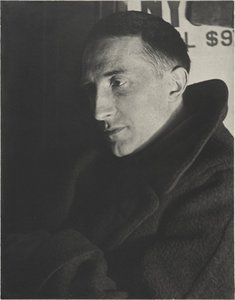
Марсель Дюшан
1887 - 1968 , Франция
Краткая справка
- Artistic Movement Or Style:
- Кубизм
- Дадаизм
- Концептуальное искусство
- Artists Or Movements Influenced By This Artist: ['Минимализм']
- Date Of Birth: 28 июля 1887 г.
- Date Of Death: 2 октября 1968 г.
- Full Name: Marcel Duchamp
- Nationality: Французский
- Notable Artworks:
- Фонтан
- Л.Х.О.О.К.
- Большое стекло
- Place Of Birth: Блейнвиль-сур-Мер, Франция