() ·

A painting made for you, by hand

Chess Game

Масляная репродукция ручной работы

Картина маслом на холсте в выбранном вами размере и раме, написанная на заказ нашими художниками. ( Переключиться на печать Перейти к цифровым изображениям)

Описание предмета

Experience Marcel Duchamp's 'The Chess Game,' a captivating post-impressionist oil painting from 1910. Explore themes of boredom, social constraints & Cubism at OriginalUniqueArt.com.

Биография художника

Шоколадный помольник №2 Дюшанпа — новаторское произведение искусства Дада и Концептуализма, демонстрирующее использование повседневных предметов для создания провокационных работ и переосмысления роли художника.

from ·

Chapter 1

How large should it be?

Slide to change the size; the picture on the left shows the frame at its real width. The proportions of the original are kept.

Стандартный размер
индивидуальный заказ
CM
INCH

Выберите один из наших стандартных размеров, соответствующих оригинальным пропорциям произведения искусства.

ширина
высота

Введите необходимую ширину и высоту, чтобы репродукция подошла к вашей раме или стене. Поскольку работа выполняется вручную, при изменении пропорций художник может немного увеличить область вокруг картины или, наоборот, обрезать края — выбор за вами. Перед началом работы мы пришлем вам цифровой макет на утверждение. Изображение на этой странице не является точным результатом — увидеть реальный вид можно только на макете.

Chapter 2

How should it arrive?

Choose the edges of the stretched canvas

Choose your frame

Corner sample of the WhiteWrap canvas edge finish, stretched on массив дерева bars
White $1
Corner sample of the BlurSideWrap canvas edge finish, stretched on массив дерева bars
Blurside $1
Corner sample of the ExtendedWrap canvas edge finish, stretched on массив дерева bars
Extended $1
Corner sample of the P118B picture frame: формованный полистирол, 5 cm wide and 3 cm thick
P118B $10
Corner sample of the P118H picture frame: формованный полистирол, 5 cm wide and 3 cm thick
P118H $10
Corner sample of the P118W picture frame: формованный полистирол, 5 cm wide and 3 cm thick
P118W $10
Corner sample of the P438Z picture frame: формованный полистирол, 5.5 cm wide and 3.5 cm thick
P438Z $10
Corner sample of the P508JH picture frame: формованный полистирол, 7 cm wide and 3.5 cm thick
P508JH $12
Corner sample of the P508YH picture frame: формованный полистирол, 7 cm wide and 3.5 cm thick
P508YH $12
Corner sample of the P805H picture frame: формованный полистирол, 5 cm wide and 3.5 cm thick
P805H $10
Corner sample of the P805Z picture frame: формованный полистирол, 5 cm wide and 3.5 cm thick
P805Z $10
Corner sample of the P919BZ picture frame: формованный полистирол, 7 cm wide and 3.5 cm thick
P919BZ $10
Corner sample of the P919G picture frame: формованный полистирол, 7 cm wide and 3.5 cm thick
P919G $10
Corner sample of the P919XJ picture frame: формованный полистирол, 7 cm wide and 3.5 cm thick
P919XJ $10
Corner sample of the P959ZH picture frame: формованный полистирол, 5 cm wide and 3 cm thick
P959ZH $10
Corner sample of the P968JZ picture frame: формованный полистирол, 6 cm wide and 4 cm thick
P968JZ $12
Corner sample of the W106C picture frame: массив дерева, 5 cm wide and 3 cm thick
W106C $8
Corner sample of the W218G picture frame: массив дерева, 5 cm wide and 3 cm thick
W218G $10
Corner sample of the W218JH picture frame: массив дерева, 5 cm wide and 3 cm thick
W218JH $8
Corner sample of the W218Y picture frame: массив дерева, 5 cm wide and 3 cm thick
W218Y $10
Corner sample of the W307PJ picture frame: массив дерева, 6 cm wide and 3 cm thick
W307PJ $10
Corner sample of the W316G picture frame: массив дерева, 6 cm wide and 3 cm thick
W316G $10
Corner sample of the W316PJ picture frame: массив дерева, 6 cm wide and 3 cm thick
W316PJ $8
Corner sample of the W316Y picture frame: массив дерева, 6 cm wide and 3 cm thick
W316Y $10
Corner sample of the W398PJ picture frame: массив дерева, 5 cm wide and 3 cm thick
W398PJ $8
Corner sample of the W4111J picture frame: массив дерева, 6.5 cm wide and 3.5 cm thick
W4111J $10
Corner sample of the W500HY picture frame: массив дерева, 7 cm wide and 5 cm thick
W500HY $15
Corner sample of the W500JH picture frame: массив дерева, 7 cm wide and 5 cm thick
W500JH $15
Corner sample of the W692G picture frame: массив дерева, 8 cm wide and 4 cm thick
W692G $12
Corner sample of the W849H picture frame: массив дерева, 5 cm wide and 3 cm thick
W849H $8
Corner sample of the W940BG picture frame: массив дерева, 7.5 cm wide and 4.5 cm thick
W940BG $15
Corner sample of the W953PJ picture frame: массив дерева, 6 cm wide and 3.5 cm thick
W953PJ $8
Corner sample of the H24-GOLD picture frame: резное дерево с левкасом, 10 cm wide and 6 cm thick
H24-GOLD $30
Corner sample of the H24-SILVER picture frame: резное дерево с левкасом, 10 cm wide and 6 cm thick
H24-SILVER $30
Corner sample of the H36-GOLD picture frame: резное дерево с левкасом, 15 cm wide and 6.5 cm thick
H36-GOLD $45
Corner sample of the H36-SILVER picture frame: резное дерево с левкасом, 15 cm wide and 6.5 cm thick
H36-SILVER $45
Предпросмотр в раме
В раме

Moulding: . Overall size with the frame: .

Chapter 3

Who paints it, and should anything change?

Examples of what can be changed: Replace face with customer photo; Add pet (e.g., replace cat with dog); Include hidden message in background; Change background landscape or elements.
After order, OriginalUniqueArt.com team will email client for instructions and provide a mockup preview

Доставка по всему миру () за 3–4 недели вместо стандартных 5 недель. (1 Ноябрь). Без компромиссов в качестве.

Chapter 4

The finishing touches

A nameplate, as in a museum?

Детали гравировки на бронзовой плакетке

This elegant plaque features the artist's name and the title of the artwork, finely engraved for a timeless presentation.

It is made from bronze with a refined, elegant finish. The text is precisely laser-engraved for a sharp and permanent result. Measuring 9x2 cm, the plaque is compact yet easy to read. It's built to be durable and scratch-resistant, offering a professional, museum-quality look. Mounting is simple thanks to the included adhesive backing.

Информация об акриловой табличке

The plaque includes essential engraved details such as the artist's name, the title of the artwork, the date it was created, the type of media used-like oil on canvas or watercolor-a brief description of the piece, and a QR code that links to the complete artwork information.

It is crafted from clear acrylic, offering a sleek, modern appearance. The text is UV-engraved in black to ensure strong visual contrast. With a size of 10x15 cm, it ensures optimal readability. It comes equipped with two metal hooks for secure wall mounting. The plaque is designed to be weather-resistant, making it suitable for various environments, and it includes interactive features that work seamlessly with smartphone scanning.

Информация о чёрной акриловой табличке

This elegant plaque includes engraved information such as the artist's name, the title of the artwork, the date it was created, the type of media used (like oil on canvas or watercolor), a short description of the artwork, and a QR code for quick access to more information.

The plaque itself is made from refined black acrylic with a premium finish. The text is laser-engraved in white for high contrast and readability. Its size is 10x15 cm, designed to be easy to read. It comes with two metal hooks for professional mounting. The design is sleek and fits any interior style. It is also weather-resistant and durable, with built-in digital integration for mobile compatibility.

A protective varnish?

When do you need it?

Chapter 5

Your painting, as you ordered it

Chess Game

Материал репродукции

Размер репродукции

-

Ведущий мастер элитного уровня

Более высокая детализация, изысканность и дополнительное время на создание работы

-

Рама для репродукции

-

-

Для произведений искусства или репродукций, размер которых превышает 105 см (приблизительно 41 дюйм) по любой из сторон, рама будет доставлена в разобранном виде (в виде комплекта). Этот метод обеспечивает безопасную доставку и предотвращает повреждения при транспортировке.

Требуется профессиональная сборка — это не продукт для самостоятельной сборки (DIY).
Комплект должен быть собран, а холст натянут опытным мастером по багетным рамам с использованием клеевого ПВА (не входит в комплект), струбцин для натяжки холста и зажимов, чтобы удерживать подрамник ровным до полного высыхания клея. Неправильная сборка или неравномерное натяжение холста могут привести к необратимому повреждению произведения искусства и не являются гарантийным случаем.

  • В комплект входят все бруски из массива дерева, точно вырезанные по размеру.

  • Собирается с помощью предоставляемых винтов, а также столярного клея для угловых соединений, который не входит в комплект и должен быть приобретен вашим мастером.

  • Требуются профессиональные инструменты, не входящие в комплект: щипцы для натяжки холста (натяжитель) и зажимы, чтобы удерживать рейки ровно во время высыхания клея.

Важно:
Для соединения углов требуется клей для дерева, перекладины необходимо зафиксировать струбцинами до полного высыхания клея, а для натяжки холста на собранную раму требуются щипцы для натяжки холста. Ни один из этих инструментов не входит в комплект. Пожалуйста, убедитесь в наличии опытного мастера по багетным работам перед заказом рамы такого размера.

Экспликация

-

-

Защитный лак

Глянцевый лак (насыщает цвета, защищает от воздействия света и влаги)

-

Настроить мою картину

Примеры возможных изменений: замена лица на фото клиента; добавление домашнего питомца (например, замена кошки на собаку); добавление скрытого сообщения на фоне; изменение пейзажа или элементов фона.

-

Срочно

Доставка по всему миру () за 3–4 недели вместо стандартных 5 недель. (1 Ноябрь). Без компромиссов в качестве.

-

Экспресс-доставка

Доставка по всему миру () в течение 5 недель. (8 Ноябрь).

Включено

Итоговая стоимость

$ 300

Итоговая стоимость $ 300

Вариант со стеклом доступен только для размеров менее 110 см

Included with every order

  • Бесплатная экспресс-доставка по всему миру
  • Высококачественный льняной холст
  • Полное страхование при транспортировке
  • Гарантия возврата таможенных пошлин
  • Гарантия точного цветового соответствия
  • 100-дневный период возврата (только при обнаружении дефектов)
  • Гарантия возврата 100% средств
  • Скидка при заказе нескольких работ

A Game of Shadows: Marcel Duchamp’s “The Chess Game”

Marcel Duchamp's "The Chess Game," painted in 1910, isn’t merely a depiction of a game; it’s a meticulously crafted tableau of ennui, social constraint, and the burgeoning anxieties of modern life. Housed within the walls of the Philadelphia Museum of Art, this oil on canvas invites viewers into a world where strategic decisions collide with unspoken tensions, all rendered in Duchamp's signature post-impressionist style – a deliberate departure from the naturalistic focus of his predecessors. The painting’s power lies not just in its visual elements but in the complex web of symbolism it weaves, reflecting the intellectual currents of early 20th-century Europe and hinting at Duchamp’s revolutionary approach to art itself.

Duchamp's artistic journey leading up to "The Chess Game" was marked by a restless experimentation. Initially drawn to Cubism – evident in his earlier work, *Portrait of Chess Players* – he soon found himself increasingly dissatisfied with the purely formal concerns of the movement. He sought to capture not just the appearance of objects but their underlying essence, their emotional weight. This pursuit led him toward Dadaism and ultimately, Conceptual Art, where the idea behind a work often superseded its physical form. “The Chess Game” embodies this shift, prioritizing atmosphere and psychological suggestion over straightforward representation.

  • Post-Impressionist Influence: Duchamp’s use of bold colors – particularly the muted greens and browns that dominate the scene – is characteristic of post-impressionism. However, he employs these colors not to faithfully reproduce reality but to evoke a specific mood: one of quiet desperation and stifled energy.
  • Gustave Flaubert's Echoes: The painting’s pervasive sense of boredom and restlessness directly reflects the themes explored by Gustave Flaubert in *Madame Bovary*. Duchamp, deeply influenced by Flaubert’s exploration of female dissatisfaction and the limitations imposed upon women in 19th-century society, uses the chess game as a metaphor for life itself – a strategic battle fought within restrictive social boundaries.
  • Brotherly Portraiture: The inclusion of Duchamp's brothers, Raymond and Jacques Villon, alongside their wives, Yvonne and Gaby, is particularly significant. Their postures—hunched over the chessboard, Yvonne reclining languidly on the grass, Gaby nervously fiddling with a tea set—suggest a subtle power dynamic. The exclusion of the women from the game underscores the societal constraints placed upon them at the time, highlighting their limited roles and unspoken frustrations.

The Scene Unfolds: A Garden of Contemplation

The setting itself is crucial to understanding the painting’s emotional impact. It's a meticulously rendered garden scene, yet one devoid of warmth or vitality. The furniture—a table laden with cups, bowls, and spoons—suggests a comfortable domesticity, but it’s juxtaposed against the palpable sense of unease. The chessboard, positioned at the center of the composition, becomes a potent symbol: a battlefield where men engage in intellectual warfare while women are relegated to the periphery. The careful arrangement of objects – the strategically placed cups and bowls, the precise positioning of the chairs – creates a visual rhythm that mirrors the strategic thinking required for success in chess, yet simultaneously underscores the artificiality of the situation.

Symbolism and the Chessboard as Metaphor

Beyond its immediate depiction, “The Chess Game” is rich with symbolic meaning. The chessboard itself represents life’s complexities – a series of choices, strategies, and potential outcomes. The players, engrossed in their game, are trapped within this metaphorical landscape, navigating challenges and making decisions that shape their destinies. Duchamp's brothers, as the dominant figures at the table, embody the masculine ideals of the era—intellectual prowess, strategic thinking, and a perceived control over their own lives. The exclusion of the women suggests a critique of patriarchal structures and the limited opportunities available to women in that society. Yvonne’s semi-recumbent position speaks to a sense of passive acceptance, while Gaby's nervous fidgeting hints at suppressed anxieties.

Artistic Significance and Reproduction

“The Chess Game” stands as a pivotal work in Duchamp’s artistic development, demonstrating his early experimentation with post-impressionism and foreshadowing his later embrace of Cubism and Conceptual Art. It's a remarkably prescient painting, capturing the anxieties and social tensions of its time while simultaneously anticipating the radical shifts that would transform the art world in the 20th century. OriginalUniqueArt.com offers meticulously crafted oil painting reproductions of this captivating masterpiece, ensuring that every detail—from the subtle nuances of color to the intricate textures of the furniture—is faithfully recreated. These handmade reproductions provide a tangible connection to Duchamp’s revolutionary vision, allowing art enthusiasts and collectors alike to experience the power and beauty of “The Chess Game” in their own homes.
  • High-Quality Reproduction: Our skilled artists use traditional oil painting techniques to meticulously recreate Duchamp's original work, capturing its unique atmosphere and emotional depth.
  • Authentic Materials: We employ only the finest pigments and canvases to ensure that our reproductions are durable and visually stunning.
  • A Window into Modernity: Own a piece of art history and gain a deeper understanding of Duchamp’s artistic vision.

Explore more post-impressionist masterpieces and discover the beauty of handmade art at Marcel Duchamp: Chess Game and The Chess Game on OriginalUniqueArt.com.

Вопросы и ответы

Какое место занимает «Chess Game» среди привычных тем Марсель Дюшан?

Среди зафиксированных тем Марсель Дюшан — post-impressionism, flaubert’s ennui, cubist elements, distorted forms, early experimentation, chess game series, dada precursors, exploring modern life — в работе "Chess Game" особый акцент сделан на chess, game, boredom, women, exclusion, flaubert, garden, strategy.

Какой размер репродукции рекомендуется для «Chess Game», Марсель Дюшан?

Рекомендуемый размер печати для «Chess Game», Марсель Дюшан — Medium.

Какой формат у произведения «Chess Game»?

«Chess Game», Марсель Дюшан — это композиция в формате Landscape. Перед выбором размера печати стоит проверить пропорции.

More about this painting

Примерить в интерьере Примерить в AR Переключиться на печать Перейти к цифровым изображениям Отправить
Подробнее Руководство Добавить в избранное Скачать Похожие объекты Рентгенография Слайд-шоу Q&A Статистика

In numbers

  • 1910the year it was painted
  • 29frames to choose from
  • standard sizes, in its own proportions
  • 5weeks to paint and deliver it

About the original

Размеры
114.0 x 146.0 cm
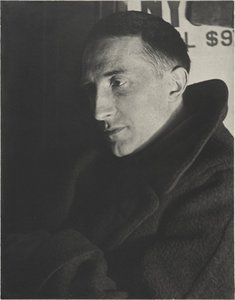
Марсель Дюшан

Марсель Дюшан

1887 - 1968, Франция

Quick facts about Марсель Дюшан

  • Artistic Movement Or Style:
    • Кубизм
    • Дадаизм
    • Концептуальное искусство
  • Artists Or Movements Influenced By This Artist: ['Минимализм']
  • Date Of Birth: 28 июля 1887 г.
  • Date Of Death: 2 октября 1968 г.
  • Full Name: Marcel Duchamp
  • Nationality: Французский
  • Notable Artworks:
    • Фонтан
    • Л.Х.О.О.К.
    • Большое стекло
  • Place Of Birth: Блейнвиль-сур-Мер, Франция

Биография художника

Marcel Duchamp: A Revolutionary Spirit

Marcel Duchamp, born Henri-Robert-Marcel Duchamp in 1887 in Blainville-Crevon, Normandy, was more than an artist; he was a philosophical provocateur who fundamentally altered the course of modern art. His early life, though seemingly conventional – nurtured within a family that appreciated artistic expression with both brothers pursuing successful careers as artists – hinted at the iconoclasm to come. Duchamp initially pursued formal training, mastering traditional techniques and experimenting with post-impressionist styles. However, this academic foundation served not as an end in itself, but as a springboard for questioning the very nature of art, its purpose, and its definition. He wasn’t content merely to depict the world; he sought to challenge how we perceive it, and what constitutes artistic value. This restless intellectual curiosity would become the defining characteristic of his prolific career.

Early Artistic Explorations: Cubism and Impressionism

Duchamp's initial foray into art began with a fascination for Cubism, spearheaded by Pablo Picasso and Georges Braque. Influenced by Cézanne’s exploration of geometric forms and spatial relationships, Duchamp produced works like *Portrait of Chess Players* (1911), demonstrating an early grasp of fragmented perspectives and multiple viewpoints – a decisive departure from the single-point perspective dominant in traditional painting. Yet, he swiftly recognized that simply rearranging visual elements wasn't sufficient to address the deeper philosophical concerns animating him. He diligently honed his skills in watercolor and gouache, mastering techniques that allowed for nuanced tonal gradations and subtle textural variations. These formative experiences instilled a disciplined approach to artistic practice, informing his later conceptual explorations.

The Dadaist Rebellion: Challenging Artistic Conventions

The horrors of World War I profoundly impacted Duchamp’s worldview, fueling a vehement rejection of the prevailing cultural values and intellectual complacency of the time. This disillusionment propelled him into the embrace of Dadaism – a movement born from nihilistic protest against rationality, logic, and bourgeois morality. Dada artists deliberately undermined established artistic conventions, embracing absurdity and chance as expressive tools. Duchamp’s Dadaist output included collages and assemblages that juxtaposed disparate materials in jarring combinations, disrupting conventional notions of visual harmony. He famously declared “Dada is not a painting,” encapsulating the movement's rejection of aesthetic judgment and its insistence on questioning artistic dogma. The Dadaists sought to dismantle the hierarchy between art and everyday life, arguing that true creativity resided in challenging accepted norms.

The Birth of Conceptual Art: ‘Ready-Made’ Sculpture

Duchamp’s most enduring contribution to art history arrived with his groundbreaking concept of “ready-made” sculpture – a radical departure from traditional sculptural practice. Rejecting the notion that artistic skill was paramount, Duchamp questioned whether an object could be considered art simply by virtue of its selection and presentation as such. In 1917, he submitted *Fountain*, a porcelain urinal signed "R. Mutt," to Marcel Broodthaers’s exhibition in Cologne – a deliberate provocation designed to expose the arbitrariness of aesthetic judgment and dismantle the distinction between artist and craftsman. This audacious act ignited considerable controversy, sparking debates about authorship, originality, and the very definition of art itself. *Fountain* became emblematic of Conceptual Art, establishing Duchamp as its progenitor and cementing his legacy as one of the most influential figures in 20th-century art.

Legacy and Enduring Influence

Marcel Duchamp’s impact on subsequent generations of artists is undeniable. He fundamentally reshaped our understanding of artistic expression, prioritizing conceptual ideas over visual aesthetics—a paradigm shift that continues to resonate within contemporary art practice. His unwavering commitment to questioning assumptions and challenging conventions serves as an inspiration for artists striving to push boundaries and redefine the role of art in society. Notable works include *L.H.O.O.Q.* (1919), a satirical reworking of Leonardo da Vinci’s Mona Lisa, and *The Large Glass* (1915–1923), an ambitious multi-faceted installation that explores themes of illusion, perception, and the subconscious—a testament to his intellectual rigor and enduring influence. Duchamp's legacy extends beyond specific artworks; it resides in his unwavering belief that art should provoke thought and inspire dialogue—a conviction that continues to shape artistic discourse today.

Краткая справка

  • Dimensions: 114 x 146 cm
  • Artistic style: Cubist influence
  • Year: 1910
  • Influences: Flaubert
  • Location: Philadelphia Museum
  • Movement: Post-Impressionism

Викторина по искусству

В каждом вопросе только один правильный ответ.

Вопрос 1:
What artistic movement is Marcel Duchamp primarily associated with in this painting?
Вопрос 2:
The scene depicted in 'The Chess Game' primarily reflects which theme?
Вопрос 3:
Which literary work heavily influenced Duchamp's interpretation of the scene in 'The Chess Game'?
Вопрос 4:
What is the significance of the exclusion of Yvonne and Gaby from the chess game in the painting?
Вопрос 5:
The chessboard itself serves as a metaphor for what concept within the painting?