Cubist Sculpture · 1914
Bottlerack (Марсель Дюшан, 1914)
Марсель Дюшан (1887–1968) создал(а) Bottlerack. Создано в 1914. Относится к направлению Cubist Sculpture. Выполнено в технике Found Object Art. Размер: 59 × 37 cm
- 1914
- Found Object Art
- 59 × 37 cm

 Картина маслом ручной работы
 Поделиться
 Поделиться
 Информационный лист


 Скачать
 Похожие предметы
 Слайд-шоу
 Вопросы и ответы

 Статистика просмотров
Bottlerack вкратце
- Название
- Bottlerack
- Автор
- Марсель Дюшан (1887–1968)
- Дата рождения художника
- Бленвиль-Кревон, Франция
- Дата
- 1914
- Техника
- Found Object Art
- Размеры
- 59 × 37 cm
- Движение
- Cubist Sculpture
- Период
- Modern
- Сюжет
- metal sculpture, industrial art, geometric form, conceptual art, shelf structure, hook arrangement
Что изображено на Bottlerack?
The Radical Simplicity of the Everyday
In the early twentieth century, a profound shift occurred in the landscape of modern art, one that moved away from the pursuit of traditional beauty toward a deeper, more intellectual engagement with reality. At the heart of this revolution stands Marcel Duchamp’s Bottlerack, a work created in 1914 that continues to challenge our very definition of what an artwork can be. On its surface, the piece presents a deceptively simple subject: a stack of metal shelves or racks, reminiscent of industrial utility rather than high art. Yet, within this mundane structure lies the seed of a conceptual explosion. By selecting a mass-produced object and elevating it to the status of sculpture, Duchamp bypassed the need for traditional virtuosity, instead inviting us to find profound meaning in the most commonplace of items.
The sculpture embodies the rebellious spirit of Dadaism, an avant-garde movement that emerged as a visceral reaction against the chaos and perceived irrationality of the era. Through the lens of this piece, we see the rejection of established aesthetic conventions in favor of a new, provocative logic. The technique employed—primarily the use of steel tubing and hooks—emphasizes a stark, industrial materiality. There is no attempt to hide the object's utilitarian origins; rather, Duchamp celebrates its geometric precision and structural honesty. This deliberate choice underscores his rejection of "retinal art"—art intended only to please the eye—and instead directs our attention toward the intellectual act of selection and the transformative power of the artist's gaze.
Symbolism and the Birth of the Readymade
Beyond its physical presence, Bottlerack carries a heavy symbolic weight that resonates through the decades. It serves as a primary example of the "readymade," a term Duchamp used to describe ordinary manufactured goods that become art through the mere act of choice and repositioning. The stack of hooks acts as a metaphor for the artist’s intervention into the realm of the everyday, asserting that creativity can be found in appropriation and conceptual thought rather than just skillful execution. This piece is not merely a rack; it is a declaration of independence from the constraints of representation, a monument to the idea that art can exist entirely outside the boundaries of beauty or narrative.
For the modern collector or interior designer, a high-quality reproduction of Bottlerack offers more than just a visual accent; it provides a conversation piece that evokes feelings of detachment, curiosity, and intellectual rigor. The sculpture’s stark lines and industrial aesthetic lend themselves beautifully to contemporary spaces, where they can act as a focal point of minimalist sophistication. To display this work is to invite the spirit of Duchamp into one's environment—to celebrate the beauty of structure and to honor the revolutionary moment when the boundaries between life and art were forever dissolved.
Изображения в высоком разрешении: Bottlerack
Protected by copyright: these files are for personal reference, not a licence to republish.
Марсель Дюшан, Bottlerack (1914).
Ответы на вопросы о Bottlerack
В каком году было создано произведение «Bottlerack», Марсель Дюшан?
«Bottlerack» датируется 1914 годом. Эта дата позволяет определить место произведения в творчестве Марсель Дюшан и в контексте его эпохи.
В какой технике выполнено произведение «Bottlerack», Марсель Дюшан?
«Bottlerack» выполнено в технике Found Object Art.
Каковы размеры оригинала «Bottlerack»?
Размер оригинала произведения «Bottlerack» составляет 59 x 37 cm. Оригинальные размеры могут служить полезным ориентиром при выборе размера репродукции.
Что изображено на картине «Bottlerack», Марсель Дюшан?
На полотне «Bottlerack», Марсель Дюшан изображены: metal sculpture, industrial art, geometric form, conceptual art, shelf structure, hook arrangement, dada aesthetic.
Является ли произведение «Bottlerack», Марсель Дюшан общественным достоянием?
Что касается авторских прав, произведение «Bottlerack» находится в находится под защитой авторского права.
Кто создал "Bottlerack"?
«Bottlerack» был создан Марсель Дюшан. Информация на этой странице описывает оригинальную работу Марсель Дюшан.
К какому художественному направлению относится «Bottlerack», Марсель Дюшан?
«Bottlerack», Марсель Дюшан относится к направлению Cubist Sculpture. Это направление определяет стилистический контекст произведения.
К какому периоду творчества Марсель Дюшан относится работа «Bottlerack»?
«Bottlerack» относится к Dada Era в творчестве Марсель Дюшан. Данная классификация позволяет проследить развитие мастера.
Сколько лет было Марсель Дюшан, когда создавалось произведение «Bottlerack» в 1914 году?
Когда в 1914 году было создано произведение «Bottlerack», художнику Марсель Дюшан (родившемуся в 1887) было 27 лет.
Об авторе, Марсель Дюшан
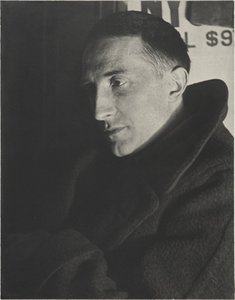
1887–1968, Франция
Марсель Дюшан
Жизнь и искусство Марселя Дюшана Рожденный 28 июля 1887 года в Бленвиле, Нормандия, Франция, Марсель Дюшан вошел в мир, где творческий импульс был глубоко укоренен в самой его крови. Он был четвертым из семи детей в семье Эжена и Люси Дюшан. Это был дом творцов и мыслителей; его братья Жак Вийон и Раймон Дюшан-Виллон, а также сестра Сюзанна Дюшан-Кротти, разделяли это созидательное беспокойство, выбрав свой путь в искусстве. И хотя со временем он стал фигурой невероятной сложности, объединившей во себе французские и американские корни, его истоки навсегда остались связаны с безмятежной тишиной Нормандии.
Другие работы Марсель Дюшан
 Нюде Спускающиеся по лестнице №21912
 Печальный молодой человек в поезде1911
 Дано: 1. Водопад, 2. Газ для освещения1966
 Фонтан1917
Эссе к произведению Bottlerack
 Индустриальный Шик в Искусстве: 10 Шедевров для Стильного ИнтерьераПогрузитесь в мир индустриального искусства! 10 шедевров от Моне до Пикассо, отражающих эпоху перемен и городскую жизнь. Репродукции картин…
 Marcel Duchamp: Challenging Conventions & Redefining Art in the 20th CenturyExplore the revolutionary art of Marcel Duchamp! Discover how his Dadaist readymades challenged artistic conventions & redefined modern art…
 The Radical Evolution of the Bottle in Still Life: From Cubist Deconstruction to Pop Art BoldnessTrace the evolution of bottle still life from Cubism to Pop Art with expert insight. Explore how masters redefined everyday objects now.