

 Preview
 Заказать репродукцию Купить цифровое изображение
 Поделиться
 Поделиться
 Детали произведения
 Добавить в избранное

 Скачать
 Похожие работы
 Рентгенография
 Слайд-шоу
Skin


 Читать далее
Жикле / Арт-принт
Печать (жикле) или холст музейного качества с быстрыми сроками изготовления и широким выбором вариантов отделки.




































Выберите один из наших стандартных размеров, соответствующих оригинальным пропорциям произведения искусства.

Вы можете указать свои собственные размеры, чтобы репродукция идеально подошла под конкретную раму или пространство. Если выбранный вами размер не будет соответствовать пропорциям оригинала, мы либо обрежем произведение, либо дополним изображение зеркальным отражением краев или однотонной заливкой. Перед началом производства вам будет отправлен цифровой макет для утверждения.
Пожалуйста, обратите внимание, что предварительный просмотр на экране не отображает фактическую обрезку или расширение изображения. Только макет точно покажет финальную композицию.
Несмотря на возможность заказа индивидуальных размеров, мы рекомендуем выбирать размер из предопределенного списка, чтобы сохранить оригинальные пропорции.
Доставка по всему миру () за 2 недели вместо стандартных 4/5 недель. (25 Июль)

Бесплатная экспресс-доставка по всему миру

Высококачественный льняной холст

Полное страхование доставки

Гарантия возмещения таможенных пошлин

Гарантия точного соответствия цветов

Политика возврата в течение 60 дней (только при наличии дефектов)

Гарантия возврата 100% средств

Предложение оптовых скидок
 Вариант со стеклом доступен только для размеров менее 110 см

Skin
Жикле / Арт-принт
Размер репродукции
-


Итоговая стоимость
-
Биография художника
A Cartography of Memory: The World Within Latifa Echakhch’s Installations
Latifa Echakhch, born in 1974 in El Khnassa, Morocco, is an artist whose work resonates with a quiet power—a power derived not from grand gestures but from the meticulous accumulation of detail and the evocative resonance of everyday objects. Her journey as an artist has been one of navigating cultural boundaries, personal histories, and the complex interplay between public space and individual experience. Echakhch’s installations are less about presenting definitive statements than they are about creating environments that invite contemplation, prompting viewers to question their own perceptions of belonging, identity, and the weight of collective memory. Growing up in Morocco before relocating to France for her studies, she developed a keen sensitivity to the subtle shifts in cultural context and the ways in which objects can carry layers of meaning beyond their immediate function. This early exposure informs much of her practice, where seemingly mundane items—pharmaceutical bottles, rugs, furniture—become vessels for exploring broader socio-political narratives.From Personal Narrative to Public Space
Echakhch’s artistic development has been marked by a gradual expansion from intensely personal explorations to increasingly ambitious interventions in public space. Early works often focused on the domestic sphere, utilizing found objects and materials to reconstruct fragmented memories of her childhood home and Moroccan culture. These pieces weren't nostalgic recreations but rather deconstructed environments—spaces that hinted at absence, displacement, and the challenges of translation. She began to explore themes of migration and exile, not through direct representation, but by focusing on the traces left behind: the remnants of lives lived, the objects that bear witness to journeys undertaken. This shift towards public space allowed Echakhch to engage with a wider audience and address more overtly political concerns. Her installations often occupy architectural spaces—abandoned buildings, museums, or even city squares—transforming them into sites of collective reflection. A key element in her work is the deliberate use of scale; she frequently creates environments that are both immersive and disorienting, challenging viewers’ sense of spatial orientation and prompting a heightened awareness of their own bodies within the artwork.The Language of Absence and the Politics of Display
A defining characteristic of Echakhch's work is her masterful use of absence as a powerful artistic tool. She doesn’t necessarily *show* trauma or conflict, but rather creates spaces that evoke its presence—spaces filled with echoes of loss, displacement, and the fragility of identity. This is often achieved through the strategic removal or fragmentation of objects, leaving behind voids that speak volumes about what has been lost or suppressed. Her installations frequently incorporate elements of Islamic art and architecture, not as a celebration of cultural heritage but as a means of questioning its representation within Western contexts. She challenges conventional notions of authenticity and originality by appropriating and recontextualizing traditional motifs, highlighting the complexities of cultural exchange and the politics of display. The use of materials like rugs, for example, is particularly significant; they are not merely decorative elements but rather symbols of domesticity, tradition, and the often-unacknowledged labor that goes into their creation. Echakhch’s work also engages with the history of colonialism, subtly addressing its lasting impact on both Morocco and France.Recognition and Lasting Impact
Latifa Echakhch has received widespread critical acclaim for her innovative installations and thought-provoking explorations of socio-political themes. Her participation in the Venice Biennale in 2013 brought her work to an international audience, solidifying her reputation as a leading contemporary artist. That same year, she was awarded the prestigious Marcel Duchamp Prize, further recognizing her significant contribution to the field of contemporary art.- Her installations have been exhibited in major museums and galleries around the world
- She has received numerous awards and fellowships for her work
- Echakhch’s work is held in prominent public and private collections
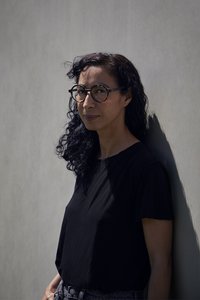
latifa echakhch
1974 - , Morocco
Основные сведения
- Artistic Movement Or Style: Contemporary installation art
- Date Of Birth: 1974
- Full Name: Latifa Echakhch
- Nationality: Moroccan-French
- Place Of Birth: El Khnassa, Morocco
Похожие статьи
Топ-10 шедевров искусства, исследующих магию цвета | OriginalUniqueArt
Погрузитесь в мир цвета с OriginalUniqueArt! От импрессионизма Моне до абстракций Кандинского – 10 шедевров, раскрывающих магию цветовой палитры. Узнайте историю искусства и вдохновитесь для декора вашего интерьера. Explore the full collection online!
Топ-25 шедевров Анри Матисса: Цвет и форма в интерьере с OriginalUniqueArt
Погрузитесь в мир Анри Матисса! 25 шедевров фовизма, ярких красок и новаторских техник. Узнайте историю создания культовых картин художника и вдохновитесь для интерьера с OriginalUniqueArt.com – музейное качество репродукций.

25 Шедевров Поля Сезанна: Открывая Новую Эру в Искусстве | OriginalUniqueArt
Откройте для себя 25 величайших шедевров Поля Сезанна! Узнайте истории создания картин импрессионизма и постимпрессионизма, технику художника и вдохновение для вашего интерьера. Репродукции картин Сезанна высокого качества на OriginalUniqueArt.com.

Silent Narratives: Exploring the Enduring Appeal of Still Life Painting Across Centuries
Explore the rich history of still life painting with OriginalUniqueArt. Discover Dutch Masters, decode vanitas symbolism & learn about collecting timeless art. Expert insights and museum-quality reproductions.
The Enduring Appeal of Still Life: A Historical & Contemporary Exploration
Explore the rich history & symbolism of still life painting with OriginalUniqueArt. Discover masterpieces from the Dutch Golden Age, learn about vanitas art, and find expert guidance for collecting timeless artworks.

