Заказать репродукцию Купить цифровое изображение
 Поделиться
 Поделиться
 Детали произведения
 Добавить в избранное

 Скачать
 Похожие работы
 Рентгенография
 Слайд-шоу
Pilot
 Acrylic On Canvas
- WallArt
- Cubism
 1913
1913- Modern
 13.0 x 10.0 cm
 Читать далее
Жикле / Арт-принт
Печать (жикле) или холст музейного качества с быстрыми сроками изготовления и широким выбором вариантов отделки.




P118B $10

P118H $10

P118W $10

P438Z $10

P508JH $12

P508YH $12

P805H $10

P805Z $10

P919BZ $10

P919G $10

P919XJ $10

P959ZH $10

P968JZ $12

W106C $8

W218G $10

W218JH $8

W218Y $10

W307PJ $10

W316G $10

W316PJ $8

W316Y $10

W398PJ $8

W4111J $10

W500HY $15

W500JH $15

W692G $12

W849H $8

W940BG $15

W953PJ $8




Выберите один из наших стандартных размеров, соответствующих оригинальным пропорциям произведения искусства.

Вы можете указать свои собственные размеры, чтобы репродукция идеально подошла под конкретную раму или пространство. Если выбранный вами размер не будет соответствовать пропорциям оригинала, мы либо обрежем произведение, либо дополним изображение зеркальным отражением краев или однотонной заливкой. Перед началом производства вам будет отправлен цифровой макет для утверждения.
Пожалуйста, обратите внимание, что предварительный просмотр на экране не отображает фактическую обрезку или расширение изображения. Только макет точно покажет финальную композицию.
Несмотря на возможность заказа индивидуальных размеров, мы рекомендуем выбирать размер из предопределенного списка, чтобы сохранить оригинальные пропорции.
Доставка по всему миру () за 2 недели вместо стандартных 4/5 недель. (19 Июль)

Бесплатная экспресс-доставка по всему миру

Высококачественный льняной холст

Полное страхование доставки

Гарантия возмещения таможенных пошлин

Гарантия точного соответствия цветов

Политика возврата в течение 60 дней (только при наличии дефектов)

Гарантия возврата 100% средств

Предложение оптовых скидок
 Вариант со стеклом доступен только для размеров менее 110 см

Pilot
Жикле / Арт-принт
Размер репродукции
-


Итоговая стоимость
-
Описание предмета коллекционирования
A Glimpse into the Dawn of Abstraction: Kazimir Malevich’s ‘Pilot’ (1913)
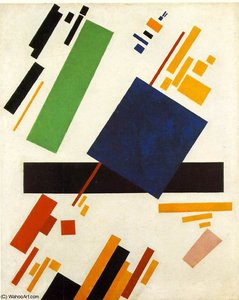
‘Pilot’ by Kazimir Malevich is not a depiction *of* something, but rather an exploration of seeing itself – a pivotal moment in art history where representation began to yield to pure feeling and geometric form. Executed in 1913, this small-scale (13 x 10 cm) work on paper serves as a crucial stepping stone towards Malevich’s groundbreaking Suprematist movement.Deconstructing Reality: Style & Technique
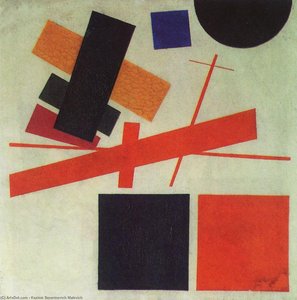
The artwork is a masterclass in analytical Cubism, pushing the boundaries of the style toward complete abstraction. Malevich meticulously renders a dynamic composition using graphite – likely pencil or charcoal – achieving remarkable textural depth through varying line weights and shading. The arrangement of triangles, circles, and rectangles isn’t arbitrary; they overlap and intersect, creating a fragmented spatial ambiguity that challenges traditional perspective. The precision of the lines and the deliberate use of negative space are hallmarks of Malevich's rigorous approach to form. This is not about *showing* an object, but about dissecting visual experience into its fundamental components.Historical Context: From Cubism to Suprematism
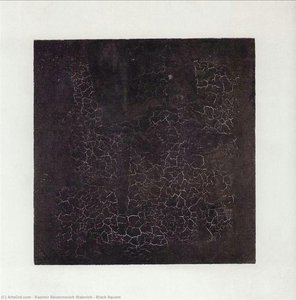
Born in Ukraine, Kazimir Malevich (1878-1935) absorbed a diverse range of influences – from folk art to Impressionism and Fauvism – before encountering Cubism during a transformative trip to Paris in 1912. However, he quickly moved beyond simply adopting existing styles. ‘Pilot’ represents this transitional phase; it demonstrates his engagement with Cubist principles but already hints at the radical simplification that would define Suprematism. Suprematism, which Malevich formally launched in 1915, sought to liberate art from any reference to the visible world, focusing instead on pure geometric shapes and their emotional resonance. This work is a vital precursor to iconic pieces like ‘Black Square’.Symbolism & Emotional Impact
While seemingly devoid of subject matter, ‘Pilot’ isn't entirely without meaning. The title itself suggests movement and exploration – perhaps alluding to the artist’s own journey toward new artistic territories. The fragmented forms can be interpreted as representing the breakdown of traditional ways of seeing, a rejection of representational accuracy in favor of a more intuitive, spiritual approach to art. The work evokes a sense of intellectual complexity and quiet contemplation. It's not an artwork designed to offer easy answers but rather to provoke questions about the nature of perception and the possibilities of abstract expression.Collecting & Interior Design
‘Pilot’ is a significant piece for collectors interested in early 20th-century avant-garde art and the development of abstraction. Its monochrome palette and geometric composition make it surprisingly versatile for interior design.- It complements modern and minimalist spaces, adding a touch of historical depth.
- Its small size makes it ideal for intimate settings or as part of a curated gallery wall.
- A high-quality reproduction captures the textural nuances and dynamic energy of the original, bringing a piece of art history into your home or office.
Биография художника
Kazimir Malevich: A Pioneer of Abstract Art
Kazimir Severinovich Malevich (1879-1935) stands as a monumental figure in Ukrainian and Russian art history—a visionary who irrevocably altered the course of artistic expression. Born in Kyiv Oblast, Ukraine, to Polish parents, his formative years were steeped in the traditions of rural Ukrainian culture, yet he possessed an unwavering ambition to forge new paths toward artistic innovation. This duality would become central to his groundbreaking contribution to Suprematism and abstract art.Early Life and Influences
Malevich’s artistic journey began with formal training in Kyiv, where he honed his drawing skills before enrolling at the Stroganov School in Moscow and subsequently attending the Moscow School of Painting, Sculpture, and Architecture. Recognizing that true artistic advancement demanded engagement with broader intellectual currents, he embarked on a transformative voyage to Paris in 1912—a pivotal encounter with European avant-garde movements that profoundly shaped his aesthetic sensibilities. The Impressionists’ exploration of light and color, alongside Symbolism's evocative imagery and Fauvism’s bold chromatic palettes, served as crucial stepping stones toward his own distinctive style. However, it was Cubism – spearheaded by Picasso and Georges Braque – that truly ignited Malevich’s imagination, prompting him to grapple with the challenge of depicting reality from multiple perspectives.Artistic Development & Key Movements
Malevich swiftly abandoned representational art in favor of abstract geometric forms—a decisive step toward establishing Suprematism around 1915. This revolutionary movement rejected any illusion of depth or perspective, asserting that color and line alone could convey profound artistic meaning. Malevich’s manifesto articulated this radical concept: “The task is to liberate painting from the shackles of objective representation.” He collaborated closely with fellow avant-garde artists like Mikhail Larionov and Natalia Goncharova, experimenting with innovative techniques and exploring new visual vocabularies. The UNOVIS artist collective became his creative hub during this period, fostering dialogue and pushing boundaries within the burgeoning Russian avant-garde landscape.Major Achievements & Notable Works
Malevich’s oeuvre is characterized by iconic masterpieces that exemplify the core tenets of Suprematism. *Black Square* (1915)—a deceptively simple composition consisting of a black square superimposed on a white rectangle—became an instant symbol of artistic rebellion and stands as arguably his most influential work. It represents a deliberate rejection of traditional iconography, prioritizing pure geometric abstraction and conveying a sense of spiritual contemplation. Similarly, *White on White* (1918)—a series exploring the interplay between color and form—further solidified Malevich’s reputation as a pioneer of non-objective art. The painting's stark monochrome palette and meticulously crafted geometric patterns challenged viewers to reconsider their perceptions of visual experience. Other significant pieces include *House under Construction* (1916), which captures the spirit of Ukrainian culture through abstracted architectural elements, and *Constructive Composition No. 1* (1920), demonstrating Malevich’s commitment to exploring new artistic possibilities.Historical Significance & Legacy
Kazimir Malevich's impact on art history is undeniable—he fundamentally altered the trajectory of modern painting and inspired generations of artists worldwide. His uncompromising pursuit of pure abstraction paved the way for Minimalism, Constructivism, and countless other movements that prioritized geometric forms and elemental materials. Beyond his artistic achievements, Malevich’s theoretical writings—particularly *From Cubism and Futurism to Suprematism* (1915) and *The Non-Objective World* (1926)—provided a philosophical framework for understanding the transformative potential of abstract art. His insistence on confronting viewers with “the supremacy of pure feeling” continues to resonate today, cementing his legacy as one of the most daring and visionary figures in 20th-century artistic thought. Malevich’s unwavering belief in the power of abstraction—coupled with his dedication to artistic experimentation—remains an enduring testament to the transformative capacity of art to challenge conventions and redefine our understanding of visual experience.
Казимир Малевич
1878 - 1935 , Украина
Основные сведения
- Artistic Movement Or Style: Супрематизм, Абстрактное искусство
- Artists Or Movements Influenced By This Artist:
- Минимализм
- Конструктивизм
- Эль Лисицкий
- Artists Who Influenced This Artist:
- Импрессионизм
- Фовизм
- Кубизм
- Date Of Birth: 1878 г.
- Date Of Death: 1935 г.
- Full Name: Казимир Северинович Малевич
- Nationality: Украинский/Русский
- Notable Artworks:
- Чёрный квадрат
- Белое на белом
- Дом под стройку
- Place Of Birth: Киев, Украина
Похожие статьи

Геометрическая абстракция: 10 шедевров, изменивших искусство | OriginalUniqueArt.com
Погрузитесь в мир геометрической абстракции! От Кандинского до Малевича – 10 шедевров, изменивших искусство. Узнайте историю создания и значение культовых картин. Репродукции музейного качества на OriginalUniqueArt.com. Вдохновение для вашего интерьера!

Beyond Form & Color: Geometric Abstraction's Evolution in 20th/21st Century Art
Explore the evolution of geometric abstraction from Cubism to contemporary art. Discover key artists like Malevich & Mondrian, investment insights, and expert collecting advice at OriginalUniqueArt.
Казимир Малевич: 25 шедевров супрематизма для ценителей искусства и декора интерьера
Погрузитесь в мир супрематизма с Казимиром Малевичем! 25 культовых картин, история создания и значение. Репродукции высокого качества для вашего интерьера на OriginalUniqueArt.com. Откройте всю коллекцию онлайн!
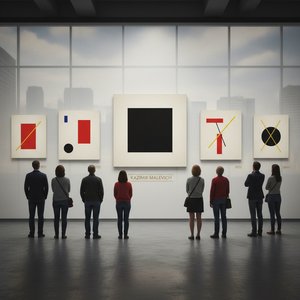
Kazimir Malevich: Pioneering Suprematism & the Quest for Non-Objective Art
Explore the revolutionary art of Kazimir Malevich & his groundbreaking Suprematism movement. Discover the origins, core principles, and lasting impact of this pivotal force in modern abstract painting.
Монохромная магия интерьера: исследование роли чёрного, белого и серого в создании атмосферы современного пространства
Изучите силу монохромного дизайна! Экспертные советы по созданию элегантных интерьеров в черном, белом и сером цветах. Вдохновение, тренды и практические решения для вашего дома.