

 Предпросмотр
 Поделиться
 Поделиться
 Детали произведения

 Скачать
 Похожие работы
 Рентгенография
 Слайд-шоу
 Статистика
Circle

 Читать далее
Масляная репродукция ручной работы
Картина маслом на холсте в выбранном вами размере и раме, написанная на заказ нашими художниками. ( Перейти к печати Перейти к цифровым изображениям)




P118B $10

P118H $10

P118W $10

P438Z $10

P508JH $12

P508YH $12

P805H $10

P805Z $10

P919BZ $10

P919G $10

P919XJ $10

P959ZH $10

P968JZ $12

W106C $8

W218G $10

W218JH $8

W218Y $10

W307PJ $10

W316G $10

W316PJ $8

W316Y $10

W398PJ $8

W4111J $10

W500HY $15

W500JH $15

W692G $12

W849H $8

W940BG $15

W953PJ $8




Выберите один из наших стандартных размеров, соответствующих оригинальным пропорциям произведения искусства.

Вы можете указать собственные размеры, чтобы картина идеально вписалась в выбранную раму или пространство. Если выбранный вами размер не соответствует пропорциям оригинала, мы либо обрежем полотно, либо расширим его за счет дополнительных элементов, написанных вручную. Цифровой макет будет отправлен вам на утверждение перед началом производства.
Обратите внимание, что предварительный просмотр на экране не отражает фактическую обрезку или расширение. Только макет точно покажет окончательную композицию.
Хотя доступны индивидуальные размеры, мы рекомендуем выбирать вариант из предопределенного списка, чтобы сохранить исходные пропорции.
После оформления заказа команда OriginalUniqueArt.com свяжется с клиентом по электронной почте для уточнения деталей и предоставит предварительный макет
Доставка по всему миру () за 3–4 недели вместо стандартных 5 недель. (13 Сентябрь). Без компромиссов в качестве.

Бесплатная экспресс-доставка по всему миру

Высококачественный льняной холст

Полное страхование доставки

Гарантия возмещения таможенных пошлин

Гарантия точного соответствия цветов

100-дневная политика возврата (только при обнаружении дефектов)

Гарантия возврата 100% средств

Предложение оптовых скидок
 Вариант со стеклом доступен только для размеров менее 110 см

Circle
Техника репродукции
Размер репродукции
-


Итоговая стоимость
$ 300
Kazimir Malevich’s Circle: A Testament to Pure Feeling
Malevich's "Circle," created in 1923, stands as a monumental achievement within the Suprematist movement—a radical departure from representational art that sought to liberate visual expression from illusionistic conventions. This deceptively simple painting embodies the core tenets of Malevich’s philosophy: prioritizing pure feeling and geometric abstraction over any semblance of recognizable imagery. It's more than just a shape; it’s a declaration of artistic freedom and an exploration of fundamental concepts within modern art history.The Suprematist Vision
Born in Kyiv Oblast, Kazimir Severinovich Malevich (1878-1935) embarked on his artistic journey with initial explorations into Impressionism, Symbolism, Fauvism, and Cubism—styles prevalent during the early 20th century. However, a transformative trip to Paris in 1912 ignited his passion for European avant-garde movements, propelling him toward a decisive break from traditional aesthetics. Recognizing the limitations of depicting reality, Malevich championed Suprematism – a movement founded on the belief that art should transcend visual perception and communicate directly with the viewer’s subconscious mind.Pointillist Technique: Dots as Building Blocks
The execution of "Circle" exemplifies Malevich's masterful application of pointillism—a technique pioneered by Georges Seurat and embraced wholeheartedly by Malevich himself. Hundreds, perhaps thousands, of tiny dots meticulously arranged on paper create a textured surface that subtly suggests depth without resorting to perspective. Graphite or charcoal was used as the medium, lending an understated elegance to the artwork’s materiality. This painstaking process underscores Malevich's commitment to achieving maximum expressive impact through precise control over color and texture—a deliberate rejection of academic conventions.Symbolism Beyond Geometry
While seemingly devoid of recognizable forms, "Circle" carries profound symbolic weight. Representing wholeness, unity, and eternity – concepts central to Orthodox Christianity and reflecting Malevich’s spiritual convictions – the circle transcends its geometric simplicity. Its repetition reinforces this idea of completeness, mirroring the cosmos itself and symbolizing a quest for transcendence beyond the confines of earthly experience. The stark contrast between the pale cream background and the dark central circle amplifies this visual impact, emphasizing the painting's contemplative mood.A Legacy Enduring Influence
“Black Circle” and “Suprematist Painting. Rectangle and Circle,” alongside Malevich’s architectural designs—particularly his collaboration with Lazar Markovich Khidekel—demonstrate the lasting influence of Suprematism on Russian art and design. Malevich's unwavering belief in pure feeling as the basis for artistic creation continues to inspire artists today, cementing his place as a pivotal figure in the history of modern abstraction. Explore museum-quality reproductions at OriginalUniqueArt.com and discover the timeless beauty of this groundbreaking masterpiece.Биография художника
Казимир Малевич: Пионер абстрактного искусства
Ранние годы и истоки вдохновения
- Родившись в 1878 году в Киевской области в польской семье, Казимир Северинович Малевич с ранних лет впитывал красоту украинского сельского пейзажа и богатство народной культуры.
- Это воспитание привило ему глубокое уважение к традиционным художественным формам, которые впоследствии стали тонким, едва уловимым источником вдохновения для его творчества.
- Его путь начался с классического обучения в Киеве, однако Малевич быстро почувствовал зов более широких горизонтов, устремившись в Москву и со временем включившись в стремительно развивающиеся авангардные движения Европы.
- Ключевые влияния: Раннее знакомство с народным искусством в сочетании с неутолимой жаждой современного самовыражения заложили фундамент его неповторимого стиля.
Художественная эволюция и ключевые течения
- В начале своего пути Малевич исследовал самые разные направления, включая импрессионизм, символизм, фовизм и кубизм. Знаковая поездка в Париж в 1912 году открыла ему глаза на новейшие достижения европейского искусства.
- Постепенно он начал отходить от фигуративности, стремясь обрести чистый художественный язык, основанный исключительно на геометре и цвете.
- Этот поиск привел к рождению супрематизма около 1915 года — абстрактного движения, провозгласившего «превосходство чистого чувства» в искусстве.
- Супрематизм отвергал любые попытки изображать объекты видимого мира, отдавая приоритет базовым геометрическим формам: квадратам, кругам и прямоугольникам.
Великие достижения и знаковые произведения
- Черный квадрат (1915): Пожалуй, его самое знаменитое творение, ставшее радикальным разрывом с традицией и фундаментальной вехой в истории абстрактной живописи.
- Белое на белом (1918): Серия работ, исследующая чистоту формы и цвета, где белые геометрические фигуры на белом фоне доводят идею абстракции до ее предела.
- Строящийся дом (1916): Ранний пример супрематизма, демонстрирующий его уникальный взгляд на украинскую культуру через призму абстрактных форм.
- Малевич также оставил глубокий след в теории искусства, формулируя философские принципы супрематизма и призывая к новому художественному сознанию.
Историческое значение и наследие
- Творчество Малевича оказало колоссальное влияние на развитие абстрактного искусства XX века, предопределив появление таких направлений, как минимализм и конструктивизм.
- Он бросил вызов привычным представлениям о репрезентации и проложил путь к беспредметному искусству.
- Его идеи о чистом чувстве и геометрической абстракции продолжают находить отклик в сердцах художников по сей день.
- Несмотря на политические преследования в сталинскую эпоху — когда его сначала поддерживали, а затем подавляли — Малевич продолжал непоколебимо следовать своему пути в искусстве и преподавании.
- Влияние на последующие поколения: Он оказал прямое воздействие на таких мастеров, как Эль Лисицкий, и косвенно сформировал творчество бесчисленного множества других художников через непреходящее наследие супрематизма.
Поздние годы и уход
- В последние годы жизни Малевич вновь обратился к фигуративной живописи, пытаясь синтезировать свои абстрактные принципы с узнаваемыми формами.
- Он продолжал преподавать и писать об искусстве до самой смерти в Ленинграде (ныне Санкт-Петербург) в 1935 году.
- После его смерти его работы на десятилетия оказались в тени, но во второй половине XX века интерес к ним вспыхнул с новой силой, окончательно закрепив за ним статус одной из самых значимых фигур в истории мирового искусства.

Казимир Малевич
1878 - 1935 , Украина
Основные сведения
- Artistic Movement Or Style: Супрематизм, Абстрактное искусство
- Artists Or Movements Influenced By This Artist:
- Минимализм
- Конструктивизм
- Эль Лисицкий
- Artists Who Influenced This Artist:
- Импрессионизм
- Фовизм
- Кубизм
- Date Of Birth: 1878 г.
- Date Of Death: 1935 г.
- Full Name: Казимир Северинович Малевич
- Nationality: Украинский/Русский
- Notable Artworks:
- Чёрный квадрат
- Белое на белом
- Дом под стройку
- Place Of Birth: Киев, Украина
Похожие статьи

Геометрическая абстракция: 10 шедевров, изменивших искусство | OriginalUniqueArt.com
Погрузитесь в мир геометрической абстракции! От Кандинского до Малевича – 10 шедевров, изменивших искусство. Узнайте историю создания и значение культовых картин. Репродукции музейного качества на OriginalUniqueArt.com. Вдохновение для вашего интерьера!
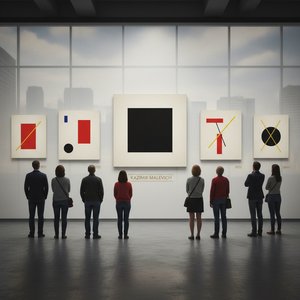
Kazimir Malevich: Pioneering Suprematism & the Quest for Non-Objective Art
Explore the revolutionary art of Kazimir Malevich & his groundbreaking Suprematism movement. Discover the origins, core principles, and lasting impact of this pivotal force in modern abstract painting.

Suprematism Explained: The Radical Geometry and Pure Feeling of Kazimir Malevich
Explore the radical world of Suprematism. Discover how Kazimir Malevich revolutionized modern art through pure geometric abstraction, non-objective form, and the supremacy of feeling. An essential guide for art students and collectors seeking deep historical context.
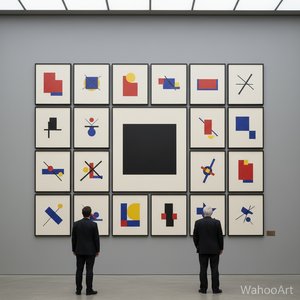
Казимир Малевич: 25 шедевров супрематизма для ценителей искусства и декора интерьера
Погрузитесь в мир супрематизма с Казимиром Малевичем! 25 культовых картин, история создания и значение. Репродукции высокого качества для вашего интерьера на OriginalUniqueArt.com. Откройте всю коллекцию онлайн!
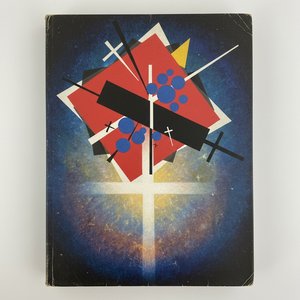
Beyond Representation: Exploring the Radical Geometry of Suprematism & Its Spiritual Foundations
Explore the revolutionary world of Suprematism with our expert guide. Discover Kazimir Malevich's groundbreaking art, its spiritual foundations & lasting influence on modern design. Learn about collecting this iconic movement.


