Baroque
St. Peter (Хосе де Рибера)
Хосе де Рибера (1591–1652) создал(а) St. Peter. Относится к направлению Baroque. Выполнено в технике Oil On Canvas. Хранится в Музей Прадо в Мадрид, Испания.
- Oil On Canvas
- Музей Прадо, Мадрид

 Предпросмотр

 Картина маслом ручной работы
 Поделиться
 Поделиться
 Информационный лист


 Скачать
 Похожие предметы
 Рентгенография
 Слайд-шоу
 Вопросы и ответы

 Статистика просмотров
St. Peter вкратце
- Название
- St. Peter
- Автор
- Хосе де Рибера (1591–1652)
- Дата рождения художника
- Хатива, Испания
- Техника
- Oil On Canvas
- Где посмотреть
- Музей Прадо, Мадрид, Испания
- Движение
- Baroque
- Период
- Early Modern
- Сюжет
- man, beard, book, keys, cloak, brown
Что изображено на St. Peter?
The Portrait of St. Peter by Jusepe de Ribera
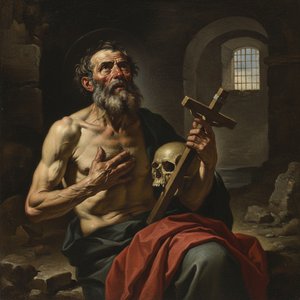
In this oil painting on canvas, Jusepe de Ribera presents us with a portrait of St. Peter. The subject, a central figure among the apostles of Jesus and recognized as the first Pope, is rendered with a profound sense of presence. Ribera focuses on the man himself, capturing the weight of his role and the character of his lived experience. There is a quiet intensity in the way the figure is presented, inviting a closer look at the weathered details of his countenance.
The work is a significant example of the Baroque style. Through this approach, the artist emphasizes the spiritual and human dimensions of the apostle. The depiction avoids idealization, opting instead for a directness that feels immediate. By focusing on the specific attributes of the saint, Ribera allows the subject to command the space, presenting a figure that is both a religious icon and a man of flesh and bone.
Composition and Visual Elements of the Portrait
The composition is built upon a stable pyramidal structure, with the head of St. Peter forming the apex of the form. He is presented from the waist up, his body turned slightly toward the viewer's left. In his right hand, he holds a book and a set of keys, objects that anchor the figure within the frame. This arrangement directs the eye upward toward his weathered features, creating a sense of quiet, grounded presence.
A strong light source enters from the left, illuminating his face and upper body while casting the rest of the figure into deep shadow. This light creates a sharp contrast against a background that is nearly black, pushing the subject forward into the viewer's space. The color palette is restrained, dominated by warm earth tones—ochre, brown, and gold—which emphasize the textures of his skin and the heavy folds of his clothing.
Technique and Artistic Style of the Work
The work is defined by a profound use of tenebrism, where the subject emerges from a nearly black background into a sharp, focused light. This dramatic chiaroscuro creates a sense of volume, pulling the figure forward and emphasizing the physical presence of the man. Such a heavy interplay of light and shadow reflects the influence of Caravaggio, grounding the religious subject in a palpable, earthly reality. The light source, positioned to the left, carves out the contours of the face and the weathered texture of the skin, casting deep shadows that heighten the emotional weight of the portrait.
Ribera’s approach to the medium is tactile and deliberate. He employs a technique of layering paint to build up depth, allowing the viewer to sense the physical weight of the drapery and the coarse nature of the beard. Visible brushstrokes are not hidden; instead, they contribute to the overall effect, lending a sense of immediacy to the rendering of the fabric and the aged features. Strong, defined lines delineate the eyes, nose, and mouth, providing a structural clarity that balances the more fluid, organic shapes of the figure. The result is a composition that feels both intensely personal and physically substantial.
Other Works by Jusepe de Ribera
The artist's exploration of this particular subject matter is reflected in several other significant pieces within our collection and major institutions. We hold St. Simeon 1 in our catalog, a work that speaks to the same profound human experience found in this portrait. Another notable piece in our collection is The Repentance of Saint Peter, which is currently housed in the Museum of Fine Arts, Lyon.
Beyond our own holdings, Ribera's preoccupation with the themes of remorse and spiritual weight is evident in other historical examples. The work known as Penitent St. Peter, dated about 1630, is held at the Kunsthistorisches Museum in Vienna. This piece shares a similar intensity in its depiction of the apostle's character. Additionally, The Tears of Saint Peter, which dates to 1612, is part of the collection at the Metropolitan Museum of Art in New York. These works collectively illustrate the artist's ability to capture the complexities of faith and the physical reality of the human condition through his characteristic use of light and shadow.
В каком музее находится St. Peter?
Музей Прадо
Мадрид, Испания
История Музея Прадо Истоки Музея Прадо неразрывно связаны с королевской коллекцией Испании, уходя корнями в XVIII век. То, что начиналось как амбициозная идея создания кабинета естественной истории при Фердинанде VII, со временем трансформировалось в священное пристанище для живописи и скульптуры. Этот переход превратил научный проект в сокровищницу величайших шедевров испанской короны.


Изображения в высоком разрешении: St. Peter
Общественное достояние: художник умер в 1652.
Хосе де Рибера, St. Peter, Музей Прадо. Общественное достояние
Цвета подобраны цифровым экспертом в соответствии с оригиналом, файл прошел тщательную ретушь и полностью передает манеру письма художника.
Приобрести файл в высоком разрешенииОтветы на вопросы о St. Peter
Где сегодня можно увидеть «St. Peter», Хосе де Рибера?
Оригинал произведения «St. Peter», Хосе де Рибера хранится в Музей Прадо, Мадрид, Испания. Репродукция позволяет украсить этим шедевром ваш дом.
В какой технике выполнено произведение «St. Peter»?
«St. Peter» выполнено в технике Oil On Canvas.
Что изображено на картине «St. Peter», Хосе де Рибера?
Темы, представленные в «St. Peter», Хосе де Рибера, включают man, beard, book, keys, cloak, brown, gold, skin. Вместе они раскрывают основной сюжет произведения.
Является ли произведение «St. Peter», Хосе де Рибера общественным достоянием?
Статус авторского права для «St. Peter», Хосе де Рибера: произведение находится в общественное достояние — срок действия авторского права истёк. Это определяет, допускается ли свободное воспроизведение изображения.
Кто создал "St. Peter"?
«St. Peter» был создан Хосе де Рибера. Информация на этой странице описывает оригинальную работу Хосе де Рибера.
К какому художественному направлению относится «St. Peter», Хосе де Рибера?
«St. Peter», Хосе де Рибера относится к направлению Baroque. Это направление определяет стилистический контекст произведения.
К какому периоду творчества Хосе де Рибера относится работа «St. Peter»?
В творческом наследии Хосе де Рибера работа «St. Peter» относится к периоду Mature Period. Этот этап позволяет сопоставить её с другими произведениями художника.
Каков правовой статус произведения «St. Peter», Хосе де Рибера с точки зрения авторского права?
Статус авторского права на произведение «St. Peter» — общественное достояние — срок действия авторского права истёк — определяется датой смерти автора в 1652.
Осталось ли произведение «St. Peter» в родной стране своего автора?
Да — произведение находится в стране проживания художника. Работа «St. Peter» хранится в Испания, в то время как Хосе де Рибера родился в Испания.
Об авторе, Хосе де Рибера

1591–1652, Испания
Хосе де Рибера
A Life Forged in Shadow and Light Jusepe de Ribera, известный многим как Lo Spagnoletto – “Маленький Испанец” – был выдающейся фигурой эпохи барокко, художник, чьи полотна пульсировали драматической интенсивностью и неумолимой реалистичностью. Родился в Хативе, Испания, в 1591 году, его путь привел его далеко от валенсийских корней, в конечном итоге утвердив его как одного из самых значительных художников XVII века в Неаполе, городе, тогда находившемся под испанским правлением. Жизнь Риберы была не просто хронологией развития искусства; это был повествовательный рассказ, сотканный из лишений, амбиций и непоколебимой преданности изображению человеческого состояния во всем его первозданном великолепии. Хотя ранние биографические детали остаются в некоторой степени окутанными тайной, мы знаем, что он прибыл в Италию около 1607 года, изначально поселившись в Риме, прежде чем устремиться к Неаполю в 1616 году – городу, который стал как его художемым домом, так и плавильным котлом для его уникального стиля.
Другие работы Хосе де Рибера
 Магдалена Вентура с мужем и сыном1631
 Косолапый
 St. Onuphrius1637
 The Duel of Women (The Duel of Isabella de Carazzi and Diambra de Pettinella)1636
Эссе к произведению St. Peter
 Mastering the Shadows: The Dramatic Power of Chiaroscuro and Tenebrism in Baroque Fine ArtExplore the profound drama of chiaroscuro and tenebrism. Discover how masters like Caravaggio used light and shadow to sculpt emotion and v…
 Masterpieces of Light: The Top 25 Artworks by Duccio di BuoninsegnaJourney through the divine elegance of Duccio di Buoninsegna. Explore 25 iconic Sienese masterpieces, from the Maestà to the Rucellai Madon…
 Jusepe de Ribera: Dramatic Realism & Spiritual Intensity in the Spanish Golden AgeExplore the powerful Baroque paintings of Jusepe de Ribera, master of tenebrism and dramatic realism. Discover his spiritual intensity, inf…